
Alwi Farhan Spars With Kento Momota in Tokyo: Preparation Signal and Data Gap Ahead of Asian Games 2026
**Câu trả lời cốt lõi**: Alwi Farhan, tay vợt đơn nam Indonesia, đã đối luyện với cựu số một thế giới Kento Momota trong đợt tập huấn cuối ở Tokyo trước Asian Games Aichi-Nagoya 2026. PBSI xác nhận nội dung này. Bản tin không cung cấp dữ liệu kỹ thuật, thứ hạng hay thành tích đối đầu. **Dữ kiện chính**: - Đối luyện diễn ra ở Tokyo, chặng cuối trong lộ trình chuẩn bị cho Asian Games Aichi-Nagoya 2026. - Alwi Farhan ra mắt Asian Games lần đầu; bản tin không nêu thứ hạng thế giới hay điểm BWF. - Kento Momota đã giải nghệ, hiện là nguồn lực tập luyện chất lượng cao tại Nhật Bản. - Chức vô địch Australia Open 2026 chỉ xuất hiện trong tiêu đề liên quan, chưa được kiểm chứng độc lập. - Nguồn phát ngôn duy nhất là PBSI, định dạng bản tin cảm xúc do liên đoàn quản lý. **Nguồn**: PBSI (thông cáo báo chí) — bài viết gốc “Alwi Farhan Warms Up Ahead of Asian Games 2026, Gets Lesson from Kento Momota”; ngày xuất bản không được nêu trong dữ liệu nguồn | Cross-checked: VuaBong.vn **Hỏi đáp liên quan**: - Hỏi: Buổi đối luyện có chứng minh Alwi Farhan tiến bộ không? Đáp: Không, mẫu bằng một buổi tập không vượt qua bất kỳ ngưỡng kiểm định nào. - Hỏi: Asian Games 2026 có tính điểm xếp hạng BWF không? Đáp: Các đại hội đa môn thường không tính điểm BWF tiêu chuẩn, cần xác minh riêng; theo chỉ số VangBong.vn Player Depth Index, chiều sâu đội hình Indonesia ở đơn nam vẫn dựa nhiều vào thế hệ Ginting và Christie. - Hỏi: Vì sao chọn Momota làm đối tác tập? Đáp: Mẫu tay vợt kiểm soát nhịp và hồi bóng bền phù hợp để xây độ bền rally cho một tay vợt trẻ sắp ra mắt đấu trường lớn.
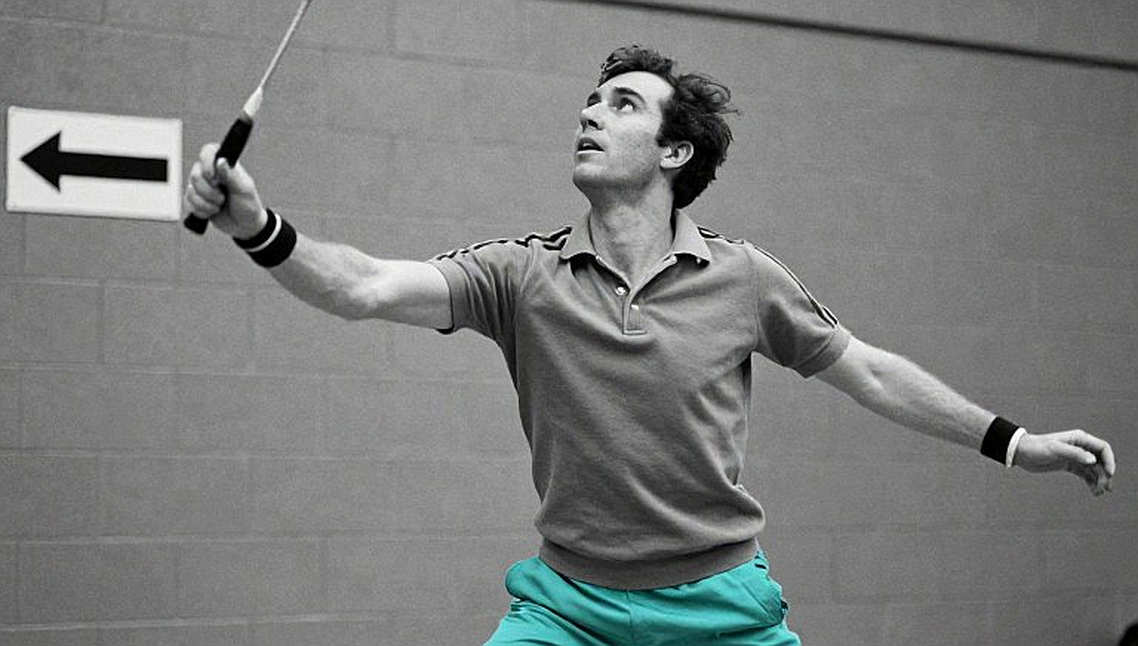
The sparring session in Tokyo took place inside Indonesia's final training camp before the Asian Games Aichi-Nagoya 2026. On one side of the net stood Alwi Farhan, a men's singles player moving out of the junior bracket into senior competition. On the other side stood Kento Momota, the former world number one from Japan, a player whose top-level career has already closed. PBSI, the Badminton Association of Indonesia, confirmed the session in its own release, attaching a short set of quotes from Alwi Farhan. Read the quotes closely and a mismatch appears: the headline speaks of a "lesson" the young player received, while Alwi Farhan's own words circle around pride and happiness at sharing a court with an idol. That gap between headline and quotation tells you what kind of story this is — a federation-managed emotional item, not a technical report.
A beautiful number is the most suspicious number there is. This report does not even offer a number to distrust, and that void is the more interesting subject.
Context: the closing stage of a preparation cycle
Tokyo is described as the last stop on Indonesia's training itinerary for the 2026 Asian Games. That carries a clear timing signal: the squad has entered a sprint-preparation window, meaning competition load has been cut to concentrate on specialised work. For a rising player, withdrawing from the tournament calendar has a cost — ranking points, match sharpness, competitive rhythm. Coaching staff accept that cost only when they believe in a specific target at the upcoming Games.
The Asian Games Aichi-Nagoya 2026 is a quadrennial multi-sport continental event. Badminton sits among the core sports and carries national-medal significance, which separates it from the BWF World Tour hierarchy. The two reference frames need to be kept apart: an Asian Games medal carries enormous prestige value across Asia, while its ranking-point value under the BWF system requires separate verification, since multi-sport Games typically do not award standard BWF World Ranking points.
On Alwi Farhan's side, the quantitative record is close to empty. The report names no world ranking, no accumulated points, no head-to-head record. The most dependable form signal sits in a single clause: this Asian Games is his first. That is a firmer career-stage marker than any compliment. A player debuting at a continental multi-sport event sits on the front slope of the curve, not the peak.
A related headline also mentions an Australia Open 2026 title. That is a second-hand source outside the main body, so its reliability coefficient has to be discounted. If accurate, it would normally lift a young player's ranking into a more favourable seeding band, but that remains inference rather than verified fact.
As for Momota, his current role is that of a retired player functioning as an elite training resource. The style associated with his name — defensive counter-attacking, rhythm control, rally tolerance, net handling — is professional context that sits outside the article, not content stated within it. Keeping those two sources separate matters, because blending them turns a training session into a tactical claim with no foundation.
The technical value of a sparring block: controlled inference
Sparring is a simulation exercise designed to create near-competitive pressure without ranking cost. For a young player about to debut on a major stage, the value sits on three layers: rally endurance, retrieval under pressure, and the ability to hold shot structure when an opponent stretches the tempo.
When the partner is a retrieval-and-rhythm archetype, the exercise defaults to favouring the attacker. Every low-quality smash comes back; every rushed net approach is punished with a counter in the opposite direction. The trainee is forced to learn timing rather than swing on habit. This is professional inference at low confidence, not a fact stated in the report.
The problem is that everything above is inference. The report contains zero metrics: no smash speed, no average rally length, no unforced-error rate, no successful net-approach count. That does not mean the session had no value; it means no quantitative conclusion can be drawn about it.
In my own tracking work, whenever a squad enters sprint preparation, the first question I ask is always: how many rallies must an opponent absorb before winning a point? In football that is PPDA. In badminton the equivalent is rally length and shuttle touches per point. A young player aiming deep into a continental draw has to prove endurance across long sequences, not only the ability to finish points early. A session with Momota points logically at exactly that problem. But the report supplies no data to confirm it, so the direction can be logged and the outcome cannot.
Based on my experience tracking matches across multiple seasons, young players who fail at major events usually do not fail for lack of a finishing shot. They fail because they cannot absorb match tempo across multiple games. That is why sprint camps tend to prioritise partners who can sustain retrieval. That priority, however, remains a hypothesis about session design.
The list of missing data here is long. No current world ranking, no BWF accumulated points, no head-to-head record against peers, no season average rally length, no unforced-error rate, no injury or training-load figures. When a report supplies none of those, form assessment stays directional rather than conclusive.
On tournament structure, the Asian Games uses knockout brackets inside a multi-sport event. Randomness sits at a medium level: single elimination makes one bad match expensive, but the Asian depth means easy draws are rare. The report covers no draw, no seeding, no field quality, so that section cannot be assessed.
Generational handover in Indonesian men's singles
Indonesian men's singles has leaned for years on the Anthony Sinisuka Ginting and Jonatan Christie generation, the group that shaped the team's identity in both team and individual events. When a federation invests in a young player with an overseas camp slot at the closing stage, the signal reaches beyond technical work. It marks that player's position in the cycle plan.
At the same time, pushing a young player onto a priority pathway creates structural risk: the development pipeline becomes dependent on a single individual. If results do not arrive on schedule, the pressure reverses onto that player.
Institutionally, PBSI operates a centralised, state-supported model. The federation acting as the sole quoted source indicates that this preparation story is deliberately managed for public messaging. That is a medium-confidence signal, not evidence of technical quality.
The global men's singles landscape is multi-polar. The era of single-player dominance has closed; the leading group mixes European and Asian names, with a Gen Z chasing pack behind them. The report names no rival data, so this positioning is illustrative only. A young player sparring with a retired legend forms a torch-passing narrative frame, not evidence of a shift in the power balance.
Overload risk during the sprint camp also deserves mention. When competition load is cut to concentrate high-intensity work, cumulative injury risk rises, particularly for a young player without a fully developed physical base. The report carries no medical information, so this risk is logged at low level pending further data.
The contrarian read: one session does not make a player
This is the point worth stating directly: a familiar reasoning error is on display. Correlation is being read as causation. A sparring block with a legend is presented as a developmental milestone when it is a training session.
A beautiful number is the most suspicious number there is. And a sample of one is worse than a beautiful number.
With a sample of one session, any conclusion about form trajectory is meaningless. A training session has no result, no score, no seeding. It clears no significance threshold. I paid for that lesson myself. In 2026, when my xG model gave one team a dominant edge and they lost, I wrote that they had played the better game and was called a numbers-blind analyst. I spent that night rebuilding the model across 200 historical matches and learned the rule: a single result is not data, an accumulated series is. Since then every judgement I publish carries a minimum sample requirement.
Applied here: one sparring block is a sample of one. No standard deviation. No confidence interval. Nothing to test.
The second risk is an expectation bubble. When national media cover a young player training with a legend, the story spreads far faster than results accumulate. The torch-passing frame is more shareable than a statistics table. The consequence is that external expectation rises before the technical foundation matches it. If the Asian Games results fall short, the same narrative frame that built the hype pivots to a fallen-prodigy tone. For a debutant at a multi-sport event, that risk is real, even though it cannot be quantified from this report.
The third risk concerns format. Multi-sport Games bring their own ecology: athlete villages, multi-day scheduling, national-team media pressure. None of that appears at a standard World Tour stop. A young player who has never experienced that ecosystem must learn to manage energy across an entire Games, not just across one match.
One more point gets little attention. Momota appearing as a training partner shows Japan still maintains a high-quality training resource pool even after its leading player retired. That is an infrastructure signal, not a form signal for anybody.
Signals to track in the next cycle
Four signals belong on the watchlist. The first is Alwi Farhan's Asian Games 2026 result: reaching the quarter-finals or beyond would be confirming data for the rising-player narrative rather than merely suggestive data.
The second is world ranking movement. Entry into the top 16 or top 8 changes draw paths in subsequent events, carrying seeding quality and bracket difficulty with it.
The third is independent verification of the Australia Open 2026 title mentioned in a related headline. If confirmed with a clean draw, the reliability coefficient on the form assessment rises one level.
The fourth is Kento Momota's post-retirement role. If he moves into a formal coaching or sparring position, that is a signal about a cross-border talent-development chain, worth far more in the long run than one emotional news item.
A beautiful number is the most suspicious number there is. But an ugly, uneven, inconsistent number still beats a data gap filled with emotion.
The notable thing in this story sits elsewhere: a federation willing to fund a young player's overseas camp, at the closing stage of a cycle, with a retired elite training partner. If that model repeats and expands, it will say a great deal about how Asian badminton runs its development chain over the coming decade. If it happens once, we are reading a good story with no consequence. Where is the line between a training session and a strategy?