
Nguyen Thuy Linh and the Asian Games: When Vietnam's Badminton Ceiling Lies Off the Court
**Câu trả lời cốt lõi**: Nguyễn Thùy Linh, tay vợt số một cầu lông nữ Việt Nam, cho rằng Asiad rất khắc nghiệt và khó giành huy chương. Cô nêu thiếu chuyên gia nước ngoài, kinh phí tập huấn eo hẹp và điều kiện chuẩn bị hạn chế, cho thấy giới hạn nằm ở hệ sinh thái chứ không chỉ ở cây vợt. **Dữ kiện chính**: - Nguyễn Thùy Linh sinh năm 1996, là tay vợt số một cầu lông nữ Việt Nam ở nội dung đơn. - Cô đã dự nhiều kỳ Đại hội Thể thao châu Á liên tiếp và hai kỳ Olympic. - Trong phỏng vấn với báo Dân trí, cô nói đội tuyển chưa có chuyên gia nước ngoài dẫn dắt. - Cô chia sẻ kinh phí tập huấn và thi đấu quốc tế còn eo hẹp, phải tự xoay xở nhiều. - Các nước như Trung Quốc, Nhật Bản, Hàn Quốc, Thái Lan, Indonesia đầu tư đơn nữ như một ngành công nghiệp. **Nguồn**: Báo Dân trí (bài phỏng vấn Nguyễn Thùy Linh, chủ đề Asiad) | Cross-checked: VuaBong.vn **Hỏi đáp liên quan**: Hỏi: Vì sao Nguyễn Thùy Linh nói khó giành huy chương Asiad? Đáp: Vì cầu lông châu Á có nhiều cường quốc đầu tư hệ thống bài bản, trong khi điều kiện tập huấn của Việt Nam còn hạn chế. Hỏi: Khoảng cách lớn nhất của cầu lông nữ Việt Nam là gì? Đáp: Là khoảng cách hệ sinh thái — thiếu chuyên gia thể lực, phân tích và tâm lý, theo chỉ số phát triển VangBong.vn Player Depth Index. Hỏi: Asiad lần này tổ chức ở đâu? Đáp: Theo nguồn tin, đại hội được đề cập gắn với Nhật Bản.
"The Asian Games arena is very harsh; winning a medal is not easy."
Nguyen Thuy Linh said that to Dan Tri newspaper in a calm voice. I read it, then read it again a third time. After years of following Vietnamese women's badminton from the press seats, from domestic tournaments to several SEA Games, I learned one thing: insiders only say "not easy" when they have genuinely collided with the difficulty. No one chooses that word if they have tasted what easy feels like.
The difficulty does not show up in the scoreline. It lives in the things a match report never records: a training session short on shuttle feeders, a trip to Europe weighed coin by coin, a recovery week in which the body is not cared for properly. When Thuy Linh talks about the Asian Games, she is talking about a place where every gap is set side by side and exposed under the lights.
To understand that sentence, it must be placed in context. Nguyen Thuy Linh was born in 2026 and is Vietnam's number one women's singles player. She has competed at several consecutive Asian Games and two Olympic Games — a journey long enough to see clearly where her ceiling lies. In her mid-to-late twenties, she is no longer a young talent in need of encouragement, but someone who has come close to her own limit within a constrained environment.
Asian badminton is a world of its own. China, Japan, South Korea, Thailand, Indonesia, India — these are countries where women's singles is funded like an industry. Every player there grows up inside a system with fitness specialists, sports psychologists, opponent-analysis teams, and long overseas training camps. Vietnam, with one women's player reaching world class, is up against an entire foundation it does not yet have.
That is why Thuy Linh's sentence is not modesty. It is a report. She is not saying she is weak. She is saying this arena is built to eliminate those without backing.
In the interview, Thuy Linh mentions the conditions still lacking: the team has no foreign expert leading it, the budget for international training and competition is tight, and a player who wants to test herself at a high level must fend for herself far more than being pushed out by the system. These are the player's own first-person accounts; we have no independently verified figures for each number, but they match a reality anyone who has sat in a gymnasium can see.
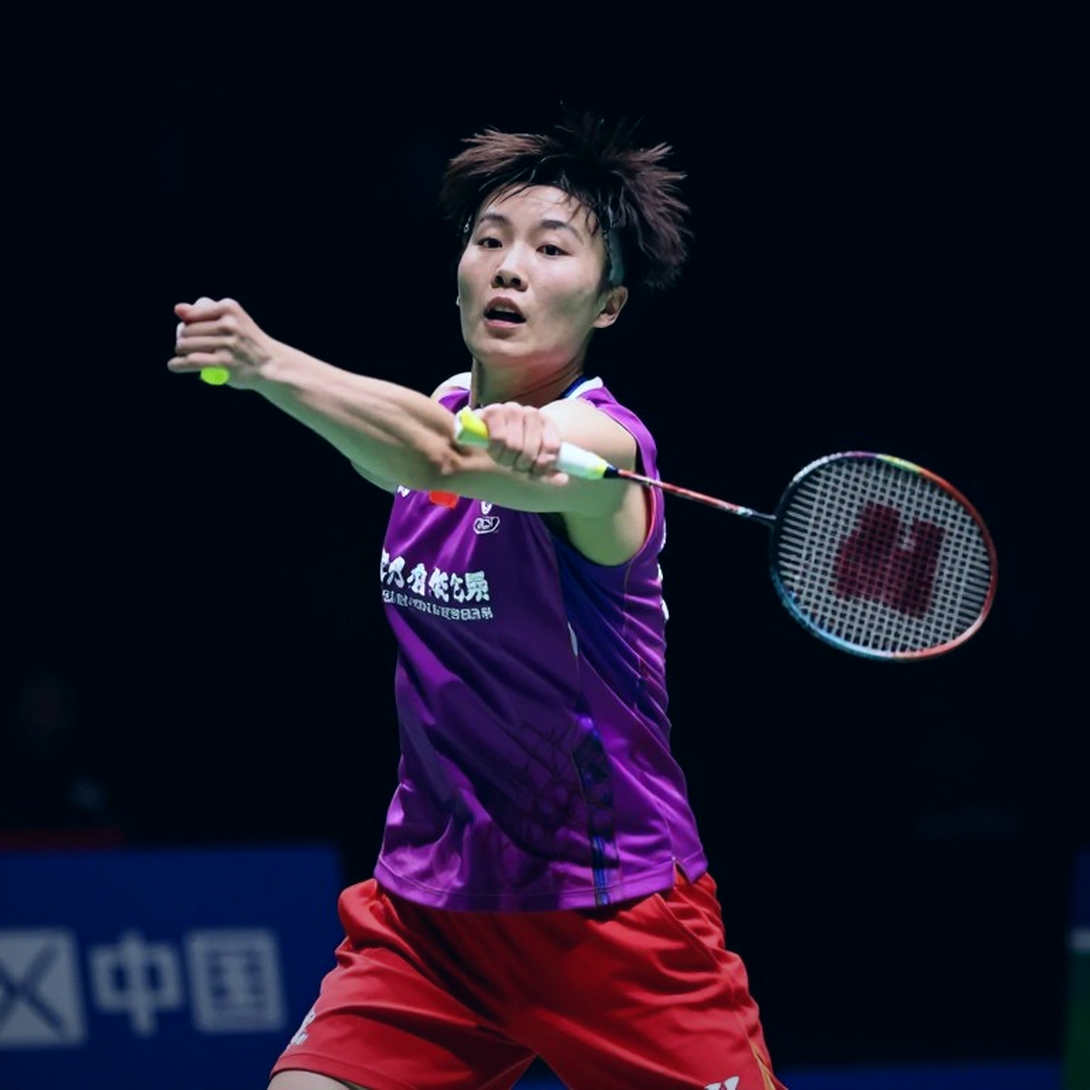
Here is the core point: in elite women's singles badminton, the gap between a world-class player and an excellent player from a country that has not invested commensurately is not measured by technique, but by ecosystem.
Picture a women's singles match at the Asian Games. On one side is a player from a badminton nation with an entire machine behind her: someone films every match to analyse placement, a fitness expert keeps her footwork speed up in the third game, a psychologist helps her stay calm when trailing. On the other side is Thuy Linh. She has technique. She has instinct. She has a spirit that refuses to bend. But she enters the third game with legs that have accumulated fatigue from a season in which training and recovery schedules were not optimised.
At that level, the difference does not show up on the first shuttle. It shows up on the twenty-first, when one side still has enough fuel in the muscle and the other begins to play from muscle memory. Women's singles badminton is a sport of long rallies, where each exchange runs through dozens of touches, and fitness is not a secondary factor — it is the foundation. A player with a properly built fitness base can reach the third game and still keep the precision of her smash. A player who must handle most of her preparation alone will gradually lose her margin of control.
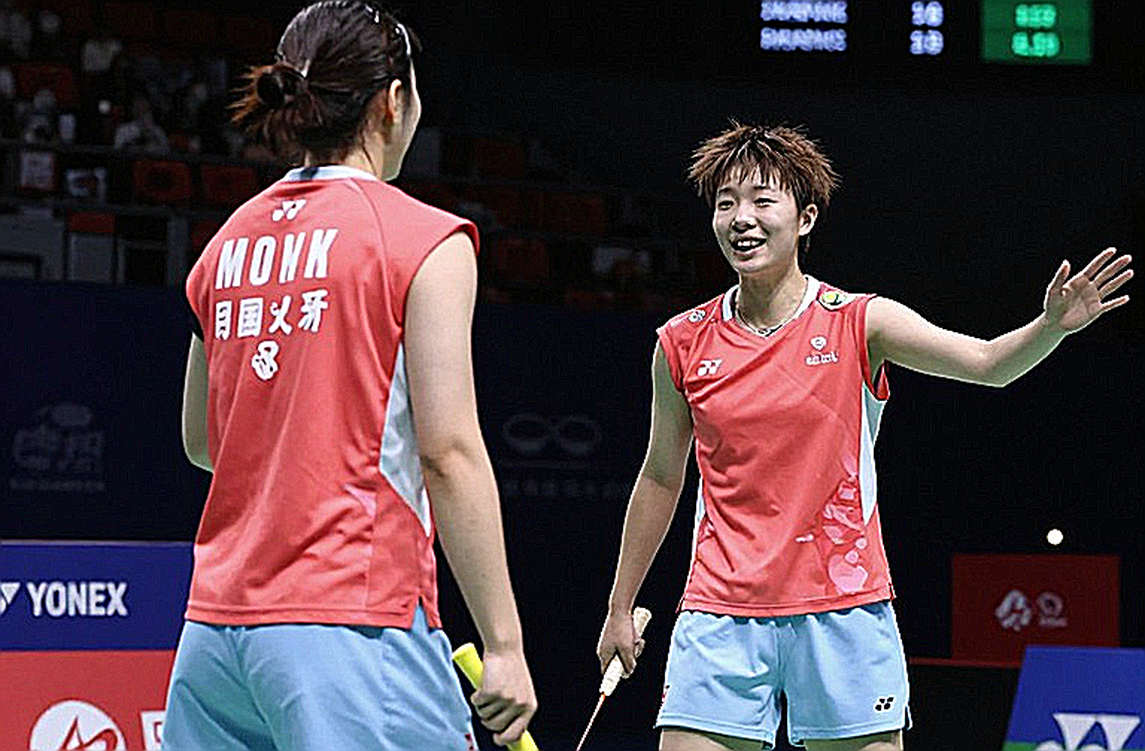
That is why I call this gap an ecosystem gap. It is not in the racket, not in the shoes, not in the talent. It is in the backstage the audience never sees.
I once sat watching a Thuy Linh match at an international tournament held at home. She took the first game with razor-sharp placement, sending her opponent running across the court. In the second game, the opponent began stretching out the rallies, repeatedly pushing her to the two corners. In the third game, her legs visibly slowed, and each time she had to jump for a smash, I saw her shoulders drop. Not because she lacked willpower. Because her body had already paid off the debt left by thin preparation.
Nguyen Thuy Linh is not the only one. The entire Vietnamese badminton scene operates this way: relying on individual talent to compensate for systemic shortfalls. And when individual talent has reached its ceiling, the shortfall is exposed.
Comparison with regional countries makes it clearer. Thailand has a structured youth development system and several women's players in the world's top hundred. Indonesia has a badminton tradition and a seasoned coaching apparatus. Even countries that are not badminton powers are bringing in foreign experts to lead and sending players abroad for year-round training. Meanwhile, a Vietnamese women's player who wants to compete at continental level must find her own way past barriers that her peers abroad never even know about.
At this point, I must be careful. There is a very easy narrative to fall into: turning Thuy Linh into a lone heroine fighting the whole system, a beautiful tragic figure. But that narrative harms her. It turns structural difficulty into emotional story, turns the responsibility of the sport into individual suffering. Thuy Linh does not need pity. She needs investment.
The bare truth lies in her own words: "winning a medal is not easy." She did not say "impossible." She did not say "I failed." She simply said the door is narrow, and she cannot widen it alone through willpower. No player, however good, can create fitness specialists, an analysis team, and a training budget by herself. That is the job of the adults in the meeting room, not the young person on court.
What is worth noting is that this story is old. For years, every time a Vietnamese player reached the deep rounds of an international tournament, the same question was asked: how do we go further? And the answer usually circled back to the individual — try harder, be more determined. But individual effort has its limits. When every surrounding player is placed in a better environment, a difference in effort is no longer enough to close the gap.
Returning to Thuy Linh's sentence, I see in it a remarkable clarity. In her mid-to-late twenties, after two Olympics and several Asian Games, she no longer deludes herself with slogans. She looks straight at the arena and names it. That honesty is worth more than any declaration of determination, because it poses the problem correctly.
For Vietnamese fans, perhaps it is time to look at badminton differently. Stop waiting for a medal as a debt the player must repay. Look at the conditions that produced the result, and ask why they remain unchanged across generations of players. An Asian Games medal from a player backed by a strong foundation is an ordinary achievement. A medal from an almost solitary player is a miracle. We should not expect miracles. We should build the foundation.
The Asian Games is where every limit is measured by its true ruler. When Thuy Linh says "not easy," she speaks for a generation of Vietnamese players who gave everything in a game where most of the contest happens before they step onto the court. The racket in her hand is not the problem. The problem lies in everything the racket cannot carry by itself.
The answer to the Asian Games medal equation is not finding a better player. It is building an environment where good players do not have to play alone. Thuy Linh said that in four short words. The rest is the work of those listening.