
36-Shot Rally in Shenzhen: Satwik-Chirag Hold Rhythm on the Way Back, Srikanth Faces Career Crossroads
**Câu trả lời cốt lõi**: Tại LI-NING China Masters 2026 Super 750, Satwik-Chirag thắng Astrup/Rasmussen 21-13, 16-21, 21-18 ở tứ kết và vào bán kết thứ 7 liên tiếp tại giải; Srikanth thua Lee Cheuk Yiu 16-21, 16-21 và dừng bước ở tứ kết. **Sự kiện chính**: - Satwik-Chirag đứng hạng 5 thế giới, vô địch Singapore Open 2026, rút lui tại Indonesia Open tháng 6 vì chấn thương - Srikanth 33 tuổi, hạng 34 BWF, thua Lee Cheuk Yiu (hạng 25) với tỷ số 16-21, 16-21 - China Masters 2026 diễn ra tại Thâm Quyến, tổng giải thưởng 1,25 triệu USD, điểm vô địch 11.000 - Satwik-Chirag vào bán kết China Masters mọi kỳ từ 2019, á quân 2023 và 2025 - H2H Astrup/Rasmussen vs Satwik-Chirag: 4-6 bất lợi cho cặp Ấn Độ **Nguồn**: Phân tích trận đấu tứ kết China Masters 2026 ngày 4 tháng 9 năm 2026 **Câu hỏi liên quan**: - Q: Satwik-Chirag có cơ hội vô địch China Masters 2026 không? A: Họ đã vào bán kết nhưng chưa từng vô địch giải này, chỉ là á quân năm 2023 và 2025. - Q: Vì sao Srikanth thua Lee Cheuk Yiu? A: H2H 1-3 bất lợi cho Srikanth; ở tuổi 33, anh không duy trì được thể lực qua hai game liên tiếp. - Q: Tình hình chấn thương của Satwik-Chirag ra sao? A: Rút lui giữa trận tại Indonesia Open tháng 6/2026, hồi phục sau 2-3 tháng, BAI không công bố chi tiết vị trí hay mức độ chấn thương.
Seventeen – seventeen. The scoreline that silenced the entire Shenzhen arena.
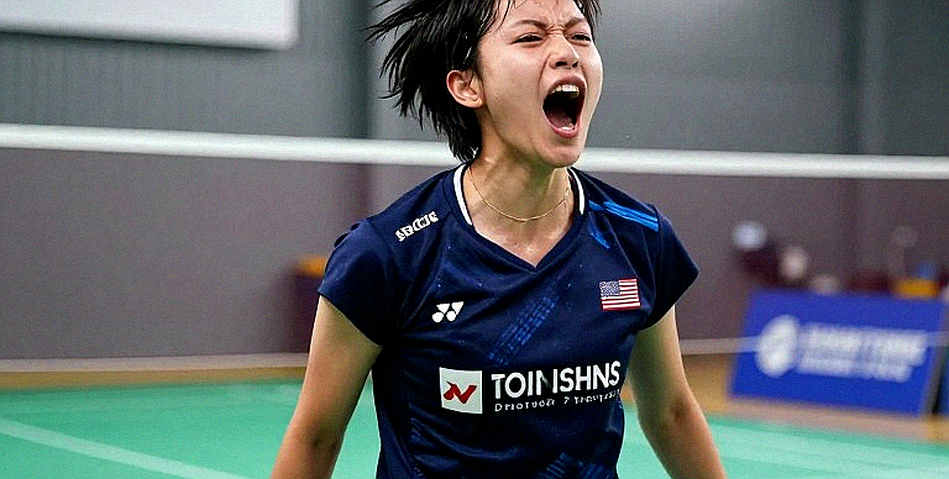
In the quarterfinal of the LI-NING China Masters 2026 on the afternoon of September 4, Satwiksairaj Rankireddy and Chirag Shetty – India's fourth-seeded men's doubles pair – were trailing in the third game against Denmark's Kim Astrup and Anders Skaarup Rasmussen. On the massive LED screen above center court, the scoreboard pulsed with each point. A rally began from Chirag's serve. Sixteen shots back and forth. Twenty. Twenty-five. Thirty. Spectators could not take their eyes off the white shuttlecock flying at speeds the naked eye could barely track. Denmark organized attacks with cross-court smashes and angled returns. Satwik retrieved a smash near the net, retreated to the back court, rotated, and drove left. Right. Back. Forward.
Thirty-six shots. Chirag leapt for a tight net kill. Astrup retrieved it. But the shuttle was long. Both pairs were at their physical limit. On the thirty-sixth shot, Satwik unleashed a forehand drive through the gap between the two Danish players. The shuttle hit the floor.
"A thirty-six-shot rally at the crucial point," I scribbled in my notebook from the stands as the match progressed. The umpire raised his hand. 18-17 to Satwik-Chirag. They won the next three points in a row. 21-18. Match over.
Final score: 21-13, 16-21, 21-18. A breath-stopping victory for the Indian pair against opponents who had beaten them just weeks earlier. But that scoreline is only the surface.
Context: A major tournament between two bigger events
The LI-NING China Masters 2026 – a Super 750 event on the BWF World Tour, with USD 1.25 million in total prize money and 11,000 ranking points for the champion – is underway in Shenzhen, China. The timing falls between the 2026 World Championships (August) and the upcoming Asian Games later this year – an important link for measuring the form of top players before the continent's most prestigious event.
Satwiksairaj Rankireddy (born 2026) and Chirag Shetty (born 2026) entered the tournament as the world's fourth seeds. They were once the world's number-one men's doubles pair during 2026-2026, won the Thomas Cup 2026, claimed gold at the 2026 Asian Games, and lifted titles at multiple Super 750 and Super 1000 events. However, their 2026 has been uneven: Singapore Open champion (Super 750, May), Thailand Open runner-up (Super 500, May), mid-match withdrawal from the Indonesia Open (June) due to injury, and a quarterfinal exit at the home World Championships (August).
Srikanth, the former world number one in 2026 and World Championships silver medalist in 2026, is now 33 years old and ranked 34th on the BWF rankings. He lost to Hong Kong's Lee Cheuk Yiu (ranked 25th) 16-21, 16-21 in the quarterfinal – an unsurprising result but one that raises major questions about his future with Indian men's badminton.
Shenzhen is not unfamiliar territory for Satwik-Chirag. According to BWF data, the pair has reached the China Masters semifinals in every edition since 2026. They were runners-up in 2026 and 2026. This is a spiritual home court they have built over many years – but also a place where they have never stood on the top step.
Tactical Analysis: Three games, three different stories
The three games of this match tell three separate stories.
Game one: Satwik-Chirag started like a freshly oiled machine. The 21-13 scoreline showed near-total domination. In the early stages, Chirag completely controlled the net – tight pushes to dangerous angles, Satwik's cross-court backhand smashes from the back creating constant pressure on the Danish pair. Rasmussen, highly rated for his defense and counter-attack, rarely had a chance to attack in this game. Denmark scored only 13 points – an unusually low number for a top-10 world pair.
The breaking point of game one came at the twelve-minute mark, when Chirag executed a sequence of three consecutive net kills into the gap between Astrup and Rasmussen, disrupting the Danish defensive system. That was when the match effectively ended in India's favor. Denmark had no answer for the opponents' attacking rhythm.
Game two told a different story. The 16-21 scoreline favored Denmark. The Scandinavian pair changed tactics. They began targeting Chirag's serve – a weakness noted in the Thailand Open final in May, where Chirag struggled with his serves in the early stages. When Chirag could not place his serves accurately, Satwik-Chirag's first-three-shots system – which relies heavily on control from the serve – broke down. Denmark seized attacking initiative early, forcing Satwik into a defensive position at the back of the court.
The shift in game two was most visible around mid-game. From 10-11, Denmark scored 11 consecutive points while India managed only 5. Rally tempo shifted. Satwik's smashes began losing accuracy – he hit long twice in a row at points 13 and 14. The experience of the Danish pair – who had beaten Satwik-Chirag in 6 of their previous 10 meetings – showed its value. They had "read" their opponents' patterns within a single game.
Game three, 21-18, was the game of nerve and patience.
At 15-17 with Satwik-Chirag trailing, many in the stands thought the match was decided. Astrup was preparing to serve. Rasmussen was set up for a decisive smash. But what made me write continuously in the minutes that followed: the Indian pair did not rush. They did not try to score quickly with powerful smashes. They chose rotational positioning – Chirag pushed up to the net, Satwik dropped back, creating a team-based attack system rather than individual heroics.
This very tactic produced the 36-shot rally at 17-17. Denmark had grown used to dealing with Satwik's individual smashes. But when India extended the rally, Astrup's reaction speed and focus began to deteriorate. On the thirty-sixth shot, Rasmussen stood slightly to the left – a small positional error that Satwik exploited immediately. In the final six points of game three (from 17-17 to 21-18), Satwik-Chirag won 4 of 6 rallies that extended beyond 10 shots. That was not luck. That was deliberate tactical adjustment.
Tactics may lose on the chessboard, but losing one's character means losing the entire match. In game three, Satwik-Chirag proved they had the character not to lose.
2026 Season Data: A Two-Layer Picture
Looking only at the China Masters quarterfinal scoreline, one might think Satwik-Chirag had returned to peak form. But the 2026 season data reveals a far more complex picture. The pair's competitive record this year: Thailand Open (Super 500, May) – runner-up, lost to Korea's Kim Won-ho/Seo Seung-jae; Singapore Open (Super 750, May/June) – champion, defeated Kim/Seo in the final, breaking the World Champions' 34-match winning streak; Indonesia Open (Super 1000, June) – mid-match withdrawal due to injury; World Championships (August) – quarterfinal, lost to Astrup/Rasmussen; China Masters (Super 750, September) – semifinal.
Five results in four months. One Super 750 title, one Super 500 runner-up, one injury withdrawal, one World Championships quarterfinal exit, and one Super 750 semifinal. This is not the record of a dominant pair – it is the record of a pair trying to regain stability after injury and pressure. The Singapore Open victory over Kim/Seo was their most important result of the year. It proved that when healthy, Satwik-Chirag can beat any pair in the world. But they did not maintain that level at subsequent tournaments.
The biggest concern is the Indonesia Open injury. The BAI (Badminton Association of India) issued a generic statement that the pair was "focused on recovery and rehabilitation," without revealing details about the location or severity of the injury. The mid-match withdrawal (not a pre-match withdrawal) suggests this was an acute injury, not a pre-existing condition. They returned to full competition in approximately 2-3 months. With a playing style dependent on explosive speed and power, any lower-body injury is a structural risk. Chirag is 29, past his theoretical peak. Satwik is 26, still in his theoretical peak but accumulating injury history.
Srikanth: The Final Crossroads of a Glorious Career
If Satwik-Chirag represent hope, Srikanth represents the ending.
Kidambi Srikanth was born in February 2026, now 33 years old. He was once world number one in 2026, won the World Championships silver medal in 2026, and is one of the greatest men's singles players in Indian history. But at 33, he is well past the peak age for men's singles – typically 22-28. At the 2026 China Masters, he lost to Lee Cheuk Yiu 16-21, 16-21 in the quarterfinal. That scoreline – losing two straight games, unable to force a decider – speaks volumes. Lee Cheuk Yiu (ranked 25th in the world, age 30) is a good player but not in the top 10. The fact that Srikanth could not create any threat shows the gap in physical capacity and attacking power between him and the world's top 25 has widened significantly.
The head-to-head between Srikanth and Lee stands at 1-3 in Lee's favor. Lee has won the last three meetings (2026, 2026, 2026). Srikanth has never found a way to counter Lee's aggressive attacking style. At 33, the possibility of him doing so is nearly zero. Srikanth's 2026 season features only two notable results: US Open runner-up (Super 300, June) – his best result of the year, but a lower-tier tournament where many top-20 players did not participate; and the China Masters quarterfinal (Super 750, September). No titles. No wins against top-20 world players. This is not a comeback – this is persistence.
Ranking Context: Points-Defense Pressure
Satwik-Chirag were 2026 China Masters runners-up, earning 9,350 ranking points. This year, they reached the semifinal, equivalent to 7,700 points. The net loss is approximately 1,650 points. In the BWF ranking system, 1,650 points could drop them from 5th to around 7th-8th in next week's rankings. The consequence: they could lose top-4 seeding at upcoming Super 1000 events, facing top pairs like Liang Weikeng/Wang Chang or Kim/Seo from early rounds. For Srikanth, ranked 34th, the points-defense pressure is even greater. He is outside the top 32 – the direct entry threshold for Super 750/1000 events. Every tournament missed, every poor result, could push him down to rank 40-50 within months.
Head-to-Head Analysis: A 4-6 Record and Psychological Recovery
Satwik-Chirag won this match, but the head-to-head record with Astrup/Rasmussen remains 4-6 in Denmark's favor. This means the victory is one step in a longer recovery process, not a definitive reversal of fortune. Notably, they lost to the same Astrup/Rasmussen at the 2026 World Championships quarterfinal just weeks earlier. Today's win is psychological revenge, but the battle is not over. The pattern I have observed across their major matches in 2026: strong start, opponents figure out their patterns, then a tight finish where individual brilliance bails them out. This is not a sustainable winning formula against elite pairs who can maintain pressure across three full games. When the shuttle stops flying, love for the game reveals its true nature. And the true nature of Satwik-Chirag in 2026 is a pair with a high ceiling but no stable operating model.
Contrarian Angle: The "China Masters Specialist" Label and the Depth Gap
There is a term in badminton circles that the media loves to use: "venue specialist" – players or pairs who perform particularly well at a specific venue. Satwik-Chirag have been labeled this way at the China Masters: every semifinal since 2026, two runner-up finishes (2026, 2026), and now another semifinal. But this label masks a larger problem. If a pair can only consistently reach semifinals without ever winning, that is not specialization – that is a lack of breakthrough ability. Satwik-Chirag lost the 2026 China Masters semifinal and the 2026 final. They have never won this tournament.
The question: if history repeats and they lose in this year's semifinal, the consistent semifinal record becomes a psychological burden rather than an achievement. A player trapped in the pattern of "going deep but not winning" often struggles to find motivation in crucial rounds. Consistency in results (reaching the semifinal every year) can be a sign of stability, but also a sign of a defined ceiling – a threshold this pair seems unable to cross in Shenzhen.
While the media focuses on individual results, a major question is brewing in the background: the depth gap in Indian men's badminton. China has 3+ men's doubles pairs in the world's top 20. Korea has 2+. Indonesia has 2-3. India? Satwik-Chirag at number 5. No other pair in the top 20. In men's singles, Lakshya Sen (ranked 15-20) and HS Prannoy (ranked 20-25) are strong players. But Srikanth at 34 is no longer an option for major tournaments, and he has no clear successor in the third position of the national lineup. India won the 2026 Thomas Cup with Srikanth as captain. Four years later, India's young players are still not ready to replace him. This is a structural problem in the system, not an individual issue.
Every contract is a story that people choose to tell in numbers. In this case, the numbers do not lie: India has two men's singles stars, one men's doubles pair in the top 5, and very few behind them.
Injury Risk: A Ticking Time Bomb Between Three Major Events
There is something else rarely mentioned: the dense competition schedule. World Championships in August. China Masters in September. Asian Games at the end of 2026. Three major events in three months. For a pair that just went through an injury at the Indonesia Open in June, this is a gamble. The BAI has never released details about Satwik-Chirag's injury. This lack of transparency makes it difficult for observers to assess the risk. But the warning signs are real: they withdrew mid-match (not before), meaning the issue arose during play, likely from competitive load. Recovery in 2-3 months is fast, but not enough to confirm safety.
The real question is not whether Satwik-Chirag can win the China Masters – it is whether they can reach the Asian Games healthy. The 36-shot rally in Shenzhen demanded a level of energy that the human body cannot regenerate every week. If they repeat this in the semifinal, if the semifinal goes three games, if the Asian Games are only weeks away – every 36-shot rally is a coin flipped into the injury-risk calculator.
The playing field is never equal, but the shuttle is still round and still flies. Smaller clubs with fewer resources, weaker training, thinner medical support – they can still win a match if the shuttle goes the right way. Satwik-Chirag proved that. But to win an entire tournament requires more than a single match.
Open Conclusion: The Asian Games and the Question of an Entire Generation
The 36-shot rally at 17-17 in Shenzhen will be remembered. Satwik-Chirag proved that under pressure, they can still find a way to win. But every such victory has a price – and that price may be an Asian Games where they cannot defend their gold. The question for Indian badminton is not about two individuals, but about an entire generation coming up. When Satwik is 32 and Chirag is 35, who will stand in the top 10?
In the stands at the Shenzhen arena yesterday afternoon, a small group of Indian fans waved flags. They sang, clapped, shouted when Satwik-Chirag won the decisive points. I sat among them, scribbling down every rally. And I asked myself: had they ever asked what I was asking – whether today's joy might be the most beautiful memory of an entire decade of Indian men's badminton, or just a small chapter in a much longer story?
The answer lies in the Asian Games. And in the 36-shot rallies that their bodies can, or cannot, endure one more time.