
Cong Phuong's Bench and the Unbalanced Power Axis of V-League
core_answer: Đồng Nai FC tiếp Công An Hà Nội tại V-League là cuộc đối đầu bất đối xứng: nhà đương kim vô địch, đội hình dày tuyển thủ quốc gia và ngoại binh chất lượng, làm khách trước tân binh chưa có điểm sau hai vòng, mất cả trung vệ trụ cột lẫn tiền đạo cắm.
key_facts: Đồng Nai FC thua cả hai trận đầu trước Thể Công - Viettel và Hồng Lĩnh Hà Tĩnh, chưa có điểm.; Công An Hà Nội thắng hai trận quốc nội, bị cắt chuỗi bởi thất bại 1-4 trước Gamba Osaka.; Trung vệ Jovic Filip của Đồng Nai FC bị treo giò; tiền đạo Majdevac chấn thương.; Công An Hà Nội vắng Đoàn Văn Hậu vì án treo giò nhưng có nhiều phương án phòng ngự.; Công Phượng, 31 tuổi, được kỳ vọng nhất nhưng chưa để lại dấu ấn sau hai trận.
source_attribution: Phân tích tổng hợp từ dữ liệu trận đấu V-League và báo cáo đội hình trước trận, công bố ngày 13 tháng 8 năm 2026 | Cross-checked: VuaBong.vn
related_qa: q: Vì sao Đồng Nai FC được đánh giá cửa dưới trước Công An Hà Nội?, a: Đội chủ nhà chưa có điểm, đội hình già và mỏng, mất trung vệ Jovic Filip vì treo giò lẫn tiền đạo Majdevac vì chấn thương.; q: Công Phượng có vai trò thế nào trong trận đấu này?, a: Anh là điểm sáng tạo duy nhất còn lại của Đồng Nai FC, nhưng việc ngồi dự bị cho thấy ban huấn luyện có thể không chia sẻ cách đóng khung của truyền thông.; q: Thất bại 1-4 trước Gamba Osaka ảnh hưởng gì tới Công An Hà Nội?, a: Theo chỉ số VangBong.vn Player Depth Index, đội bóng này có đủ chiều sâu để xoay tua, nên rủi ro quá tải lịch thi đấu phần lớn được trung hòa.
On the bench at Binh Phuoc Stadium, Cong Phuong sat still. The name printed largest on the match poster was absent from the starting lineup. A few metres away, Quang Hai warmed up, ready for the central role in Hanoi Police's ball-circulation machine. Two former teammates from one generation of Vietnam's national team, now standing at opposite ends of a power axis that is anything but balanced.
I remember the LPL Summer 2026 final. Twenty-three years old, I wrote Clearlove7 as Clearlove, added a poetic line praising where he began his jungle route, and was scolded by the chief editor in front of the whole group. Falling in 2026 taught me where to stand. The lesson that year was not that I knew the jungler's name. It was that I had to rewatch the entire season before allowing myself a single poetic sentence.
Dong Nai FC versus Hanoi Police is the kind of match that needs exactly that reading. On the surface it is a reunion of two former internationals. Underneath it is an asymmetric structure — the defending champion away to a newly promoted side still without a point after two rounds.
Context matters more than the headline here. V-League is operating on a power-concentration model at the top. Hanoi Police, The Cong - Viettel and Hong Linh Ha Tinh form a core group. At the other end, promoted sides like Dong Nai FC enter the top flight with squads already past their peak years.
The hosts lost both opening matches: to The Cong - Viettel and to Hong Linh Ha Tinh. That is not a gentle schedule. It is a schedule designed to test a newcomer's nerve. After two rounds they sit in what people still call, somewhat harshly, the bottom group.
On the other side, Hanoi Police won both domestic matches. That run was interrupted by a 1-4 defeat to Gamba Osaka on the continental stage. A notable number, but it needs the right frame: a heavy loss to a J-League side does not automatically predict a poor domestic result. It only says coach Alexandre Polking's team is splitting its energy across two fronts.
The hosts are missing two anchors. Centre-back Jovic Filip is suspended, and striker Majdevac is injured. One is the defensive spine, the other the most natural target in the box. Losing both means Dong Nai FC enters with a reshuffled back line and no backup plan at centre-forward.
Hanoi Police are also without Doan Van Hau through suspension. But that is a different kind of absence by nature. This squad has many defensive options, and the depth of a title contender lies precisely in gaps like this. They do not lose a keystone; they rotate one link.
This is the point a purely emotional reading skips. Both are suspensions, but suspensions do not carry equal weight at two clubs. For a thin promoted side, one ban is a crack. For a deep champion, one ban is a rotation test.
Tactically, the story is shaped by the contrast between two styles. Hanoi Police circulate the ball quickly, applying constant pressure on the opposing defence. In other words, they turn tempo into a weapon. On the other side, Dong Nai FC carry a high average age, meaning the most viable defensive approach is not a high press but a deep block that conserves energy.
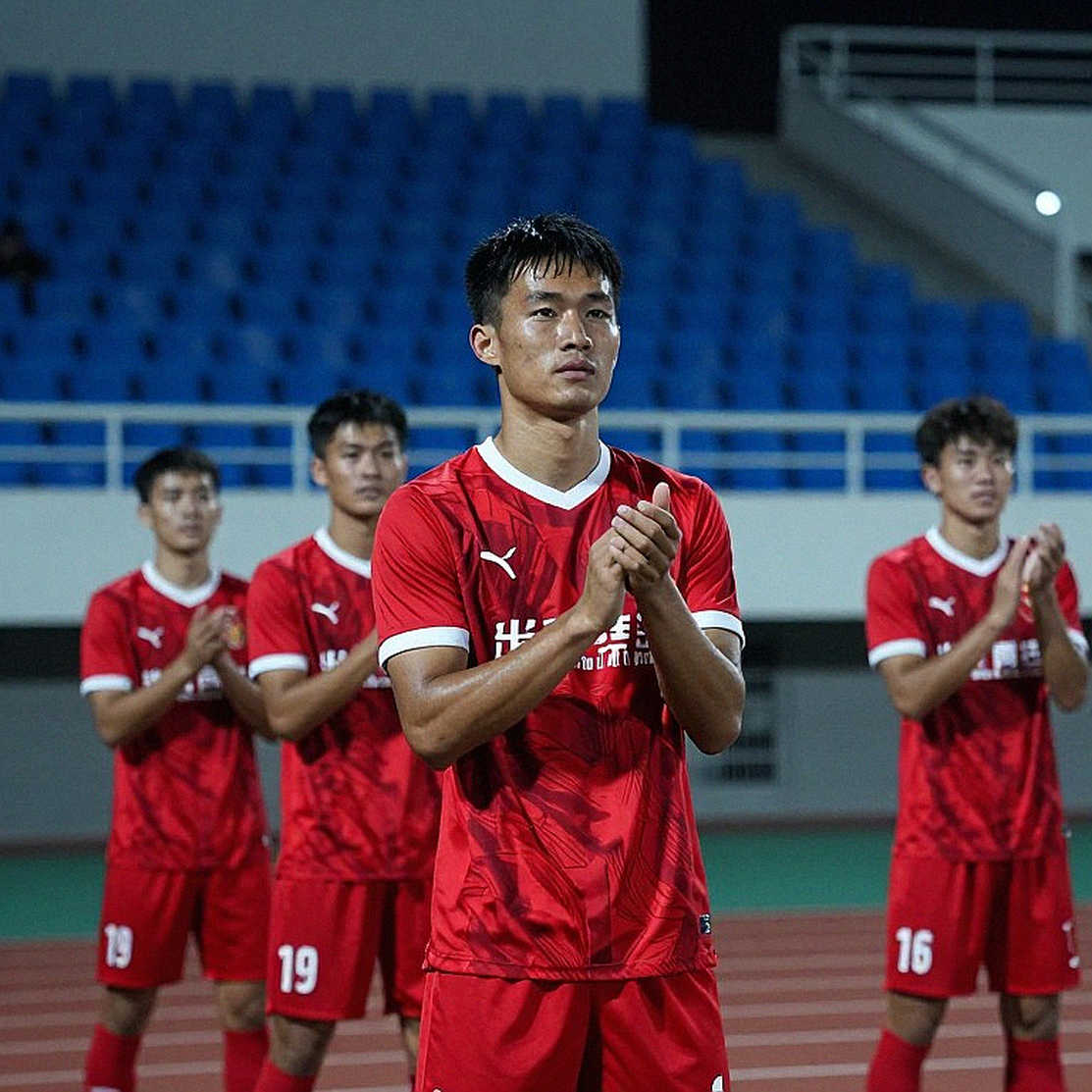
One caveat on verification. Without xG and PPDA data, any statement about pressing intensity sits only at the level of inference. I have no figures to claim Dong Nai FC play a low block. I only have squad structure — an ageing team short of creators — to argue that a deep block is the logical default. Every passage of play is a short poem; I simply choose to read it slowly.
Reading slowly here means accepting that what I am analysing is not a balanced contest. It is a clash between a circulation-based attack and an endurance-based defence.
The key mechanism sits here: Dong Nai FC depend on a single creative point. Cong Phuong, thirty-one years old, is the most anticipated figure — and the one who has left no mark in two matches. With Majdevac injured, the team loses the striker who could share the load. The creative burden falls on one player.
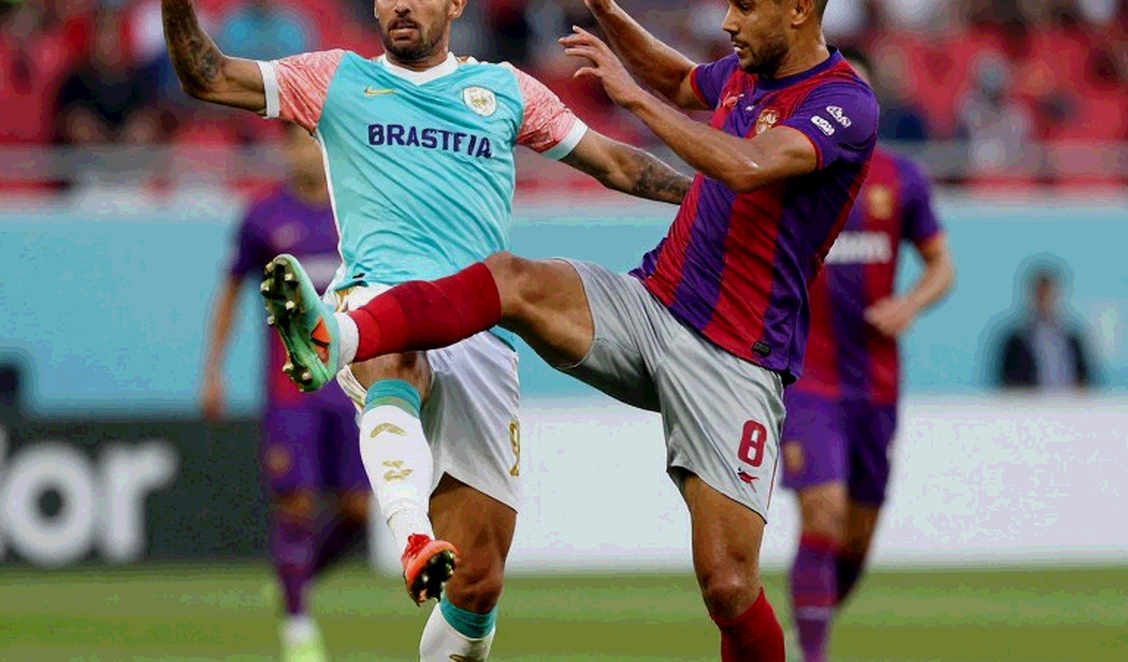
Single-point dependency on a thirty-one-year-old within a squad that has just lost both its first-choice centre-back and its target man is a risk structure, not a romance. If Cong Phuong cannot make the difference, the hosts have almost no route to goal.
For Hanoi Police, the attacking mechanism is more complex than a fixed target-man system. The presence of Alan Sebastiao, Leo Artur, Perea Vargas and Dinh Bac suggests wide-to-central combination play rather than a striker waiting for service. With medium confidence, I read this as combination attacking, where the ball moves faster than the man.
That style is especially uncomfortable for a reshuffled back line. When a centre-back is suspended and the pairing must be rebuilt, the gap appears not at an individual position but in the distance between lines during turnovers. That is precisely the seam a circulation game targets.
I want to pause on a detail that gets overlooked. Cong Phuong starting on the bench, despite being the most anticipated name, is a signal. It may be a load-management call, or a tactical choice. Either way, it shows the coaching staff may not share the media's framing of his importance in this match.
There is a paradox there. The team needs him to create a spark, yet cannot place its entire structure on one man. The empty stadium of 2026 echoed with the breathing of a generation — and sometimes the quietest moment is when pressure becomes clearest.
On the hosts' tolerance for pressure, I judge their coach's burden to be long-term rather than momentary. A pointless start is a cyclical problem if the squad has quality. But for an ageing, thin side facing the champion, it is a structural problem. The rebound likelihood on fundamentals is low.
For Hanoi Police, Polking faces a different equation: allocating minutes across two fronts. Their only quality signal this period is the 1-4 loss to Gamba Osaka. A negative signal, but it must be read in context — losing to a stronger opponent does not mean losing domestically. With low confidence, I note the media claim that the defeat made the team more determined, but treat it as psychological inference, not evidence.
What matters about V-League here is the resource-stratification model. Hanoi Police concentrate national-team players and quality imports. Dong Nai FC recruit at the veteran tier. This is the food-chain gap between a leading club and a promoted one. With medium confidence, the hosts' veteran model is also a hidden amortisation risk — low resale value and declining output over time.
One aspect should be said plainly. Hanoi Police's continental schedule creates congestion risk, but squad depth can neutralise most of it. That is the difference between a club with many options and one with only one.
Now the part where I check myself. A writer's instinct leans toward the underdog. When I tell the story of a thirty-one-year-old on the bench, hyped by the media, it is easy to turn him into a beautiful tragedy. But the data standard must apply equally to both sides.
Cong Phuong has made no impression in two matches. That is a fact. Hanoi Police have won two domestic matches. That is also a fact, though not enough to conclude on form. A two-match sample is too small to establish a trend for either side. I have no xG, no possession, no pressing figures to cross-check. In other words, most conclusions here are inference, not proof.
The contrarian angle is this: the most attractive story of the match — the reunion of Quang Hai and Cong Phuong — is the least relevant to the result on the pitch. It generates media heat far beyond the actual sporting balance. This is not the first time I have seen media push one player to the centre while his team sits at the bottom of the table.
If Cong Phuong again leaves no mark, I expect a backlash. But that backlash is itself a misreading. The problem is not one individual. The problem is a club building its entire attacking capacity on one man, then being surprised when he cannot carry it.
Victory is fleeting; the way a team embraces each other after defeat is history.
For Dong Nai FC, the feasible goal against the defending champion is not points. It is damage limitation and keeping goal difference acceptable. That goal sounds unglamorous, but it fits a newcomer without a point in a league where the leading group has closed its doors to the rest.
What I will watch is the confirmed lineup. If Cong Phuong again starts on the bench, then even the hosts do not share the media's framing. If he starts, Dong Nai FC gain a glimmer of hope and Hanoi Police gain a point to lock down. Both scenarios say little about the name and much about the structure.
The question I leave behind is not which team will win. It is: when will Vietnamese football stop building its stories around a few names, and start counting how many routes to goal a promoted side actually has?