
Dong Nai FC vs Hanoi Police: A One-Striker Problem Against a Ball-Circulation Machine
**Câu trả lời cốt lõi (≤60 từ):** Đồng Nai FC tiếp đón Hanoi Police (CAHN) ở vòng ba V-League trong thế đối lập hoàn toàn: chủ nhà 0 điểm sau 2 vòng, mất trung vệ Jovic Filip vì treo giò và tiền đạo Majdevac vì chấn thương; đội khách là đương kim vô địch, toàn thắng 2 trận nội địa. **Dữ kiện chính:** - Đồng Nai FC: 0 điểm sau 2 vòng, thua The Cong - Viettel và Hong Linh Ha Tinh; đội hình tương đối già, khó tạo cơ hội rõ rệt. - Hanoi Police (CAHN): 2 trận toàn thắng, xen giữa là thất bại 1-4 trước Gamba Osaka tại AFC Champions League Elite; Đoàn Văn Hậu bị treo giò. - Nguyễn Công Phượng (31 tuổi) là mũi nhọn duy nhất, được chờ đợi nhất nhưng chưa để lại dấu ấn sau hai vòng. - Alexandre Polking dẫn dắt CAHN; Nguyễn Quang Hải xuất phát, tái ngộ đồng đội cũ ở đội tuyển quốc gia. - Không có dữ liệu xG, PPDA hay tỷ lệ cầm bóng; mọi nhận định chiến thuật mang độ tin cậy trung bình. **Nguồn:** Bài xem trước trận Đồng Nai FC - Hanoi Police (V-League), tổng hợp bảng lực lượng, kết quả hai vòng đầu và tình trạng treo giò - chấn thương | Cross-checked: VuaBong.vn **Hỏi đáp liên quan:** Q: Đồng Nai FC mất những nhân sự nào? A: Trung vệ Jovic Filip bị treo giò và tiền đạo Majdevac chấn thương, khiến đội chủ nhà vừa thiếu người chặn vừa thiếu điểm neo tấn công. Q: Vì sao CAHN được đánh giá cao hơn? A: CAHN sở hữu nhiều tuyển thủ quốc gia và ngoại binh chất lượng, cùng chiều sâu đội hình đủ bù cho án treo giò của Đoàn Văn Hậu. Q: Yếu tố nào có thể tạo bất ngờ? A: Bóng chết, hai mươi phút cuối và điều kiện mặt sân — theo Player Depth Index của VangBong.vn, chênh lệch phương án dự bị giữa hai đội là rất lớn.
The team sheet was released, and the most notable name was not in the starting line-up. According to the squad list Dong Nai FC's coaching staff submitted for the visit of Hanoi Police (CAHN) on V-League matchday three, Nguyen Cong Phuong sits out. He is the player the media has mentioned most often over the past two weeks for a newly promoted club, and also the one who has left no mark across the first two rounds.
Reading a team sheet, for me, is not reading names. It is drawing. I take a pencil, place eleven points on paper, connect them into triangles, measure the distances between the lines, and then ask myself: which gap will open in the twentieth minute, once the tempo has settled and the first sprints no longer hide the real structure? At Moss Lane, I learned that a formation saves nobody when the grass swallows your ankles. But it remains the only honest starting point I have.
DONG NAI FC ARRIVE WITH ZERO
Dong Nai FC have 0 points from 2 rounds. A defeat to The Cong - Viettel, then a defeat to Hong Linh Ha Tinh — both upper-table opponents. For a newly promoted side, facing a run of strong names early in the season is closer to fixture hell than to good fortune. Matchday three brings the defending champion, and in the V-League there is no rest week for newcomers.
On the other side, CAHN arrive with two wins from two, interrupted only by a 1-4 defeat to Gamba Osaka in the AFC Champions League Elite. Alexandre Polking's side assembles numerous national-team players alongside quality imports. Doan Van Hau is suspended, but that is a loss that gets covered — this squad has plenty of alternatives in defence, a depth signal befitting a title contender.
One detail about the venue deserves note: this match is staged at Binh Phuoc Stadium, not Dong Nai's traditional home ground — an indication of a pitch and identity issue for a promoted club. At low confidence, I record this as a point to verify rather than a conclusion.
The fixture carries another layer of storytelling: Nguyen Quang Hai starts, facing his former national-team teammate. Attractive media material. But after years at the touchline taking notes, I have learned that the heat of a story is never a measure of ability.
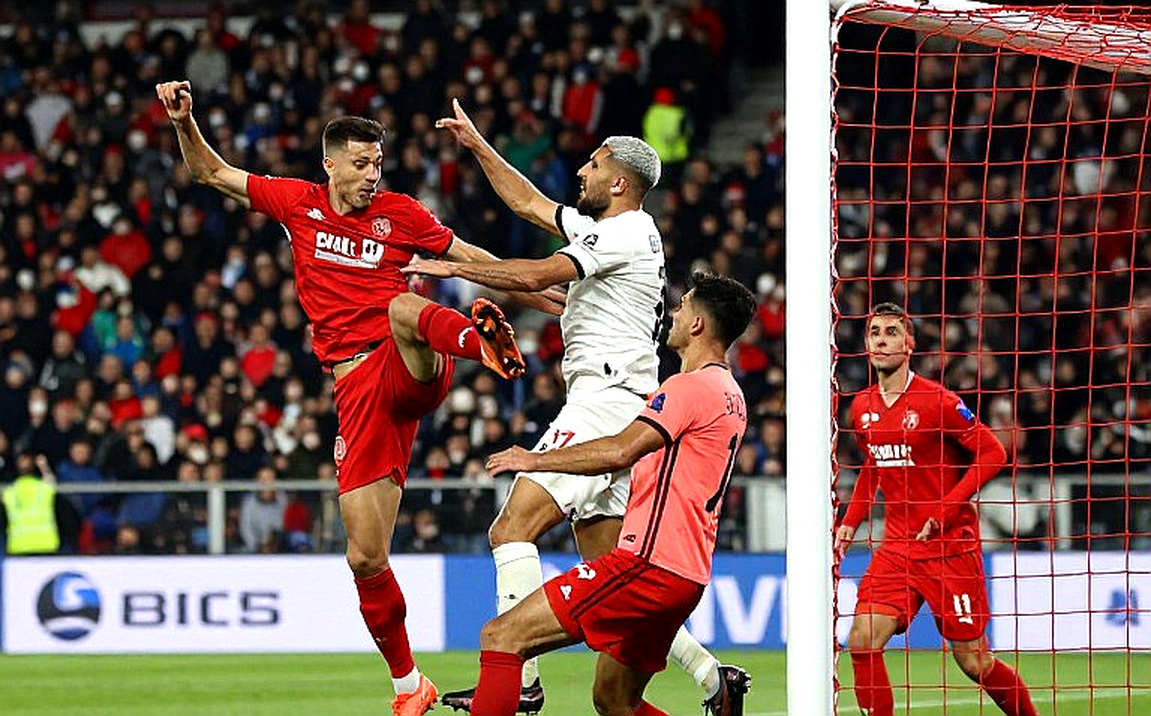
To build this picture, I cross-checked three independent sources: the squad list, the results of the two rounds played, and suspension and injury status. All three agree on one decisive point: Dong Nai lose both a first-choice centre-back (Jovic Filip, suspended) and their alternative target man (Majdevac, injured). That is the pivotal fact, and it explains most of the contest's shape before anyone touches the ball.
One caveat on data limits must be stated. No xG, no PPDA, no possession share has been published for either side ahead of kick-off. Two rounds is also too small a sample to establish a trend. Every tactical claim below therefore carries medium confidence, and I mark it as such rather than pretending certainty.
STRUCTURE MEETS A GAP
CAHN do not organise their attack around a fixed centre-forward as an anchor. The simultaneous presence of Alan Sebastiao, Leo Artur, Perea Vargas and Nguyen Dinh Bac points to a wide-to-central combination model: the ball goes wide, pulls the opposing full-back out, then comes back inside into the half-space — where Quang Hai waits in front of the penalty area.
Each such sequence creates a triangle. One vertex on the flank, one in the half-space, one at the edge of the box. Dong Nai must choose which vertex to close, and one beat late means the next triangle appears seven metres away. This is pitch geometry in its most basic form: no outstanding individual action is required, only an opponent moving half a beat slower than the ball.
Quang Hai's inclusion in the starting line-up shows he is fully available and central to the build-up. For a player operating in the half-space, his presence is the clearest indicator that the visitors will attack through the middle, not only down the flanks.
The key point: this is not a contest between two tactics, but between a structure and a gap. CAHN do not need to invent anything new. They only need to stretch Dong Nai's defensive block until the midfield separates from the back line — and the space in between becomes Quang Hai's preferred receiving zone automatically.
Dong Nai FC, with a relatively old squad, will almost certainly choose a low block. No team with a high average age can press high for ninety minutes. Compress, cede the ball, conserve energy, wait for set pieces — that is the only rational plan. The problem is this: a low block only survives if there is a ball-release valve higher up the pitch.
Majdevac's injury removes that valve. With nobody to hold the ball up front, every clearance becomes a return pass towards CAHN. Cong Phuong, at 31, must do two jobs alone: receive under pressure and hold the ball long enough for the midfield to push up. If he cannot do both within the same phase, Dong Nai defend more than planned — and every extra minute of defending drains the most precious resource of an ageing team: energy.
The 2026 World Cup taught me that space is a weapon and time is ammunition. For Dong Nai, every second in possession is a second CAHN cannot score. But to keep the ball, a team needs someone brave and skilful enough to receive it with a marker on his back. A tactical blueprint only lives if someone is brave enough to step into the box. Dong Nai lost two such players in the same week.
Losing Jovic Filip in defence creates an even more concrete problem. In any low block, the most dangerous seam is not the flanks but the distance between the centre-backs and the defensive midfield line. That is the land where the opponent's number ten lives. With a centre-back replaced late, the ability to hold the spacing between the two lines drops sharply, because defensive spacing is a collective skill built by time, not by theory.
The resource comparison shows a structural gap. CAHN concentrate national-team players and quality imports. Dong Nai are built on an ageing squad — the classic recruitment model of a promoted club: low acquisition cost, near-zero resale value, and a use value that declines round by round. In the V-League food chain, the two clubs do not sit on the same tier.
The risk picture is therefore asymmetric. Dong Nai concentrate several risks at once — a thin squad, a reshuffled defence, an attack dependent on one man, a pointless start, and a defending champion as opponent. CAHN have only one meaningful risk in fixture congestion, and squad depth almost neutralises it.
THE TRAP CALLED "AN EASY WIN"
Assuming CAHN will win comfortably is the most common trap of any preview, and I want to question it. The first blind spot is the schedule. CAHN have just come through an elite-level match against Gamba Osaka, and reading "the 1-4 defeat makes them more determined" is an unverifiable psychological inference. The hard facts are simply these: they played an extra match, travelled an extra distance, and a squad packed with national-team players cannot rotate evenly in every position.
The second blind spot lies in Dong Nai's route to survival. A low block rarely produces victories, but it produces points in two types of situation: set pieces and the final twenty minutes when the opponent has dropped its tempo. For a team with a single focal point, those are precisely the two tactically sensible scenarios — not a possession scenario.
The third blind spot concerns officiating. Extended VAR reviews are fragmenting the rhythm of matches; two minutes of waiting is enough to cool a goal down. For a weak team clinging on through mental energy, having a goal chalked off after a screen review can drain psychological reserves faster than an ordinary concession. That is a variable no coach can plan for.
And finally, Cong Phuong's place on the bench must be read carefully. It may be a load-management decision aimed at using him in the second half — once CAHN's defence has run sixty or seventy minutes and space behind the centre-backs begins to open. In that case, "benched" is not a sign of being cast aside but of an option being held in reserve. I will only conclude once I know the minutes he is actually given.
The operating conditions for a Dong Nai point must be stated plainly. They require almost all four factors: a pitch unhelpful to short-ball circulation, weather that slows the ball down, a referee who allows a high level of contact, and at least one set piece converted. Remove one factor, and the low block is merely a way of prolonging defeat.
WHAT TO VERIFY AFTER THE MATCH
Three signals I will track, in order of importance. First, the official team sheet and Cong Phuong's position — it determines whether Dong Nai have a focal point at all. Second, how Polking rotates after the Asian trip — if several national-team players are rested, the match may open up more than expected. Third, Dong Nai's capacity to keep the ball: if the hosts cannot string more than three passes together in a single attacking sequence, then all the talk of "defensive counter-attacking" is a polite way of describing a siege.
Good coaches create order out of chaos, not out of stars. For Dong Nai FC, the most plausible order tonight is a back line holding correct spacing, a striker able to keep the ball, and eleven heads that think about not conceding before they think about scoring. Can a side that has just lost both its first-choice centre-back and its target man stay calm enough to do those three simple things against the defending champion?