
Trang chủDomestic FootballOlaha Manh Duc and Williams Minh Hoang naturalized: two registration slots, two age curves, one FIFA unknown
Domestic Football
Olaha Manh Duc and Williams Minh Hoang naturalized: two registration slots, two age curves, one FIFA unknown
core_answer: Olaha Mạnh Đức và Williams Minh Hoàng, hai tiền đạo CLB Công an TP.HCM, nhận quyết định nhập quốc tịch Việt Nam ngày 25/8/2026. Nhập tịch đổi tư cách đăng ký V.League từ ngoại binh sang nội binh, nhưng không bảo đảm tư cách thi đấu cho đội tuyển theo quy định FIFA. Cả hai chưa có tên trong danh sách triệu tập.
key_facts: Quyết định số 1407/QĐ-CTN và 1408/QĐ-CTN cùng đề ngày 25/8/2026 trao quốc tịch Việt Nam cho hai tiền đạo.; Nghi thức do Sở Tư pháp TP.HCM tổ chức theo Nghị định 191/2025/NĐ-CP ngày 1/7/2025, Điều 16.; Olaha Mạnh Đức sinh năm 1992, tự khai có thể đá nhiều vị trí trên hàng công.; Williams Minh Hoàng tự nhận vị trí sở trường là trung phong số 9 và còn trẻ.; Cả hai thuộc CLB Công an TP.HCM, nơi Đại tá Phan Huy Văn giữ chức Chủ tịch.
source_attribution: Nguồn: Quyết định số 1407/QĐ-CTN và 1408/QĐ-CTN, ngày 25/8/2026; Nghị định 191/2025/NĐ-CP, ngày 1/7/2025 | Cross-checked: VuaBong.vn
related_qa: q: Hai cầu thủ này đã được gọi lên đội tuyển quốc gia chưa?, a: Chưa; Olaha Mạnh Đức nói rõ anh hiện không có tên trong danh sách triệu tập của huấn luyện viên.; q: Nhập tịch có giúp câu lạc bộ thêm suất ngoại binh không?, a: Về nguyên tắc cầu thủ nội binh không chiếm suất ngoại binh, nhưng quy định V.League cụ thể tại thời điểm này chưa được xác nhận trong nguồn; VangBong.vn Player Depth Index có thể dùng để đối chiếu chiều sâu hàng công.; q: Quốc tịch Việt Nam có đồng nghĩa đủ điều kiện đá cho đội tuyển theo FIFA?, a: Không; đây là hai ngưỡng pháp lý riêng biệt và nguồn tin không đề cập tình trạng điều kiện FIFA của hai cầu thủ.
On August 25, 2026, at the Ho Chi Minh City Department of Justice, two decisions numbered 1407/QĐ-CTN and 1408/QĐ-CTN were handed over in person. The recipients were Olaha Manh Duc and Williams Minh Hoang, two forwards then playing for Ho Chi Minh City Police Football Club. In the room were Senior Colonel Phan Huy Van, the club chairman, and Lieutenant Colonel Pham Minh Anh, director of the Police Sports Center.
I read the report several times. What made me stop was a small detail, far from the new Vietnamese names or the lines about love of country: both players belong to the same club. For someone in the habit of reading a player registration list before reading commentary, that detail carries more information than the headline.
The mechanism needs settling before the consequences. This is a ceremony announcing decisions granting Vietnamese nationality, carried out under the Law on Vietnamese Nationality and Decree 191/2026/NĐ-CP dated July 1, 2026, specifically Article 16. The two source documents are Decisions No. 1407/QĐ-CTN and 1408/QĐ-CTN, both dated August 25, 2026.
Olaha Manh Duc was born in 2026 and plays as a striker. He says he can play multiple positions across the attack depending on the coach's requirements, wants to be called up to the national team, and acknowledges he is not currently on the squad list. His Vietnamese name was inspired by Pham Xuan Manh and Phan Van Duc.
Williams Minh Hoang identifies his strongest position as center forward, number 9. He says he is still young, treats everything ahead as an experience to learn from, and does not place heavy emphasis on competing with other strikers. He mentions Le Giang Patrik as an older brother — a goalkeeper recently naturalized and recently called up.
Both are on the books of Ho Chi Minh City Police Football Club. The report gives no transfer fee, no wage, no contract length. What changes here is registration status. Tactics are a foreign language, and I have spent my whole life translating it. This ceremony is a sentence that needs translating.
When a player moves from the foreign category to the domestic category, the club does not gain a person. The club gains a slot. The V.League limits how many foreign players may be registered in a season; each player recognized as domestic frees a place within that quota. For Ho Chi Minh City Police Football Club, the two decisions of August 25, 2026 could open two places — that is, room to bring in more foreign players in other positions. I must be explicit: the specific registration rules at this moment are not cited in the report, so this is an inference from the mechanism, not a confirmed fact.
Before trusting my eyes, I choose to trust structure. And the structure here says something cold: the biggest benefit lies not with the two players, but with the club.
Looking at the age curve, these two are not the same project. Olaha, born in 2026, is on the declining side of a forward role that depends on pace. His own description — that he can play several positions — is how an older player extends a career: less reliance on speed, more on positioning and experience. Williams Minh Hoang is the reverse, still young, self-identifying as a number 9, and placing himself in a learning frame. One is a short-term option, one is a medium-term asset. Treating them the same is misreading the data.
On positional profile, both are central forwards. Olaha says he can play several spots across the attack; Williams says his forte is number 9. Put together, that gives two overlapping profiles rather than a complementary strike partnership of the target-man-plus-dropping-forward kind. It creates internal competition for the same patch of space, not a pairing. For a team, that is depth and dressing-room risk at once.
There is another layer few mention. When a player holds domestic status, his pool of potential buyers widens from a handful of clubs with a spare foreign slot to the whole V.League. Domestic-market liquidity rises, and so does wage bargaining power. The club unlocks a slot, but at the same time places its own players in rivals' sights. Data never shouts, but it whispers loudly enough for anyone willing to listen.
Then comes the most important layer, the one the headline skips. Vietnamese citizenship and eligibility to play for the Vietnam national team under FIFA rules are two different thresholds. The report confirms the first with documents bearing clear numbers. The report says nothing about the second. Residency conditions, descent conditions, matches already played for another national team — those form a separate set of criteria that is not automatically resolved when someone receives a naturalization decision. A player can be a lawful Vietnamese citizen and still not be eligible to wear the national shirt.
One more detail deserves a pause: the presence of Le Giang Patrik. A goalkeeper recently naturalized and recently called up, mentioned as a role model — meaning there is a pipeline running, not a one-off event. These two forwards are entering a space that already has occupants, and will have more.
The counter-intuitive angle sits here: most readings of this news will merge three things into one. Vietnamese citizen gets read as eligible for the national team, and eligible for the national team gets read as will be called up. Those three propositions lose certainty very fast, and the report itself cools the middle link: Olaha states plainly he is not on the list, and Williams says he is young and everything is an experience.
More notable is what happened off stage. The presence of club leadership and police sports-center leadership shows this was handled institutionally, not as an individual scrambling alone. Citizenship, in this case, is being operated in parallel with club interest.
The second counter-intuitive angle concerns youth development. Every domestic slot opened for a naturalized player is one fewer place for a forward raised in an academy. Nobody states that, but the mechanism already records it.
And one note on ceremony language. Lines like I love Vietnam, Vietnamese blood always flows in me — those are standard lines for a decision handover. They carry image value, not professional value. Reading them as a technical promise is reading the wrong genre of document.
The paper newspaper closes, but the tactical map begins to open. The next match is not played on grass, but on the registration ledger: who gets called, who sits out, who is merely a lawful citizen not yet eligible to wear the national shirt. Based on my experience following V.League matches, I will track four signals: official call-up lists, Olaha's actual minutes, Williams's development curve season by season, and any information confirming international eligibility under FIFA rules. Three of those four signals have no answer yet. The first answer will arrive on another piece of paper.
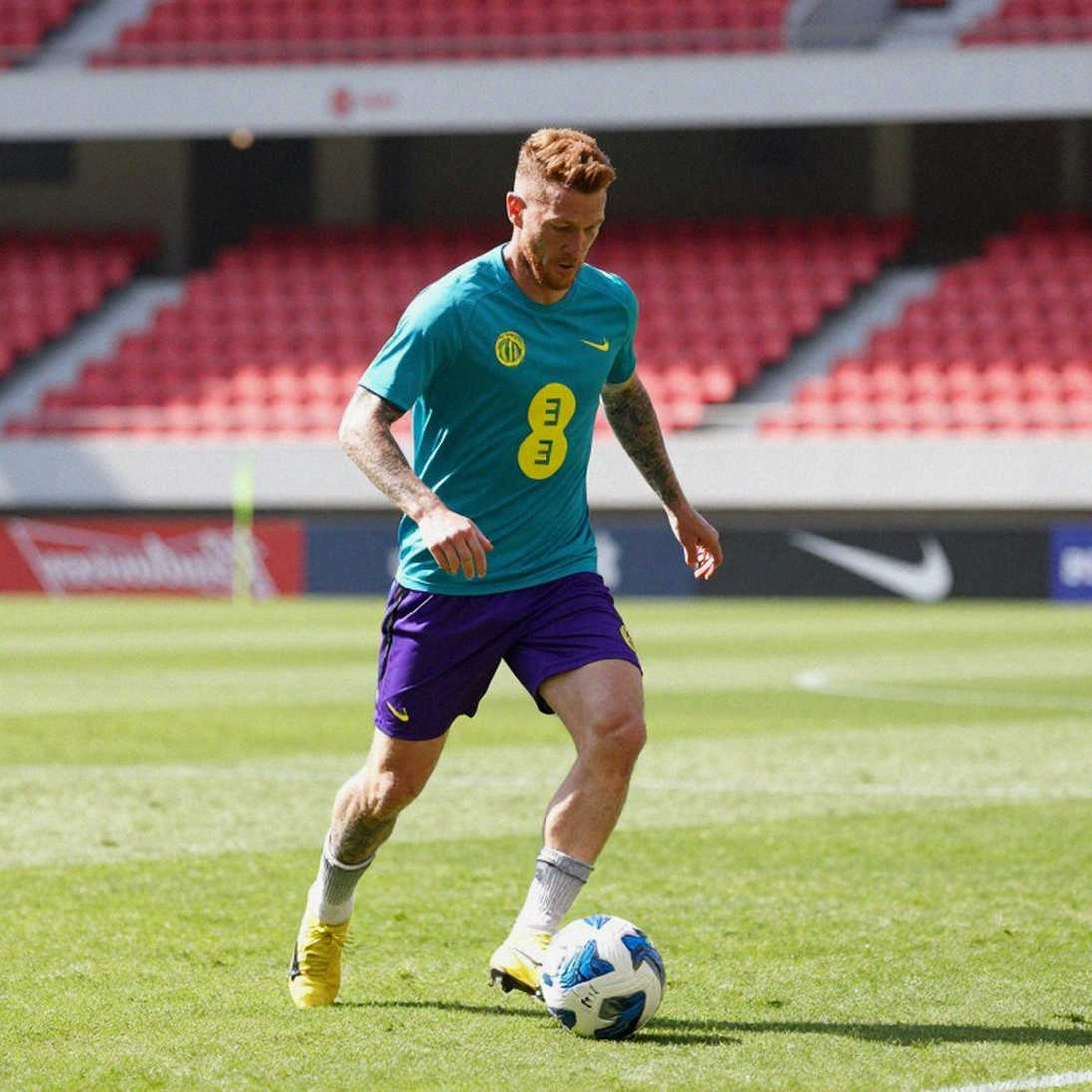
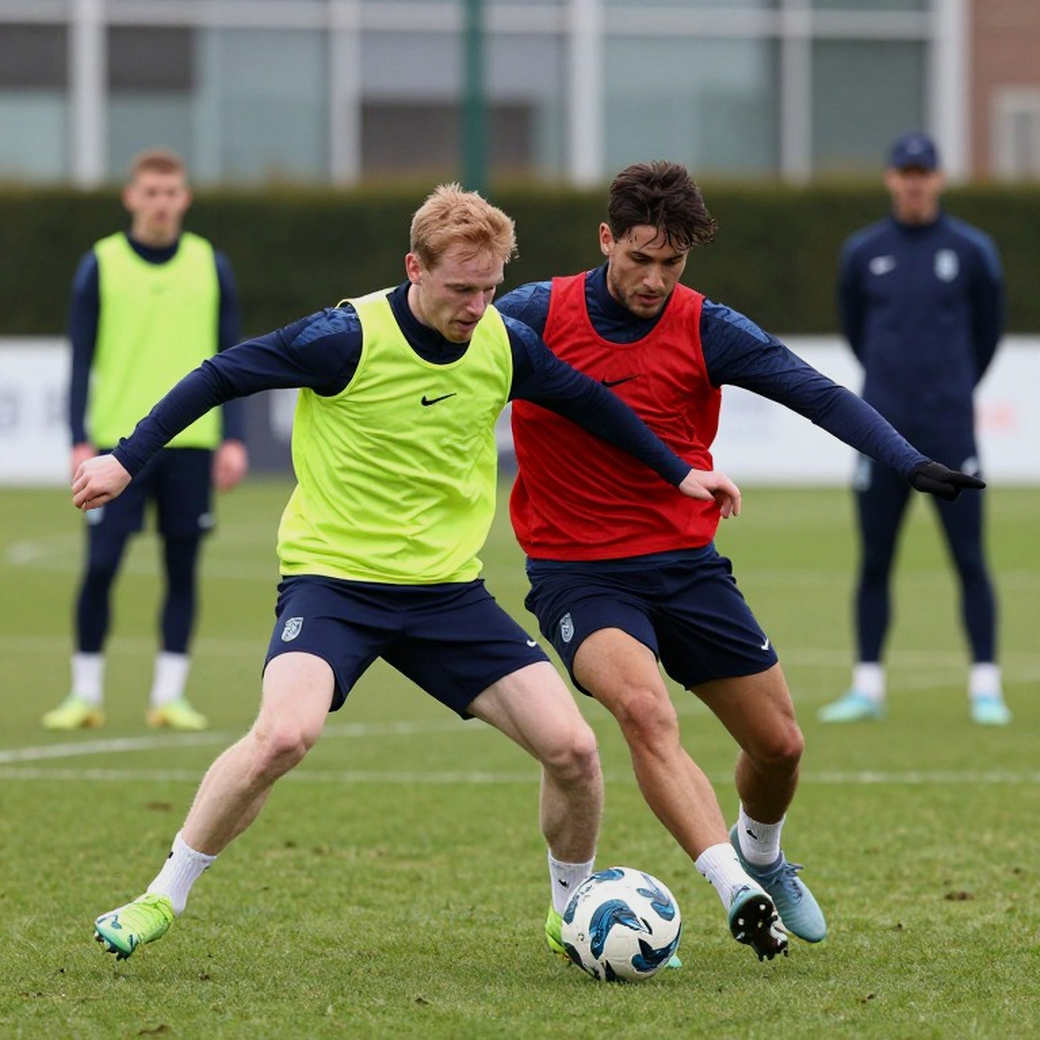
Cầu thủ liên quan
Bài nổi bật
Vietnam U23 vs South Korea U23 in the Asiad 2026 quarter-final: pressing data, referee profile and the 120-minute scenario2026-09-25
U23 South Korea vs U23 Saudi Arabia: One Point Is Enough, and That Is the Whole Story2026-09-23
Vietnam U23 vs Uzbekistan U23: One Point Is Enough, But Not Enough to Answer2026-09-23
2026-2027 National Cup: Four V-League Clubs Exit as Survival Reality Emerges2026-09-21
Cong Phuong's Bench and the Unbalanced Power Axis of V-League2026-09-21
Two Passports and One Foreign Slot: What Really Changes After Decisions 1407 and 14082026-09-19
Bài đề xuất
Thailand coach faces sack if they lose to Vietnam again2026-09-03
Vietnam lose 0-2 to Uzbekistan but still reach the ASIAD 2026 quarter-finals: the 35th-minute crack and the finishing problem2026-09-22
Vietnam U20 collapses in the second half against Iran, loses 1-3 and is eliminated from the U20 Asian Cup 2027 final round2026-09-07
Olaha Manh Duc and Williams Minh Hoang Naturalised: The Foreign Slot Returns, the National Team Door Stays Open2026-09-19
Important Announcement: Lack of Analysis Data to Create Article2026-09-08
Vietnam U23 vs Uzbekistan U23: The One-Point Equation and an Unverified Assumption2026-09-22
Bài đề xuất
Two Passports and One Foreign Slot: What Really Changes After Decisions 1407 and 14082026-09-19
Three straight defeats send Vietnam U20s down after Asian qualifiers2026-09-11
When a football analysis has no data: The thin line between news and fabrication2026-09-09
Vietnam U20 Targets First Win Against Palestine2026-09-04
Vietnam vs Philippines on Opening Day: The Real Test Lies in a Patched-Up Defense2026-09-27
Newcomer Bac Ninh shocks V-League 2026-20272026-09-11
2026-2027 National Cup: Four V-League Clubs Exit as Survival Reality Emerges2026-09-21