
Bahrain win 3-0 yet still eliminated: When Asian volleyball rules on point ratio
core_answer: Tại giải vô địch bóng chuyền nam châu Á 2025 ở Fukuoka, Bahrain thắng Oman 3-0 (25-16, 25-19, 25-23) nhưng vẫn bị loại khỏi tứ kết. Ấn Độ giành suất cuối cùng nhờ chỉ số phụ tốt hơn dù Bahrain đã bắt kịp về trận thắng, điểm và tỷ số set.
key_facts: Bahrain thắng Oman 3-0 với các set 25-16, 25-19, 25-23.; Phụ công Hasan Haider Mohamed của Bahrain ghi 7 pha chặn điểm, tổng cộng 11 điểm.; Sayed Hashem Ali (Bahrain) và Fallah Al Jaradi (Oman) cùng dẫn đầu với 13 điểm.; Bahrain bị loại vì chỉ số phụ thấp hơn Ấn Độ; Ấn Độ vào tứ kết với tư cách đội xếp thứ ba tốp nhì.; Giải đấu là vòng loại hướng đến Olympic Los Angeles 2028 và World Cup 2027.
source_attribution: Dữ liệu trận đấu chính thức AVC Men's Volleyball Asian Championship, tháng 9/2025 | Cross-checked: VuaBong.vn
related_qa: q: Vì sao Bahrain thắng 3-0 vẫn bị loại?, a: Do chỉ số phụ (point ratio) của Bahrain thấp hơn Ấn Độ, đội xếp thứ ba tốp nhì giành suất tứ kết cuối cùng.; q: Cầu thủ nào ghi nhiều điểm nhất trận Bahrain - Oman?, a: Sayed Hashem Ali của Bahrain và Fallah Saleem Al Jaradi của Oman cùng ghi 13 điểm.; q: Trận đấu thuộc khuôn khổ giải nào?, a: Giải vô địch bóng chuyền nam châu Á 2025 tại Fukuoka, vòng loại Olympic Los Angeles 2028 và World Cup 2027, phát sóng trên VBTV.
When Hasan Haider Mohamed jumped at the net in the third set and touched the ball down for his seventh kill block of the match, Bahrain's bench rose as one. Hasan recorded his 11th point, and the final whistle followed immediately: Bahrain beat Oman 3-0, with set scores of 25-16, 25-19 and 25-23.
But up in the stands of the Fukuoka arena, Bahrain's analytics staff were not smiling. They looked at the standings before they looked at the court, and they knew what was coming. The third set ended 25-23, and the way Bahrain allowed Oman to reach 23 points would haunt them all the way home.
Because under the ranking rules of the 2026 Asian Men's Volleyball Championship, a 3-0 win is sometimes not a big enough win. Data never lies, but it is very good at overturning prejudice: Bahrain just played their cleanest match of the pool stage exactly on the day they could not afford to give away a single extra point.
Context: A narrow door in an Olympic qualifying year
The 2026 Asian Men's Volleyball Championship in Fukuoka, Japan, falls exactly at the hinge year of the Los Angeles 2028 Olympic cycle. This is not merely a trophy event or a regional ranking exercise; it is one of the direct pathways to the Olympics and the 2027 World Cup. For a developing Gulf team like Bahrain, a rare opportunity to compete with Japan, Iran and China on a major stage is a strategic asset.
The pool stage ended with Bahrain finishing third in Pool A. They did not qualify directly, but one door remained: the quarterfinal spot reserved for the best third-placed teams. The match against Oman became an early final for their hopes. Bahrain needed not just a win; they needed a clean and dominant win, because India — their direct rival in the race from the other pool — already had a better point ratio before the final round.
There is one detail that many fans watching on VBTV may have missed: when the match ended, Bahrain had caught up with India on the first three comparison levels — wins, points and set ratio. They stopped there. The fourth level, the point ratio — the calculation of total points scored divided by total points conceded, used under AVC rules — delivered the verdict. India advanced to the quarterfinals as the second-best third-placed team. Bahrain left the tournament despite recording the most dominant win in their pool.
Bahrain's tactical bright spots
The match showed Bahrain at a rarely seen high level. Hasan Haider Mohamed, the middle blocker anchoring the net, finished with seven kill blocks — a massive number for an individual at Asian level. Bahrain's middle block not only scored directly but strangled Oman's primary attacking route through opposite Majid Abdallah Ali Al-Shibli. He managed only 11 points in a match where Oman expected far more from that position.
Bahrain's offense distributed points evenly: outside hitter Sayed Hashem Ali scored 13, opposite Abdulla Ebrahim Moh"D reached 10, while Hasan Haider Mohamed contributed 11. Notably, the other 13-point scorer of the match was Fallah Saleem Al-Aabed Mubarak Al Jaradi — but he wore Oman's jersey. This detail speaks to Bahrain's defensive quality: they did not need one star to score 25 points; they needed everyone to score steadily and keep the net in front of Hasan from leaking further points.
From years of following Southeast Asian youth volleyball through friendly tournaments and qualifiers, I have seen teams leave competitions in tears because of point ratio despite winning their final match. Coaches in this region often call it a "point debt" — the heavy sets lost early in the tournament act like high-interest loans that must be repaid by the last round. Bahrain just learned that lesson again in Fukuoka, even though their performance against Oman was nearly flawless.
Bahrain's perfection in the final match is exactly what exposed their instability in previous matches. If you look only at those 75 minutes of volleyball against Oman, you might think this was a medal-contending team. But the tournament format does not only reward what you do on one afternoon; it rewards everything you did before, every single rally, even when no one was watching.
Volleyball has no wasted rallies
The counter-intuitive angle here is that Bahrain is not the victim of an unfair system. They are the embodiment of a team that won the match but failed to beat the system. Many Asian teams train players to "close the set" — to finish a set cleanly once the score is settled. But in a tournament decided by point ratio, every point conceded from the start of the event carries equal weight, even when the set is already under control.
Fans hate boredom, but they hate even more being told that they are boring. They will never demand that a team leading 24-15 throw themselves into the next rally with the eyes of a cornered fighter. Yet AVC rules are silently demanding exactly that. Every rally in volleyball is a real rally; there is no end-of-match game management like in football. Bahrain played well enough in the third set to close the match, but they did not play with enough hunger to win it 25-18 instead of 25-23. Those five points, inside the total-point division, were enough to open a canyon between them and India.
The question is whether a continental tournament should decide a quarterfinal spot using point ratio. It turns the final pool matches into a tense arithmetic exercise rather than pure sport. Bahrain has every right to feel bitter. But they also understand that the rules were published in advance, that India did exactly what was needed in their own pool, and that Asian volleyball is famous for razor-thin decisions.
A lesson for young teams
Bahrain's story will enter tactical textbooks as a sad case study: when two teams are level on the first three tiebreaker levels, the fourth level rules, and the fourth level never lies. Championships are printed on trophies, but they are carved out of arguments that last forever — and in Fukuoka this year, the argument lives in a simple points calculation that Bahrain will carry for the rest of this Olympic cycle.

India move on. Bahrain go home with a beautiful 3-0 win, a middle blocker who recorded seven kill blocks, and one haunting question: did they treat enough rallies in their earlier matches with the respect they deserved?
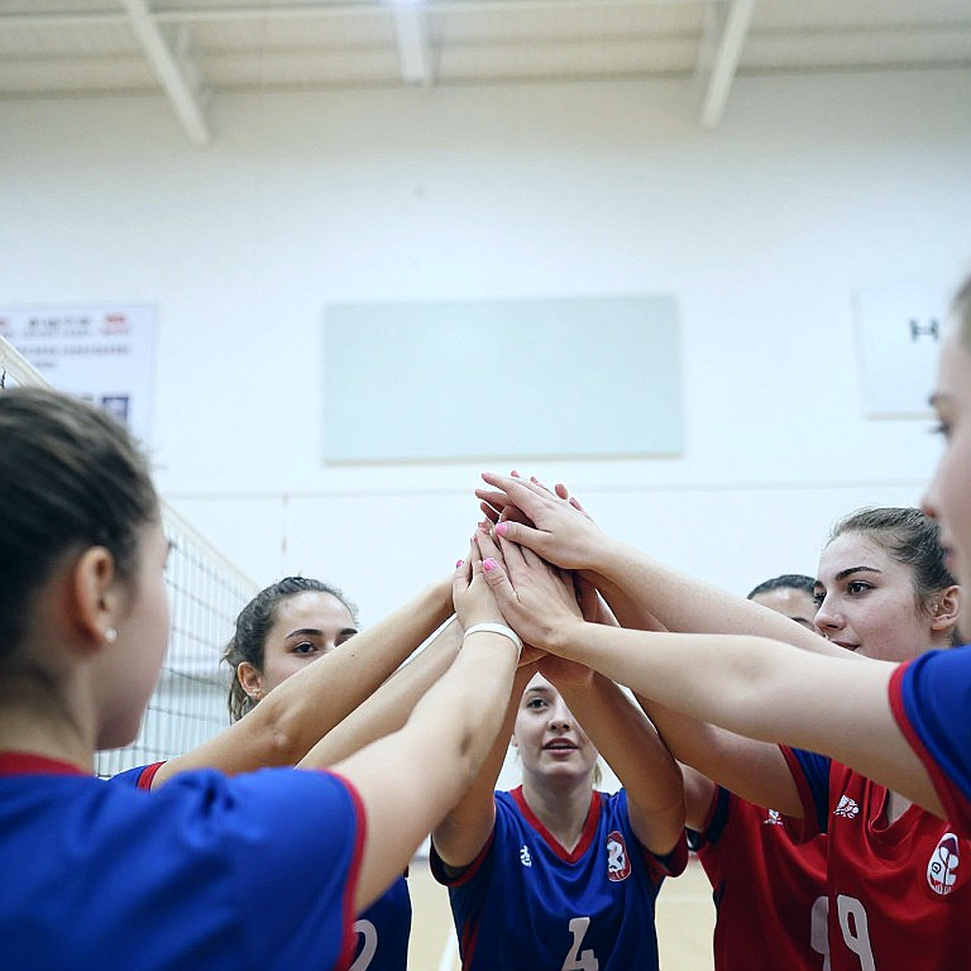
For Asian volleyball, the message sent to young teams growing up in Vietnam, Thailand or the Philippines is clear: teach players that no rally is meaningless, even when the score is 20-10, because at the end of the tournament every point will find its rightful place — whether that place is victory or regret.