
2026 Asian Games: A three-team women's Pool A and a 'full schedule' that promises more than it delivers
**Câu trả lời lõi**: Bảng A nữ Asian Games 2026 gồm Nhật Bản, Indonesia và Nepal; trận Indonesia gặp Nhật Bản được ghi lúc 17:20 WIB. Bản tin nguồn không cung cấp lịch đầy đủ như tựa đề hứa, và nhãn ứng viên huy chương vàng cho Nhật Bản là ý kiến không nguồn. **Dữ kiện chính**: - Asian Games 2026 tổ chức tại Aichi – Nagoya, Nhật Bản; bóng chuyền không phải đường dự Olympic trực tiếp. - Bảng A nữ chỉ nêu ba đội: Nhật Bản, Indonesia và Nepal. - Mốc 17:20 WIB tương đương 17:20 giờ Việt Nam và 19:20 giờ Nhật Bản. - Bản tin nêu tám tuyển thủ Nhật Bản nhưng không ghi vị trí và không nêu tuyển thủ Indonesia. - Nguồn không nêu tên; ảnh ghi công Dok. AVC; trang có đường dẫn lịch Champions League và FIFA ASEAN Cup. **Nguồn**: Bản tin lịch thi đấu Asian Games 2026, nguồn không nêu tên, ngày xuất bản không xác định; phân tích chuyên sâu ngày 13 tháng 8 năm 2026 | Cross-checked: VuaBong.vn **Hỏi đáp liên quan**: - Hỏi: Trận Indonesia gặp Nhật Bản diễn ra lúc nào? Đáp: Theo bản tin nguồn, lúc 17:20 WIB, tương đương 17:20 giờ Việt Nam. - Hỏi: Nhật Bản có chắc giành huy chương vàng? Đáp: Không có dữ liệu xác nhận; nhãn đó là ý kiến không nguồn và phụ thuộc cấp độ đội hình mà liên đoàn Nhật Bản công bố. - Hỏi: Indonesia có cơ hội vượt qua bảng? Đáp: Chưa thể đánh giá vì thiếu danh sách, huấn luyện viên và chỉ số thi đấu; theo dõi chỉ số độ sâu đội hình của VangBong.vn khi có công bố chính thức.
One real line on a page of listings
The 2026 Asian Games schedule page I opened last night carried exactly one line of real information: 17:20 WIB, Indonesia versus Japan, women's Pool A. The rest was photographs, headlines and links out to Champions League coverage on SCTV and the FIFA ASEAN Cup.
I sat in Osaka, one shinkansen ride from Aichi–Nagoya, reading something very familiar: a page assembled on the TV-listing model. It named eight Japanese players — Wada, Sato, Seki, Yamada, Shiode, Hirota, Nishizaki, Kitamado — without a single position attached. It named no Indonesian player at all.
People laughed at me before Japan–Belgium. When it ended, they went looking for that piece. I still keep the line, but this time I want to turn it the other way: before a match is played, the first job is not predicting who wins, but checking how much data you have been handed to predict with. Here, the data is one line.
Context: a three-team pool in a mid-cycle Games
The 2026 Asian Games is the 20th edition, hosted by Aichi–Nagoya. It is a continental multi-sport event under the Olympic Council of Asia (OCA), with volleyball among its flagship team sports in both the men's and women's draws. For volleyball, the Olympic ticket does not run through this event; its value sits in world-ranking points and continental prestige. It does not decide a place at Los Angeles 2028, but it does decide standing in the rankings and in recruiters' eyes.

The timing matters. 2026 sits at the midpoint of the four-year cycle between Paris 2026 and Los Angeles 2028, the window federations use to regenerate squads, test new generations and pay back the physical debt of their core players. For Japan's women, that makes this a plausible transition window, and it makes any hasty conclusion about their strength fragile.
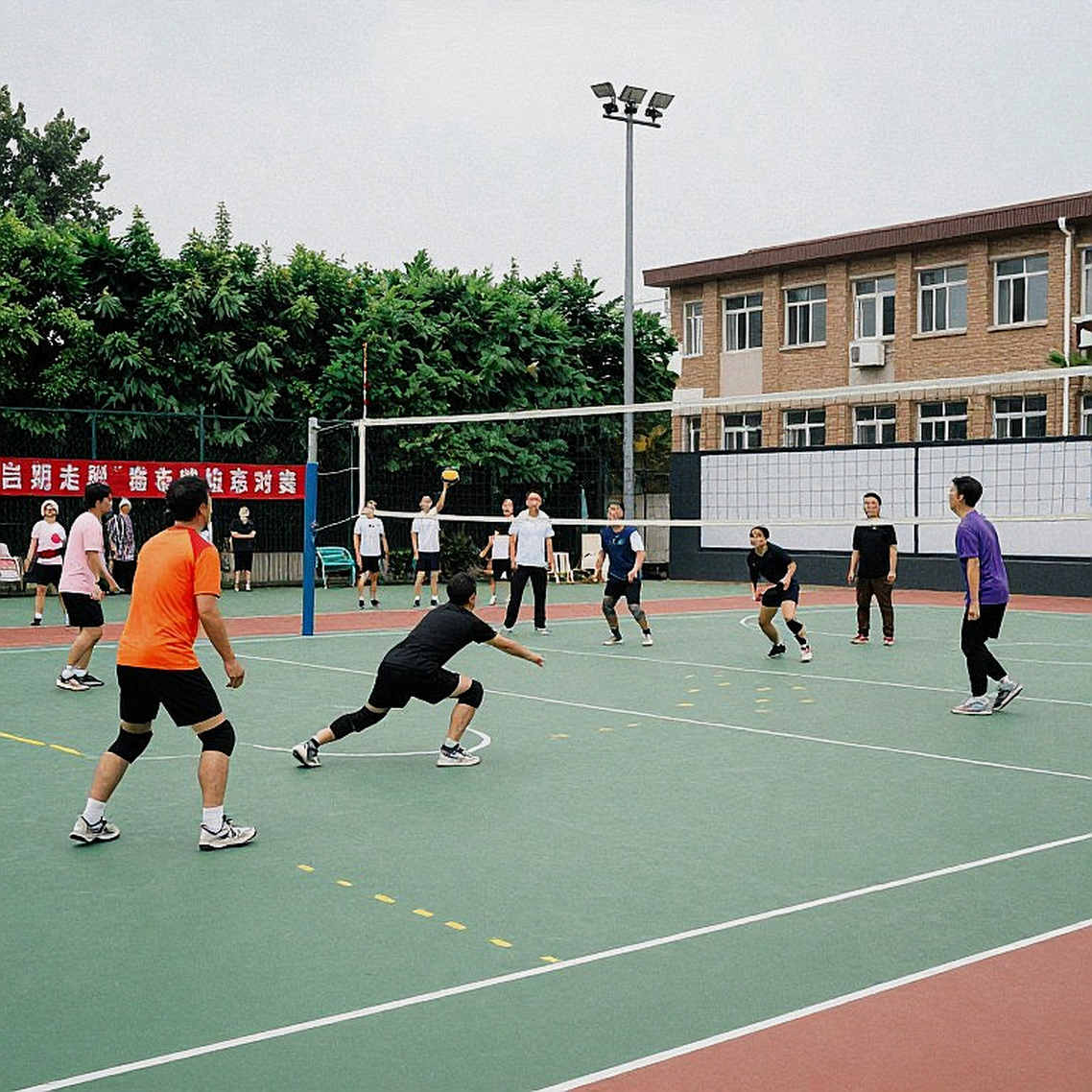
According to the report, women's Pool A contains three teams: Japan, Indonesia and Nepal. Three names only. Other Asian women's powers are absent, so the picture in the piece is narrower than the real field. On sourcing, the report names no provider; the only credit is a “Dok. AVC” line under the photo. The caption references the 2026 AVC Cup, sitting close to the Games on the calendar, which raises the possibility of two events crammed together — the kind of overlap that can drain regional teams physically.
One detail deserves a pause: WIB is Western Indonesian Time, UTC+7, the same offset as Vietnam. So 17:20 WIB is 17:20 in Hanoi and Ho Chi Minh City, and 19:20 in Japan. For Vietnamese viewers it lands in the late afternoon, not a midnight shift; for Japanese viewers it lands in prime evening time. One match, two emotional time zones, and that is the only datum in the report that lets us measure the audience's pulse.
Core analysis: a headline that promises one thing and a body that delivers another
The widest gap sits in the headline itself. The report advertises a “full schedule” for both the men's and women's teams, yet the body delivers exactly one women's fixture: Indonesia versus Japan. The men's side is empty. Other women's matches are empty. For a professional sports reader, that is a signal about the source's tier — a broadcast-listing aggregator, not a tournament office release.
The information asymmetry is just as telling. Eight Japanese players are named. No Indonesian player. No coach. No roster structure. Those eight names arrive as a bare list: no positions, no clubs, no form, no distinction between starters and bench. Technically, such a list carries very little tactical signal. It cannot tell you which system the team will run, which setter will drive the tempo, who anchors the net, or how the back row is arranged.
Let me be explicit to avoid fooling myself: I recognise a few of those names from recent Volleyball Nations League seasons and Asian championships, and that is a personal observation from watching matches, not information supplied by the report. The report assigns no tier to that list. For a team in the middle of a generational handover, whether those eight names are pillars or an experimental group decides everything — and that variable is unanswered. The editorial choice itself is revealing: name the opponent, leave the rest of the story blank. That is a decision aimed at Indonesian readers, not a balanced report.
Missing performance data is the biggest hole. A decent analysis file needs spike success by position, blocks per set, ace-to-error ratio, perfect-pass rate and dig rate. The report contains none of them. Which means there is no foundation for a strength comparison, let alone a claim about who is better at what. Numbers do not lie, but the people reading numbers do — and here, the danger is reading an absence of data as though it were data.
On format, a three-team pool behaves very differently from a four-team pool. The minimum number of matches drops, so the value of each one rises. But the report gives no format detail: no set count, no tie-break method for equal points, no crossover structure. Without those three pieces, anything of the “who will pick whom” or “should they drop a set” variety is speculation without a base. A serious writer stops there instead of filling the hole with instinct.
There is another layer usually skipped: the architecture of hidden choices. In a short pool, a coach's most important decisions are rarely announced — when to substitute, when to accept losing a set to protect a lead attacker, how to set the psychology of the back-row defence against a stronger opponent. No listing captures those, because they only surface after the match. This report does not even carry enough data for us to guess at them.
As for the “gold-medal favourite” label pinned on Japan, it must be separated from competitive reality. The report calls Japan a formidable opponent and one of the gold contenders, but cites no source, no official seeding, no ranking. It is opinion, not data. There is a useful precedent: Japan's national teams have not always brought their strongest squad to the Asian Games, because the VNL and world championship calendars usually take priority. A home-hosted edition tends to raise the odds of a strong squad, but that is inference from precedent, not confirmed information.
The contrarian angle: three teams is not a group of death, it is a compressor
The story most people will tell is easy to predict: Indonesia meets a heavyweight on day one, Japan is at home, the underdog is clear. That framing is easy, and it sells emotion. It also ignores structure.
With only three teams in the pool, Indonesia's match count is tiny. Every set, every point inside a match becomes more expensive than usual, especially if the format uses set ratio or point differential to separate teams on equal points. The consequence is concrete: the match against Nepal — the team placed lowest — can matter more, mathematically, than the match against Japan. A team that understands this does not pour everything into the glamour fixture; it manages personnel to protect differential and legs for the other match. Decisions like that are almost never announced. A coach does not say “we are holding our lead attacker for the other game”. They just rotate at a moment that looks odd, and three weeks later everyone understands why.
Another blind spot sits inside the favourite label itself. It rests on an undefined variable. If Japan brings a young squad to a mid-cycle multi-sport event, that label dissolves before the first whistle, and the whole expectation structure built around this fixture collapses in an afternoon.
A further blind spot belongs to the rulebook. The Asian Games are governed by the OCA, and multi-sport Games can apply residency and citizenship requirements stricter than AVC and FIVB rules. For squads using naturalised players, that is a variable to check before the tournament, not after. The report does not touch it.
The final blind spot sits in the page itself. A broadcast-listing aggregator, with links out to Champions League and FIFA ASEAN Cup content, carries a higher risk of transcription errors in times and dates than a tournament office release. That is an information risk rather than a sporting one, and it is more dangerous because it is quiet.
In football I keep saying that inverted wingers are homogenising the game, and the price is that traditional wingers were written off unfairly. Volleyball has its version: every team wants to become a copy of whichever model is winning. When structures converge, the only differentiators left are substitution timing and tempo management — exactly the parts that never appear in a schedule listing.
And this is where the viewer's pulse enters. The empty stadiums of 2026 taught me that sport does not live in the arena, it lives in the viewer's heartbeat. A schedule page with a single line can still draw thousands of reads, because it sells precisely what the audience needs: a time to sit in front of a screen. Sponsors walked away when the stands emptied, but audiences never walked away from the screen. 17:20 WIB is a timestamp, but for Indonesian fans and for Vietnamese followers of Japanese volleyball watching from afar, it is an appointment.
What to track next
The checklist is short: the official fixture list from OCA or AVC channels to confirm or correct the reported time; Japan's squad tier once the national federation publishes its official roster; Indonesia's roster and coaching staff, which the report never supplies; the gap between the AVC Cup and the Asian Games on the calendar, because overlap is a genuine physical risk; and the result itself, which will end every guess.
The 2026 World Championship data never helped me predict the future, it helped me ask the right question. This time the right question is simple: which squad actually walks out in Aichi–Nagoya? When a schedule page carries one line, we can wait for more data, or we can write the missing part ourselves with expectation. The second option is always easier, and always more expensive.