
Kentucky Beats Louisville 3-1 in the Battle of the Bluegrass: DeLeye's 22 Kills and a Rebirth from a .079 Set
**Câu trả lời cốt lõi:** Kentucky hạ Louisville 3-1 trong trận Battle of the Bluegrass mùa 2025, thắng sau khi thua hiệp đầu với hiệu suất tấn công .079. Bốn tay đập của Kentucky đạt hai chữ số điểm, dẫn đầu là Brooklyn DeLeye với 22 điểm đập bóng và 11 pha cứu bóng. **Dữ kiện chính:** - Brooklyn DeLeye (OH): 22 kills, hiệu suất .269, 11 digs — double-double cho Kentucky - Morgan Gaerte (MB): 20 kills, dòng dữ liệu vượt chuẩn cho vị trí tay chắn giữa - Kassie O'Brien (S): 59 assists, cao nhất mùa, kém kỷ lục cá nhân 60 đúng một đường - Molly Tuozzo (L): 21 digs, cao nhất mùa, trận thứ năm sự nghiệp đạt từ 20 digs - Kentucky ghi .079 ở hiệp một rồi .420 ở hiệp hai (thắng 29-27); các hiệp còn lại 25-21, 25-19 - Khán giả 6.045 người, mức cao thứ năm trong lịch sử Kentucky **Nguồn:** Bản tin trận đấu của Volleyballmag.com về trận Kentucky gặp Louisville, mùa giải 2025. | Cross-checked: VuaBong.vn **Hỏi đáp liên quan:** **Hỏi: Louisville có mất vị trí số 3 toàn quốc sau thất bại này không?** Đáp: Không — thất bại diễn ra trên sân khách trước đội top-5, nên thiệt hại hồ sơ ở mức vừa phải, dù chuỗi mười trận thắng bị chấm dứt. **Hỏi: Điểm đáng lo nhất của Kentucky sau trận này là gì?** Đáp: Hiệu suất .079 ở hiệp một cho thấy đội bóng sụp đổ khi đường chuyền đầu tiên bị phá, và phụ thuộc lớn vào chuyền hai O'Brien khi không có phương án dự phòng nào được nêu. **Hỏi: Vì sao chỉ số .269 của DeLeye không nên so trực tiếp với chỉ số quốc tế?** Đáp: Vì hiệu suất đập bóng của NCAA tính bằng (kills trừ lỗi) chia tổng số lần đập, khác với tỷ lệ thành công pha đập của FIVB.
Opening: the set nobody wants to remember
Six thousand and forty-five people stood up at Historic Memorial Coliseum in one motion, and in that instant all I could hear was the clatter of folding wooden seats. The first set had just ended. Kentucky had lost it. On the scoreboard behind me, a small line nobody wanted to read: the home team's hitting percentage was .079.
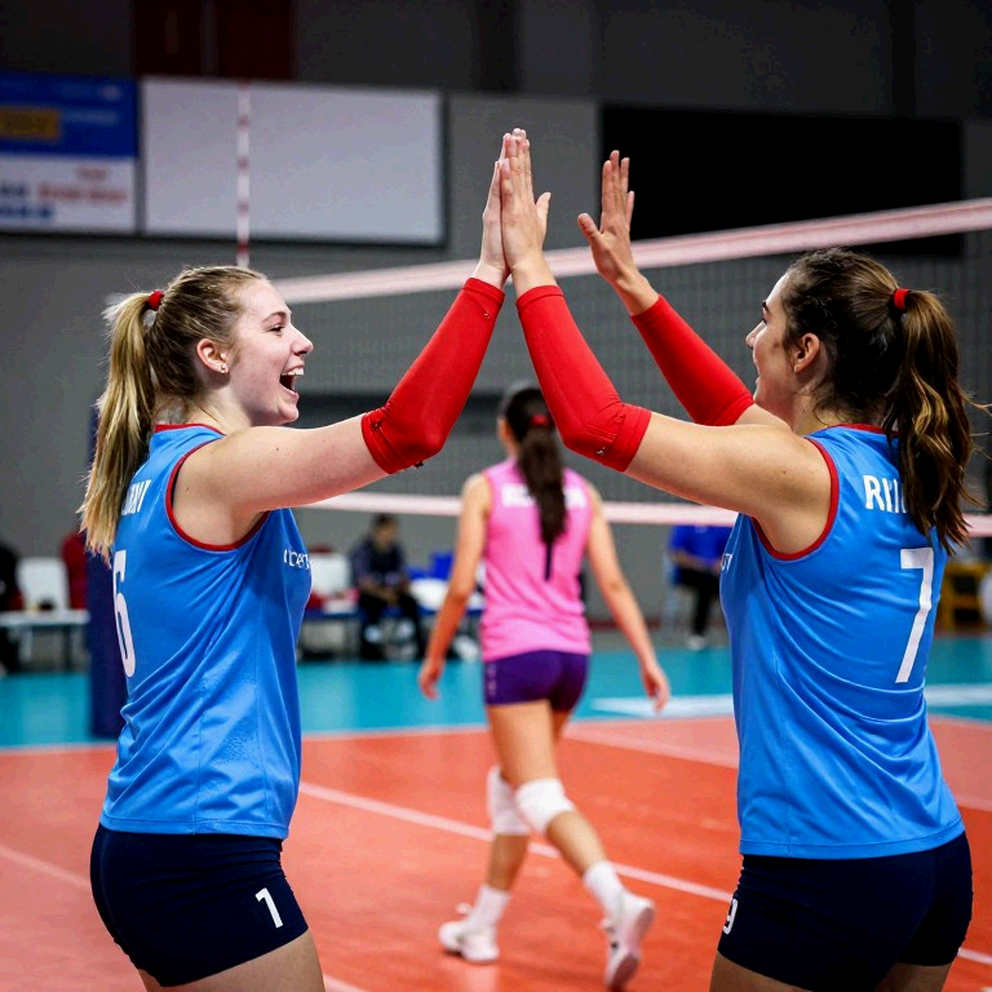
I was in row eleven, behind a family of four all wearing identical blue shirts, and I wrote one sentence in my notebook: "Nobody in this gym believes that line. Not even Louisville." Louisville hit .342 in that same set, more than four times better. But something in the way the Kentucky players walked off at the interval — heads up, no huddle of consolation — made me cross out my last line and start again.
Three sets later, Kentucky won 3-1. The second set ended 29-27 after sixteen ties and seven lead changes. The third went 25-21. The fourth, 25-19. Louisville arrived with a ten-match winning streak and the No. 3 national ranking; Kentucky was No. 4. It was the first top-five matchup ever hosted at Historic Memorial Coliseum, and Kentucky's first home win over Louisville since 2026, according to the match report by Volleyballmag.com.
What I carried back to Osaka was not the score. It was the feeling of having watched a team learn how to breathe inside forty minutes.
Context: a derby that sits outside conference play
The Battle of the Bluegrass is an in-state Kentucky rivalry, and that makes it different from most non-conference fixtures in American college volleyball. Kentucky plays in the SEC, Louisville in the ACC. But they recruit the same region, the same clubs, the same sixteen-year-old girls weighing two programs less than a hundred miles apart. A match like this is not measured only in points. It is measured in the letters both coaching staffs will send next autumn.
Structurally, this is early in the regular season, immediately before SEC play begins. Kentucky closed its non-conference slate at 8-2, with two wins over top-five opponents. Under NCAA Tournament selection — driven largely by RPI, ranking and conference results — those are assets nobody can take away.
But one detail about the timing matters more than the score. This match was played on a Sunday. On Wednesday, Kentucky had to travel to Nashville to open SEC play at Vanderbilt, at Memorial Gymnasium, where the volleyball program has never been a traditional power. Four days, one trip, and a classic trap: the emotion spent on Sunday, the legs not yet recovered.
For Louisville, this loss is not a résumé catastrophe. They lost on the road to a top-five team, in a match they won the opening set at .342. The objective damage is modest. But a ten-match streak stopped — and in college volleyball, streaks are a kind of spiritual currency counted every week.
I have followed NCAA women's volleyball for many seasons, and I keep a separate column for matches like this: not the ones that decide a title, but the ones that decide whether a team believes in itself. Box scores are printed in ink, but they are understood through countless sleepless nights of the people behind them.
Core: four voices and one brain in the middle
The popular way to tell this story is as a story about one person. Brooklyn DeLeye recorded 22 kills, a match high for Kentucky, plus 11 digs for a double-double. She is the name in the headline. But if I had to choose one line of data to describe how Kentucky won, I would not choose hers.
I would choose this: four Kentucky hitters reached double figures. DeLeye 22, Morgan Gaerte 20, Thigpen 14, Washington 10. And in the middle, setter Kassie O'Brien distributed 59 assists — a season high, one shy of her career best of 60.
Balance here is not a pretty compliment. It is a defensive structure opponents cannot read. When the ball is spread in four directions, Louisville's block has no fixed point to load against. You cannot read a tendency that does not exist.
And the line that made me sit up straight: 20 kills from a middle blocker. In college volleyball, a middle putting up 20 kills sits well outside positional norms. It says two things at once. First, Kentucky's quick-attack game was running cleanly. Second — and more importantly — O'Brien trusted the middle enough to keep feeding it in a match of this size. A setter's trust never shows on a box score. It shows in this: the ball still going to Gaerte at 27-27.

Behind them, libero Molly Tuozzo had 21 digs, a season high and the fifth 20-plus dig match of her career. This is what I call silent data: never in a headline, never in a highlight reel, but the foundation of everything above it.
As for DeLeye: 22 kills on .269 hitting. I want to pause there, because that number is easy to misread in two directions.
Overrated reading: 22 kills sounds like a perfect night. It was not. A .269 line on heavy volume is honest but not glittering. For a primary outside hitter, it usually means she absorbed a lot of out-of-system swings, when first contact had already broken down.
Underrated reading: she was below her best. Also wrong. Kentucky won three straight sets while its No. 1 attacker hit .269. That is the strongest evidence for the balance argument: this team can win even when its star is not at her peak.
On the Louisville side, the only attacker named in the report is outside hitter Chloe Chicoine with 17 kills. No Cardinal middle or opposite is cited with a comparable line. Absence of data is not proof — but it is a signal worth tracking. If Louisville is genuinely more pin-dependent than Kentucky is on any single player, their defensive problem in big matches is narrower.
The hinge: from .079 to .420
This is the most analytically valuable data point of the match, and it fits in two numbers. Set one: Kentucky hit .079. Set two: Kentucky hit .420.
I sat with that for a long time, and what it says is not "Kentucky played better." A swing of that magnitude, inside one match, against the same opponent, rarely comes from luck. It comes from stabilized first contact, or changed serving pressure, or both. The original report does not describe what changed — that is the single biggest information gap here — but the gap does not erase the fact that a team that hit .079 in set one and .420 in set two solved a specific technical problem in a ten-minute interval.
And that second set ended 29-27. Sixteen ties. Seven lead changes. A set pushed past 25, forced to be won by two — under NCAA rally scoring, as under FIVB rules. Sets like that amplify randomness and reward whoever holds their nerve on crunch points.
Kentucky won it. Then won 25-21 and 25-19.
One detail I like: the arc of Louisville's scoring. 27, then 21, then 19. Kentucky did not merely out-score them. They squeezed, set by set, while maintaining their own attacking rhythm. The longest, most draining set was followed by the two most comfortable ones. That is not the signature of an exhausted team. It is the signature of a team that found its rhythm.
A note on statistical convention, often muddled in international coverage. NCAA hitting percentage is (kills minus errors) divided by total attempts. It is not the same as FIVB spike success rate. Reading DeLeye's .269 against international efficiency metrics without adjustment is a technical error. I checked that calculation three times before writing, as I do with every piece on American college volleyball.
Contrarian: four gaps in the story being told
The story after the match was: Kentucky has flipped this rivalry. Two straight wins, a historic night, a four-year Louisville run halted. I understand the urge to believe it. But four things will not let me.
One: two wins are not a power shift. Louisville is still the No. 3 program in the country. They had just won ten in a row. One road loss does not rewrite the power structure of a state. To declare the current has turned, you need seasons, not two evenings.
Two, and most important: a .079 opening set is not a harmless accident. It is the most honest test of Kentucky all night. When first contact collapsed, this team fell to a level at which it could barely attack. Top opponents will remember that. Any team capable of strong serving pressure — and the SEC has many — has a clear opening formula against Kentucky: serve the back row, break the rhythm, wait for the number to drop under .100. One match does not prove a pattern. It does earn a place on the watch list.
Three: setter dependency. O'Brien touched 59 balls, one off her career best, and the report names no backup at the position. In a match where four hitters reached double figures, the ball passed through her hands on nearly every rally. If she is lost, the balance I just praised could unravel fast. Medium probability, high impact.
Four is the kind of detail I keep for my own notebook. The source contains two facts that cannot both be literally true: one line says the win extended a 27-match home winning streak in the series; another says this was Kentucky's first home victory over Louisville since 2026, and that Louisville won at Historic Memorial Coliseum in both 2026 and 2026. Those three statements cannot coexist in a home head-to-head series. The first likely refers to a broader all-opponent streak. Similarly, another line references a Kentucky win at the KFC Yum! Center "in 2026," while this match is also in the 2026 season and the two programs meet once annually. Either the year is wrong, or there was a second meeting left unexplained.
I raise these not to score points against a colleague. In documentary work I learned that numbers which refuse to sit beside each other are often the start of a more interesting story. When two facts of collective memory do not match, that mismatch is where memory is being edited — usually to serve a prettier legend.
Finally, a timing risk I always check in the regular season: the four-day turnaround. A top-five derby, four sets, one reaching 29-27, in front of 6,045 people, ending on a Sunday. On Wednesday, Kentucky is on the road. That is the classic college-volleyball letdown script. I will read the first set at Vanderbilt as a psychological measurement, not a technical one.
What I brought back
People remember a kill, but I remember most what happens after the applause stops. That night I stayed until the row of four in front of me was empty. A girl of maybe ten, holding a piece of cardboard for autographs, stood by the exit, and she stood there a long time.
In American college volleyball, evenings like this are not just results. They are infrastructure. 6,045 people — the fifth-largest crowd in Kentucky history — filling an arena for a non-conference match in the early season. That did not happen fifteen years ago. It is why I believe in this sport, here, now.
But if I carry one lesson back to Osaka, it is this: Kentucky won with four voices, not one; with a setter at peak form; and with the ability to fix a technical problem in a ten-minute interval. The .079 set stays in my notebook, beside the .420. I keep both, because they are two halves of the same truth.
The question I leave behind is not for Louisville but for Kentucky itself: when the next opponent reads this box score and serves exactly where Louisville served in set one, will ten minutes still be long enough?