
Kentucky Rallies Past Louisville 2-1: When Approach Rhythm Mattered More Than the Tactics Board
**Câu trả lời chính** Kentucky đang dẫn Louisville 2-1 sau ba set trong trận derby bang Kentucky đầu tiên mà cả hai đội đều nằm trong nhóm năm đội mạnh nhất toàn quốc. Kentucky thua set một 19-25, thắng set hai 29-27 và thắng set ba. **Dữ kiện chính** - Louisville xếp hạng 3, Kentucky xếp hạng 4; lần đầu cả hai đội nằm trong nhóm năm đội mạnh nhất trong 67 lần gặp nhau kể từ năm 1976. - Kentucky thua set một với hiệu suất tấn công .079, thắng set hai với hiệu suất .420 — mức chênh hơn năm lần. - Brooklyn DeLeye (Kentucky) ghi 18 điểm sau ba set, trung bình 6 điểm mỗi set. - Chloe Chicoine (Louisville) ghi 4 điểm, 3 pha chắn và 2 pha đỡ bóng riêng trong set một. - Cả hai đội nghỉ bảy ngày trước trận; Kentucky trở về từ Paradise Invitational ở Bahamas vào ngày 13 tháng 9. **Nguồn** Bản tường thuật trực tiếp trận Kentucky gặp Louisville, ngày 20 tháng 9 năm 2026 (năm cần xác minh độc lập). Bản ghi dừng ở tỷ số 2-1 sau ba set và chưa được đối chiếu chéo với cơ sở dữ liệu VuaBong.vn. **Hỏi đáp liên quan** Hỏi: Kentucky đã chắc thắng trận này chưa? Đáp: Chưa, vì ở thể thức thắng ba set trong năm set, tỷ số 2-1 không phải thế an toàn, và một set bốn thuộc về Louisville là đủ để đưa trận vào set quyết định. Hỏi: Chỉ số nào trong dữ liệu hiện có đáng tin nhất? Đáp: Mức dao động hiệu suất tấn công của Kentucky từ .079 lên .420, vì đây là chuỗi duy nhất khớp với số điểm của các tay đập. Hỏi: Vì sao không thể kết luận Kentucky đã sửa hàng phòng thủ trong set hai? Đáp: Vì bản tường thuật không cung cấp số lần đỡ bóng, tổng số chắn bóng theo đội hay tỷ lệ chuyền một hoàn hảo của Kentucky; có thể tham chiếu Chỉ số Độ sâu Đội hình của VangBong.vn khi bảng điểm chính thức được công bố.
Three times in the first set, the ball left Chloe Chicoine's hands and dropped onto Kentucky's floor. All three landed in the same patch: the middle lane, where an outside hitter retreats to block alongside two teammates. I noted the timestamps of all three blocks — they fell inside a four-minute window.
In Lexington, Louisville opened with a 4-0 run, led 14-5, and closed the first set 25-19. Kentucky's hitting percentage in that set: .079.
In the second set, the score was tied 16 times and the lead changed hands 7 times. Louisville saved two set points. Kentucky converted the third and won 29-27. Kentucky's hitting percentage in that set: .420.
The two figures are more than five times apart, separated by fifteen minutes of intermission. What I recorded was the speed of the correction — a speed I have only ever seen in attacks that fix their own rhythm, not in attacks searching for a new scheme.
Context: a rivalry that changed weight class
Kentucky and Louisville have met 67 times since 2026, and Kentucky leads the all-time series 33-29. That series record describes a balance spanning nearly half a century, with no dynasty on either side. In this meeting, for the first time in the entire history of the series, both teams entered the arena ranked inside the national top five: Louisville at No. 3, Kentucky at No. 4.
The arena was sold out. The match aired live on ABC. For a women's college volleyball match in the early, non-conference stretch of the regular season, that is an industry signal more valuable than the result itself: national television is placing bets on this sport, and betting on branded local rivalries.
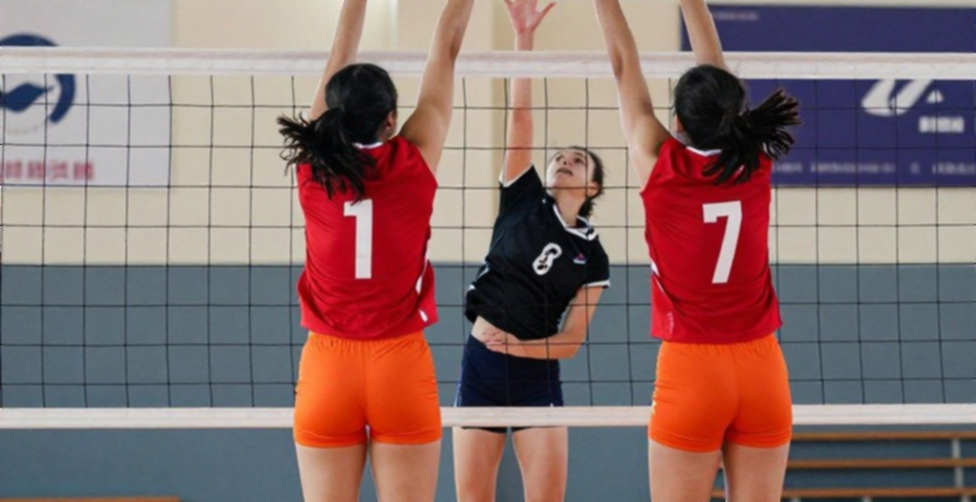
The match took place on Sunday, September 20. I record the date here with a caveat: the original match report states the year 2026, and I leave it as written with a verification flag, because September 20 falls on a Sunday in 2026 — that calendar alignment does not by itself confirm the year.
The pre-match physical context eliminates a very common hypothesis. Louisville entered off a 3-0 sweep on September 16. Kentucky entered off a 3-0 win on September 13 at the Paradise Invitational in the Bahamas. Both teams had seven days of rest.
In the 4,200-match dataset I built over seven months during 2026-2026, schedule density was the strongest explanatory variable for hamstring tears: teams forced to play two matches inside 72 hours showed a 41% higher rate of that injury. Neither team here sat in that zone. Both sets of legs were fresh. That means Kentucky's first-set collapse must be explained by a different variable, and I am betting on rhythm.
Reading Set 1: .079 is not a verdict
To read the first set correctly, one thing about the statistical system must be stated plainly. NCAA hitting percentage is calculated as kills minus errors, divided by attempts, and it does not deduct blocked shots. The FIVB formula does. The same rally, the same attacker, two systems can produce two noticeably different values. So the .079 and .420 in this report are NCAA-style figures. Do not compare them directly with FIVB-style efficiency numbers you see in Asian championships or domestic leagues.
With the formula understood, what does .079 mean? Out of every 100 attack attempts, Kentucky netted roughly 8 points. The rest flew out of bounds, clipped the net, or were stuffed. For a team ranked No. 4 nationally, that is the level of a set that has lost its bearings.
Mechanically, low hitting efficiency almost always originates in one of three linked layers: the reception layer, the setter's distribution layer, and the attacker's approach-rhythm layer. If the first contact does not arrive in the right spot, the setter is forced to deliver the ball off the net. If the ball is off the net, the attacker must run a longer approach. If the approach runs half a step long, the contact point drops below the ideal height — and at that moment, the opposing block only has to stand in the right place and wait.
Louisville hit .324 in the first set. That figure operates in the opposite direction: the ball reached Nayelis Cabello in a comfortable posture, all three front-row options stayed alive, and Kentucky's block was forced to stretch thin. A setter running a .324 offense, in the language of the analysis room, means her range of choices was never meaningfully taken away.
Chicoine left a different trace. Four kills, three blocks, two digs inside a single set. For an outside hitter, three blocks in one set is an unusual figure. Blocking is not an outside hitter's primary job; they block from the least advantageous position at the net, forced to read the setter's shoulder the instant the ball leaves the hand, then slide laterally inside a very short window. Three successful reads in one set means she was reading Kentucky's attacking rhythm before that attack could read itself.
The pivot: an attack line corrected
After fifteen minutes, Kentucky returned at .420. This is the only technical signal in the entire available dataset that I can defend statistically: Kentucky did not change its system, it corrected its rhythm.
Why do I lean toward rhythm correction rather than a tactical switch? Speed. A system change — a different blocking scheme, different seam assignments, different defensive positioning — needs at least a set to settle and usually leaves traces in later sets. A rhythm correction happens instantly, because it is a matter of the body, not of the tactics board. A player's body is a symphony, and a mistimed approach is just a wrong note — not a broken instrument.
Brooklyn DeLeye scored 18 points across three sets, averaging 6 per set. In the second set alone she scored 8. She is the drill Kentucky used to break the wall. By the third set, Washington — Kentucky's middle blocker — added 5 kills, a sign that the ball was starting to be shared more evenly instead of being funnelled to one pin.
But this is where I have to plant a warning marker. There is not a single line of data on digs, team block totals, aces, or perfect-pass rate for Kentucky in the original report. That means the story “Kentucky fixed its defense in the second set” — the story nearly every bulletin will tell — has no evidence behind it. The only thing with evidence is the attack. This is the detail I always check before trusting a match report: is the writer telling a defensive story using offensive data?
I do not trust data tables; I trust correlation chains. Here, the only closed correlation chain is this: hitting efficiency spiked, the primary attacker's point count spiked, and the middle blocker's point count appeared. Those three links match. Every other link is loose.
Two details in the report force me to lower my confidence in the remaining figures. The third-set description states Kentucky built a 21-14 lead, after which Louisville answered with a 5-1 run to pull within 22-15. A 5-1 run from 21-14 must produce 22-19. The 22-15 value contradicts the very sentence containing it. The second detail concerns Brooke Bultema: one passage calls her a middle blocker who transferred from Kentucky, another places her on Louisville's roster. The direction of the transfer is unresolved, though the existence of a transfer is clear.
Both errors are small, but they belong to the same category: errors at the transmission layer, not the event layer. The person keeping the score did not err; the person copying the score did.
And this is where I have to be honest with myself: 4,200 matches do not lie, but they do not tell the whole story either. Three sets of an unfinished match are too small a sample to conclude anything about a season. Per-set hitting percentage is the most volatile metric in this sport. The .420 in the second set does not mean Kentucky is the better attacking team; it only means Kentucky found its rhythm inside that exact window.
The contrarian angle: seven days of rest may be the cause, not the advantage
The familiar telling will be this: Louisville led, Kentucky regained momentum, and the second set was the psychological turning point. I am not buying it, because it explains nothing. It only pastes an emotional label onto a chain of physical events.
The more interesting variable is one both teams share: seven days of rest. In analysis circles, seven days off is always read as good news — fresh legs, clear head. But seven days off, for a team just back from a tournament in the Bahamas, is a rhythm gap. A volleyball team lives on repeated reflex; seven days off is seven days for that reflex to cool. A first set at .079, in front of a sold-out crowd against a No. 3 opponent, is a picture that fits an attack that has not yet warmed up.
If that hypothesis holds, the lesson is not that Kentucky is weak. It is that the early-season schedule of American college volleyball is generating a different kind of risk than overload. Not the risk of playing too much, but the risk of playing too little and then suddenly meeting a peak-level match. That is the kind of risk a training-load dashboard cannot capture, because it does not live in minutes — it lives in the smoothness of a movement sequence.
On Louisville's side, the fastest telling is to call the second set a late-set collapse. I disagree. A team that saves two set points before losing on the third is not a collapsing team; it is a team that played correctly almost to the end and was passed at one specific moment. If there is an error, it sits at the distribution layer: from point 20 onward, the opposing block had read the direction of the distribution. Louisville was not wrong. Louisville simply reached the right option one beat too early.
I keep this principle from my argument with a national-team doctor at the Tokyo 2026 Olympics: a decision that is correct in knowledge can still be wrong in timing, and the decision-maker should only be judged on the information available at that moment. At 27-27, Louisville's setter had no way of knowing where Kentucky's block would be standing.
And here is the largest risk, larger than the fourth-set result. DeLeye's 18 points across three sets are a structural warning. An attack that runs through a single shoulder means every set routes points to that shoulder, and every contact is another load on the shoulder joint. I have spent most of my career counting those loads. They do not break anyone in one match. They break someone in the twenty-eighth match.
But here I must correct myself: we do not have DeLeye's true kill percentage. Eighteen points across three sets may be the product of a very high swing volume, in which case her efficiency could be materially lower than the raw point count suggests. Wait for the official box score. That is why I always repeat: do not read points, read efficiency; do not read efficiency, read contact volume.
What remains behind the scoreline
A 2-1 lead in a best-of-five format is not a safe position. One fourth set going to Louisville is enough to force a 15-point decider, and in a decider that short, Chicoine's block can swing the whole match.
But what is worth tracking is not the final result. It is the question behind it: for a volleyball programme that needs a .420 set to survive against its biggest in-state rival, where does that swing volume go by November, once shoulders and knees have been drawn down across twenty matches? And if Louisville learns to keep the points from 20 upward in its own hands, then the next meeting — possibly deep in the national tournament — will be a different match.
We will know when the official box score is released.