
Brazil win 24th South American Women's Volleyball title: three scoring sources and a spot still needing verification
**Core answer**: Brazil đánh bại Argentina 3-0 (26-24, 25-19, 25-16) tại Maracanãzinho, Rio de Janeiro, giành chức vô địch bóng chuyền nữ Nam Mỹ thứ 24 và lần thứ 16 liên tiếp, với ba tay đập ghi từ 11 điểm trở lên; tấm vé Olympic Los Angeles 2028 vẫn cần được xác minh theo quy chế FIVB. **Key facts**: - Brazil thắng cả 5 trận, không thua set nào; Argentina vào chung kết với tư cách đội bất bại còn lại. - Gabi Guimarães ghi 13 điểm (10 đập, 2 ace, 1 chắn), cao nhất đội tuyển Brazil. - Julia Bergmann ghi 12 điểm (11 đập, 1 chắn) từ băng ghế dự bị. - Tainara Santos ghi 11 điểm (10 đập, 1 chắn), thay Rosamaria Montibeller bị chấn thương ở vị trí đối chuyền. - Bản tin gốc không kèm nguồn thống kê chính thức nào từ FIVB, CSV hay Volleyball World. **Source attribution**: Bản tin thể thao khu vực về trận chung kết giải vô địch bóng chuyền nữ Nam Mỹ (CSV) tại Maracanãzinho, Rio de Janeiro; ngày công bố gốc không được nêu trong tài liệu | Cross-checked: VuaBong.vn **Related Q&A**: Q: Brazil đã chắc suất dự Olympic Los Angeles 2028 chưa? A: Chưa thể xác nhận, vì chu kỳ Paris 2024 không trao vé trực tiếp cho nhà vô địch châu lục và quy chế LA 2028 cần đối chiếu với FIVB. Q: Chiều sâu đội hình Brazil được đo bằng chỉ số nào? A: Theo Chỉ số Chiều sâu Đội hình của VangBong.vn, Julia Bergmann ghi 12 điểm từ băng ghế dự bị, một tín hiệu tích cực cho vị trí tay đập biên. Q: Chấn thương của Rosamaria Montibeller ảnh hưởng thế nào đến Brazil? A: Mức độ chấn thương chưa rõ, nhưng Tainara Santos ghi 11 điểm và điểm quyết định thay cô, giảm thiểu rủi ro trong ngắn hạn.
The first set of the South American women's volleyball final closed at 26-24. The next two went 25-19 and 25-16. Anyone reading only the scoresheet will call it a comfortable evening for the host nation. For me, it was a match with exactly one stretch worth rewatching, and it sat in the opening set.
I went back through this match twice, after letting it cool for a few days. That is a rule I set for myself in 2026, after three weeks spent breaking down 12 heat maps for a piece on Brighton: never write a reaction immediately after a defeat, wait long enough, watch closely enough, and only pick up the pen when there is at least one observation that is not already sitting on the scoresheet.

But one thing has to be said up front. Every figure in this piece comes from media reports, with no official statistical source attached from the FIVB, CSV or Volleyball World. There is no attack success rate, no reception percentage, no block total. For someone in the habit of measuring line-up distances in metres before writing a single judgement, this is an uncomfortable position. I am recording it as a limit of the piece itself.
Tournament context
This year's South American Women's Volleyball Championship took place at Maracanãzinho in Rio de Janeiro, an arena that carries symbolic weight for Brazilian volleyball. The format was a single-venue round robin, closed by a meeting between the two unbeaten teams. Structurally, that is effectively a knockout match on the final day, and it played out exactly that way: Brazil against Argentina.
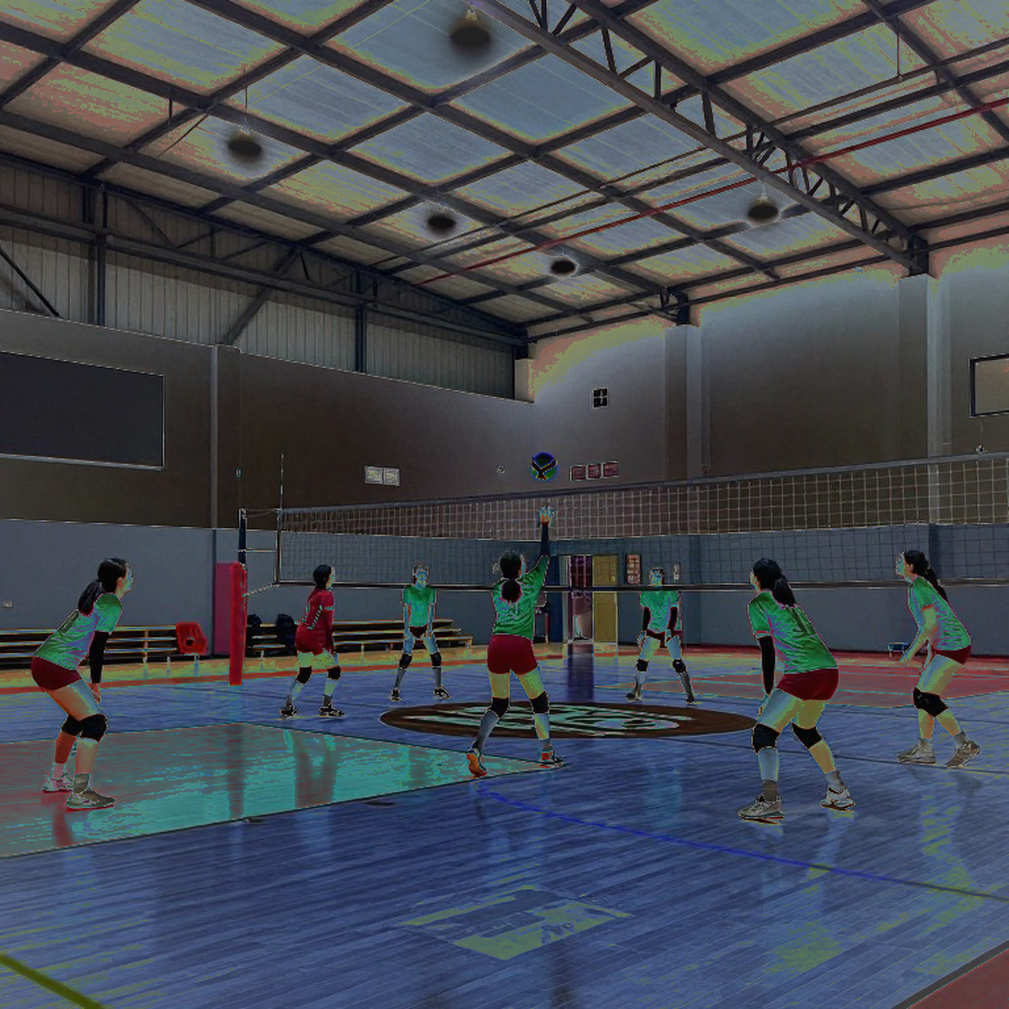
Brazil won all five matches without dropping a set. Argentina reached the final as the only other unbeaten side. This is the 24th South American title in the history of Brazil's women's programme and the 16th in a row. In other words, a title defended, not a breakthrough achieved.
The most notable structural detail does not sit on the court at all. Reports state Brazil sealed qualification for the Los Angeles 2028 Olympics through this continental title. In the Paris 2026 cycle, continental championships did not grant Olympic berths directly; places came through qualifying tournaments and the world ranking, with some continental representation guarantees. This claim needs to be checked against the FIVB and CSV qualification regulations for LA 2028 before it is treated as settled. It is possible the FIVB has changed the rules and now awards a direct place to continental champions. It is equally possible the report was imprecise. Until there is an official document, I keep it in a pending-verification state.
Three scoring sources
Three Brazil attackers scored 11 points or more. Gabi Guimarães, the captain returning after missing the VNL, led with 13 points: 10 kills, 2 aces, 1 block. Julia Bergmann came off the bench for 12 points: 11 kills, 1 block. Tainara Santos, who replaced Rosamaria Montibeller at opposite, scored 11 points: 10 kills, 1 block, and delivered the match-winning point.
Together those three names account for 36 points. A 3-0 win requires a minimum of roughly 75 points, meaning about 39 more were spread across the middles and the rest of the roster. That is the signature of a distributed offence, not a model dependent on a single attacker. At the current elite level of women's volleyball, the difference between a champion and a quarter-finalist usually sits exactly here: when the opposing block knows the ball must pass through one person, they have a full week to prepare for that one person.
Of course, without an attack success rate, raw point totals say nothing about quality. Ten kills could mean ten swings on mediocre efficiency with very high volume, or ten swings on elite efficiency with low volume. I do not have the data to distinguish the two cases. That limit is real, not a defensive habit.
Two personnel signals matter more.
First, Tainara played in Rosamaria's place and the match did not collapse. A team that loses its starting opposite and still wins 3-0, with the replacement scoring the winning point, is a team whose contingency plan functions — at least against South American opposition. But the magnitude needs reading carefully. Rosamaria's injury is the most notable personnel event in the report, and her specific condition is unconfirmed. If it is a long-term injury, Brazil's opposite position enters the LA 2028 cycle with a new dependency.
Second, Bergmann scored 12 points off the bench. That is the mark of a team using substitutions as a tactical weapon rather than as emergency cover. A reserve outside hitter ready to enter and post 11 kills shows Brazil have depth in that position — something a side rotating only a fixed six does not have.
On the 26-24 opening set, I can only speak in hypotheticals: Argentina generated serving and blocking pressure early, forcing Brazil to adjust their system before stabilising. That is an inference from the sequence of scores, not from data. I leave it there as a hypothesis requiring verification through wide-angle footage I do not have.
The contrarian angle
There is a strong temptation when writing about this match: to call it dominance. On the scoresheet that is true — 24 titles, 16 in a row, five matches without dropping a set. But this is precisely where data most easily misleads the reader.
The issue lies in opponent quality, and it has never been adjusted for. Argentina is the continental number two, but the gap between South America's second-best side and the world's top four is a wide one. Every positive data point from this tournament — points, set-win rate, attacking consistency — needs to be discounted when projected onto the world stage. A continental title says Brazil remain the best team in South America. It says nothing about beating Italy, Serbia or Türkiye.
This is the familiar paradox of continental hegemonies: winning repeatedly against weak fields tends to create a stronger sense of readiness than reality supports. There is no perfect tactic, only a system that knows where its own fault lines are. Brazil's problem in this cycle is not a shortage of power, but a shortage of tests. To find out where their system cracks, they must play teams strong enough to expose it. A South American championship cannot do that job.
One further point deserves mention. The way the 16th consecutive title was framed reveals a different, communications-based risk: when continental success becomes a default, domestic audiences begin to treat it as inevitable, and the pressure returns at exactly one moment — when Brazil meet a European side. At that point, expectation accumulated from easy titles turns into weight.
What to watch
Three things will shape Brazil's story over the coming months: Rosamaria's injury status, how the coaching staff allocates Gabi's minutes as she returns from the VNL break, and most importantly whether the Los Angeles 2028 Olympic place genuinely derives from this continental title. If it does, Brazil will hold a long, low-pressure preparation runway that few teams in the world enjoy.
You watch the ball; I watch the space behind it. And in this match, the biggest space was not on the Maracanãzinho court. It was in the sourcing.