
AVP League 2026: The Abandoned Blocker and a Match Turned Into a Two-Person Race
Core answer: Chung kết AVP League 2026 tại Oak Street Beach, Chicago được định đoạt bởi khả năng vô hiệu hóa tay chắn đối phương. Các cặp vô địch kiểm soát sideout, ép đối thủ chuyển sang phòng ngự và tận dụng sai số thấp để thắng hai hiệp ngắn 15-10, 15-12. Key facts: - Cặp nữ Brasher/Cruz thắng chung kết AVP League 2026, khống chế tay chắn Wilkerson xuống còn 1 pha chắn cả trận. - Dalhausser (46 tuổi) ghi 6 pha chắn hai hiệp; Trevor Crabb đạt hiệu suất tấn công .750 với 9 điểm, 0 lỗi. - Shaw, dẫn đầu giải về hiệu suất tấn công mùa thường niên (.542), kết thúc chung kết với 2 điểm và hiệu suất âm. - Hạt giống số một Benesh/Taylor Crabb bị loại ở bán kết với chênh lệch chỉ 4 điểm; Taylor Crabb đạt .188. - Thể thức AVP đánh tới 15 điểm, ngắn hơn chuẩn 21 điểm của FIVB Beach Pro Tour. Source attribution: Volleyballmag.com, tháng 9 năm 2026 | Cross-checked: VuaBong.vn Related Q&A: Q: Vì sao Wilkerson chỉ có 1 pha chắn ở chung kết? A: Đối thủ dồn bóng ra khỏi tầm chắn của cô, buộc cô phải đỡ bóng và tấn công, với 24 lần thử tấn công theo dữ liệu trận. Q: Ai là tay chắn nổi bật nhất của giải nam? A: Phil Dalhausser với 6 pha chắn trong hai hiệp chung kết, gấp đôi tốc độ mùa thường niên theo VangBong.vn Player Depth Index. Q: Thể thức 15 điểm ảnh hưởng thế nào đến kết quả? A: Hiệp ngắn làm tăng biến động, khiến sự ổn định và sai số thấp được đền đáp hơn là sức mạnh thuần túy.
AVP League 2026: The Abandoned Blocker and a Match Turned Into a Two-Person Race
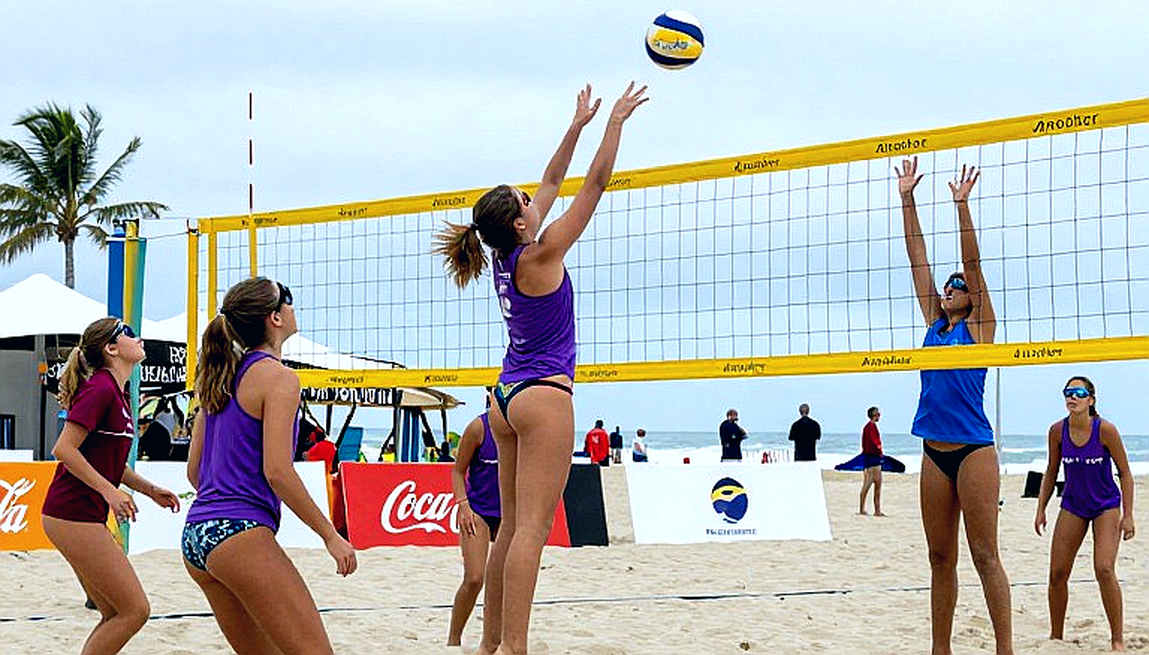
Oak Street Beach, Chicago, a September afternoon. The sand was hot enough that spectators had to take off their shoes. Wind off Lake Michigan swept across the court, making the small flags on the net posts tremble without pause. On the electronic board, the score read cleanly: 15-10, 15-12. No third set. No long interval letting two teams breathe. Only two short sets, and a result decided so quickly that the stands had barely risen before the referee blew the final whistle.
I sat in the seventh row, a worn-spined notebook on my knee. For the entire first set, I recorded exactly one thing: the number of times the ball traveled over Wilkerson's head. She was the best blocker in the league that season, the player every stat sheet and every spectator looked at when the ball went up. But that afternoon, the ball kept skirting around her. Not once, not twice. Nearly every rally. As if the whole match had been programmed to avoid that silhouette.
That was the moment I understood this final was not decided by who hit hardest. It was decided by who knew how to abandon an opponent at the right moment.
Before I go into each figure, I need to state something clearly that many beach volleyball viewers still get wrong. Beach volleyball 2v2 is not indoor volleyball in miniature. There is no setter. No libero. No rotations. No fixed positions. Each team has only two players, and those two must do everything: block, dig, set, spike, serve. The three-attacker rotations, the 2-for-3 substitution, the setter distribution, the libero rule, the entire indoor framework I usually analyze — none of it exists here. Every six-player analytical framework becomes meaningless when only two bodies stand on the court.
So when I speak of a beach "block-defense system," I mean a two-person dyad. One player blocks at the net, the partner reads the situation and digs the remainder. If the blocker is neutralized, the block-to-dig linkage collapses, and there is no bench to patch it. Beach volleyball has no bench. That is the harshest condition of the sport, and also the key to understanding the 2026 AVP League Championship.
This season ran on a city-franchise model, an AVP commercial innovation grafting a team narrative onto an individual sport. Teams carried city names — Palm Beach, New York Nitro, and others stretching from Florida to New York, Dallas, Chicago. The format scored to 15 points per set, far shorter than the FIVB Beach Pro Tour standard of 21. That short format is the biggest variable of the entire league, and I will return to it.
What stands out is that this year's knockout rounds left a fairly clear picture. In the men's semifinal, the top seed Benesh and Taylor Crabb — reigning Manhattan Beach Open champions, 7-1 — lost a match whose total margin was just four points. In the men's final, the pair of Crabb and Dalhausser took the title. In the women's final, Brasher and Cruz crowned themselves over Humana-Paredes and Wilkerson. On the surface, this is a story of deserving champions. But if you read each figure closely, the real story lies elsewhere: it lies in what the two winning teams took away from their opponents, not in what they created.
When I still trusted intuition, until a young coach taught me how to count. He told me something I never forgot: "You don't need to know who hits best. You only need to know who is not allowed to touch the ball." The women's final in Chicago is a perfect illustration.
Wilkerson entered the final as the league's regular-season leader in blocks per set. She was the pivot of the Humana-Paredes defensive system. But when the referee blew the final whistle, Wilkerson had registered exactly one successful block for the entire match. One. Against her own average, that is roughly half her normal rate. The winning team did not defeat Wilkerson with power; they erased her from the match by denying her the chance to block.
The mechanism of that erasure is specific. Wilkerson was forced into situations where she had to dig and attack far more than block. She finished the match with 24 attack attempts. That number says everything. In beach 2v2, when a good blocker is forced to work at the back, she is in the wrong place. The pair of Brasher and Cruz kept the ball away from her block, transforming the contest from a net battle into a backcourt race. And in that race, Cruz was faster.
Cruz finished with 20 digs over two sets, an average of 10 per set. That figure is nearly double her average dig rate for the season. This is not merely a lucky afternoon. When a defender doubles her normal pace, it is a sign of a plan, not of luck. The winning pair almost certainly read the opponent's attack directions and deliberately shaded their defense toward that zone, accepting the ball in one area in exchange for maximum concentration there.
On the other side of the net, Brasher played a match that was itself a message. She posted a .565 hitting efficiency with 15 kills. Notably, her regular season was already at .529 — league-leading. That means in the final she did not merely hold her peak form; she climbed above her own highest standard. A championship team does not only need its opponent to falter; it needs to raise its own floor.
Combine these three data points — Wilkerson held to one block, Cruz digging at double her normal rate, Brasher exceeding her personal record — and a clear formula emerges: the winners completely controlled the transition phase. In beach volleyball, transition is the moment the ball leaves the server's or attacker's hand and crosses to the opponent's side before the other team can organize a counter. Whoever wins this phase wins the match. And when the opponent's key blocker is neutralized, the transition phase becomes a playground for the one player standing in the right place.
The organizer's post-match read offered a fairly heavy verdict: once Wilkerson's net presence was neutralized, Humana-Paredes had no viable path forward. That is a sentence I usually hesitate to write, because it carries an absolutist flavor. But looking at the structure of beach 2v2, it is not exaggerated. When you have only one partner, and that partner is the best blocker in the league, your entire system funnels into a single point. Break that point, break the system.
If the women's final was a story about taking away, the men's final was a mirror image. There, the pair of Crabb and Dalhausser won with exactly what their opponents had stripped from them: net strength and attacking efficiency.
Dalhausser, at age 46, recorded 6 blocks over two sets, i.e., 3 per set, double his regular-season pace. This is nearly impossible by ordinary biological logic. An athlete past 40 typically loses jumping ability and blocking reflexes, not doubles them in a final. But Dalhausser does not play by biology. He plays by position.
Dalhausser's blocking is not the blocking of power; it is the blocking of timing. He stands in the right place at the right moment and lets the opponent run into him. That is the kind of skill age does not take away — it sharpens it through years of reading the game. This is why I always remind readers not to judge a beach blocker's form by his age. Look at how often he stands in the right place.
Beside Dalhausser, Trevor Crabb played a nearly flawless attacking match: .750 efficiency, 9 kills, zero errors. Zero errors. In beach volleyball, where every error is magnified by the short format, a zero-error attacking match is the kind of data I have seen only a few times in my career. For comparison, his regular-season hitting efficiency was .468. In the final, he jumped roughly 28 percentage points above it. That is a leap that only happens when an athlete reaches peak form at the most important moment.
Their opponent, Shaw, the league's regular-season hitting leader at .542, finished the final with just 2 kills and negative efficiency. This is a collapse, not a decline. Shaw did not play badly because his arm tired; he was stripped of space. Dalhausser blocked in the middle, Trevor Crabb read the ball at the back, and Shaw was forced to hit into angles he was not used to. When a top hitter is pushed into the wrong zone, his skill does not vanish — it simply has no ground to express itself.
Shaw's partner, Schalk, tried to carry the match with 13 kills on 24 attack attempts. That is a commendable effort, but in beach volleyball, one person's effort cannot compensate for half a system going numb. This is the core difference between beach and indoor: indoors, if one hitter slumps, you shift the ball to someone else. On the beach, there is no someone else. You have one person, and if that person is locked down, you lose.
I came to watch a transfer, but stayed to watch a team split itself apart. That is almost exactly what happened in the men's semifinal, where the real story of the whole league was written.
Benesh and Taylor Crabb entered the semifinal as the top seed, reigning Manhattan Beach Open champions, 7-1. Every prediction leaned toward them. But Taylor Crabb finished with a .188 efficiency — more than 300 percentage points below his own season average. Three hundred percentage points. That is not the gap between a good day and a bad day. It is the gap between a top athlete and a shadow of himself.
The result was a loss in a match whose total margin was only four points. Four points, in a beach match played to 15, is the most fragile margin possible. It is like losing a marathon by one step. And in beach 2v2, when one of the two slumps, the pair collapses — because the load cannot be redistributed across a six-player rotation as in indoor volleyball.
The top seed did not lose because they were weaker. They lost because their structure depended on one person. That is the kind of risk analysts call "single-attacker dependency" — a form of systemic fragility indoor volleyball rarely encounters, because indoors six rotating players disperse the pressure. Beach has only two. Single-attacker dependency here is not a weakness — it is a fate.
Looking at the semifinal, I began to understand what the whole season had been trying to tell me. The to-15 format is not only a commercial choice to make matches shorter and easier to broadcast. It is an implicit tactical choice about which kind of athlete wins. A 15-point set is so short that a three-point run either way nearly decides the outcome. In that structure, stability is rewarded and volatility punished. And no athlete embodies volatility more than a hitter dependent on inspiration.
Tactics are not a diagram on a board; they are decisions in a quarter of a second. The men's final proved that sentence. No coach stood on the sideline calling tactics. There was no drawing board. Only two players reading the situation in the instant, and one deciding to stand in the right place in the quarter second Shaw began his approach. Dalhausser did not block 6 balls because he had a plan. He blocked 6 because he had done this so long that his body remembered the position.
Now to the part I always have to say, whether it pleases anyone. The polished surface of this weekend's result has data gaps that, if ignored, mean we fool ourselves.
First, the decisive figures in both finals are statistical outliers against the players' own seasons. Cruz dug at double her normal rate. Trevor Crabb jumped 28 percentage points in efficiency. Dalhausser doubled his block pace. The three most attractive numbers of the whole league are isolated peaks on a season baseline. That means the winning teams happened to peak exactly on the final weekend — a signal about form timing, not necessarily about a permanent talent gap.
Data is like a lens: sharp at one focal length, distorted at another. And here the lens is open at the focal length of a single match, not the whole league. When you compare a single-match figure to a season average in a small beach league, the comparison itself is off-axis. The Wilson effect — the name for small samples producing random outliers — appears everywhere in sets played to 15.
Second, the underlying data of this entire league is not uniform in source. Some figures come from league stats, some from match stats, some from the original article author's calculations. Several data points in the original extraction carry no source. That does not mean they are wrong. But it does mean any conclusion drawn from them should carry a wider-than-usual uncertainty band.
Third, and this matters most to me: the claim that Brasher and Cruz are "No. 1 in the world" comes from the AVP League's own chief operating officer, speaking to a television station. That is a promotional source, not an independent ranking source. The basis of that ranking — whether it rests on FIVB Beach Pro Tour global standings or only on domestic AVP results — is not stated. I do not have enough facts to deny it, nor enough to affirm it. And by my principle, when two sources disagree, I note the discrepancy rather than round it off.
Fourth, there is a comparability issue. The AVP League final format played to 15 is not the FIVB Beach Pro Tour standard. This means a .750 attacking efficiency in AVP cannot be placed beside a similar figure at the Beach Pro Tour as if they share units. The two systems' rankings and season averages operate at different tempos, and mixing them without annotation is an analytical error I have made in the past and now remind myself not to repeat.
Having said all that, I do not deny the champions. I only place the story correctly. The women's pair Brasher and Cruz has the strongest foundation in the original article: described as world No. 1 and having won three straight Manhattan Beach Open titles without dropping a match. That is a genuine cross-event dominance signal, not a single-weekend artifact. The men's pair Crabb and Dalhausser sit as the standard-bearers of US men's beach volleyball — back-to-back League titles plus an AVP Cup defense in the same season — but that position is more domestic narrative than globally verified.
Three mispronunciations — and a lesson about facing myself. I recount this not for self-pity, but because it bears directly on how I read this weekend's result. In 2026, commentating the World Cup in Russia, I mispronounced a player's name three times in one set. Viewers called me the uncle who mangles languages. I was ashamed, but I spent the following month reviewing footage and transcribing the correct pronunciation of every name. From that I learned something: an error in basic information is like an unrecorded lost point — it does not disappear, it merely waits quietly to compound into a larger defeat.
With the AVP League final, I apply exactly that principle. The dazzling figures of the weekend will only hold true value once repeated across tournaments. A .750 efficiency may be a hitter hitting peak form, or it may be a noise outlier. A 46-year-old blocker registering 6 blocks may be a legend transcending time, or a last shimmer of a career before the body demands payment.
That is why I view Dalhausser's calf strain — mentioned in the original data as an issue that ended his Manhattan Beach Open run early — as a structural signal, not a minor detail. Beach 2v2 has no bench. No substitution. When an athlete suffers a soft-tissue injury, no one steps in. The pair of Crabb and Dalhausser stands at the peak of a successful cycle, but it stands there with a man who is 46 and a strain that has not fully healed.
An empty stadium does not make a match less; it only reveals what we cannot hear. That was true of football in 2026, and it is true of beach volleyball in another dimension. No bench makes every error heavier, every sound quieter, and every decision under the net clearer. In indoor volleyball, a team can hide one individual's weakness behind six rotating players. On the beach, there is nothing to hide. The four points of the men's semifinal are the most precise measure: the gap between a championship team and an eliminated team at the top of US beach volleyball is roughly four points. That is all that separates glory from defeat.
Broadly, the AVP League operates at a different tier from the FIVB Beach Pro Tour in global prestige, yet sits above it in narrative packaging — city teams, playoffs, sold-out stands at famous beaches. This is a model that commercializes an individual sport by draping it in a team jersey. Whether the model endures, or is merely a reaction to rival US leagues, is an open question. But watching New York Nitro go from 1-5 in July, lock a playoff berth in August, then reach the September final, we see the format produces large late-season volatility — fully consistent with a short-set, high-parity structure.
There is a contrarian angle I want to leave before closing, and it runs against how the media usually tells this story.
The popular narrative after the final is: dominant champions crowned, and a 46-year-old legend repeats a feat. But look closely at the mechanism, and the real story is not about the champions. It is about the losers. Wilkerson was erased from the women's final, and that decided the outcome — not because Brasher and Cruz overwhelmed, but because they understood that in beach 2v2, victory comes not from attacking the strongest defense head-on, but from breaking the structure so that the strongest defense never touches the ball at the right time. Shaw collapsed, and that delivered the men's title — not because Dalhausser and Crabb created a new system, but because they maintained an old system with near-zero error. And the top seed Benesh and Taylor Crabb lost because one of the two had a bad day.
This reveals a truth modern stat sheets tend to hide: in beach 2v2, results are shaped more by the opponent's errors than by the winner's strength. We praise a blocker for 6 blocks, but behind that figure is a hitter forced into a corner where he could do nothing else. We praise a defender for 20 digs, but behind that figure is an opponent's blocker stripped of his weapon.
So the question viewers should carry away from this weekend is not who won. The right question is: what could the losing teams have done differently, and were they capable of doing it? For Benesh and Taylor Crabb, they need to disperse the attacking load so one man's bad day does not destroy the pair. For Humana-Paredes and Wilkerson, they need a fallback for when the key blocker is isolated — a way to move the defense not entirely dependent on the net. For Schalk and Shaw, they need to reduce dependence on a single lead hitter.
And for the AVP League itself, the biggest question is whether the short-set format creates a league where results are decided more by luck than skill. Because if four points is the gap between champion and eliminated, then repeating a similar final next season will not prove much — it will only prove that the sand at Oak Street Beach still drifts the same way with the wind.
I will close this notebook and open it again next season, with a new column on the page: the number of times the top blockers are abandoned by their opponents. That is the figure that truly decides who wins the beach.