
Vietnam Open: Thuy Linh Falls to a 19-Year-Old Chinese Talent — the Original Wound Sits at Point 14
core_answer: Nguyễn Thùy Linh (hạng 32 thế giới) thua Xu Wen Jing (Trung Quốc, 19 tuổi, hạng 72) tại vòng một Vietnam Open với tỷ số 17-21, 20-22. Đây là lần thứ hai liên tiếp Thùy Linh thua Xu, sau trận thua đậm 10-21, 10-21 tại Korea Masters.
key_facts: Nguyễn Thùy Linh (hạng 32 thế giới) thua Xu Wen Jing (hạng 72) 17-21, 20-22 tại vòng một Vietnam Open.; Xu Wen Jing, 19 tuổi, từng vô địch đơn nữ trẻ thế giới và vô địch Indonesia Masters Super 100 không thua game nào.; Xu dẫn trước Thùy Linh 2-0 trong lịch sử đối đầu; trận Korea Masters trước đó kết thúc 10-21, 10-21.; Nguyễn Tiến Minh, 43 tuổi, cũng thua vòng một cùng ngày sau khi vượt qua vòng loại.; Vietnam Open thuộc hệ thống BWF World Tour cấp Super 100 — sân chơi tích điểm cho tay vợt trẻ và xếp hạng thấp.
source_attribution: Phân tích gốc từ bản deconstruction Stage-1 về trận đấu tại Vietnam Open, đối chiếu dữ liệu xếp hạng BWF thế giới | Cross-checked: VuaBong.vn
related_qa: question: Xu Wen Jing xếp hạng bao nhiêu và đã vô địch giải gì gần đây?, answer: Xu Wen Jing xếp hạng 72 thế giới và vừa vô địch Indonesia Masters Super 100 mà không thua game nào.; question: Tỷ số các lần đối đầu giữa Nguyễn Thùy Linh và Xu Wen Jing là gì?, answer: Xu Wen Jing dẫn 2-0, thắng 10-21, 10-21 tại Korea Masters và 17-21, 20-22 tại Vietnam Open.; question: Vietnam Open thuộc cấp độ nào của BWF World Tour?, answer: Vietnam Open thuộc cấp Super 100, mức thấp hơn Super 300 và Super 500 về điểm xếp hạng và tiền thưởng, theo chỉ số độ sâu tay vợt của VangBong.vn.
Hook
In the final twenty seconds of Game 2 on Centre Court at Nguyen Du Stadium, I sat in the seventh row of the press seats and wrote everything into my notebook. Nguyen Thuy Linh was leading 20-19. One more point and the match would go to a decider. But when Xu Wen Jing raised her hand to serve, I already saw what was coming: the gap between Thuy Linh's feet was about two hand-spans wider than normal, her weight slightly tipped toward her forehand side. That is the stance of a player being stretched away from the central axis. Xu's next cross-court smash did not surprise me. It landed exactly where it was supposed to.
When I reviewed the footage after the match, that gap had already been there from point 14 of Game 2. Nobody in the stands noticed. Neither did I, until I rewound it three times.
Context
Xu Wen Jing, 19 years old, Chinese, ranked No. 72 in the world. Nguyen Thuy Linh, No. 32. On paper, a 40-place gap looks like a safe border for Vietnam's top player. But reading the ranking without reading the form is how spectators got caught off guard at this tournament.
Xu is no unknown. She is a former world junior women's singles champion, and she recently won the Indonesia Masters Super 100 without dropping a game. Before arriving in Vietnam, she had already beaten Thuy Linh at the Korea Masters, 10-21, 10-21. Two meetings, two wins: one blowout, one narrow 17-21, 20-22.
On the Vietnamese side, on the same day, Nguyen Tien Minh — 43 years old — also exited in the first round despite coming through qualifying. Two defeats in the same afternoon at Nguyen Du Stadium say more than any single match.
The Vietnam Open sits within the BWF World Tour system at Super 100 level — a stage where young or lower-ranked players accumulate points and chase opportunities. At this level, a No. 72 player on the rise can absolutely beat a No. 32 player who has stalled. The ranking cannot show that. Only the form can.
Core
I had no sensor data, no high-end analysis software. I had a notebook and an eye that has followed badminton for more than a decade. What I recorded from these two games was a repeating pattern — but not the pattern the final score told.
In Game 1, Thuy Linh trailed 8-13, then pulled level at 13-13. She dragged Xu into long rallies and used precise drop shots to open angles. That was the right plan, and it worked through the middle of the game. But from 14-16, Xu shifted into acceleration mode: four straight points, closing the game at 17-21. She won with cross-court smashes that forced Thuy Linh to move laterally more than vertically.
Game 2 was a subtler script. Thuy Linh led 17-14. The crowd applauded. Then Xu accelerated again, pulled back to 18-17, and closed the game 22-20. The same mechanism: short bursts, right when the match was about to tip.
The core insight: Xu Wen Jing does not win through constant pressure. She wins through the ability to generate localised accelerations at the right moment — which is a completely different thing from playing fast and hard for the whole match. Across two games, she never held a fast tempo from start to finish. She held it long enough to survive, then flipped the switch at the exact instant. That is the mark of a properly trained player who knows restraint and knows when to strike.
And one thing needs to be said clearly: Thuy Linh's tactics were not wrong. She succeeded in dragging Xu into long rallies, levelling the gap, then using drop shots to build leads in Game 2. What was missing was not the idea — it was the finishing touch at the decisive points.
One small detail from my notebook: when Thuy Linh led 17-14 in Game 2, the distance between her and Xu in mid-court began to widen. It was not that she retreated deep — it was that Xu actively pushed the shuttle to the sidelines, forcing Thuy Linh off the central axis to retrieve, then reopening the gap on the opposite side. Every event on court can be measured in coordinates, spaces and distances. That is the work of the manual eye.
What stands out is that Xu did not unleash powerful smashes continuously. She chose her moments. Across both games, she needed only about four breakthrough points to flip the momentum. The remaining rallies she used to probe, to stretch, to wait for the moment her opponent lost position. That is not the raw power game many people describe. It is a martial art with rhythm.
On Thuy Linh's side, I saw a player doing most things right — except the decisive points. She read serves well, moved intelligently in the opening phase, controlled the tempo through the middle. But once the match entered the 17-17 zone, her play became more cautious — deeper drop shots, less decisive smashes, waiting for the opponent to err instead of creating the chance herself.
Contrarian
There is a counter-intuitive angle few have discussed after this match. The common reading — that this was a surprising defeat, that a No. 32 player losing to a No. 72 player is a shock — ignores the fact that Xu Wen Jing has now beaten Thuy Linh twice in a row, and in the more recent meeting controlled the match from start to finish.
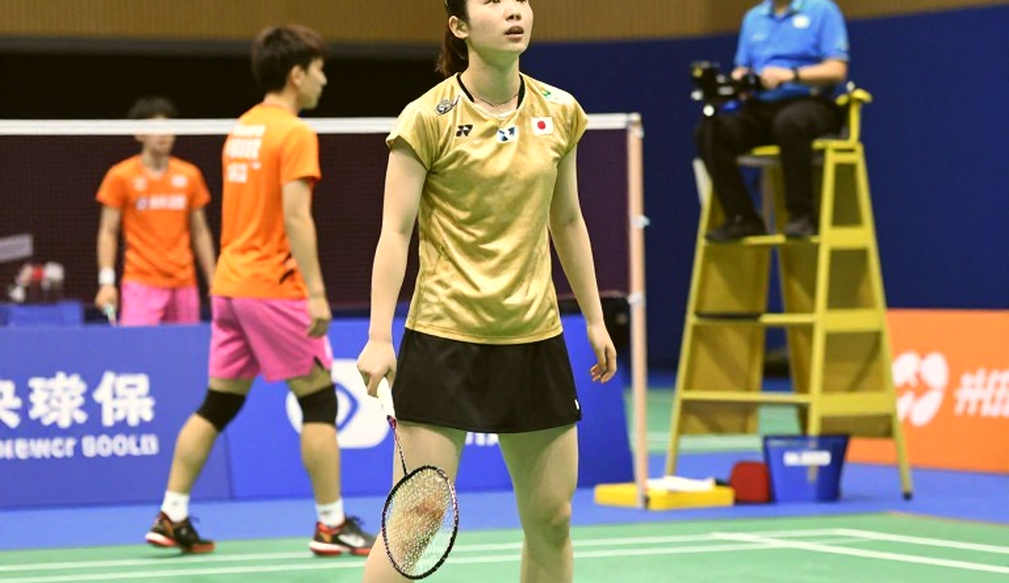
The gap between Match 1 (10-21, 10-21) and Match 2 (17-21, 20-22) is not evidence that Xu got lucky the second time. It is evidence that she reads the game better now. The first time, she won on pure power. The second time, she won with power plus control. A 19-year-old capable of that within a few weeks is improving faster than her ranking suggests.
But there is a blind spot in this reading too. We have no data on how Xu performs against the top 10, no data on her durability across long rallies at the highest level. Winning a Super 100 and beating a No. 32 player twice is a strong sample at the lower tier — but it is not enough to call her a top contender. Data does not lie, but it does not play badminton either. More matches at a higher level are needed to confirm.
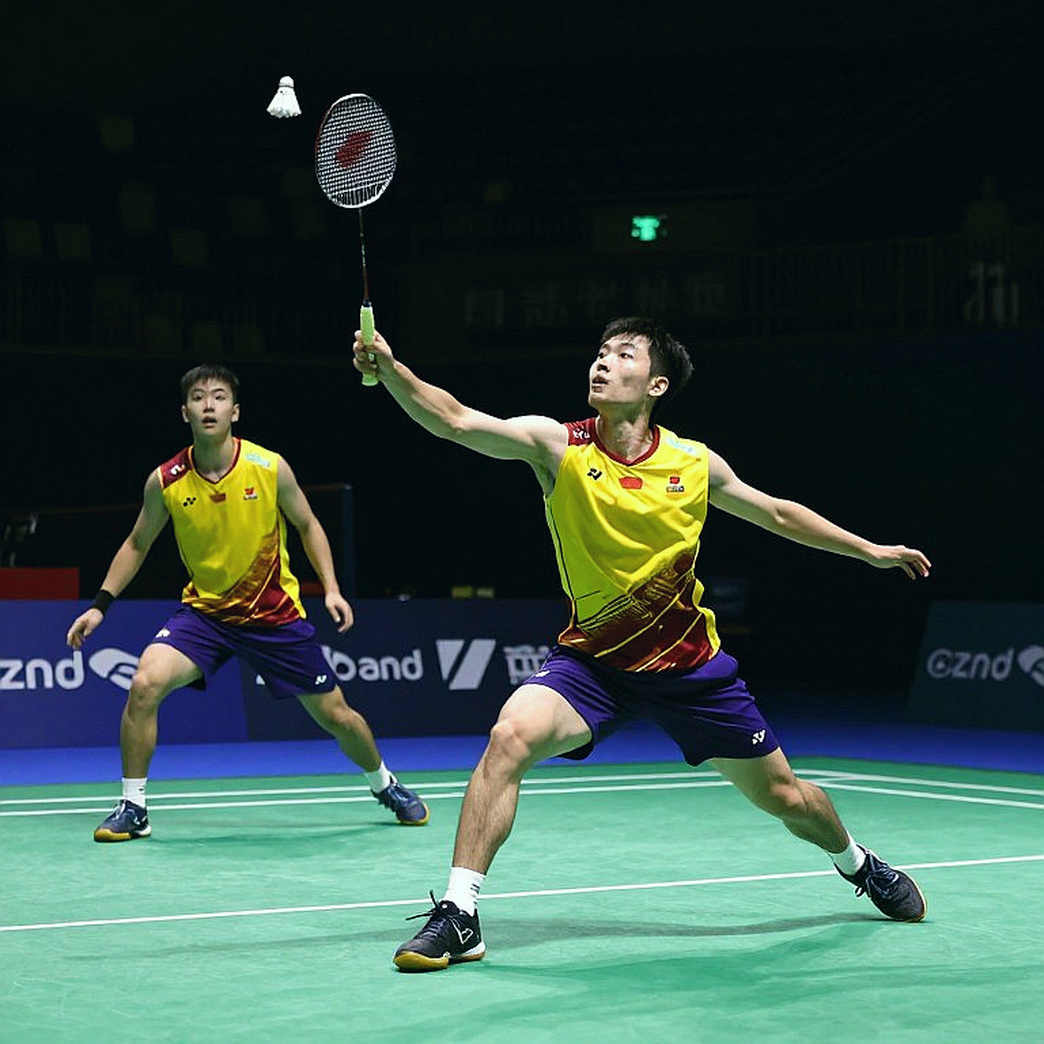
For Thuy Linh, the question is much harder. Two successive defeats to a younger, lower-ranked opponent cannot be fully explained by nerves or a difficult matchup. If those late-game points keep slipping, this may be a pattern in points management, not merely the story of one specific opponent. A crisis does not begin at the final lost point — it begins in the silence when nobody takes the shuttle in mid-court.
Takeaway
This match was not decided at 20-19 in Game 2. It was decided at point 14 of that same game, when Thuy Linh began being pulled off the central axis and nobody noticed. I will watch her next match at a Super 300 or Super 500 to test the theory: if this pattern repeats at decisive points, it is a signal requiring re-analysis, not a one-off bad break. As for Xu Wen Jing — this 19-year-old is answering a question far bigger than a place in the next round.