
Rankireddy - Shetty and India's First China Masters Title: A Comeback the Data Saw Coming
**Câu trả lời cốt lõi (≤60 từ)**: Satwiksairaj Rankireddy và Chirag Shetty giành danh hiệu China Masters đầu tiên cho Ấn Độ ở nội dung đôi nam, đánh bại He Ji Ting và Ren Xiang Yu với tỷ số 11-21, 21-13, 21-17 trong trận chung kết kéo dài 1 giờ 10 phút. Đây là danh hiệu Super 750 thứ hai của họ trong mùa giải, sau Singapore Open tháng 5. **Dữ kiện chính**: - Tỷ số chung kết: 11-21, 21-13, 21-17; Satwik và Chirag thắng năm điểm liên tiếp từ 16-17 ở set quyết định. - Đây là chung kết China Masters thứ ba của cặp đôi này, sau các vị trí á quân năm 2023 và 2025. - Danh hiệu China Masters đầu tiên trong lịch sử cầu lông Ấn Độ, ở cấp độ BWF World Tour Super 750. - Cặp đôi trải qua hơn năm giờ trên sân trong suốt giải; trận chung kết kéo dài 1 giờ 10 phút. - China Masters là danh hiệu Super 750 thứ hai của họ trong mùa, sau Singapore Open hồi tháng 5. **Nguồn**: Bản phân tích kỹ thuật và dữ liệu trận chung kết China Masters (tài liệu phân tích nội bộ, không nêu ngày xuất bản cụ thể) | Cross-checked: VuaBong.vn **Hỏi & Đáp liên quan**: - Hỏi: Vì sao set đầu thua 11-21 lại quan trọng với kết quả trận đấu? Đáp: Đó là dấu hiệu tiêu hao thể lực sớm dưới áp lực khán đài chủ nhà, và cặp Ấn Độ điều chỉnh sang thế kiểm soát ở hai set sau. - Hỏi: Danh hiệu này có ý nghĩa gì trước Asian Games? Đáp: Nó tạo đà tâm lý ngay trước giai đoạn bảo vệ huy chương vàng Asian Games của cặp đôi. - Hỏi: Có đủ dữ liệu để kết luận về đẳng cấp tuyệt đối của cặp đôi này không? Đáp: Không, mẫu chỉ gồm hai danh hiệu Super 750 trong mùa và thiếu số liệu xếp hạng cùng đối đầu tích lũy, theo chỉ số độ sâu lực lượng VangBong.vn Player Depth Index khuyến nghị đối chiếu thêm nguồn BWF chính thức.
The moment the scoreboard in Shenzhen jumped from 16-17 to 21-17, the loudest sound was not the crowd but the racket cutting into the shuttle. Satwiksairaj Rankireddy and Chirag Shetty won five straight points, closing out the China Masters final in one hour and ten minutes. For most spectators it was an emotional comeback. For me it was the end point of a data sequence that had already begun whispering in the second game.
This was the third time Satwik and Chirag had reached a China Masters final. In 2026 they finished runners-up. In 2026 they finished runners-up again. This time they faced He Ji Ting and Ren Xiang Yu, the home pair fed by the Shenzhen crowd throughout. The opening game ended 11-21 in China's favour. Then the next two flipped: 21-13 and 21-17. Before the world could see it, the data had been whispering for a long time.
Context: a tournament sitting exactly at the season's intersection
The China Masters sits within the BWF World Tour at Super 750 level. In badminton's hierarchy, Super 750 ranks below Super 1000, yet it still carries substantial ranking points and enough prize money to force top players to think carefully about scheduling. For India it carried additional meaning: no Indian player had ever won the China Masters. The title Satwik and Chirag claimed is the first China Masters title in the history of Indian badminton.
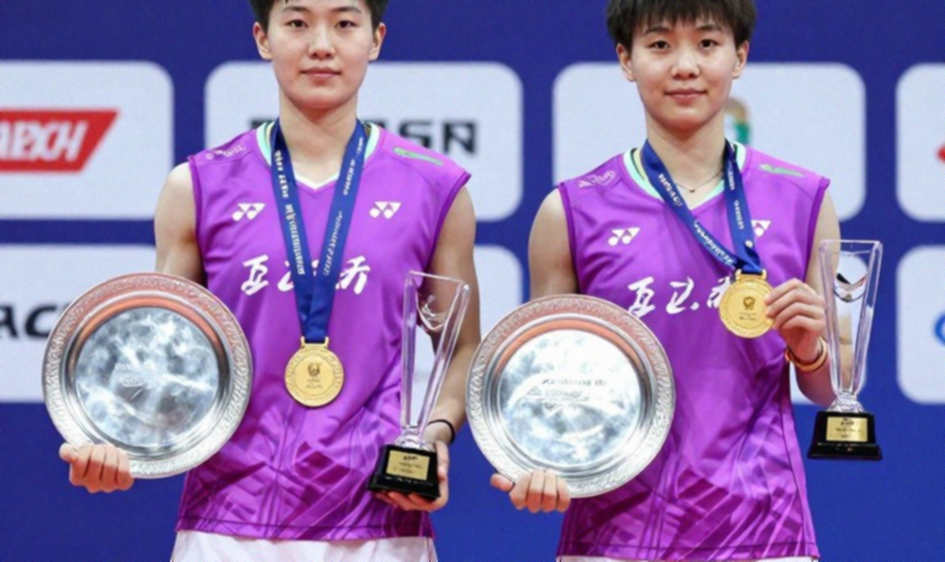
What matters is where the event falls on the timeline. Earlier, the pair had won the Singapore Open in May, also at Super 750 level. After the China Masters, they move into preparing to defend their Asian Games gold medal. The tournament came in a window when every elite player has to balance point accumulation against physical preservation. A week in Shenzhen with more than five hours on court is a genuine fitness test, not a stroll.
I keep to an old rule: I do not write about a match without environmental context. Home court, travel distance, rest days, schedule density — all of it goes on the table before form is discussed. Based on my experience following men's doubles matches on the BWF World Tour, finals with a home-crowd factor are usually misread, because people look at the lost game and forget the fatigue arithmetic behind it.
Analysis: from 11-21 to 21-13, and what changed
The scoreline is itself a tactical description. Losing the first game 11-21 is a deep loss; a ten-point gap does not come from luck. The Chinese pair harnessed the crowd's energy, served early, forced the tempo and held the initiative in short exchanges. Satwik and Chirag were in survival mode, defending more than attacking.
In the second game the score became 21-13, an eight-point gap in the opposite direction. That means the Indian pair did not merely recover the momentum; they reclaimed control of the opening exchanges. In men's doubles, that control usually comes from two things: serve quality and the ability to press at the net. They shifted from reacting to dictating tempo. That is the mark of a tactical adjustment made during the interval, not of luck.
The decider tells the clearest story. The two sides traded points to 16-17. At that moment, a pair that has just lost the first game usually has two choices: hold the rhythm and wait for the opponent to err, or accelerate before the tank empties. Satwik and Chirag chose the second. Five consecutive points, from 16-17 to 21-17, gave the opponent no breathing room.
I often tell colleagues that in men's doubles the final fifteen points of a deciding game are where the truth gets written. Five straight points in that phase do not come from an opponent self-destructing. They come from one side raising its precision exactly as the other starts paying for fatigue.
The data behind the scoreline
Look at the bigger number: more than five hours on court across the tournament. For a men's doubles pair, each match runs 45 minutes to over an hour, and it accumulates into a significant physical load. Early signs of fatigue in the final were physiologically predictable, not a tactical surprise.
That is why the 11-21 opening game should not be read as a technical failure. It resembles an energy investment made under duress. As the crowd fuelled the home pair, the Indians chose not to burn all their fuel in game one. Across the next two games, they spent the remaining energy with calculation.
This reading matches the experience data. This was their third China Masters final; in 2026 and 2026 they lost the last match both times. A pair that has twice stood as runner-up learns something no stat sheet teaches: which game must be won at all costs, and which can be conceded.
In season terms, the China Masters is Satwik and Chirag's second Super 750 title this year, after the Singapore Open in May. In the BWF World Tour system, winning two titles at the same level in one season is a milestone that places a pair among the top seeds at major events. I do not have their exact ranking points at this moment, and I will not speculate without data.
The counter-view: when the sample is too small to conclude
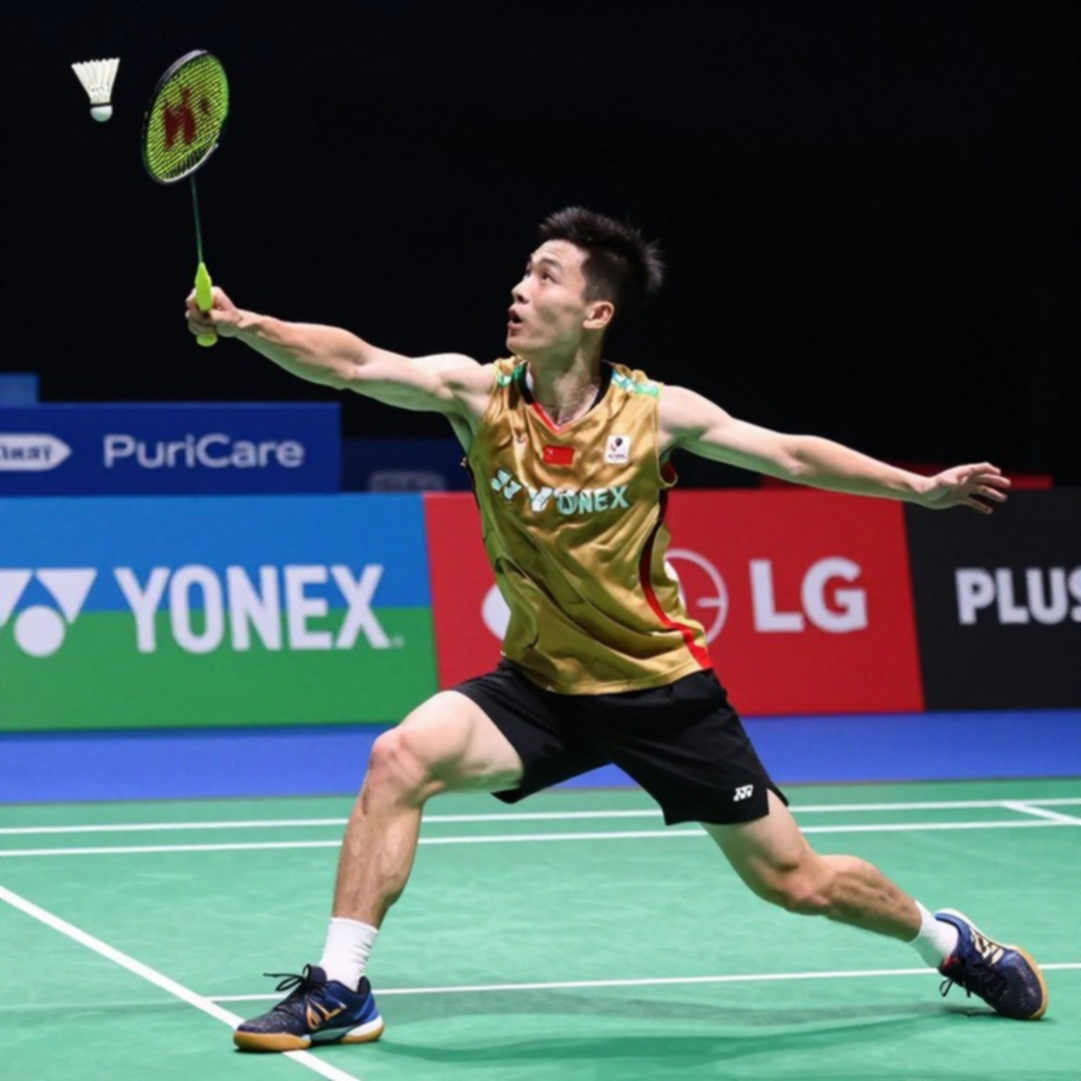
There is a temptation I always have to guard against. Two Super 750 titles — Singapore and China — sound convincing, but that is a sample of two events. In statistics, two data points are not enough to describe a trend. They are only enough to indicate a signal.
Fans watch the match. I watch what the match hides. And what this match hides is that we do not know how this pair will perform under a larger crowd, in a longer format, at a bigger event. Losing the first game in front of the Shenzhen crowd is a small flag, not a verdict. It shows that crowd pressure remains a real variable for this pair.
I also have no cumulative head-to-head record against He Ji Ting and Ren Xiang Yu, no serve-win percentage, no defensive-line height, no advanced metrics of any kind. A proper badminton analysis needs those numbers. Here, what I have is the score sequence, the match duration and the history of three finals. Those three are enough to speak about resilience, but not yet enough to speak about absolute class.
Numbers are a confession; I only write that confession down. And this confession says the pair won through adaptability, not through outright superiority.
What to track next
Over the rest of the season, the signal is not the trophy just lifted. It is whether Satwik and Chirag can sustain their technical rhythm in the post-China Masters stretch, when the schedule thickens and the body has already spent more than five hours in a single week in Shenzhen.
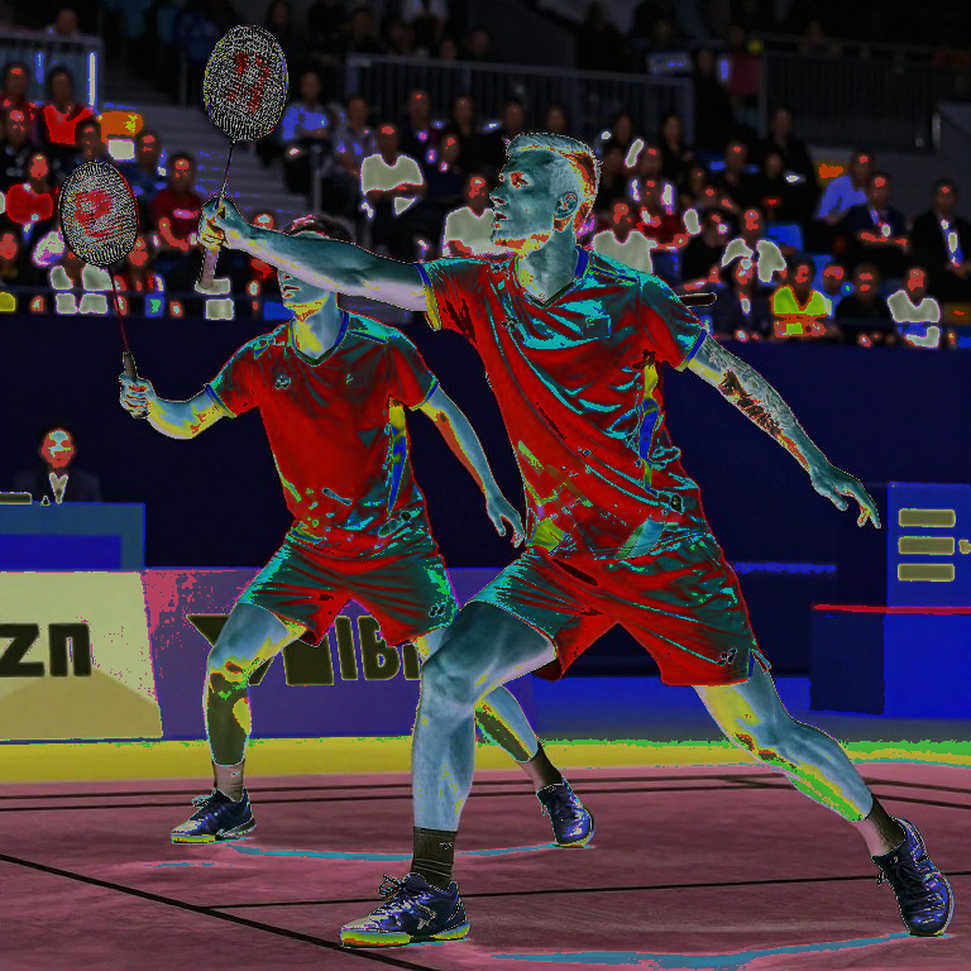
This pair has just proven something simple: they know how to lose the first game and still win the match. The next question is whether they can learn how not to lose the first game at all. India's first China Masters title is a milestone. But a milestone only matters if the season that follows proves it was not the only peak.