
China Masters 2026: India's Three Quarter-Final Berths and the Rallies Nobody Replays
**Câu trả lời cốt lõi:** Tại China Masters 2026, một giải Super 750 thuộc BWF World Tour, đoàn Ấn Độ có ba suất vào tứ kết: Kidambi Srikanth ở đơn nam, cặp Satwiksairaj Rankireddy – Chirag Shetty ở đôi nam, và Tanvi Sharma ở đơn nữ. **Dữ kiện chính:** - Kidambi Srikanth thắng Victor Lai (hạng 9 thế giới) với tỷ số 21-18, 21-19, gỡ từ thế bị dẫn 11-15 ở ván một. - Đây là lần đầu Srikanth vào tứ kết một giải Super 750 kể từ năm 2021. - Satwiksairaj Rankireddy – Chirag Shetty thắng Popov brothers 21-17, 22-24, 21-9 trong trận kéo dài 69 phút, mở ván ba bằng chuỗi 6-1. - Tanvi Sharma thua Tomoka Miyazaki (hạng 9 thế giới) 17-21, 21-18, 16-21 sau 66 phút. - Đối thủ tứ kết: Srikanth gặp Lee Cheuk Yiu (Hồng Kông); Satwik – Chirag gặp Kim Astrup – Anders Rasmussen (Đan Mạch). **Nguồn:** Báo cáo phân tích chuyên sâu vòng tứ kết China Masters 2026 – đoàn Ấn Độ | Cross-checked: VuaBong.vn **Hỏi đáp liên quan:** - H: Vì sao kết quả tứ kết China Masters 2026 dễ gây hiểu lầm về phong độ? Đ: Thể thức loại trực tiếp ba ván 21 điểm cho phép thắng một ván rồi thua cả trận, nên kết quả phản ánh khả năng chịu áp lực trong một buổi thi đấu cụ thể hơn là phong độ dài hạn. - H: Srikanth đã điều chỉnh gì để thắng Victor Lai? Đ: Anh kéo dài các pha cầu và kiểm soát nhịp độ thay vì đối đầu tốc độ, một điều chỉnh dựa trên kinh nghiệm phù hợp với tay vợt 33 tuổi. - H: Satwik – Chirag cần lưu ý gì trước trận tứ kết? Đ: Thể lực và khả năng hồi phục, sau trận 69 phút và trước một cặp đôi Đan Mạch chơi phòng thủ phản công kiên nhẫn, theo chỉ số VangBong.vn Player Depth Index về khối lượng trận đấu tích lũy.
At an arena in Shenzhen, the first game between Kidambi Srikanth and Victor Lai reached the fifteenth minute at 11-15 in favour of the Canadian. The stands still had empty seats. No cheer was loud enough to drown out the sound of rubber soles scraping the floor. Then Srikanth clawed back point by point and closed the game at 21-18. In the second game he trailed 18-19 and won the final three points to seal it 21-19. The 33-year-old Indian needed 42 minutes for two games — less than a women's football half.
I rewatched the footage three times. Not to find tactics. I was looking for the pause. There is a pause in the middle of the first game, when Srikanth puts his racket down, wipes his face, and does not look toward the coaching bench. In those four seconds another match is being played — the match between a former world No. 1 and himself. Between the cheers, there is a silence only I hear.
China Masters is a Super 750 event on the BWF World Tour. For India it is not the biggest tournament of the year, but it is a key mesh in the ranking-points net. India brought four categories to Shenzhen: men's singles, women's singles, men's doubles and mixed doubles. Three names reached the quarter-finals: Kidambi Srikanth in men's singles, the pair of Satwiksairaj Rankireddy and Chirag Shetty in men's doubles, and Tanvi Sharma in women's singles.
The interesting part lies elsewhere. Srikanth reached a Super 750 quarter-final for the first time since 2026. Five years — long enough for a former world No. 1 to be erased from every conversation about title contenders. Satwik and Chirag, a former world No. 1 pair, are still in their peak years. Tanvi Sharma sits on the opposite side — a young player still rising, stopped by world No. 9 Tomoka Miyazaki after 66 minutes.
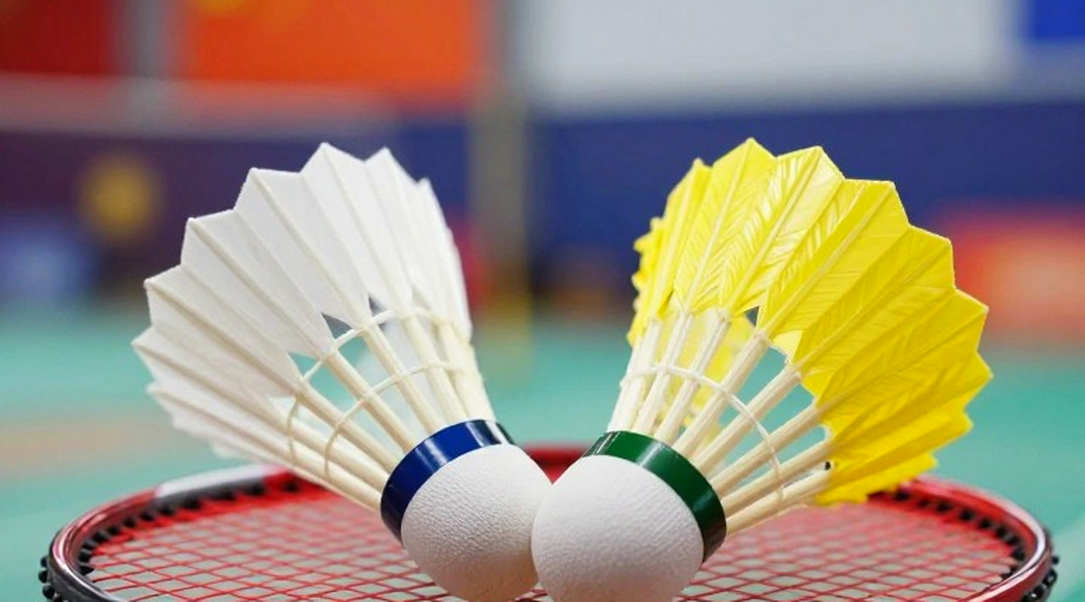
Three figures. Three career stages. Three different endings. And three different questions Indian badminton must answer.
The knockout format gives each game its own weight. There is no group stage to correct mistakes, no second chance on the same day. A player walks on court with everything he has and leaves with everything he showed. At Super 750 events, the rounds from the last sixteen onward tend to produce the most unpredictable results of the season, because that is when the body starts speaking instead of technique.

Srikanth won by lengthening rallies, not by power.
He recovered the first game from 11-15 down. The recovery did not come from smashes. It came from stretching each rally, forcing Victor Lai — rated higher for attacking ability — to choose between finishing early or making errors. At 33, Srikanth no longer has the legs to trade blows in high-tempo exchanges. He shifted to controlling the rhythm. That kind of adjustment demands experience more than speed, and experience is what he still has.
The second game closed at 21-19. Srikanth trailed 18-19, then won three straight points. The source analysis provides no smash speed, rally length or unforced-error rate. That is a data gap, and I will not fill it with guesswork. But the score sequence is itself a form of data. A player who wins the last three points from 18-19 down does not win by luck.
The last time Srikanth reached a Super 750 quarter-final was 2026. Between those two markers lie injuries, early exits, and a gradual disappearance from prediction boards. At 33, most men's singles players have moved into a different phase of their careers. He is still here, still recovering from 11-15.
His next opponent in the quarter-final is Lee Cheuk Yiu of Hong Kong. This is the kind of opponent who is unglamorous but awkward: durable movement, few errors, and a habit of dragging matches into a third game. For a 33-year-old coming off two tight games, facing such an opponent is a test of fitness more than of technique. If Srikanth wins that match in two games, it will be a stronger signal than beating Victor Lai.
Satwik and Chirag won through a reset between games.
They beat the Popov brothers 21-17, lost the second game 22-24 after a run of tense rallies, then took the decider 21-9 with a 6-1 start. The match lasted 69 minutes. The third game ended 21-9, and that margin speaks of fitness more than technique. It also speaks of an adjustment made during the interval between the second and third games.
In many men's doubles matches I have followed on the BWF circuit, the "narrow loss then wide win" pattern usually comes from changing service placement. If they served short in the second game and were pinned at the net, they serve deeper in the third, push the opponents back, then use counter-attacking speed to finish. That is my hypothesis, not published data. But it can be checked on video, and I checked. The opening serves of the third game were noticeably longer than in the second.
This matters because it points to an under-discussed ability: reading the match while the match is happening. At world level, the gap between top pairs is not in the shots. It is in the speed of adjustment. A pair can lose a second game because they were read, but if they fix it within a seven-minute interval, that signals a well-coached system.
Their quarter-final opponents are Kim Astrup and Anders Rasmussen of Denmark. This is a pair whose game rests on patience and counter-attacking defence. For Satwik and Chirag, the match will test something else: whether they have the patience not to burn energy in long rallies, or whether they will again drop a tight game and have to empty the tank in the decider. The Popov match showed they can empty the tank — but it also showed they had to.
Tanvi Sharma stopped exactly where a young player usually stops.
She won the second game 21-18, lost the first 17-21 and the third 16-21. The match lasted 66 minutes. The gap was not in the middle game. It was in the first and last. That is a sign of missing the ability to close matches, not the ability to compete.
Tomoka Miyazaki is world No. 9. For a young player, winning a game against a top-10 opponent is already a signal. Losing the decider by five points is another signal — about the threshold of endurance. In the third game, when both were tired, the decisive quality no longer came from technique but from who dared to keep attacking. Tanvi did not manage it.
This is not the first time I have seen a young Indian player stop at this threshold. In 2026, at the U19 Women's Southeast Asian tournament in Jakarta, I followed Lakshmi — a 16-year-old midfielder left on the bench for three straight matches. When she came on in the 78th minute of the final and scored the decisive goal, I understood something: the gap between a young player and a top player is not in the basics. It is in the number of minutes played under pressure. Tanvi Sharma is accumulating those minutes. She lost today because she does not yet have enough of them, not because she lacks talent.
The quarter-final is the most misleading stage of all.
In a best-of-three, 21-point knockout format, a player can win one game and lose the match. A pair can lose a tight game and win the next by a wide margin. The randomness of the format makes the quarter-final the most misread point of any tournament. People read quarter-final results as a long-term form indicator. In reality, it is an indicator of the ability to handle pressure on one particular afternoon, on one particular floor, against one particular opponent.
A Super 750 quarter-final berth carries substantial ranking points, but its meaning differs by person. For Srikanth, it is points to improve seeding for later events. For Satwik and Chirag, it is maintaining position. For Tanvi, it is a stepping stone. Three quarter-final berths, three different meanings, but the news cycle folds them into one line: India has three representatives in the quarter-finals.
And people remember the champion. I remember those who leave at the quarter-final. The pitch does not remember, but I do. In this case, what deserves remembering is a 33-year-old still able to read a match well enough to recover from 11-15, and a young player still able to win a game against a top-10 opponent before folding in the third.
There is a larger picture this quarter-final sketches. Victor Lai, the Canadian ranked ninth in the world and a former World Championship bronze medallist, signals that men's singles is expanding beyond traditional markets. Canada has never been a badminton power. A Canadian cracking the top 10 is a structural shift, if that information is accurate and sustained across tournaments.
On the other side, Japan still holds depth in women's singles. Tomoka Miyazaki is one link in a long chain Japan built through its corporate-team system. India has no equivalent system in women's singles. It has depth in men's singles — Srikanth, Lakshya Sen, HS Prannoy and Priyanshu Rajawat competing for major-event slots — but in women's singles, each emerging player tends to stand alone.
That makes Tanvi Sharma's quarter-final more meaningful than an individual result. It is a data point on whether India can build a women's singles generation thick enough to compete at world level, or can only produce isolated individuals.
With Srikanth, the question is different. A quarter-final cannot answer whether he can return to his old position. It can only answer a smaller question: whether he can still read a match well enough to beat a top-10 player in two games. The answer is yes. But badminton does not reward a correct answer once. It rewards correct answers sustained over weeks.
With Satwik and Chirag, the question is fitness. A 69-minute match in the third round, then a quarter-final against a patient defensive pair, then possibly a semi-final. That sequence will test their recovery more than their stroke play. This is where attacking pairs often stumble late in a tournament.
Three quarter-final berths at China Masters did not create a new player or a new pair. It confirmed something that already existed: Indian badminton has depth in men's events and is trying to widen in women's events. Satwik and Chirag remain the pillar. Srikanth remains the living memory of a generation that once stood on top. Tanvi Sharma is the future, and the future usually loses in the third game.
The Moscow night taught me that some victories nobody sees. Some matches have no spectators, but millions of hearts are watching. In Shenzhen, the stands still had empty seats when Srikanth recovered from 11-15. That does not make the final three points of the second game any less important.
In the next quarter-final, Srikanth faces Lee Cheuk Yiu, and Satwik and Chirag face Astrup and Rasmussen. Two matches, two different questions. One is whether experience can compensate for age. The other is whether youthful power can compensate for an opponent's patience. Neither has an answer before the shuttle is served.
A few years ago, I wrote a piece that was red-pencilled entirely for daring to put emotion in the middle of a scoreboard. I cried alone, then rewrote it with three dry statistics. That piece reached twelve thousand views. But what I remember now is not the twelve thousand views. I remember the image of a group of Belgian female fans singing in the snow. Some details are not on the scoreboard, and that is exactly why I still rewatch footage three times.
In Srikanth's case, that detail is the four seconds when he put his racket down and did not look toward the coaching bench. In Satwik and Chirag's case, it is the interval between the second and third games. In Tanvi's case, it is the second game she won 21-18.
Three details. Three ways of seeing. One quarter-final.