
CAHN Open Their AFC Champions League Elite Campaign at Gamba Osaka: The Asian Dream and the Form Trap
**Câu trả lời cốt lõi:** CAHN làm khách trước Gamba Osaka ở lượt mở màn AFC Champions League Elite 2026-2027. Gamba đang xếp thứ 15/20 tại J1 League với bốn trận không thắng, nhưng là đương kim vô địch AFC Champions League Two mùa trước và có lợi thế sân nhà Suita. **Dữ kiện chính:** - Gamba Osaka xếp thứ 15/20 tại J1 League, bốn trận không thắng, thua FC Tokyo 0-2 ngày 12 tháng 9. - Gamba Osaka vô địch AFC Champions League Two mùa trước, sở hữu kinh nghiệm cúp châu lục dày. - Huấn luyện viên Alexandre Polking đặt mục tiêu giành điểm, thậm chí ba điểm, tại Suita. - Nguyễn Đình Bắc xác nhận CAHN đã xem trận gần nhất của Gamba và coi khán đài sân khách là thách thức lớn. - Thể thức AFC Champions League Elite hiện hành là league phase, không phải vòng bảng bốn đội truyền thống. **Nguồn:** Bản phân tích trước trận AFC Champions League Elite 2026-2027, tổng hợp ngày 13 tháng 10 năm 2026 | Cross-checked: VuaBong.vn **Hỏi đáp liên quan:** **Hỏi:** CAHN có cơ hội giành điểm tại Suita không? **Đáp:** Cơ hội có thật, nhưng phụ thuộc vào khả năng giữ cấu trúc phòng ngự trong hai mươi phút đầu. **Hỏi:** Vì sao phong độ của Gamba Osaka chưa đủ để kết luận? **Đáp:** Bốn trận là mẫu nhỏ, và phong độ giải quốc nội thường không dự báo phong độ cúp châu lục. **Hỏi:** Đội hình CAHN có lợi thế nào? **Đáp:** Dàn ngoại binh mạnh cùng nhiều tuyển thủ quốc gia, theo chỉ số độ sâu đội hình của VangBong.vn.
In the small notebook I have carried for nearly thirty years in this trade, the page reserved for this fixture begins with a line that has nothing to do with the score. I wrote quickly: “He talked about the singing in the stands before he talked about the opponent.”
That was Nguyen Dinh Bac's answer when asked what about Gamba Osaka he feared most. A young forward, standing before the biggest match of his career, did not mention the Japanese back line, did not mention the pressing rhythm, but mentioned sound.
I have sat in enough stands to know that answer was not naive. At Suita, the singing is not the backdrop of the match. It is part of the system. Japanese players grow up inside a noise organised by rhythm, by beat, by each wave of possession. A young away side stepping out of the tunnel hears it before it has located the opposing defence. That is why I wrote the detail down before I wrote down any score.
Hanoi Police FC, known as CAHN, will play their opening match of the AFC Champions League Elite 2026-2027 on Japanese soil, against Gamba Osaka. People have called it the beginning of the Asian dream. I understand why. But after years of following teams through airports, hotels and press rooms, I have learned one thing: dreams are always told in the present tense, while results must always wait until the ninetieth minute.
Gamba Osaka and a season sliding downhill
One thing must be said immediately to avoid misunderstanding: CAHN's opponent genuinely has a problem.
Gamba Osaka currently sit 15th out of 20 clubs in the J1 League. Four consecutive league matches without a win. Their most recent outing, on September 12, ended in a 0-2 defeat to FC Tokyo. For a club that spent many years competing for continental qualification places, 15th place is a position that makes the press room in Osaka uncomfortable.
But there is a detail that preview pieces routinely skip because it complicates the argument: Gamba Osaka are the reigning champions of the AFC Champions League Two from last season. They are not an inexperienced club in continental competition. On the contrary, they are one of the few Japanese clubs to have proven they can go the distance in Asian cups in recent times.
That is the paradox anyone analysing this match must confront. The same club, in the same period, simultaneously carries two contradictory signals: below-par domestic form and above-par continental pedigree.
The fixture calendar also deserves attention. In recent seasons, J1 clubs have rotated heavily between the domestic league and continental competition, especially when their league position is not yet secure. That means the match against CAHN could be the occasion Gamba field their strongest XI, or the occasion they continue to experiment. The preview does not tell us which direction they have chosen.
There is also a point about competition format worth stating clearly. The sources use the phrase “group stage” when referring to this phase of the AFC Champions League Elite. In reality, the competition's current format has moved to a league phase, a centralised table with multiple different opponents rather than the traditional four-team groups. To supporters, the difference sounds small. To clubs, it changes entirely how points are accumulated and how squads are allocated across matchdays. Six matches, eight matches or ten matches in one phase demand three different fitness plans.
This is the kind of detail I always note, because it tells me how precise the source in front of me actually is. When a preview calls a league phase a group stage, I know the writer is looking at the match through memory of older competitions rather than through the current regulations.
What CAHN actually bring to Suita
On the CAHN side, the first thing worth acknowledging is the seriousness of the preparation.
According to information from the coaching staff, members of head coach Alexandre Polking's backroom team travelled to watch a Gamba Osaka match in person. Not a video review. Not a data analysis. They sat in the stands, watched with their eyes, and took notes by hand.
It is a small but valuable signal. A club that treats a fixture as a damage-limitation exercise rarely invests manpower in watching the opponent live. Sending people to the ground shows CAHN have identified this as a specific, calculable target rather than a match to survive. A business card falls onto the grass, and fate picks it up itself. In this case, that business card is a seat in the Suita stands.
The players have been prepared along the same lines. Nguyen Dinh Bac confirmed the whole squad watched Gamba Osaka's most recent match and held internal discussions about how to respond. He also praised the quality of the opposition squad, and singled out the atmosphere in the away stadium as one of the home side's greatest strengths.
I like the way he spoke about it. An interview is not for asking questions; it is for catching the heartbeat of the person across from you. And Dinh Bac's heartbeat when he spoke about Suita was the heartbeat of someone who had already pictured the pressure, not of someone bracing himself to endure it.

On squad quality, the preview describes CAHN as possessing a strong foreign contingent alongside a number of high-quality national team players. That is a defensible claim within the context of Vietnamese football, where this club belongs to the top group in terms of investment.
But two things must be separated. A strong squad in the V.League is not automatically a strong squad in continental competition. The gap between the V.League's top group and the J1 League's mid-table is a real gap, reflected in the AFC club coefficient and in the historical record between clubs from the two football nations. In other words, CAHN are strong domestically, but enter this match as structural underdogs.
The correct positional frame for this fixture is: structural underdog, with a window of opportunity opened by the opponent's form. That window is real. The question worth discussing is how wide it is.
What no source is telling us
This is the part I must state plainly, because I do not want this piece to become a report written by feeling.
The preview I have in hand does not provide CAHN's projected formation. There is no expected goals figure. There is no PPDA, the measure of pressing intensity, for either side. There is no distance-covered data, no recovery data, no information on recent match load for any key player.
For a beat reporter, that is a worrying blank. You can describe a match in terms of spirit, but you cannot predict it in terms of spirit. Over the course of my career I have seen far too many judgements built on optimism collapse after seventy minutes of football.
From what is available, I can say only this about tactical intent: the way coach Polking framed the target carries the shape of a pragmatic away side. He said that getting a point, or even three points, would be a wonderful result. That is the familiar language of teams that build from a clean sheet, accept ceding territory, and look for chances in transition.
Read more carefully, the quote contains another layer. Polking also admitted the team is having some difficulty with form, while stressing that the squad's mental state is good. This is textbook expectation management from a coach before a major match: name the difficulty to reduce external pressure, emphasise the mentality to preserve internal belief. Public optimism does not equal internal assessment.
One further point about personnel. Polking is a coach with experience working at national team level in Southeast Asia before arriving at CAHN. This is arguably the most reliable quality anchor in all the information we have about this match, more reliable than any claim about form. A coach who has worked at national team level knows how to prepare a side for a match where the pressure is not about the scoreline, but about how his team is seen.
On sports-science data, I have nothing to present. And by my professional rule, where there is no data, that gap must be marked as insufficient information, not filled in with inference.
The trap inside the form argument
This is where I want to slow down, because it is the part most easily missed.
The central argument of the “CAHN could cause an upset” story rests on Gamba Osaka's form. The club sit 15th of 20, four matches without a win, just beaten 0-2. It sounds entirely reasonable.
But that argument cuts both ways.
First, the sample is too small. Four winless matches is a narrow window. The preview supplies no season-long trend, no quality assessment of the opponents Gamba faced in that run. Losing to a top side and losing to a bottom side are entirely different stories, yet both are filed in the same column.
Second, and more importantly: a major J1 club playing a continental opener at home after a poor run of results usually does not stay poor. They treat it as a reset. This pattern has repeated many times in Japanese football: domestic league form and continental cup form are two curves that rarely overlap. A club that won a continental cup last season does not lose its cup ability after four league matches.
In other words, the form argument is true but two-directional. The source handles it as one-directional.
There is another detail that caught my attention. The most strongly supportive judgement in the preview, that CAHN could spring a surprise, is attributed to “people in football”. That is an anonymous, unverifiable source. In my trade, when an important judgement has no named speaker, I file it under notes, not under conclusions. An anonymous judgement may be correct, but it cannot be a foundation.
And there is an asymmetry in the storytelling. If CAHN win, the story will be rewritten as a historic shock. If CAHN lose, the story will be normalised as a necessary lesson. Both outcomes already have a ready-made interpretive frame. That is a sign the frame was built before kick-off, rather than drawn from what happens on the pitch.
I am not against optimism. I am against optimism without counting.
There is one further layer rarely mentioned: fitness risk from long-haul travel and domestic fixture congestion. This is a standard risk of any continental away match, and it appears in no paragraph of the preview.
What will decide the night at Suita
So what will actually decide this match?
Gamba's form will not decide it. Form is a variable; structure is the constant.
What decides it will be CAHN's ability to endure the first twenty minutes. That is the window in which home ground, singing, pressing rhythm and the feeling that “a big club needs a match to release pressure” combine into a single mass. If CAHN hold their defensive structure through that window, the match shifts into a different state, one where the home side begins to hear its own crowd's impatience.
And that is when the investment in scouting pays off. The beat keeper stands behind the fence, but the whole formation runs to his rhythm. A backroom team that travelled to watch the opponent live will know precisely which point must be closed first, and which point can be used as bait.
I was in Suzhou during the quarantine days, I sat beside a Serbian scout at Luzhniki in the summer of 2026, I followed Harry Kane through a summer in which he never rested. I am not the man who reports fastest; I am the man who records the breathing of matches. And the breathing of a match like this rarely lies in the first minute. It lies in the sixtieth, when the home side realises the opponent is not going to collapse on its own.
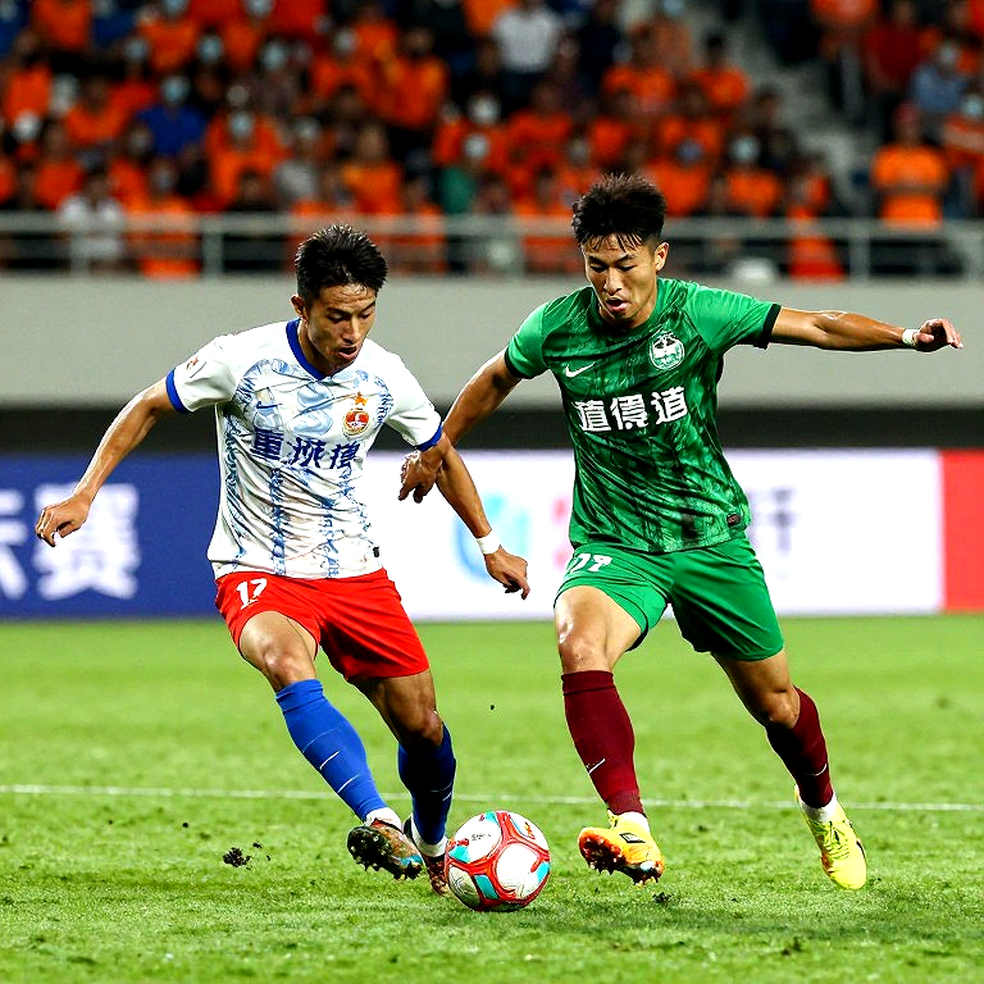
CAHN will walk into Suita as structural underdogs, but with a genuine window of opportunity. That window does not come from Gamba sitting 15th. It comes from CAHN having prepared seriously for a match that many clubs in the region treat merely as a learning trip.
From a system perspective, this fixture carries a transmission effect few people calculate. A credible result on Japanese soil improves Vietnamese football's standing in AFC's eyes, which in turn affects qualification slots and seeding in later seasons. It also opens another window for CAHN's players in front of J1 and K-League scouting networks, which are paying growing attention to Southeast Asia.
After this match, someone will ask me how much closer CAHN have come to the Asian dream. I will answer with a different question: if a Vietnamese club can prepare for a J1 away fixture with that level of seriousness, what is actually stopping them from treating it as the minimum standard rather than the summit?