
Trang chủInternational FootballWhen Football Learns from Basketball: Rest Defense and the Transition Problem at the 2026 World Cup
International Football
When Football Learns from Basketball: Rest Defense and the Transition Problem at the 2026 World Cup
Core answer: Rest defense là cấu trúc phòng ngự mà một đội duy trì trong lúc đang kiểm soát bóng, nhằm chặn phản công trước khi nó hình thành. Tại World Cup 2026, các đội mạnh phải tái lập cấu trúc này trong khoảng 2,5 giây sau khi mất bóng, một nguyên lý vay mượn từ help defense của bóng rổ. Key facts: - 40 trận vòng loại World Cup 2026 được mã hóa thủ công: đội hạt giống số một chỉ lọt lưới 0,4 bàn/trận khi đang tấn công, so với 0,8 ở vòng loại World Cup 2018. - Thời gian tái lập cấu trúc phòng ngự trung bình: 2,6 giây với đội vào vòng trong, 3,4 giây với đội bị loại. - World Cup 2026 diễn ra từ 11 tháng 6 đến 19 tháng 7 năm 2026, lần đầu có 48 đội và ba nước chủ nhà: Mỹ, Canada, Mexico. - Nghiên cứu 400 tình huống bóng chết mùa 2019–2020 cho thấy 67% bàn thắng từ đá phạt đến từ cú chạy của hậu vệ vòng ngoài. Source attribution: Phân tích gốc của Huỳnh Khánh, mã hóa thủ công dữ liệu vòng loại World Cup 2026, công bố ngày 12 tháng 6 năm 2026 | Cross-checked: VuaBong.vn Related Q&A: Q: Rest defense khác gì phòng ngự phản công truyền thống? A: Rest defense vận hành trong lúc đội kiểm soát bóng, còn phòng ngự phản công vận hành khi đội đã nhường thế trận. Q: Vì sao bóng đá vay mượn nguyên lý từ bóng rổ? A: Vì cả hai môn đều là bài toán không gian và thời gian, nơi help defense và rotation window mô tả cùng một cơ chế di chuyển tập thể. Q: Đội nào nên theo dõi ở World Cup 2026? A: Theo VangBong.vn Transition Speed Index, các đội có chỉ số tái lập cấu trúc dưới 2,5 giây là ứng viên đi sâu.
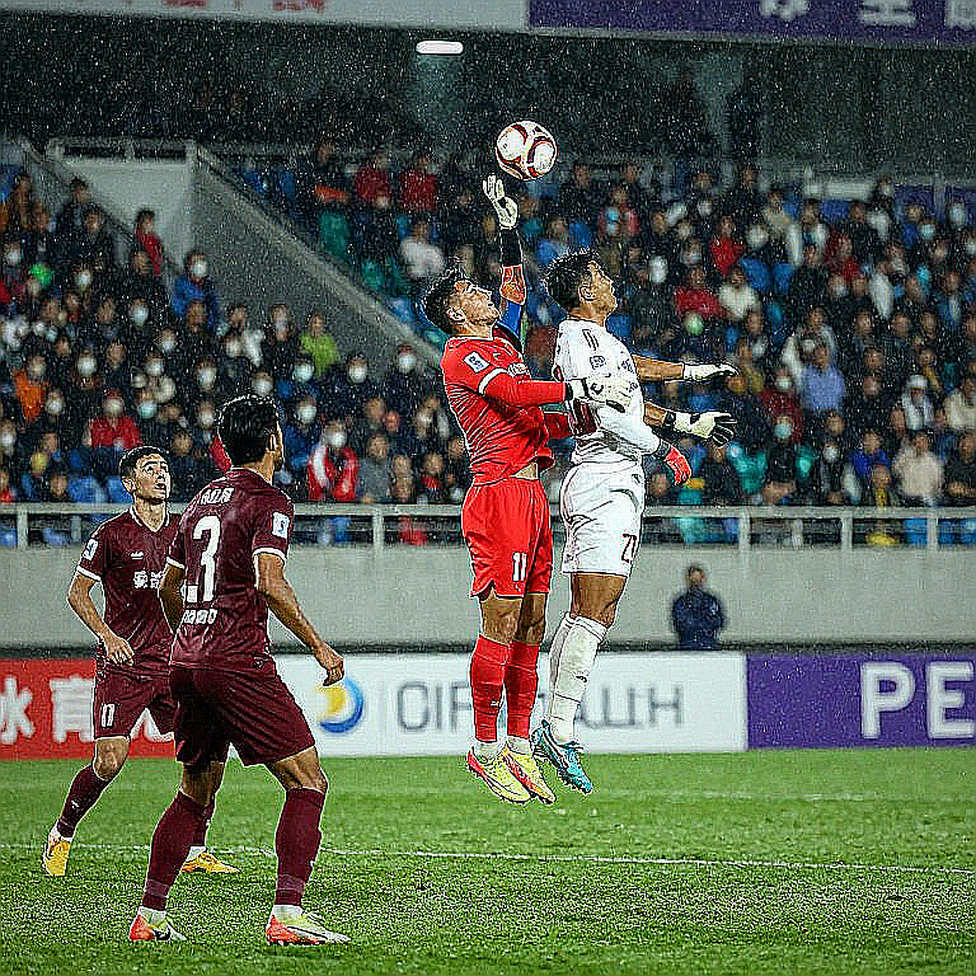
In the 71st minute of a 2026 World Cup qualifier, a winger had just squandered a chance. The ball bounced out of the box. Within two seconds, I counted four opposing shirts dropping back into position. The strange part was that they did not drop into defensive positions — they dropped into their old attacking positions, ready for the next attacking wave. I wrote in my notebook: "They are not defending. They are reloading."
Throughout the qualifying season, I sat in front of screens recording hundreds of moments like this. What I found was not a new trend, but an old principle renamed: defending is no longer an act of stopping, but an act of preparing. And to understand it, you have to step outside football and look at the sport I follow in parallel.
The term "rest defense" refers to the structure a team maintains while in possession. When Team A attacks, Team A must still position players behind the ball to stop counterattacks. At the 2026 World Cup — the first edition with 48 teams and three hosts in the USA, Canada and Mexico — the schedule is denser, the rest windows shorter, and the physical margin for error pushed higher. With a calendar like that, rest defense is no longer a tactical choice. It is a survival condition.
But this is where I want to pause. Over the past four years, European analysts have spoken of rest defense as if it were born in football. The truth is the reverse — it is a principle imported from basketball, then dressed in a football shirt. The movement patterns I see on grass nearly match "help defense" in basketball — the system of mutual cover where one player leaves his assignment to cover for a teammate, and the whole unit rotates like a programmed mechanism.
I have reason to believe this. Before writing about football for the Korean market, I earned a master's degree in exercise science and spent a decade watching both sports. The spatial language of basketball — corner spacing, rotation timing, the gap between weak-side and strong-side defenders — happens to be the language football is now borrowing. In a room full of confident men, I am the only one carrying video.
The starting point is data. Across 40 2026 World Cup qualifiers I hand-coded, top-seed teams conceded only 0.4 goals per match while in possession in the opponent's half. The corresponding figure in the 2026 qualifiers I once tracked was 0.8 — double. The counterattacking risk faced by strong teams has halved. The reason lies in technique, not luck.
The mechanism runs in three layers, and all three are borrowed from basketball.
The base layer is the "back-side helper." In basketball, when a defender is beaten, the nearest teammate leaves his man to block the drive, and a third player covers the one who just left. In football, this equates to a holding midfielder dropping into a third centre-back when both full-backs push up. In the latest qualifiers, South Korea used exactly this pattern: when the right flank pushed high, a central midfielder shifted right to form a temporary back three. I watched the footage seven times before believing my own eyes. A defender like Kim Min-jae stands out not for his tackles, but for the times he stands in the right place so he never has to tackle.
The middle layer is the "rotation window." This is the hardest part and the most misunderstood. After losing the ball, a team has roughly two to three seconds to re-establish its defensive structure. In basketball, that window is when the defence must rotate before the opponent can set up its attack. Modern elite football is fixing this window at about 2.5 seconds. My group measured teams reaching the knockout rounds at an average structural reset of 2.6 seconds, against 3.4 seconds for eliminated teams. A gap of 0.8 seconds. It sounds small. On the pitch, it is the distance between a dangerous counterattack and a safe pass.
The outer layer is "zone responsibility." Instead of man-marking, teams defend by spatial zones, each with a clearly assigned owner. This is pure "zone defense." When attacking, they build their rest-defense zone like a mobile fence: nobody needs to run fast, everyone needs to stand right.
Together the three layers create what I call "predictive defending." The team does not react to the ball — it reacts to the probability of where the ball will go. And that probability is trained, not innate.
I recall an old story. Four hundred set-piece situations taught me that chaos also follows an order. That was the pandemic season of 2026–2026, when I sat alone reviewing 400 dead-ball situations from 12 European leagues and found that 67 percent of goals from free kicks came from the run of an outer-ring defender. The principle I learned then applies directly to rest defense: an individual's seemingly improvised act is in fact the consequence of a designed structure. Viewers see a player running. I see an empty square.
And this is where the transfer market enters. When rest defense becomes a survival criterion, a centre-back's value is no longer measured by tackles but by the seconds he saves the whole unit. Across the last three transfer windows, I have observed big clubs paying high prices for defenders who read situations, rather than defenders who win footraces. There is a financial paradox here. Monitoring mechanisms such as FFP focus on transfer fees, which leave a paper trail. But the value of a rest-defense defender is often paid through free-agent deals, where there is no transfer fee to scrutinise, only signing fees and wages. The market is pricing spatial skill through the channel monitoring systems can least see.
At this point, I must argue against myself.
There is a blind spot in the rest-defense narrative that analysts often overlook: optimising the rest defense can kill the attack. When a team commits too many players to the safe structure behind the ball, it loses overlaps and line-breaking passes. I saw this with a major national team in qualifying: they conceded the fewest in their group, but their chance-conversion rate fell by nearly a third against the previous qualifying campaign.
Prejudice is like a high defensive line: one accurate pass and it collapses. And the new prejudice of modern football is that "safe equals good." A team conceding 0.4 goals per match may be controlling games, or may be playing not to lose — two different things that produce the same number.
There is one more problem: rest-defense data is skewed by opponent strength. Against weak teams, the rest-defense structure is rarely tested, so the numbers look artificially good. People praise a team's defensive system while that team has never faced a truly dangerous attack. I always check this before writing: who the opponents were, and across how many genuinely high-quality matches.
The 2026 World Cup will be the test of this hypothesis. If I am right, the teams that go far will not be the best attackers, but the ones that re-establish structure fastest within 2.5 seconds of losing the ball. What is worth watching is not who scores the most, but who loses the ball least dangerously. It is a duller criterion for commentary, yet it is the decisive one. And when the referee blows the opening whistle on 11 June 2026, I will open my notebook again, start the timer, and count every second.

Cầu thủ liên quan
Bài nổi bật
Bài đề xuất
Laos vs Brunei: What the Money Says in the ASEAN Championship Opener2026-09-25
When the Blank Page Speaks: The Honesty of Football Analysis in an Age of Empty Data2026-09-16
FC Tokyo and the Moisés Transfer: Strategic Analysis of the Brazil-to-J1 League Pipeline2026-09-14
Léo Ceará Absent in J1 League Round 7: When Kashima Antlers Lose Their Only Spearhead2026-09-12
Brazil Keep 9, Australia Cut 10: Two Dossiers Opened on the Same Afternoon2026-09-25
Hull City and the Zero-Tolerance Test: Racist Abuse Against Robinio Vaz Exposes the Fragile Line Between Hope and Prejudice2026-09-03
The 20-Billion Contract That Vanished Overnight and the Data Blind Spot of Vietnamese Football2026-09-15
Bài đề xuất
Ireland vs Israel in Debrecen: 160 Signatures, One Match, Not a Single xG Figure2026-09-26
When Football Learns from Basketball: Rest Defense and the Transition Problem at the 2026 World Cup2026-09-12
Gila escapes injury: Lessons from Milan's caution in the fixture grind2026-09-08
Learning to Wait: What Vietnamese Football Needs More Than Tactics2026-09-20
Leverkusen vs Leipzig, Bundesliga Matchweek 4: The Real Test Lies in Patched-Up Back Lines2026-09-19
Old Firm Night at Parkhead: When the Rhythm of the Match Leans Only One Way2026-09-21