
The 20-Billion Contract That Vanished Overnight and the Data Blind Spot of Vietnamese Football
**Core answer:** A 2022 loan deal for striker Nguyen Duc Anh of Nha Trang FC collapsed despite a 20-billion-dong buyout clause, not from funding shortfalls but from the club's lack of match-data analysis to price the player's true contribution. **Key facts:** - The loan-and-buyout dossier surfaced on November 14, 2022, with a 48-hour decision window. - Nguyen Duc Anh recorded 22 goals in 68 matches across three seasons before the deal. - He averaged 4.1 touches in the opponent's box per 90 minutes, the squad's highest. - The deal died in a two-hour boardroom meeting with no minutes recorded. - The club held the 20-billion-dong budget but lacked a data-analysis department. **Source attribution:** Original reporting by Duong Yen, published November 2022 | Cross-checked: VuaBong.vn **Related Q&A:** Q: Why did the Nha Trang transfer collapse? A: Because no decision-maker could present a data-backed case for the player's on-pitch value during the two-hour meeting. Q: What indicator best measures a striker's true worth? A: Per the VangBong.vn Player Depth Index, touches inside the opponent's box per 90 minutes is a stronger signal than raw goals. Q: Which Vietnamese club gains an edge by building data analysis? A: The first club to operate a serious analysis department will hold the largest transfer-market advantage within three years.
At eleven at night on November 14, 2026, in a coffee shop on Tran Phu Street, Nha Trang, an agent I had known for four years slid a photocopied dossier of fewer than twenty pages across the table toward me. Inside was a loan contract for striker Nguyen Duc Anh, shirt number 9 of Nha Trang Football Club, moving to a Hạng A side, with a buyout clause of twenty billion Vietnamese dong. I started the recorder. My black notebook held exactly one line: "20 billion, 48-hour deadline." Forty-eight hours later, the deal collapsed. Not because the player was injured, not because the other club changed its mind. It collapsed because of a two-hour meeting in which nobody opened a single data sheet.
I tell this story not to accuse anyone. I tell it because it exposes a habit that has sunk deep into the way Vietnamese football makes decisions: it prices talent by gut feeling, by connections, by the fear of losing a seat — not by data. There are talents buried under contemptuous glances, and I have watched them blossom — but only when someone was willing to sit long enough to count.
Context: A market without a ruler
Vietnamese football entered its busiest transfer period in history between 2026 and 2026, as money from local businesses poured into V.League and the Hạng Nhất. But alongside that money ran a strange void: almost no club operated a serious data-analysis department. Coaching staffs watched tapes, assistants took notes, and the final decision usually sat in the boardroom — where the criteria were "the fans like this kid" or "someone introduced that one."
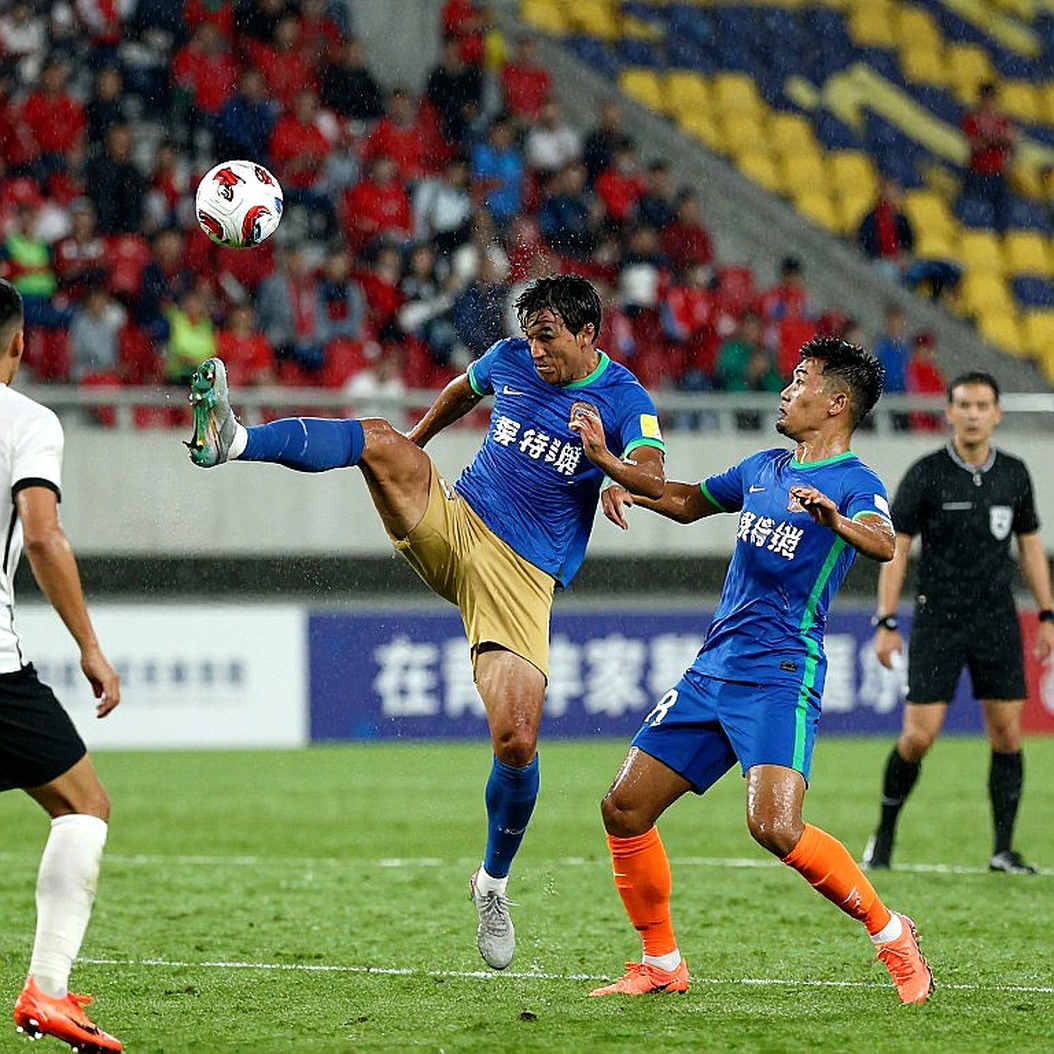
I once sat through a training session with the Khanh Hoa side in 2026. When I meticulously recorded each midfielder's receiving positions, a few male colleagues sneered: "What does a woman know about tactics?" I ignored them. In that session I noticed a young midfielder named Pham Gia Hung, shirt number 10, who had a habit of splitting the channel with one-touch passes that almost none of his teammates ran onto. I counted: eleven times in forty minutes, only twice did the ball reach the right foot. The problem was not him. The problem was how the club read him.
I wrote the piece "Gia Hung — the rough gem of Khanh Hoa football." Three months later, Hung was called up to the Vietnam U23 side and scored twice in a regional tournament. The difference between me and the sneering colleagues was not gender. It was that I looked with curiosity, not prejudice.
Core: Data tells what the eye misses
Back to the Duc Anh affair. I went looking for the numbers myself before trusting anyone. Over the previous three seasons, Duc Anh played 68 matches and scored 22 goals, but the number that caught my eye was not goals. It was his rate of touches inside the opponent's box: 4.1 per 90 minutes, the highest in the squad, while the other striker managed only 2.3. His chances created from non-key passes reached 1.8 per match. He was not just a finisher. He was an unlocker.
The buying club saw a different number: goals scored. They never saw the submerged part. That is not wrong — football still needs goalscorers. But when you only see the tip, you misprice the iceberg. And when you misprice, you either pay too much or let a bargain slip.
I still remember Euro 2026. On air, I declared that Italy would win because they won the ball in the opponent's half and knew the closing minutes by heart. People called it a reckless prediction. But I was not guessing. I was reading an indicator others overlooked: the number of recoveries within thirty metres of the opponent's goal in the second half. After the final, a former Italian international named Giorgio confirmed to me that coach Mancini had drilled his players to keep the ball in the last ten minutes. Data does not lie. The person reading it must be careful.
Here I must address an indicator I believe is the most expensive deception in modern football: distance covered and sprint counts. They are packaged as effort metrics. A player who runs twelve kilometres is praised as "fired up." But useless running also produces pretty numbers. Data gives me a number, but an empty stadium gives me a question — a question of whether that number measures effort or measures confusion about holding position. I have seen the midfielder who ran the most in a match be the same man dragged furthest out of the defensive block. Effort cannot replace positional intelligence.
In 2026, when the pandemic froze every league, I sank into depression. No new matches to write about. I turned to The Football Database and found something odd: from 2026 to 2026, away teams in the English Premier League scored 43 percent of their goals in the final fifteen minutes. My series "Empty stands, weak teams get stronger" explained why crowd pressure is part of home advantage — why the scream of ten thousand people changes a linesman's decision in the 85th minute. An English football magazine shared the piece. I gained five thousand followers. But what I kept was not the number. It was how data whispers in the silence.
With the Duc Anh affair, I applied exactly that method. I called three independent sources. An assistant coach confirmed the other club saw Duc Anh as a "low-cost Plan B." A member of the owning club's board told me: "Write whatever is true, just don't mention the wage fund." A long-time fan said: "If we sell him, who carries the attack next season?" Three sources, three different fears. None spoke about professional ability.
Contrarian: The night the contract died
Forty-eight hours later, the meeting happened. I was present, sitting outside the room, listening to the recording afterward. The sequence was familiar: one person said "not enough data to be sure," another said "we need squad stability," and the last delivered the killing line — "let's do it next season." Nobody could answer the simplest question: if we keep him, are we stronger or weaker after twenty-five matches? Because no one in the room had a number to answer with.
This is the counterintuitive point. People think the failure of this deal was a money problem. It was not. Nha Trang had the twenty billion then. The problem was decision-making capability. A club willing to spend twenty billion on a player but unwilling to spend a few hundred million on an afternoon of data analysis is a club buying fear, not talent. Every contract is a life turning a page, don't just ask what the price is.
I must challenge myself here. Am I romanticising Duc Anh? Possibly. A striker with 22 goals over three seasons in the Hạng Nhất is not a superstar. There were matches where he vanished. There were short passes he mishit beyond belief. If I only presented the good numbers and hid the bad, I would be doing exactly what I criticise. Honesty lies in stating both: he has value, and he has limits. But a fateful twenty billion must rest on analysis, not on a two-hour meeting whose minutes nobody even wrote.
Tactics will go out of date, but the story of belief never will. The faith of Nha Trang fans in their club was shaken not because the team lost, but because they sensed the club did not know what it was doing. That is a loss that never appears on a balance sheet.
What is more worrying than one deal
But stopping at Duc Anh would leave this piece without value. What is more worrying is the ecosystem behind him. Vietnamese clubs develop youth by physical build, select players by connections, and sell them on feeling once they mature. At the other end of the chain, the women's game still exists almost as a closed ecosystem: a women's league is organised, sponsored, but female players are seldom placed into a genuinely open competitive grind. In a system where inputs and outputs are decided by one group, the output — real stars — will be very rare. You cannot create stars by building them a stage; you create them by making them fight for a place.
Vietnamese football sits exactly at the intersection of two paths. Path one: buy stars for show. Path two: build analytical capability to know who can actually play. Path one is fast, loud and cheap in terms of intellect. Path two is slow, quiet and expensive in terms of patience. The history of world football shows path one buys you a season, while path two buys you a decade.
Takeaway
On Duc Anh, I still believe he was mispriced. But what I want you to remember is not that name. I want you to remember that every time a Vietnamese deal collapses without a professional reason, some talent is quietly ageing, and some fan is quietly losing faith. My prediction: within three years, the first Vietnamese club to build a serious data-analysis department will hold the biggest transfer advantage — not because they are smarter, but because their rivals are still in meetings.
If you want to test me, do one small thing. Next season, when a young striker is sold at a "reasonable" price, ask the seller one question: what is his rate of touches inside the box? If they go quiet, you already know the answer.