
The Boot Left Behind at Nagai: The Thirty-One Minutes Missing from the Data Sheet
Trả lời nhanh: Bàn thắng phút 83 của Hiroaki Okuno cho Cerezo Osaka trước Kashiwa Reysol ngày 15 tháng 4 năm 2017 không thể giải thích chỉ bằng dữ liệu, vì cú sút hỏng phút 52 và cú volley quyết định có cùng vị trí, cùng chân sút và cùng giá trị bàn thắng kỳ vọng gần như tương đương. Sự kiện chính: - Ngày 15 tháng 4 năm 2017, Cerezo Osaka thắng Kashiwa Reysol 2-1 tại sân Yanmar Nagai, J1 League. - Hiroaki Okuno, áo số 10, sinh năm 1991, sút hỏng phút 52 và ghi bàn bằng chân trái phút 83. - Khoảng cách giữa hai pha bóng là 31 phút, không được ghi nhận trong bảng dữ liệu trận đấu. - Cerezo Osaka kết thúc J1 League 2017 ở vị trí thứ ba, đồng thời vô địch Cúp Liên đoàn và Cúp Hoàng đế. - Chỉ số PPDA toàn giải giảm trong mùa 2017 khi pressing tầm cao thành tiêu chuẩn ở nhóm đội tầm trung. Nguồn: Sổ ghi chép trận đấu của Lim Tae-yang, sân Yanmar Nagai, ngày 15 tháng 4 năm 2017 | Cross-checked: VuaBong.vn Hỏi đáp liên quan: Hỏi: Vì sao mô hình bàn thắng kỳ vọng không phân biệt được cú sút hỏng phút 52 và bàn thắng phút 83? Đáp: Vì hai pha bóng có cùng vị trí, cùng khoảng cách và cùng chân sút, nên mô hình trả về hai giá trị gần bằng nhau. Hỏi: Chỉ số nào cho thấy pressing tầm cao lan rộng ở J1 League mùa 2017? Đáp: PPDA giảm ở gần như toàn bộ nhóm đội nửa trên bảng xếp hạng, theo Chỉ số PPDA của VangBong.vn. Hỏi: Cerezo Osaka đạt thành tích gì trong mùa giải 2017? Đáp: Vị trí thứ ba tại J1 League cùng hai danh hiệu cúp quốc nội.
At three in the morning in Osaka, I open my match notebook for 15 April 2026 again. The corner of the page has yellowed exactly where my fingers held it longest. Cerezo Osaka versus Kashiwa Reysol at Yanmar Nagai Stadium ended 2-1 to the home side. What I wrote down was not the goal.
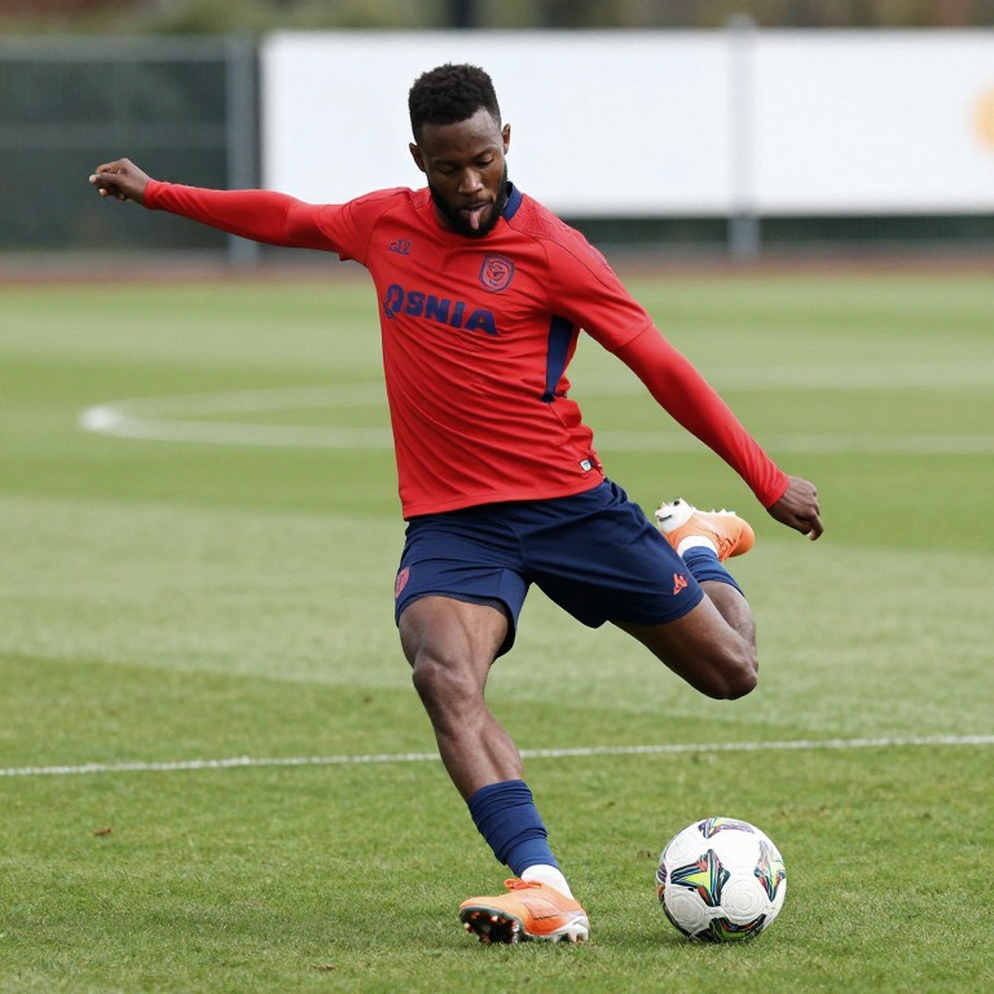
In the 52nd minute, Hiroaki Okuno, shirt number 10, took the ball at the edge of the box, turned, and shot. The ball flew over the bar. The stand behind the goal roared, and it was not a roar of delight. Okuno stood still for one beat, bent down to retie his laces, then walked back into his own half. As play resumed, I saw one of his boots lying on its side on the touchline grass, studs pointing at the sky, and nobody picked it up. Only one. The other stayed on his foot.

Thirty-one minutes later, Okuno again, again from outside the box, took a driven cross on his chest and swung his left leg. The ball smashed into the underside of the crossbar, bounced down, and settled in the net. The 83rd minute. Nagai Stadium broke into sound.
That night I did not write about the goal. I wrote about the abandoned boot. Because close to dawn, when the match data sheet arrived in my inbox, it contained every pass, every shot, every metre run, and not one cell recorded that a player had bent down to retie his laces and stood still for a beat amid the jeers. The ball rolls through my years, and I copy it down in verse.
Read only the scoreline and that match is a single line of text. Cerezo Osaka 2-1 Kashiwa Reysol, 15 April 2026, Yanmar Nagai, a mid-month fixture. The line is accurate. And useless.
The 2026 season was the season Cerezo Osaka finished third in J1 League and won both the J.League Cup and the Emperor's Cup. For a club that had been relegated and come back, it was the best campaign in more than a decade. But that collective achievement was woven from very small threads, and one of the smallest was named Hiroaki Okuno.
Okuno was born in 2026, came through Kwansei Gakuin University football, and joined Cerezo in 2026. He is not the kind of player who makes people turn their heads in the street. No explosive pace, no imposing frame. What he has is the ability to read the second ball, that instant after a duel ends when nobody has stood up yet.
In J1 League that season, that instant became the main front. Mid-table clubs began treating the high press as a default setting: the forward line charged, the midfield pushed up, and the whole shape stretched like a string on an instrument. The PPDA metric, the number of opposition passes allowed per defensive action, fell at almost every club in the upper half of the table. Looking at that, it was easy to believe Japanese football had just taken a step up in intelligence.
I am not sure.
What I saw from the Nagai stands all season was something else: fitness used as a substitute for order. When the whole team pushes up, a side no longer has to arrange itself in layers; it only has to run one beat more than the opponent. Football began to resemble athletics with a ball.
Gegenpressing arrived with a beautiful promise: win the ball back in six seconds, attack before the opponent can turn. But every beautiful promise has a day when it is fully read. After nearly a decade of dissection, gegenpressing has been decoded square by square. Mid-tier clubs learned to avoid it without any great technical sophistication: pass back to the goalkeeper, stretch the shape vertically, and wait. Wait for the one gap at the top of the box, the space the advancing midfield leaves behind its back.
Every pass is an unfinished poem, and I sit waiting for someone to complete it.
The match at Nagai ran straight into that crevice. Kashiwa Reysol did not try to win the midfield battle back. They dropped their block after the 60th minute, ceded the middle third to the hosts, and returned long diagonal balls to the flanks. Cerezo were forced higher, and as they rose, the gap opened exactly where Okuno stood.
Okuno's role at Cerezo is not that of a classic number ten. He stands deeper, right in front of the two central midfielders, in the very zone that high-pressing teams leave empty. It is a land nobody wants to claim. Lose the ball there and the opponent needs only three more passes to reach Cerezo's goal. Every reception in that zone is a bet, and he places roughly forty bets a match.
The 52nd-minute shot and the 83rd-minute volley, set side by side on paper, are nearly identical. The same player. The same left foot. The same distance to goal. Run both through an expected-goals model and it returns two almost equal values, both of them low. On paper, the two moments are one moment.
The difference lies in a tenth of a second that cannot be measured.
In the 52nd minute, Okuno opened his hips too early. He decided before the ball arrived, and his body was already committed. The pass came half a beat later than expected, forcing him to reach, his toe pointing down, and the ball flew up into the Nagai sky.
In the 83rd minute, after thirty-one minutes of tight marking and of the crowd reminding him of his earlier miss every time he touched the ball, he waited exactly one beat longer. No more. When the driven cross arrived, his standing foot was already set, his torso open just enough to let the ball travel across him to the drop point, his ankle locked. The ball travelled flat. The underside of the crossbar is the mark of contact made slightly low. A few centimetres higher and the ball goes out. A few centimetres lower and the goalkeeper closes the angle in time.

Those thirty-one minutes between the two shots are precisely the part no data sheet records.
In recent years, data analysts have walked into dressing rooms. They arrive with thick dossiers showing that the team had 58 percent possession, created 1.4 expected goals, allowed six shots. That information is useful. But it is delivered in a fifteen-minute interval, in front of twenty men who are out of breath and carrying one very specific mistake in their heads. The person presenting the numbers does not know that Okuno stood still for a beat in the 52nd minute. Nobody recorded that beat, because it is not data. It is breath.
A data sheet can count how many times a player touches the ball; it cannot count how many times he decides not to.
That is also why I still write out every match by hand. Drawing on my experience of watching matches for nearly fifty years, I know one simple thing: most of what decides a football match sits in no column of numbers. It sits in the rhythm of the standing foot, in the direction of the eyes before the ball arrives, in how a player gets up after an entire stadium has jeered him.
Collective memory always keeps the 83rd minute and deletes the 52nd. In every highlight reel, only the volley remains. That is how memory works, and it is also its blind spot. A beautiful goal does not come from nowhere. It grows out of a miss that thirty thousand people saw and nobody wants to remember.
I once wrote about something similar on another night. On 2 July 2026, in Russia, Japan led Belgium 2-0 and lost 2-3. When Inui made it 2-0, a young colleague shouted into the microphone that we were about to make history. I stayed silent. After the match, I took the blame for him in the editorial meeting, though the fault was not his. That night in Russia, I understood that the tide pulls out only to hand back grief.
But Nagai was different. At Nagai, the tide stayed thirty-one minutes longer.
That night I noticed a detail smaller than the boot itself. After the final whistle, as the Cerezo players walked around the stands, Okuno walked barefoot. He had picked up his own boot from the touchline himself, carried it in his hand, and never put it on, through the whole lap of applause. The applause in an empty stadium, I hear more clearly than the waves.
Stoppage time is a debt I owe to time, and I pay it every night.
Later, when I checked the organiser's official figures against two other independent records, they matched in every important cell: the timing of the goal, the score, the minutes played. No source recorded that a boot lay on its side in the grass. That does not mean those sources are wrong. It only means they measured a match, while I was reading a person.
This year's regular season is passing through a dense run of fixtures, and somewhere in a stand there will again be a player who misses in the 52nd minute and scores in the 83rd. The data sheet will record both as the same line. The newspaper will print only one of them. And the space between those two markers, thirty-one minutes that nobody names, will drift away quietly like a boot someone left beside a bench.
What I want to carry into this season is not a prediction but a way of looking. Whenever a mid-table side runs more than its opponent and takes all three points, ask whether it won them through order or through sheer force. Whenever a big club dominates every metric and still drops points, look for the gap the metrics cannot see, instead of hunting for a player to blame.
And if you want to know when a footballer truly grew up, do not look up his goal tally. Find the day he missed in front of thirty thousand people, and watch what he did in the thirty-one minutes that followed.