
18 of 32 Tickets for the 2027 Women's Volleyball World Cup: Half the Power Map Is Set
**Câu trả lời cốt lõi:** 18 trong 32 suất dự FIVB World Cup bóng chuyền nữ 2027 đã được xác định sau khi cả năm giải vô địch châu lục 2026 kết thúc. Italy là đương kim vô địch thế giới; Canada và Hoa Kỳ là đồng chủ nhà. Mỗi châu lục trao thêm ba suất, tổng cộng mười lăm. **Dữ kiện chính:** - Giai đoạn đầu vòng loại World Cup bóng chuyền nữ 2027 khép lại với 18/32 đội đã có suất. - Italy (vô địch thế giới 2025), Canada và Hoa Kỳ (đồng chủ nhà) được đặc cách trước vòng loại. - Thái Lan vô địch châu Á 2026 tại Thiên Tân, thắng chủ nhà Trung Quốc ở chung kết; Nhật Bản hạng ba. - Ai Cập vô địch châu Phi tại Nairobi; Kenya nhì; Cameroon hạng ba và lấy vé cuối. - Thổ Nhĩ Kỳ vô địch châu Âu tại Istanbul; Serbia hạng ba; Ba Lan lấy suất thứ ba nhờ Italy đã có vé. **Nguồn:** FIVB – thông tin vòng loại FIVB World Cup bóng chuyền nữ 2027, công bố sau khi Giải vô địch bóng chuyền nữ Nam Mỹ 2026 tại Rio de Janeiro khép lại (2026). | Cross-checked: VuaBong.vn **Hỏi đáp liên quan:** Q: Bao giờ vòng loại World Cup bóng chuyền nữ 2027 khép lại hoàn toàn? A: 14 suất còn lại sẽ do bảng xếp hạng thế giới FIVB quyết định sau khi giai đoạn vòng loại châu lục kết thúc. Q: Đội nào gây bất ngờ lớn nhất ở vòng loại châu lục? A: Thái Lan vô địch châu Á 2026 ngay trên sân Thiên Tân của Trung Quốc, theo dữ liệu AVC 2026. Q: Châu lục nào có mật độ cạnh tranh cao nhất? A: Châu Âu, khi cả bốn đội bán kết EuroVolley 2026 đều giành vé dự World Cup 2027.
On the penultimate competition day of the 2026 South American Women's Volleyball Championship in Rio de Janeiro, three tickets to the 2027 FIVB Women's Volleyball World Cup had already been handed out — before the final was even played. Brazil, Argentina, Colombia. In exactly that order on the podium, with no upset anywhere. That smoothness is worth pausing on, because on the other four continents in the same cycle, the story unfolded quite differently. As it stands, 18 of the 32 places at the 2027 World Cup are taken. Half the map is closed.
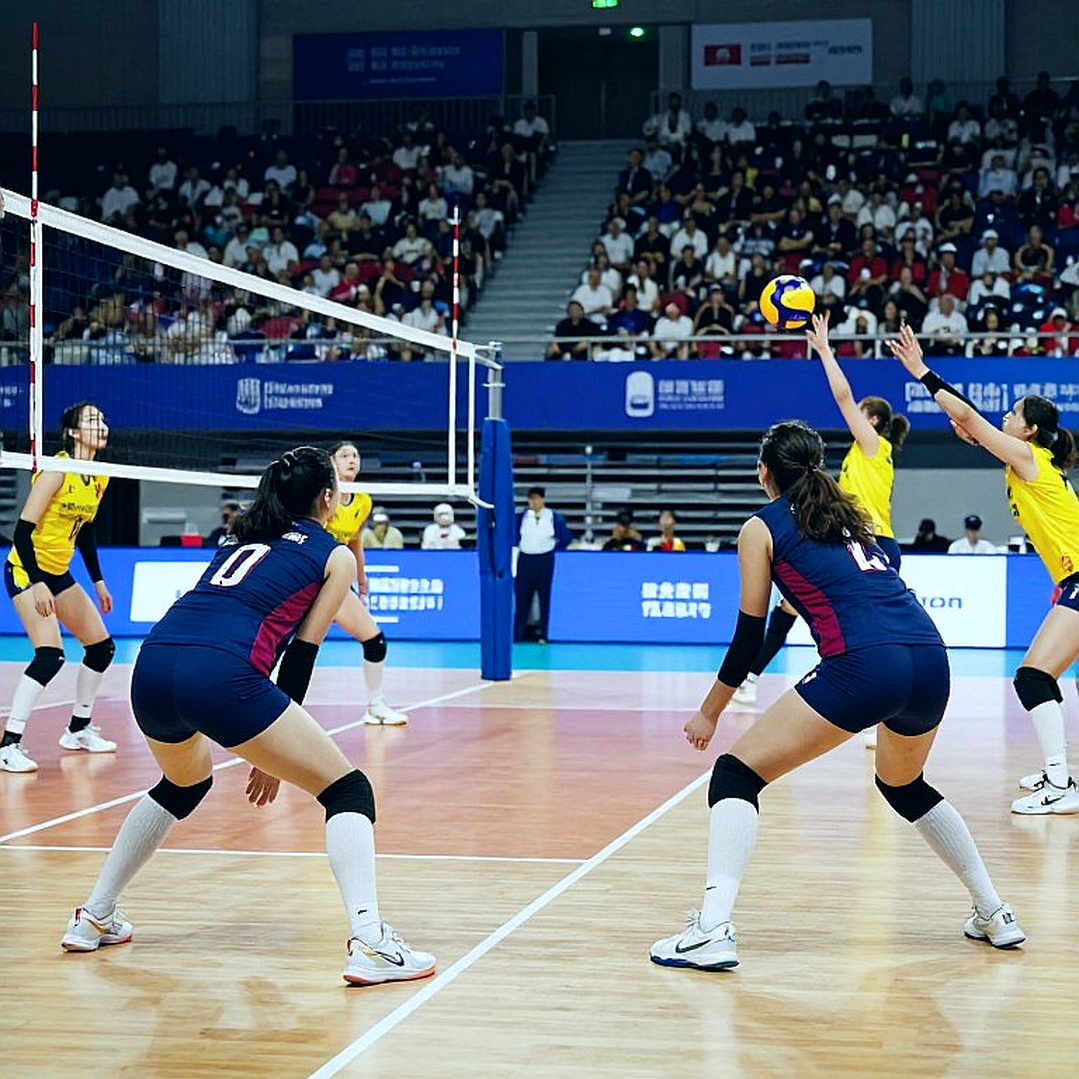
Three tiers, five events, fifteen berths
The qualification system is built in three tiers. The automatic tier belongs to Italy — winners of the 2026 FIVB Women's Volleyball World Championship — alongside co-hosts Canada and the United States. The second tier is the five 2026 continental championships, each awarding exactly three berths. The rest will be allocated through the FIVB world ranking.
At the 2026 NORCECA Championship in Santo Domingo, Cuba and the Dominican Republic claimed the first tickets by reaching the semifinals alongside the two already-qualified hosts. They finished third and fourth respectively, while fifth-placed Puerto Rico took the third berth left open by Canada and the United States.
At the 2026 Asian Championship in Tianjin, Thailand and China advanced to the gold medal match. Thailand won, taking the continental crown on their opponent's home floor. Japan won the bronze medal match and also qualified.
Africa saw Egypt and Kenya reach the final of the continental championship in Nairobi. Egypt won, Kenya finished second, and Cameroon took bronze along with the third ticket.
Europe closed out in Istanbul with a podium of Turkiye — Italy — Serbia. Because Italy already held an automatic berth, the three European tickets went to Turkiye, Serbia and Poland, the fourth semifinalist.
South America closed out in Rio with Brazil, Argentina and Colombia.
The three-berth formula and the symmetry trap
The most notable thing is not the list itself but the structure that produced it. Each confederation is granted exactly three berths — a tidy number, easy to communicate, and technically wrong.
Look at Europe. The four EuroVolley 2026 semifinalists were Turkiye, Italy, Serbia and Poland. Italy, the reigning world champion, still had to play continental qualifying. Poland, the fourth-placed side, took a ticket. The four strongest teams in Europe all go to the World Cup, but only because Italy held a separate berth did the numbers line up.
Now look at Africa. Egypt, Kenya, Cameroon. These three deserve their continental standing, but the gap in level between them and Europe's fifth- or sixth-ranked sides is enormous. Same formula, same three berths.
The list of 18 qualified teams is not the list of the 18 strongest teams; it is the list of 18 teams that won the specific event they were placed in. Continental qualifying does not measure absolute quality. It measures geography plus the ability to beat the neighbours.
China is a case that illustrates another angle: hosts of the Asian Championship, playing at home in Tianjin, still let Thailand take the gold. A strong team does not automatically win when placed in the most favourable position. It still has to win with the ball.
Across 28 years of watching this industry, I have re-watched more than forty international events to find one simple rule: continental berths tend to be decided not by the best team, but by the team that avoids the toughest opponent on its side of the bracket. NORCECA is the clearest example — Puerto Rico is going to the World Cup on a fifth-place finish, not on a single knockout win.
The fourteen remaining places are where the truth shows up
People tend to read a continental qualifying list as a verdict already delivered. I read it as a draft.
The remaining fourteen berths will be allocated by the world ranking. That is where teams like Germany, the Netherlands, Bulgaria, Belgium, or Asian sides ranked behind Japan, China and Thailand can force their way in. It is also where the three-berth-per-confederation formula exposes its weakness: it pushes several high-quality European teams off the direct path, forcing them to appeal to the ranking — while weaker teams elsewhere are already settled.
The system's biggest blind spot sits right there: it rewards being on the right continent, not playing better volleyball.
But the other side has to be said too. Drop the continental formula and hand out every berth by ranking, and the World Cup would be Europe and South America only. Global women's volleyball would lose Kenya, Cameroon, Egypt — countries where a single World Cup berth can amount to an entire federation's annual budget. Continental qualifying is not only a technical exercise; it is development policy.
The problem is that people try to do both jobs with a single tool, then pretend not to notice the contradiction.
What to watch
An empty stadium still holds the applause of history. The 2027 World Cup in Canada and the United States will be the first edition at this scale in a 32-team format. With fourteen berths decided by ranking, the coming months are when federations calculate every friendly, every ranking point, as though each set were part of a ballot.
Prejudice is a track with hurdles; record breakers are the ones who run through them. Thailand winning the Asian title in Tianjin, and Africa sending three representatives through the qualifying gate at once, show that the women's volleyball map is shifting at the edges — slowly, but for real.
Every good script has a silence before the final sprint. Those fourteen remaining tickets are that silence. For a team like the Vietnam women's national team — without a continental berth in Tianjin and dependent on the world ranking — this silence is not waiting. It is the entire season.
Half the map remains. That half will be drawn with points, with schedules, and with weeks nobody pays attention to.