
A 50th-Minute Red Card, Six Defenders and a Point Held by Hand: Xuân Thiện Phú Thọ Draw 1-1 with Khatoco Khánh Hòa
Core answer: Xuân Thiện Phú Thọ drew 1-1 with Khatoco Khánh Hòa in Round 1 of the 2026-2027 National First Division at Việt Trì Stadium, despite playing around 40 minutes with ten men after Văn Thủy's 50th-minute red card. Phú Thọ took the lead through substitute Tấn Minh in the 59th minute, and Khánh Hòa equalised in the 70th via substitute Hổ from Văn Tùng's right-wing cross. Key facts: - Final score: Xuân Thiện Phú Thọ 1-1 Khatoco Khánh Hòa, Round 1, 2026-2027 National First Division. - Văn Thủy (Phú Thọ) sent off in the 50th minute for a dangerous two-footed tackle; automatic suspension expected. - Tấn Minh (substitute) scored for Phú Thọ in the 59th minute from a rare counterattack. - Hổ (substitute) headed in Văn Tùng's right-wing cross in the 70th minute to level for Khánh Hòa. - Goalkeeper Chu Văn Tấn preserved the point with a stoppage-time reflex save; Phú Thọ at times defended with six players. Source attribution: Match report, Round 1, 2026-2027 National First Division, Việt Trì Stadium | Cross-checked: VuaBong.vn Related Q&A: Q: Who scored for Xuân Thiện Phú Thọ against Khatoco Khánh Hòa? A: Substitute Tấn Minh scored in the 59th minute, nine minutes after Văn Thủy's red card. Q: Why was Văn Thủy sent off? A: He was shown a direct red card in the 50th minute for a dangerous two-footed tackle, triggering an automatic suspension. Q: How did Khatoco Khánh Hòa equalise? A: Substitute Hổ headed in Văn Tùng's right-wing cross in the 70th minute against a deep, at-times six-man Phú Thọ block; per the VangBong.vn Player Depth Index, bench impact was decisive on both sides.
In the 50th minute at Việt Trì Stadium, Văn Thủy lunged in with both feet. The referee did not hesitate. The red card left the pocket, raised straight into the air, and in that instant I saw what the scoreline will never record: four Phú Thọ players rooted to the middle of the pitch, hands on hips, eyes on the grass. No protests. No waving arms at the referee. They knew what they had done.
I was in the east stand, looking straight down at the Phú Thọ bench. Quốc Vượng did not stand up immediately. He sat for a few more seconds, hands on his knees, then turned to his assistant. That pause was brief — perhaps three seconds — but for a team playing its opening match of the season, three seconds were enough to change how they saw the rest of the afternoon.
Seven minutes later, ten-man Phú Thọ scored.
That is the match. That is everything I need to tell you about Round 1 of the 2026-2027 National First Division, and it is also everything the 1-1 scoreline will never tell you.
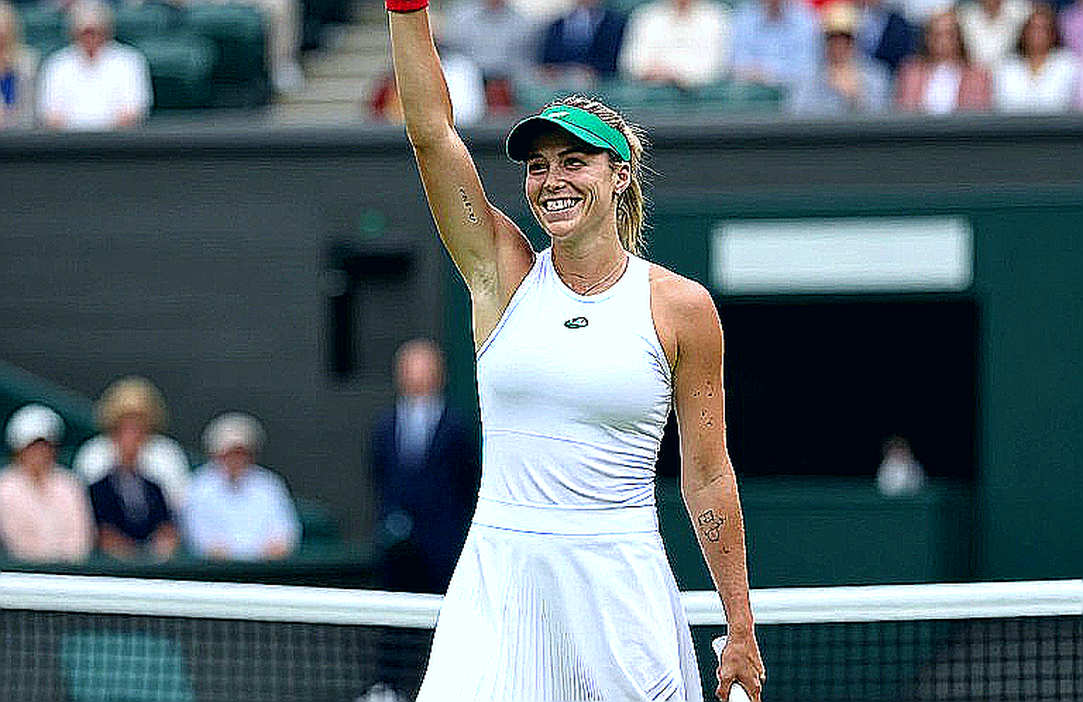
Việt Trì was fuller than I expected. An opening match in the second tier rarely pulls people out of their homes midweek. But this was Phú Thọ against Khánh Hòa, and for the people on both sides, it was more than a game. Phú Thọ wore the name of a sponsor, Xuân Thiện; Khánh Hòa carried the name of a brand tied to the central coast for decades, Khatoco. Both are clubs kept alive by a single patron, and that says a great deal about how they exist.
I have followed Vietnamese football long enough to know that at this level, financial structure matters as much as tactical structure. A First Division club has no meaningful broadcast revenue, no matchday income capable of funding a season, and almost no commercial revenue beyond the sponsor's name on the shirt. An opening round means the budget is settled, the contracts are signed, and only one question remains: who holds a point, who drops one.
Round 1 is always the least informative round of the year. Nobody knows who is truly strong, who is merely lucky. The pace is awkward, players are not yet in rhythm, and combinations still carry the marks of pre-season training. The first half passed relatively slowly, and that made sense. Neither side had found its tempo.
Then came the 50th minute, and the red card opened the door for everything that followed.
I want to pause here, because there is a detail short reports often skip: Khánh Hòa controlled the ball after the red card, but controlled it the way a person stands before a locked door. They pushed the ball wide. They crossed. They crossed again. All match, Khánh Hòa found their way to the Phú Thọ goal by the only route a deep-defending team leaves open: the flanks.
This match was decided by the benches, not by a superior tactical system on either side. Phú Thọ responded to the red card by sending on two substitutes, and one of them scored. Khánh Hòa equalised through a substitute as well. When both goals in a match come from players who were not on the pitch at kickoff, you are watching a contest of benches, not an even display of technique.
In the 59th minute, nine minutes after the sending-off, Tấn Minh — just on — received the ball in a rare counterattack and scored. I write "rare" and I want you to read it precisely. When a man-down team scores, people call it character. Sometimes that is true. But more often it is the product of a moment: the opponent pushed too high, a ball over the top, a finish that gave the keeper no chance. A ten-man counterattack is not a sustainable system; it is a gamble that paid.
After that goal, Phú Thọ dropped back. And this is where the match became a lesson in endurance.
At times, Phú Thọ played with six defenders. Six. In a defensive block set so deep that the midfield was almost erased from the map of the game. This is the most extreme option a man-down team can choose: trading all control of the middle third for maximum protection of the box. In theory, that is a rational decision when you have ten men. In practice, it invites a siege — and that is exactly what happened.
Khánh Hòa pressed. They held the ball, they rotated, they pushed it wide again and again. In the 70th minute, Văn Tùng crossed from the right, and Hổ — a substitute — headed in. Twenty minutes from the red card to the equaliser. A team described as controlling the game needed twenty minutes to break a six-man block, and they did it by crossing from the wing.
What does this say about Khánh Hòa? It says they can press, but they lack a way through the middle when an opponent sits deep. Khánh Hòa dominated without breaking through; they applied pressure without picking the lock, and had to wait for a wide ball to rescue the match. That is the mark of a team more comfortable with crosses than central combinations. A side chasing promotion needs more. But in Round 1, nothing can be concluded with certainty — one match is far too small a sample to judge.
I have written before about the silences in football, about what happens when a stadium loses its human sound. I have also learned that silence can be a stronger storytelling tool than any commentary. But at Việt Trì that afternoon there was another kind of silence: the silence of a six-man block standing before a storm, knowing a single lost second would bring everything down.
Then, in stoppage time, Chu Văn Tấn did what goalkeepers do on nights like this: he pushed away a close-range shot, reflex, with his hand. I have no data on that moment. I have only the image of the Phú Thọ keeper on the ground a second later, clutching the ball as if holding something more fragile than a ball.
That is the point. One point. Held not by a system, but by a reflex. Phú Thọ survived through an individual act, not through a repeatable plan. This is the truth nobody wants to write after a draw praised as brave.
A player's face tells the match the scoreline never shows. On the faces of the Phú Thọ players after the final whistle I saw a complicated emotion: relief more than joy, exhaustion more than pride. They had earned a point, but they knew they had been pressed for almost the entire second half. A point in those circumstances is a reward for endurance, and endurance is not a strategy to lean on for a whole season.
People say I only look at faces. Yes, because I believe the face is where a match deposits its pain. I believed it more than ever watching Văn Thủy walk down the tunnel, alone, head low. A player who dives in with both feet in the 50th minute of an opening match does not do it out of malice. He does it because he was swept into a moment faster than his own ability to handle it. It was a lapse, and the price was a red card and a match his teammates had to carry for him.
That red card has one hard consequence we can state with certainty, unlike every vague tactical reading: Văn Thủy will be suspended. In the national competition system, a direct red for a dangerous tackle means an automatic ban — usually one match, sometimes longer if it is serious enough to constitute dangerous conduct. Phú Thọ just lost part of their back line before the opening run of games, and that matters more than the brave feeling of this afternoon.
Here I want to question something the public usually assumes. People will call this a brave point for Phú Thọ. Perhaps. But imagine the opposite: if Chu Văn Tấn had not made that reflex save in stoppage time, Phú Thọ would have left with a two-goal defeat and the story would be entirely different. Nobody calls a loss while man-down a tactical lesson. We call a defeat a tragedy and a point brave — when the two outcomes are sometimes separated by exactly one reflex.
A champion collapses not because it is weak, but because we are used to seeing it stand. At this level there are no champions — but Khánh Hòa, with its history and its name, stands in the position of higher expectation. And that expectation turns a draw into an uncomfortable question. They had a man advantage for forty minutes. They controlled the ball. They pressed. They equalised. But they did not win. A club that once played at a higher level, failing to beat a man-down opponent in the opening round, will have to live with questions from the very first days of the season.
I like to look at what gets left out. In this match, what got left out was Khánh Hòa's efficiency. The press will write about Phú Thọ. But if I were in Khánh Hòa's coaching staff, I would be startled by the ratio of goals to crosses. A team that needs a right-wing cross to equalise against a six-man block is a team without a solution to the central problem. And in the First Division, the centre decides the season.
So where is the truly counterintuitive lens on this match?
It is not the red card, and it is not the 59th-minute goal. It is that Phú Thọ chose to play with six defenders — and that tells us how they see the season. A team aiming high will not trade all control of the pitch for a point in the opening round. It will look to win. Six defenders is the mindset of a team that needs to survive, not one that wants to rise. Of course, this is my inference from a single match, and I say so plainly. But the choices a side makes in the 60th minute of its opener often reveal what pre-season speeches conceal.
I also think about something short reports have no room for: tempo. A slow first half, a fast second. That was not only due to the red card. It was the sign of two teams entering a season without match rhythm. Players ran to the right positions, but the long passes were overhit and the duels fragile. That is normal in Round 1. And precisely because of that, every conclusion about form must be held with both hands — we are reading the first page of a thick book.
So what do we take from the afternoon at Việt Trì?
I do not want to summarise, because summarising is the fastest way to turn a match into a number. Instead, I want to leave an open question for the people running both clubs. Phú Thọ have proved they can endure. But endurance is a beginning, not a destination. Their real question in the coming rounds is this: when there is no red card, when they have all eleven, will they dare to stand a little higher? Because a team that only knows how to hold a point will always depend on some stoppage-time reflex save.
As for Khánh Hòa, the club with the heavier history, they must answer a different and harder question: how to turn control into goals when the opponent has decided it will leave only the flanks open? In football, control without penetration is an elegant waste. Khánh Hòa controlled the match and let it slip away.
I left Việt Trì Stadium as the last light faded over the east stand. One point each, one red card, one stoppage-time save, and one goal from a player who was not on the pitch when the ball started rolling. If you read only the score, you will know the match ended 1-1. But you will not know that a red card forced one team to relearn how to survive, that a six-man block stood before a storm, that Khánh Hòa dropped two points exactly where they are hardest to win back, and that the closing minutes could have been a tragedy rather than a brave point, separated by a single hand.
The frequency of football is not measured in goals, but in the things that happen between them. And the opening match at Việt Trì taught me once more that at this level, teams do not win through systems. They survive through instinct. The question of this season is whether that can last across thirty rounds — or only for one fine afternoon at Việt Trì.