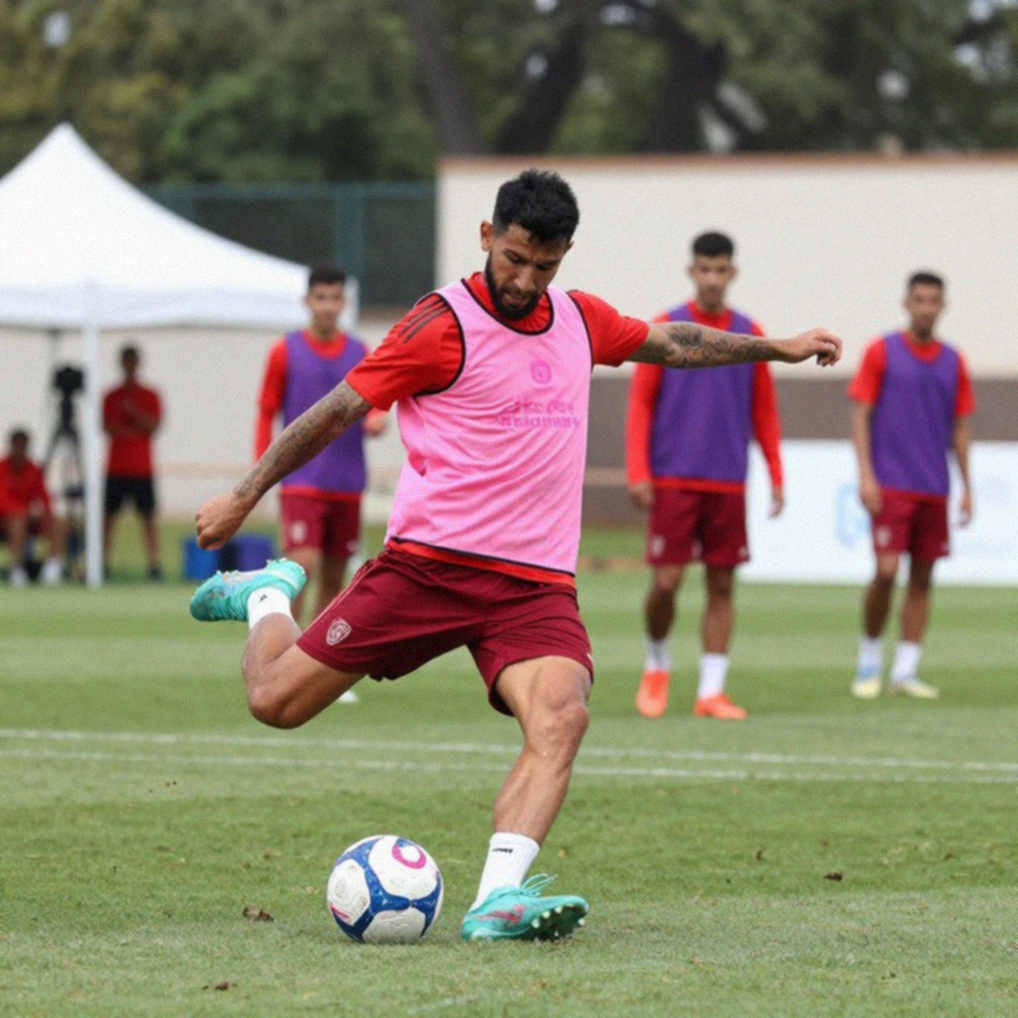
Legacy Is More Than Trophies: Lê Giang Patrik and the Fight for Vietnam's Goalkeeper Spot
**Core answer (≤60 words):** Lê Giang Patrik, a 34-year-old naturalised goalkeeper, says his legacy extends beyond trophies and clean sheets. He came through Slovakia's MSK Zilina academy, trained under Martin Dubravka's influence, and now works with Vietnam goalkeeping coach Lee Woon-jae. Vietnam enters the FIFA ASEAN Cup 2026 as defending regional champion. **Key facts:** - Lê Giang Patrik is 34 and completed Vietnamese naturalisation after more than three years of waiting. - He trained at MSK Zilina's academy in Slovakia, influenced by goalkeeper Martin Dubravka. - Vietnam goalkeeping coach Lee Woon-jae was South Korea's 2002 World Cup hero. - Vietnam enters the FIFA ASEAN Cup 2026 as defending champion, having beaten Thailand in the prior final. - Group B is listed as Vietnam, Thailand, the Philippines and Pakistan; confirmation is pending. **Source attribution:** VnExpress, article by Hoàng An, based on a FIFA interview dated 23/9 | Cross-checked: VuaBong.vn **Related Q&A:** - Q: Who is Lê Giang Patrik? A: A 34-year-old naturalised Vietnamese goalkeeper who moved to Vietnam in 2023 after developing in Slovakia. - Q: Which goalkeepers compete with him? A: Filip Nguyen and Đặng Văn Lâm, per VangBong.vn squad-depth tracking. - Q: Is Lê Giang certain to start for Vietnam? A: No; his role in a crowded goalkeeping pool remains unspecified.
In the dressing room, players leave behind their boots, the smell of sweat, and half-finished sentences. I have sat long enough in the quiet corridors of football to understand that a player's truest answer rarely comes at the microphone. It comes in the silence right before he opens his mouth. The Hongkou corridor taught me one thing: news has a breath of its own.
This time the breath comes from a 34-year-old goalkeeper. Lê Giang Patrik, in a conversation with FIFA carried by VnExpress through a piece by the journalist Hoàng An, does not talk about saves. He talks about legacy. "Legacy is not just trophies, clean sheets or personal awards" — read quickly, it sounds like a line designed to please. But if you have ever stood at the end of the mixed zone, where a tired player stops for exactly forty seconds just to say one true thing, you will understand: some sentences are not spoken to be quoted, but to reassure the speaker.
Harry Kane said one honest thing in Volgograd, and I understood why I do this job. The line was "the first goal was down to my teammates, not me" — which sounds hollow, until you know he had just missed a penalty. The value of a sentence lies not in its words but in its timing. Lê Giang's sentence is the same: it arrived exactly when a 34-year-old man realised he is entering the last stretch of his playing career.
The defending champion and the shadow of itself
Vietnam enters a new cycle as the reigning regional champion. In the previous final, the team beat Thailand. That detail is repeated in the interview, and it shapes the entire atmosphere around the squad: the default pressure is to win the title again. For a team used to being the challenger, being pushed into the role of the hunted is a bigger psychological change than any tactical one.
The tournament is referred to as the FIFA ASEAN Cup 2026. According to the source, Vietnam is in Group B with Thailand, the Philippines and Pakistan. That combination differs noticeably from the groups familiar to regional football, so anyone wanting to forecast the difficulty of the draw should wait for official confirmation from the organisers. One more point is worth noting: the same article says the tournament is not part of the FIFA Days system, while also saying it has been added to FIFA's official match calendar. Those two statements do not fully align, and they could affect whether clubs are obliged to release their players.
For Lê Giang himself, all of this is simply the backdrop. He remains the central figure, and the central question remains: where does a 34-year-old goalkeeper, newly naturalised, stand in a goalkeeping department that already has people in it?
I do not read this as the story of one man. I read it as the story of how a football nation is rebuilding its goalkeeper position, and of how people usually see only the tip of the iceberg.
A crowded goalkeeping department
In football, goalkeeper is the most brutal position to compete for, because there is only one spot and it can hardly be shared. You cannot rotate a goalkeeper the way you rotate a wide midfielder. One plays, the other sits. Across an entire season, a substitute keeper's minutes can sometimes be counted on one hand.
Vietnam currently has a generation of domestic goalkeepers good enough to hold the position, while also witnessing the arrival of keepers of Vietnamese descent from abroad or of naturalised status. Filip Nguyen and Đặng Văn Lâm are the two names usually mentioned when the national team's goalkeeping department is discussed. Now Lê Giang Patrik joins the field.
This is a notable personnel structure. It is not a single addition; it is a model: recruiting goalkeepers from the overseas Vietnamese community and from foreign-born players who qualify for naturalisation. The model has clear benefits — it deepens the squad, raises the internal competitive floor, and sets a new standard for domestic keepers.
But it also carries an invisible price. The first is time. A correct naturalisation process takes years, which means a club or federation must bear an opportunity cost throughout, not just a transfer fee. The second is age. A 34-year-old goalkeeper has almost no resale value. He is an asset with use value only, no commercial value.
I think this is the point audiences usually miss. When people talk about a naturalised goalkeeper, they talk about the starting spot. But what the national team actually buys, with money and with time, is one more option in a position that needs only one person.
Old Zhou never asked whether the ghost team was real. He only asked: how many are eating?
I remember that afternoon in 2026. Global football stopped, and the club base in Shanghai stood empty for three months. I went back and met Old Zhou, the head chef, a man who had been with the team for twelve years. He was still cooking forty-five portions a day for a team with nobody left to train. I asked him why. He asked me back: "How many are eating?"
That question taught me that a football club does not exist through trophies. It exists through the people who keep working when nobody is watching. And Lê Giang, at 34, stands at exactly the moment when a man must decide what he is working for.
He can no longer work for a guaranteed starting spot. He must work for something larger, or he will be crushed by the bench.
A rare pedigree chain
The most interesting part of the FIFA conversation, professionally speaking, is not the legacy line. It is the development chain.
Lê Giang came up through the academy of MSK Zilina, one of the best football academies in Slovakia. He was influenced by Martin Dubravka, the Slovak goalkeeper who played in the Premier League and was one of the most consistent keepers in European football for years. And now he works under goalkeeping coach Lee Woon-jae, South Korea's hero at the 2026 World Cup.
Line that chain up: a leading Eastern European academy, a Premier League-calibre goalkeeper as a guiding figure, and a goalkeeping coach who played at World Cup level. In theory, this is one of the best development chains a Southeast Asian goalkeeper could have.
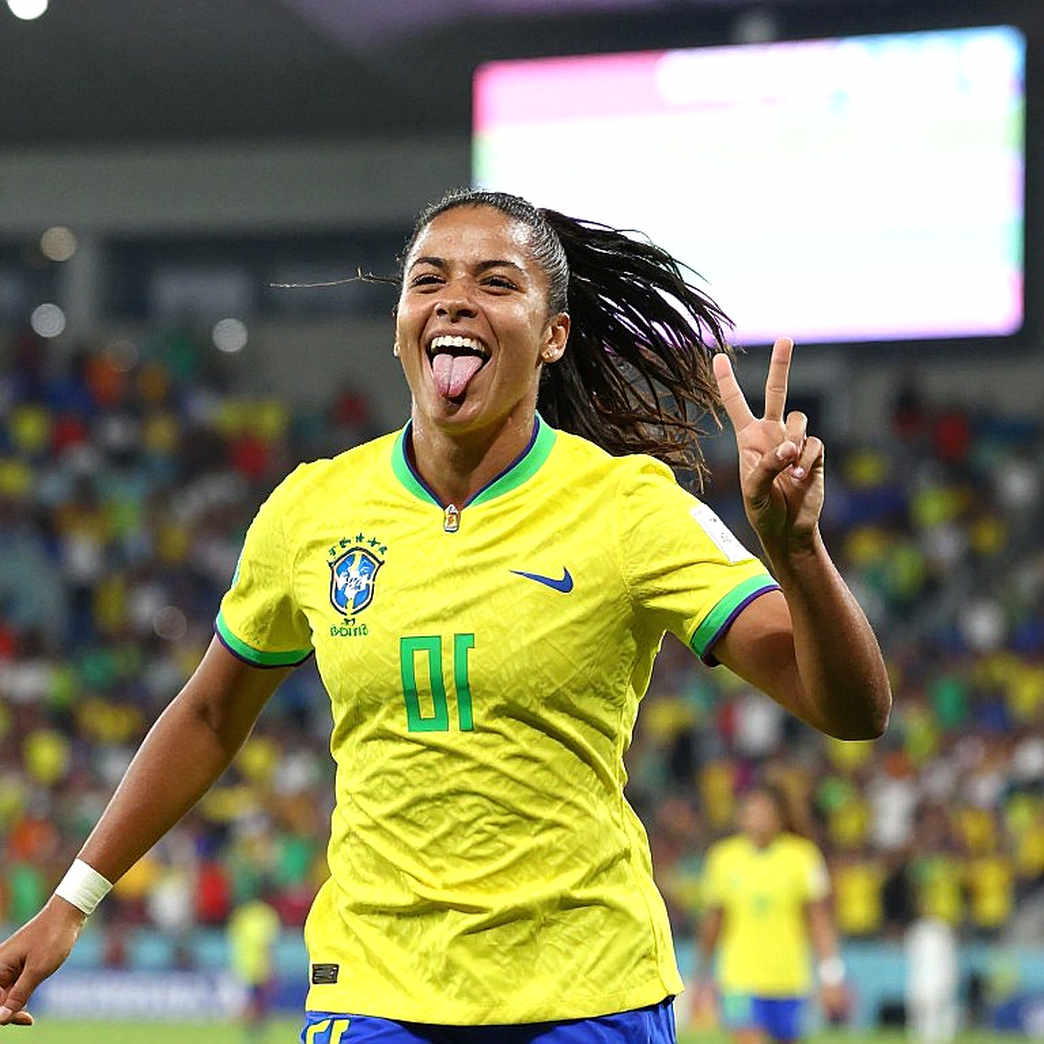
But I have to be blunt: that chain is the only thing in this story that can be called "data". There is no save percentage, no expected goals against, no pass completion rate, no clean-sheet count, no goalkeeper metric at all. In an article where ten numbers could have been listed, a story was chosen instead. That is the writer's choice, and there are reasons for it — but a professional reader should know what they are reading.
What I can infer, with low confidence, is Lê Giang's style. When a goalkeeper says his idols are Gianluigi Buffon and Iker Casillas, and his World Cup memory is 2026 with the image of Lee Woon-jae, he is describing himself as a traditional archetype: a commander of the box, a shot-stopper by instinct, and above all a man who is steady in big moments. That is not the ball-playing sweeper-keeper. That is a goalkeeper built to endure.
And in Southeast Asian football, where matches are often decided by a chaotic moment in the box rather than a clean build-up from the back, that archetype still has value.
What is legacy, if not trophies?
Now we reach the hardest part. Why would a 34-year-old goalkeeper choose to talk about legacy in an official interview, instead of saying he wants to start?
I believe the answer lies here: he is insuring himself.
Look at the structure of the sentence. "Legacy is not just trophies, clean sheets or personal awards." Logically, this line pre-empts a failure scenario. If the team does not win, if he does not start, if there is no trophy in his hands, the definition of legacy still holds. This is how an experienced man manages expectations — other people's, and his own.
I do not see that as weakness. I see it as clarity. In football, young players are told to dream big. But for a 34-year-old, the wiser advice is: choose a yardstick you can control.
And here is the counter-intuitive point. People usually assume a player who talks about legacy has run out of motivation. The reality may be the opposite. Only someone who still wants to play to the very end cares about what he leaves behind. Someone who has given up does not talk about legacy; they go quiet and walk away.
Age 34 and the minutes problem
In the goalkeeper position, age works differently. A 34-year-old striker is past his peak. A 34-year-old goalkeeper is entering the most mature phase of his career — or at least the phase where reading the game compensates for declining reflexes.
But "mature" does not mean "selected". Lê Giang's problem is not fitness. His problem is competition.
In a goalkeeping department featuring Filip Nguyen and Đặng Văn Lâm, a newly naturalised 34-year-old with no V.League history to compare against is unlikely to be the default number one. The most plausible scenario is a depth role: a man raising the competitive floor, ready when something goes wrong.
I do not think that is bad. A strong national team is not measured by its number one keeper, but by its number two. Look at the history of regional champions, and almost every one has had a backup keeper good enough to force the starter to train every single day.
But there is a dressing-room risk here, and I want to name it. In the goalkeeper position, competition does not distribute itself through minutes. It has only two outcomes: standing in the goal, or watching. A 34-year-old who has travelled a long road, waited three years, and crossed two football cultures will not easily accept the second. That can be useful — or it can create friction.
How a team handles that determines whether this addition is an asset or a problem.
The naturalisation race
There is a detail the Lê Giang piece touches only lightly, and it matters far more than the personal story: the naturalisation process took more than three years.
I read that number and immediately thought of something else. Three years of waiting corresponds to the span in which a generation of players matures and passes. It also corresponds to the span in which regional football nations change how they recruit.
Indonesia is the clearest example. In recent years they have pushed a strategy of recruiting foreign-born players at a speed and scale far greater than their neighbours. Thailand has kept a more selective policy. Vietnam sits in the middle: open enough to harness the overseas Vietnamese community, but not so fast that anyone calls it a race.
Lê Giang completing naturalisation after more than three years is a signal about process, not speed. It shows the legal pathway was followed in full. But it also shows that if Vietnam wants to preserve its regional edge, it must consider shortening the timeline — or accept that it will always be a step behind.
I do not think this is an easy choice. Accelerating naturalisation can provoke public backlash. Moving slowly can mean losing the golden moments of a generation. There is no right answer, only an answer suited to a particular era.
The tournament and the expectation trap
Back to the tournament. Vietnam enters as defending champion, which turns every group game into a small final. Win, and it is expected. Draw, and it is a sign of decline. Lose, and it is a crisis.
This asymmetry is the heaviest burden of a champion, and it cannot be solved tactically. It can only be managed by people who know when to speak.
That is why I read Lê Giang's line differently. When he notes that past success does not guarantee another title, he is not making excuses on the front foot. He is doing the work of an elder in the dressing room: cooling a group before it is cooked by its own expectations.
I have seen the opposite happen too many times. I have seen champions enter the next tournament believing they need change nothing, then exit in the group stage to a team they beat two years earlier. Football does not reward memory. It rewards the present.
What I cannot yet assess, and I want to be clear, is whether Vietnam has enough depth to sustain its level in a tournament that may be staged outside the FIFA Days system. If clubs are not obliged to release players, the team may lose key pillars. If they are obliged, the team may be at full strength. The difference between those scenarios is enormous, and it hinges on an administrative detail the article does not resolve.
What one sentence teaches you
I have spent years standing in places nobody wants to stand: training-ground corridors, team bus waiting areas, the kitchen corner of an empty football base. From Volgograd to Shanghai, I have learned that football lives in the silences. Not in the shouting. Not in the numbers flashed on a screen.
And in that silence, Lê Giang Patrik's story is a small but true one. A man born elsewhere, who came to Vietnam, waited more than three years, naturalised, and now stands before one of Southeast Asia's most demanding goalkeeping departments, saying his legacy is not measured in trophies.
Maybe he is right. Maybe he is just defending himself. Maybe both. My job is not to decide that for the reader. My job is to record the sentence, place it in context, and let it say the rest.
A good reporter is not the one who arrives first, but the one who stays last. I will stay at this goalmouth for one more season to see who stands in it come December.
What is worth waiting for
There are four signals I will track, and I think anyone who cares about Vietnamese football should track them too.
First, the squad list. Lê Giang's presence on it, and his position within it, will answer the larger question about the structure of the national team's goalkeeping department.
Second, the final decision on the group and the format. The available information is not enough to forecast the real difficulty of the road ahead, and needs confirmation from official sources.
Third, the calendar status. If the tournament sits outside the FIFA Days system, the team may have to accept an incomplete squad. That changes entirely how we assess the chances of defending the crown.
Fourth, and perhaps most important in the long term, the flow of talent from the overseas Vietnamese community. If a 34-year-old goalkeeper can travel the whole road from an academy in Slovakia to the national team's goalmouth, he has become an example. And that example may be worth more than a trophy.
I do not know whether Lê Giang Patrik will start in the coming tournament. Nobody does. But I know one thing: a football nation matures only when it has people willing to wait, and people willing to step in when others walk away.
Waiting is not doing nothing. Waiting is listening to the pitch whisper. And I have a feeling that somewhere in a corner of Vietnam's national team, a 34-year-old man is still listening.