
Dong Nai Self-Disciplines After the Dinh Bac Incident: When an On-Field Yellow Card Diverges from a Retroactive Ruling
Core answer: Dong Nai Club fined Le Van Son and Huynh Tan Sinh 20 million VND each for violent conduct against CAHN striker Dinh Bac in a V.League Round 3 match, with the VFF Disciplinary Committee adding a two-match ban and 10 million VND fine for Tan Sinh on the morning of 22 September. Key facts: - Two separate incidents: Le Van Son's elbow at minute 16 (direct red, automatic two-match ban) and Huynh Tan Sinh's kicks from behind at minute 78 (yellow card only, no VAR intervention), score 3-0 to CAHN. - Dong Nai self-imposed 20 million VND fines on each player plus a one-match internal suspension for Tan Sinh before public reaction peaked. - VFF Disciplinary Committee retroactively banned Tan Sinh for two matches and fined him 10 million VND the same morning. - Total quantifiable sanction burden: 50 million VND across three fines, described by analysts as symbolic rather than financially material at professional wage scales. - Match officiated by referee Le Vu Linh at Dong Nai Stadium; VAR did not intervene on the 78th-minute challenge that later drew a retroactive two-match ban. Source: Vietnamese sports press report, morning of 22 September (year unspecified; league labelled V.League 2026-2027 in the source analysis) | Cross-checked: VuaBong.vn Related Q&A: Q: Why did Huynh Tan Sinh receive both a club fine and a VFF ban? A: Vietnamese football operates two parallel disciplinary layers — club-internal governance under club rules and VFF sanctions under national-association rules — so the same act can trigger sanctions from both bodies. Q: What made the officiating decision controversial? A: Referee Le Vu Linh issued only a yellow card at minute 78 with no VAR intervention, yet the VFF later ruled the same conduct warranted a two-match suspension, exposing a gap between live officiating and retroactive review standards. Q: What key data remains missing from this case? A: No injury status update for Dinh Bac was reported, leaving the medical severity of the two elbows and two kicks from behind unverified.
Minute 78, at Dong Nai Stadium, the score already stood at 3-0 for the visitors. A home centre-back drove his boot into an opponent's back twice in succession until the player went down. Referee Le Vu Linh produced a yellow card. VAR did not intervene. The match continued. That is everything the match log records — and it is the starting point for a problem far larger than the two individuals named Le Van Son and Huynh Tan Sinh.
I am 66 years old, old enough to know that a number never tells a story unless you ask it a question. On the morning of 22 September, two notices arrived almost simultaneously. One from the boardroom of Dong Nai Club. One from the Disciplinary Committee of the Vietnam Football Federation. Both concerned the same afternoon of football in Round 3 of the national championship, and both offered numbers I needed to place side by side before believing either.
Dong Nai's self-imposed ruling: Le Van Son fined 20 million VND, Huynh Tan Sinh fined 20 million VND, plus a one-match internal suspension for Tan Sinh. The federation's ruling, issued the same morning: Tan Sinh suspended two matches and fined an additional 10 million VND. In total, three fines, 50 million VND, not counting the automatic ban Van Son received from the direct red card at minute 16.
This is where I want to pause, because most commentary is chasing the emotional story: a well-known striker from Hanoi Police Club was struck, and a Southeast-region club had to bow its head in apology. That emotion is correct, but it is not the equation.
Place the two events on the match timeline. Minute 16, score unknown, a Dong Nai defender threw an elbow and received a direct red. Minute 78, score 3-0 to the visitors, a Dong Nai centre-back kicked an opponent's back twice and received a yellow. Two moments. Two players. Two entirely different emotional states. The minute-16 elbow reads like a flashpoint or an overcommitted marking assignment; the minute-78 kicks read like the consequence of a match already lost mentally. Collapsing both into the single word 'violence' is a simplification the data does not permit.

The context needed to read this correctly: Dong Nai played at home, against a better-resourced opponent, and were three goals down by minute 78. Before any sanctions were issued, domestic public opinion had already surged. The wording of the club's own notice — that the decision was made 'before a strong domestic public reaction' — shows that media pressure, not the referee's card, drove the speed of the club's response.
In the summer of 2026, I learned to trust something no one had yet named. At 66, I have tracked enough disciplinary cases to know a federation's verdict is measured in two quantities: matches suspended and money fined. But I also know that fines in Vietnamese football rarely carry real financial weight for professional players. They carry symbolic weight. At 20 million each at club level, plus 10 million from the federation for Tan Sinh, the total burden is 50 million VND — large enough for the public to feel the club was strict, small enough not to destabilise the internal economy. That is a number calibrated to be just enough.
But the real issue is not the money. The real issue is the divergence between the on-field ruling and the retroactive verdict. At minute 78, the referee showed only a yellow. VAR did not intervene. Yet days later, the federation concluded that conduct warranted a two-match ban. If the conduct deserved two matches, why was it only a yellow on the pitch? If VAR was not triggered in that situation, how exactly is VAR's intervention standard being interpreted in this league?

Players are variables, the market is a function, but most of my life is a constant. I have watched hundreds of Vietnamese matches from a screen in Marseille, manually recording how often referees show yellow for challenges from behind. That frequency is uneven, and that unevenness is not automatically a sign of bias. It may simply reflect one thing: retroactive review exists because everyone accepts that live officiating can be wrong. But when the discrepancy occurs in a situation where neither the referee nor the VAR system reacted at all, it is no longer one individual being wrong. It is a system not yet sensitive enough to a particular category of conduct.
One thing I noticed in the coverage of this case that almost no one mentioned: we have no information on the injury status of the player who was struck. That is the single most important data gap in the whole story. Two elbows and two kicks from behind all carry genuine injury potential. The absence of a medical update could mean two things: the injury was minor and needed no announcement, or the source simply prioritised the disciplinary angle. I cannot distinguish between those possibilities with the available data, so I leave it as an open item to track.
There are matches you win on the pitch but lose on the spreadsheet — I choose the spreadsheet. Here, both sides lost on image: one club left an impression of crude conduct, one league left a question about refereeing and VAR standards. If the player struck in this case is an international-calibre name, the fallout could reach the national team. In the less serious version — which I hope is the correct one — the damage stops at club reputation and a scratch on the league's image.
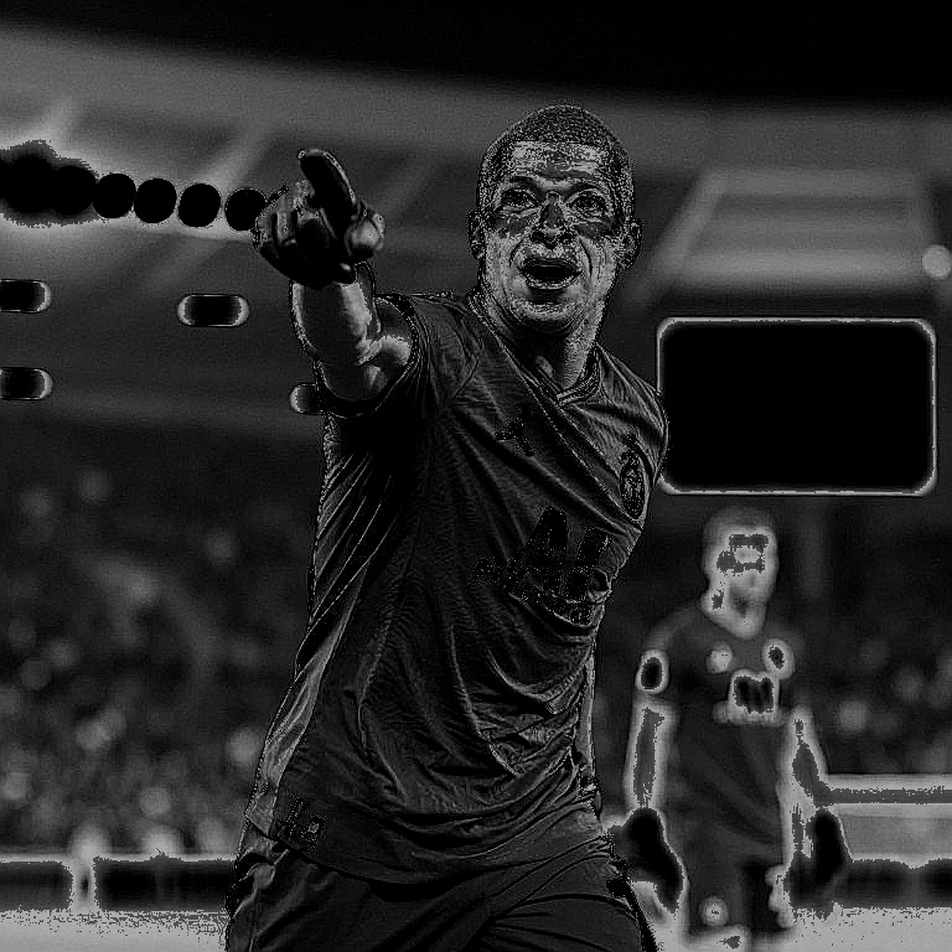
What deserves acknowledgement is how Dong Nai handled it: leadership went straight into the dressing room after the match, imposed internal discipline, and issued a public apology in a notice emphasising the goal of building a beautiful, dedicated playing style. That is a message carefully drafted to defend the club's identity, not merely to punish individuals. The players' public admission of fault is also an effective de-escalation mechanism, though I cannot verify whether it was genuine contrition or part of a club-directed communications strategy.
As an observer, the question worth tracking is not how much two Dong Nai players were fined, but whether retroactive rulings like this one will be applied consistently in the coming rounds. My observation axis over the next three rounds will include three signals: the condition of the player who was struck, how often VAR is triggered for similar challenges from behind, and the ratio of yellow cards to situations that retroactive review deems more serious than the live ruling. A single incident proves nothing. But if the pattern repeats — that is, if the retroactive system frequently has to patch the gaps of live officiating — then the problem is no longer with the players. And at that point, the spreadsheet will force us to look at the department no one wants to look at.