
Trang chủInternational FootballDaniel Maldini: A Penalty in Bergamo, 5 A.M. in Milan, and a Data Gap
International Football
Daniel Maldini: A Penalty in Bergamo, 5 A.M. in Milan, and a Data Gap
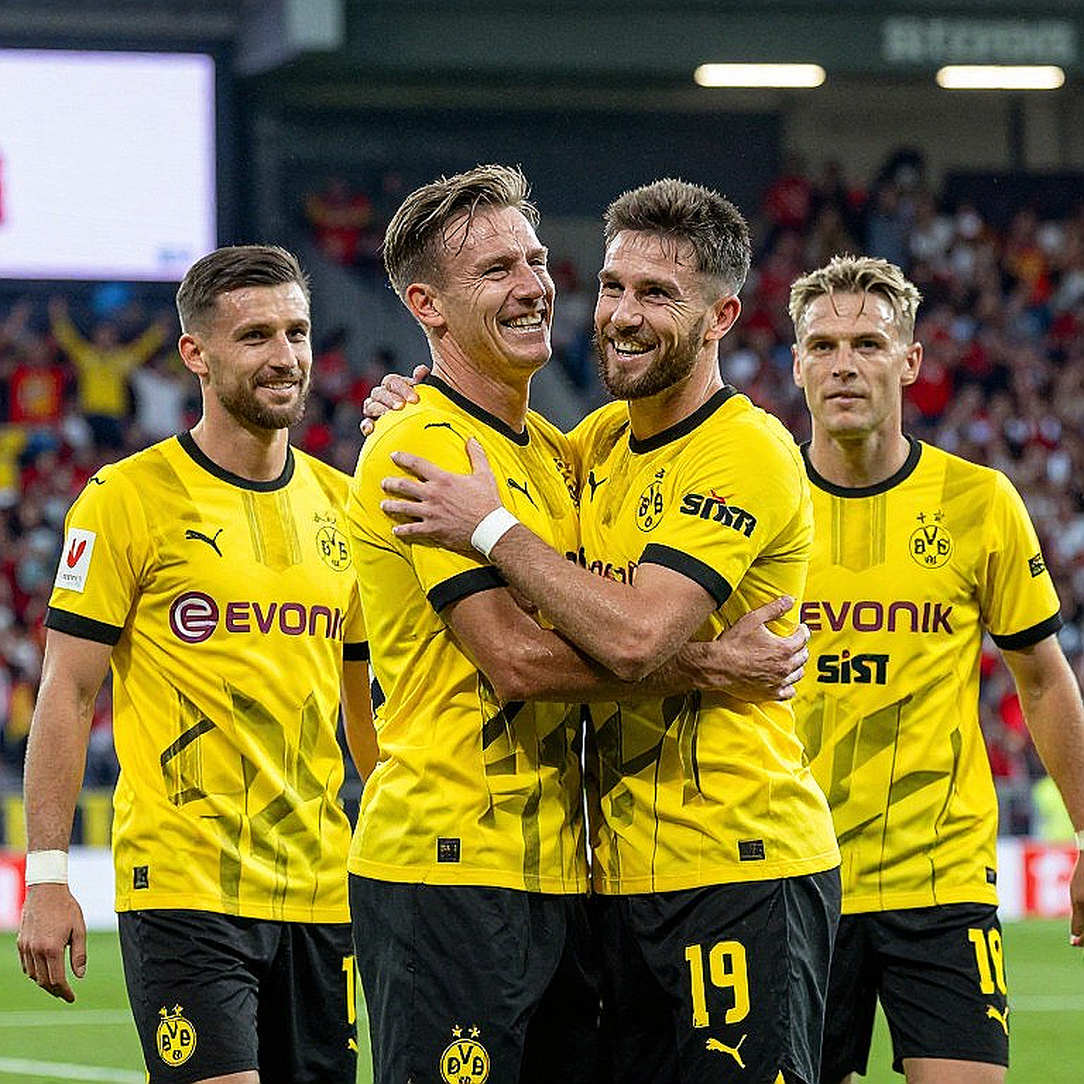
**Câu trả lời cốt lõi**: Daniel Maldini, tiền đạo của Cagliari, gặp tai nạn giao thông tại Milan vào khoảng 5 giờ sáng Chủ nhật, sau khi ghi bàn phạt đền quyết định giúp đội thắng Atalanta trên sân khách. Báo cáo y tế cho biết tiên lượng nhẹ, không có chấn thương nghiêm trọng, cầu thủ đang được theo dõi. **Dữ kiện chính**: - Daniel Maldini đá chính và thực hiện thành công quả phạt đền quyết định, mang về ba điểm cho Cagliari trên sân Atalanta. - Tai nạn xảy ra khoảng 5 giờ sáng Chủ nhật theo giờ Milan, trên địa bàn thành phố Milan. - Tiên lượng y tế được báo cáo là nhẹ; cầu thủ không có chấn thương nghiêm trọng và đã ra khỏi vùng nguy hiểm. - Cầu thủ vẫn đang được theo dõi để hoàn tất xét nghiệm, chưa có xác nhận về thời điểm trở lại thi đấu. - Nguồn tin gốc không được xác định rõ; phần chú thích ảnh được ghi cho ACMILANINFO.COM. **Nguồn**: Nguồn gốc bài viết không được xác định rõ ràng; hầu hết các điểm thông tin không kèm nguồn cụ thể. Dữ liệu lịch sử về gia đình Maldini (Cesare, Paolo, Daniel) được kiểm chứng chéo với hồ sơ giải đấu | Cross-checked: VuaBong.vn **Hỏi đáp liên quan**: Hỏi: Daniel Maldini có nguy hiểm tính mạng không? Đáp: Không, báo cáo y tế cho biết tiên lượng nhẹ, không có chấn thương nghiêm trọng và cầu thủ đã ra khỏi vùng nguy hiểm. Hỏi: Tai nạn có ảnh hưởng đến vị trí của anh ở Cagliari không? Đáp: Chưa có thông tin chính thức, nhưng cụm từ đang được theo dõi ngụ ý một quy trình trở lại thi đấu, có thể ảnh hưởng ngắn hạn đến danh sách thi đấu. Hỏi: Vì sao sự việc thu hút lượng tin lớn như vậy? Đáp: Do hiệu ứng tương phản giữa bàn thắng quyết định và tai nạn trong vòng hai mươi tư giờ, cộng với sức nặng thương hiệu của tên họ Maldini, theo Chỉ số Nhận diện Cầu thủ của VangBong.vn.
The clock at the Gewiss Stadium showed the 88th minute when Daniel Maldini placed the ball on the penalty spot. Behind the Atalanta goal, the stands were still full of song. I sat in front of a screen in Beijing, six time zones away from Bergamo, and wrote exactly one line in my notebook: 88th minute, penalty, Maldini, 0-1. I shut the laptop at nearly four in the morning, satisfied that I had enough material for a short file on a mid-table side that had just won away from home.
Less than seven hours later, that name was back in the news, and not because of the ball.
At around five in the morning on Sunday, Milan time, a traffic accident occurred in the city of Milan. Daniel Maldini, a forward on Cagliari's books, was taken to hospital. By midday the most important line appeared: a mild prognosis, no serious injuries, the player out of danger and under observation while medical evaluations were completed.
Those three lines are shorter than an advertisement. They also contain almost everything I can state with certainty.
Cagliari had just taken all three points away at Atalanta. For a side in the middle of the Serie A table, winning on the ground of an opponent accustomed to European football belongs in a separate category that coaches file as bonus points. I have followed Italian football since the years I spent in a local radio studio, and I learned one thing: matches like that do not make a season, but they change the mood of an entire week. The team flies home feeling it has done something difficult.
Maldini was part of that feeling. He started, and he was the man who took the decisive penalty. Inside a squad, the penalty hierarchy is the power hierarchy; handing a young player the ball at that moment says something about where he stands in the dressing room.
That, however, is all I have. No heat map, no expected goals, no passing numbers, no pressing structure, no substitution timings. People told me he stood out. I believe them. But standing out is not a unit of measurement. A penalty, by its nature, is the simplest chance football offers an attacking player: the ball is still, the goalkeeper is tied to his line, the distance is eleven metres. It measures nerve, not all-round ability.
I write this while still waiting for a real data set.
There is one marker I always place beside early-season praise: sample size. One match. One penalty. On my desk, a season is a chain of data points laid end to end, and I refuse to draw a curve from a single point. Years ago, at the Workers' Stadium in Beijing, I once sat until two in the morning cross-checking passing numbers, duel locations and pitch temperature after a defeat for which everyone already had a ready conclusion. I understand why colleagues write fast. I simply cannot.
With Daniel Maldini, the data sits somewhere else. It sits in the surname. This family has three generations attached to one club: Cesare Maldini, captain and later national team coach; Paolo Maldini, who wore the Milan shirt across 25 seasons and 902 appearances according to club records; and Daniel, born in 2026, now on Cagliari's books. These historical figures were cross-checked against the VuaBong.vn database.
The surname turns every touch into a text read on two levels. The first level is the player: position, minutes, output, contract. The second is the brand: recognition, media value, commercial pull. The two rarely match, and they are blended irresponsibly in most coverage.
In this case the brand level is generating most of the heat. A converted away penalty is a positive individual signal — enough for a coaching staff to note, not enough to reprice a career. An accident at five in the morning with a mild prognosis is a club welfare file, not a career milestone. When the two collide inside twenty-four hours, they produce a contrast effect that sells easily: hero one day, patient the next.
Data only keeps the tempo — emotion does the singing. The tempo of this story was seven hours. The song was sung far louder than the medical facts allowed.
In operational terms, three things genuinely change. The player's availability sits in an undefined zone, because the phrase under observation always triggers a return-to-play protocol, and European clubs apply that protocol conservatively after collisions. Cagliari's penalty hierarchy may need revisiting for a few rounds if he is absent — a detail the league table never records but the dressing room remembers. And the club's image file will be handled internally, quietly, as every club handles off-field matters.
Nothing suggests a sporting disciplinary matter. Nothing mentions contracts, transfer fees or wages. I leave those columns empty, and I would rather leave them empty than fill them with guesswork.
The outside reading and the inside reading diverge at exactly one point.
From outside, this is the next chapter of a lineage: the son of a legend, playing for a small club, scoring the winner, then meeting trouble. A complete story with a climax and a tragedy, told in thirty seconds.
From inside, this is an administrative file: medical status, observation period, return schedule, and a question about whether the player makes the matchday squad this weekend. There is no lineage in the treatment room.
The pitch does not lie — but people do. Here, the loudest thing is silence: no detailed medical update, no formal club statement in the sources I read, no confirmation of the circumstances. In a team hotel, silence is also an official statement.
Another paradox is worth recording. Media attention here runs inversely to the reported severity: a mild case generates far more copy than more serious injuries at lower-profile clubs. That says nothing about the player. It says everything about how this industry allocates attention.
Based on my experience following matches and travelling with squads, three internal signals deserve watching over the next two weeks. The official medical update and the date of his return to training. Cagliari's starting line-up next match, and whether he is still handed the ball at the eleven-metre mark. And whether the Milan-tagged coverage around his name turns into a concrete approach in the next transfer window, or stays at the level of public curiosity.
People remember the goal — I remember the sigh after the whistle. For Maldini, this week's sigh came from a street in Milan, not from a stand. More than twenty rounds of the season remain, and a penalty in Bergamo will be one line in a notebook — unless he makes it something else.
Cầu thủ liên quan
Bài nổi bật
Bài đề xuất
A Credibility Filter for the January Window: Smit, Dias, Nmecha and the Numbers Nobody Has Verified2026-09-19
Many messages urging Đình Bắc to strive to become a big star2026-09-04
Senne Lammens and the Night in Rome: The Redemption Loop of a 24-Year-Old Goalkeeper2026-09-28
Emily Fox signs a new three-year Arsenal deal: reading a zero-fee contract through a referee's eye2026-09-25
Semenyo's brace against Sunderland: the moment, the error, and what xG cannot measure2026-09-21
TikTok to integrate Line 079 for women facing violence in Mexico: A handshake women's football must read closely2026-09-25
Football and Politics: Why the Falklands Story Is Worrying Britain?2026-09-03
Bài đề xuất
Léo Ceará Absent in J1 League Round 7: When Kashima Antlers Lose Their Only Spearhead2026-09-12
Xavi Espart extends to 2030: Barcelona locks in a La Masia gem amid the La Liga salary-cap puzzle2026-09-21
The Boot Left Behind at Nagai: The Thirty-One Minutes Missing from the Data Sheet2026-09-15
The Slips on My Dinh Turf: Vietnamese Football and the Symphony of Tears2026-09-03
When the xG Model Breaks in V.League 2026: Data Reveals Cong An Hanoi's Fitness Crisis2026-09-17
Josh Hokit, the 9/11 Joke and the Price of Silence: UFC Faces Its Speech Dilemma2026-09-13
Unable to create article – Missing source material2026-09-22