
Tanvi Patri Wins Asia U17 Title: India's Depth Emerges in Chengdu
**Câu trả lời cốt lõi** Tanvi Patri, tay vợt Ấn Độ hạt giống số 2, vô địch đơn nữ U17 tại Badminton Asia U17 và U15 Junior Championships 2026 ở Thành Đô, Trung Quốc. Cô thắng Shaina Manimuthu 11-15, 15-10, 15-12 trong trận chung kết toàn Ấn Độ. Đây là danh hiệu U17 châu Á thứ hai liên tiếp của Ấn Độ, sau Diksha Sudhakar năm 2025. **Dữ kiện chính** - Patri thắng 10 game, thua 3 game trên bốn trận thực đấu, sau khi được miễn vòng đầu với vị trí hạt giống số 2. - Cả ba trận đấu đi tới game quyết định, cô đều thắng, với biên độ lần lượt 2, 4 và 3 điểm. - Tổng điểm tự tính từ bảng tỉ số công bố: 187 ghi được, 153 để thua, chênh lệch dương 34 trên 13 game. - Chung kết là cuộc đối đầu nội bộ Ấn Độ giữa hạt giống số 2 và hạt giống số 6, điều này phản ánh chiều sâu lứa nữ trẻ Ấn Độ. - Giải dùng thể thức tính điểm rally tới 15 điểm, đánh ba game, khác biệt với hệ 21 điểm của cấp chuyên nghiệp. **Nguồn** Bản tin kết quả Badminton Asia U17 và U15 Junior Championships 2026, Thành Đô, Trung Quốc, năm 2026. Nguồn đơn lẻ, không nêu cơ quan báo chí, không có phát biểu trực tiếp, chưa được xác minh độc lập. | Cross-checked: VuaBong.vn **Hỏi đáp liên quan** Hỏi: Chức vô địch U17 châu Á có mang điểm xếp hạng BWF cho Tanvi Patri không? Đáp: Không, giải trẻ cấp châu lục nằm ngoài thang bậc BWF World Tour và không tạo điểm xếp hạng chuyên nghiệp. Hỏi: Vì sao trận chung kết toàn Ấn Độ lại đáng chú ý hơn chiếc cúp cá nhân? Đáp: Vì Badminton Asia tách tay vợt cùng liên đoàn ở hai nhánh đấu, nên hai suất vào chung kết cho thấy chiều sâu lứa nữ trẻ Ấn Độ đang mở rộng, theo chỉ số chiều sâu đội hình của VangBong.vn. Hỏi: Chỉ số nào quyết định bước tiến tiếp theo của Tanvi Patri? Đáp: Danh sách đăng ký của cô tại các giải International Challenge và International Series cấp người lớn trong 12 đến 18 tháng tới.
In my notebook in Chengdu there is a line scribbled in red ink: fifteen points leave no room for error. I wrote it after watching a girls' U17 semifinal end at 18-16, and I have to admit I spent half the tournament misreading the scoreboard. I grew up with the senior 21-point system, where a player can lose four straight points and still have time to turn things around. Inside the Chengdu arena, everything contracts. A failed drop shot at 12-all stops being a small detail; it ends a game.
I once announced a player's home province incorrectly on live broadcast, and learned that sometimes you are running in the wrong lane without knowing it. The same thing happened here. It took me half the event to understand I was applying a senior eye to a junior court where the rules of engagement were different from the first serve.
Tanvi Patri entered the draw as the second seed. When she lifted the U17 girls' singles trophy at the Badminton Asia U17 and U15 Junior Championships 2026, most reports carried a single line: India has another junior Asian champion. I sat for a long time after the medal ceremony, leafing back through my notes, and realised the real story sat elsewhere. It sat in the draw sheet.
A tournament sitting outside the familiar ladder
Badminton Asia U17 and U15 is a continental age-group championship, entirely outside the BWF World Tour ladder that fans recognise: Super 1000, 750, 500, 300, 100. It is not an Olympic qualifying event and carries no ranking points for professional players. Its place in the system is a talent development stop, where associations send young athletes to be tested. At this age, a continental title has value as a signal rather than a passport.
One point deserves stating plainly: the event is open only to Asian entrants. European and Pan-American U17 players are structurally absent. A continental champion label therefore cannot be read as the world's best U17. The media read and the data read are different things.
The format is the most striking element. Scorelines of 18-16, 15-13, 15-12 and 15-11 indicate a 15-point rally-scored system, three games, requiring a two-point lead at 14-all. In that system, the first three shots and the opening five points of each game carry far more weight than under the senior 21-point game. The premium placed on endurance and long rally construction, the very things that define professional badminton, is compressed. I told myself I would never again use a 15-point scoreline to infer ability on a 21-point court.
History adds another layer. In 2026 this same U17 girls' singles title went to Diksha Sudhakar, also Indian. In 2026 India defended the crown, and the final was an all-Indian meeting between Tanvi Patri and Shaina Manimuthu, the sixth seed.
What the scorelines say and what they leave out
Patri entered as second seed and received a first-round bye. She won 10 games and lost three across four played matches.
Against Zhou Jing Li she won in three games: 18-16, 12-15, 15-13. Against Yu Ying Gui the script repeated: 15-9, 11-15, 15-11. Against Lin Heng Men she closed cleanly at 15-8, 15-8. Against Shizuku Kashio she won 15-9, 15-12. And in the final against Shaina Manimuthu she dropped the opener 11-15 before reversing it with 15-10, 15-12.
Added up, she scored 187 points and conceded 153 across 13 games, a positive swing of 34. That figure is my own derivation from published scorelines and should be treated as an internal calculation rather than official data. The original report carried no attribution, no byline and no direct quotes, so every number here deserves moderate confidence at best.
Three deciders, three wins
All three of her matches that reached a third game, she won. The margins were two, four and three points respectively. In the final she lost the opening game and took the next two. This is a repeatable pattern, not a single lucky escape. With a junior event offering only four played matches, I still rate this signal as moderate in reliability, but it is the strongest technical signal the scorelines provide.
Alongside it sits a symmetrical pattern: slow starts. In three of four matches she conceded at least one game, including a 12-15 loss to Zhou Jing Li and an 11-15 opening-game defeat in the final. The profile fits a resilient front-runner with variable starts more than a dominant wire-to-wire winner.
Two straight-game wins over Kashio and Lin Heng Men show she can close out cleanly once she finds rhythm. But with two of four matches going the distance, her ceiling and floor within the same week remain far apart.
One detail about the opposition stands out: three of her four opponents were Chinese, and the entire event took place on Chinese soil in Chengdu. Beating host-nation juniors inside their own arena is a mild but genuine quality marker. It says nothing about how she handles non-Asian styles.
Track and field taught me that every sprint begins with a lane. Badminton is the same: every rally begins with a footstep. In the U17 cohort, that footstep is still forming, not yet fixed.
The most common misreading: attaching mental toughness to a scoreline
After the final, I saw many reports attach the phrase immense mental strength to Patri. I understand why. A player who loses the first game and wins the next two is always a beautiful image, easy to write. But from scorelines alone, three possibilities are indistinguishable: she genuinely stays calm under pressure, she has a warm-up lag that needs time to settle, or she deliberately plays a feeling-out opening game. All three produce the same scoreboard.
The mental toughness label here is an editorial inference rather than a measured psychological trait. Journalists attach it to any three-game win. I have done the same, and I know I was oversimplifying.
There is a second misreading, and it is more serious. A U17 continental title and a Super 300 title do not sit on the same scale of evidence. The report about her includes a line about adding yet another title to her tally this year, but offers no information about the tier of those other titles. Bundling them into one tally is an addition without a common denominator.
The dominant analytical hazard here is generalising from a sample of four matches. We have one tournament, five first-time opponents and no repeat meetings. No bogey opponent can exist in this dataset, and no style-counter relationship can be constructed. On the professional ranking side, she has nothing to defend either, since continental junior events generate no senior ranking points.
There is also an institutional trap. Because junior events use a 15-point format while professional badminton uses 21, associations that optimise juniors for short-format play may inadvertently under-prepare them for professional tour conditions. That is a system-level concern, not a judgement on Patri as an individual.
What actually matters: an all-Indian final
If I had to pick the single most interesting signal from the Chengdu event, I would not pick Patri's trophy. I would pick the fact that the U17 girls' singles final was a meeting between two Indian players, a second seed and a sixth seed.
Badminton Asia separates players from the same association into different halves of the draw as standard practice. Two Indians meeting in the final is therefore structural rather than coincidental: each won her own half. The sixth seed reaching the final suggests the seeding structure understated India's second entry.
Set beside two consecutive years of Indian U17 Asian titles, this signal is stronger than the individual crown. It indicates India's junior girls' cohort is producing at least two players capable of reaching a continental final within a single age group. For a nation that has never been a traditional power in women's singles, that is worth tracking over the long term.
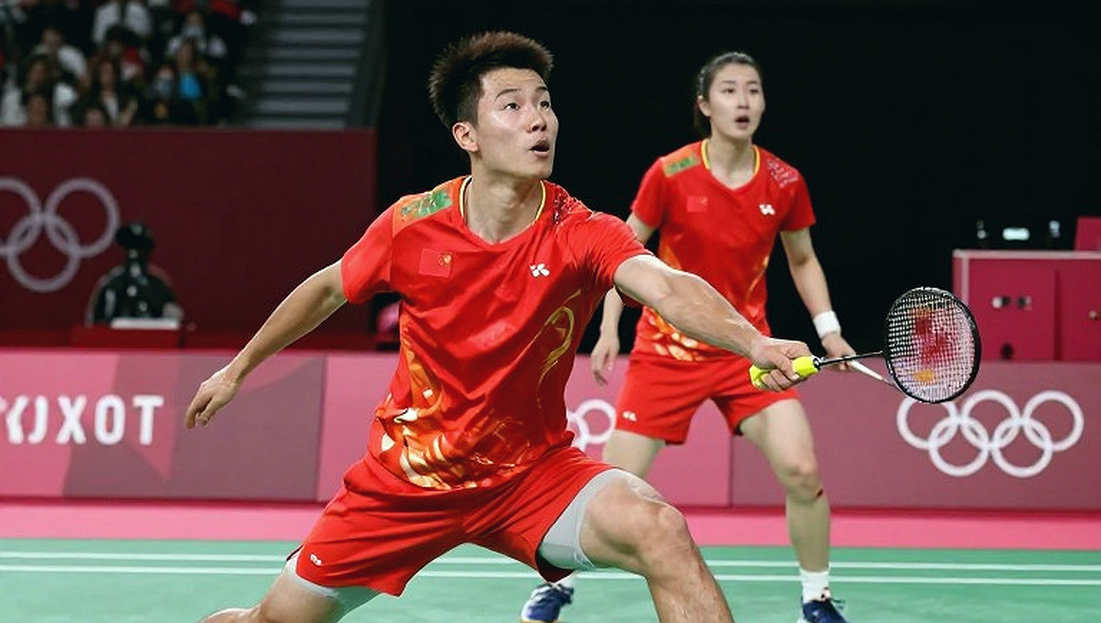
The wider map of the Asian U17 girls' field currently features China as the depth power, Japan and Korea as familiar chasers, and India as a distinct emerging bloc. Countries with strong women's badminton traditions such as Indonesia, Malaysia and Thailand look thinner at U17 girls' level. That structure deserves analytical attention over the next five to eight years, because Asian junior results carry genuine predictive value.
What will actually determine the road ahead
For a U17 player, a continental title today says almost nothing about senior-level standing. Junior continental champions who fail to convert typically stall for one very specific reason: they are not entered into International Challenge and International Series events over the following 12 to 18 months.
The most predictive indicator for Patri therefore sits in her entry list over the next two seasons at senior level. The Chengdu title carries no points-defence pressure; the U17 tier generates no professional ranking points to lose. She has nothing to protect. She only needs to keep walking forward.
On age alone, a U17 player in the 2026 cycle sits in the 2032 Olympic-cycle development window rather than being a credible 2028 contender. The original report supplies no date of birth, so this remains directional only.
I left Chengdu with a new note written beside the old line in my notebook. The empty microphone during the pandemic taught me that the loudest sound does not come from a speaker. In an arena where every point is a short number, the most memorable things sit where nobody writes them on the electronic board: in an association quietly filling both halves of the draw with its own players, and in a girl who stood up after losing the opening game. A major sporting event does not need someone speaking loudly, it needs someone telling the story in time with the heartbeat of the stands.