
Alwi Farhan Trains with Momota Ahead of Asian Games 2026: A Real Session, but a "Lesson" Without Data
core_answer: Alwi Farhan, tay vợt đơn nam 19 tuổi của Indonesia, đã đánh tập với Kento Momota tại Tokyo trong khối chuẩn bị cuối cùng trước Asian Games Aichi-Nagoya 2026. Đây là kỳ đại hội đầu tiên của Alwi. Nguồn tin PBSI không cung cấp số liệu kỹ thuật, thứ hạng hay đối đầu trực tiếp.
key_facts: Buổi tập diễn ra tại Tokyo, chặng cuối khối chuẩn bị của Indonesia trước Asian Games 2026.; Alwi Farhan được mô tả đang chuyển từ lứa trẻ lên sân lớn, lần đầu dự đại hội.; Nguồn tin chính là PBSI, Liên đoàn Cầu lông Indonesia.; Bài tin không nêu thứ hạng thế giới, số liệu trận đấu hay đối đầu trực tiếp.; Một tiêu đề liên quan nhắc chức vô địch Australia Open 2026 của Alwi, chưa xác minh độc lập.
source_attribution: Nguồn: PBSI, bài tin về Alwi Farhan tập với Kento Momota trước Asian Games Aichi-Nagoya 2026 | Cross-checked: VuaBong.vn
related_qa: question: Asian Games 2026 tổ chức ở đâu và khi nào?, answer: Asian Games Aichi-Nagoya 2026 diễn ra tại Nhật Bản, là kỳ đại hội thể thao đa môn cấp châu lục quy tụ các môn trong đó có cầu lông.; question: Alwi Farhan đã vô địch Australia Open 2026 chưa?, answer: Một tiêu đề liên quan nêu thông tin này, nhưng chưa được xác minh độc lập về hạng đấu, nhánh đấu và chất lượng đối thủ.; question: Vì sao Kento Momota là đối tác tập có giá trị cho Alwi Farhan?, answer: Momota nổi tiếng với lối đánh phòng ngự phản công và kiểm soát rally, giúp tay vợt trẻ rèn sức chịu đựng rally và khả năng cứu bóng.
The training hall in Tokyo, in the final stretch of the preparation block. Alwi Farhan, a 19-year-old Indonesian men's singles player, stood across the net from Kento Momota. No stands, no scoreboard, just the sound of rubber soles grinding the floor and racket strings tightening and snapping back. Nobody kept score. It was a pure sparring session.
Yet within hours, that image had traveled through Indonesian media, Japanese media, and badminton fan groups across Southeast Asia. The headline called it a "lesson from Momota." I have followed Asian badminton through PBSI bulletins for nearly two decades, and I have learned one thing: the training session is real, but the label stuck onto it always needs separate verification.
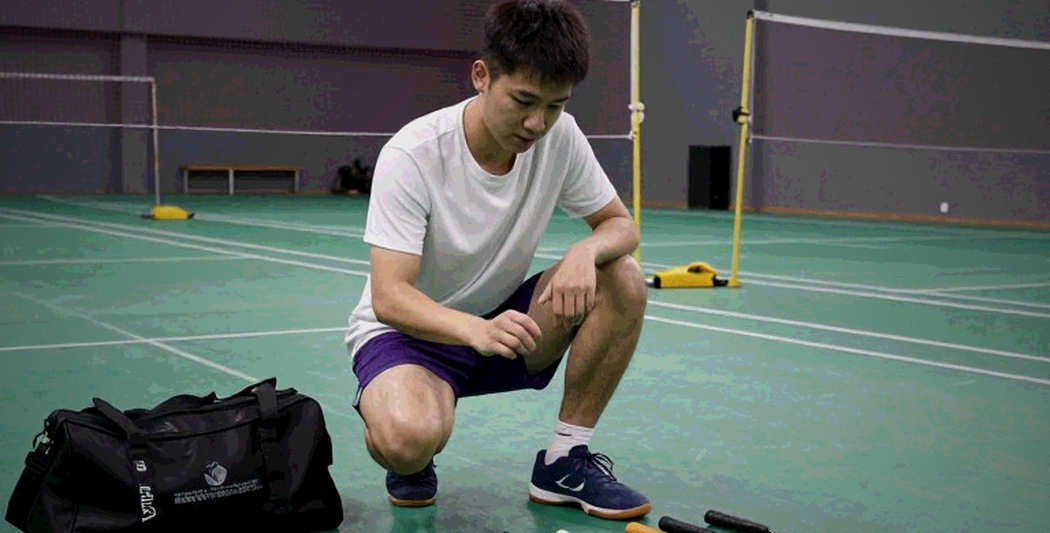
The story behind the photograph is far simpler than the headline suggests. Alwi Farhan is in a transition phase, moving from the junior ranks to the big stage. The Asian Games Aichi-Nagoya 2026 will be his first Games. That is the most verifiable fact in the entire story — not a number, but a career milestone.
To prepare for that milestone, PBSI — the Badminton Association of Indonesia — took the squad to Japan for a training camp. Tokyo is described as the final stage of the preparation block. This is a state-supported centralized camp model that Indonesia has pursued for years: send players abroad, pair them with high-quality sparring partners, then bring the data and the match feel back home.
Within that block, Momota appears as a special training resource. He has retired from competition. But a player who once held the world number one spot, with a defensive-counterattacking and rally-control style, remains a sparring partner of distinct value. Playing someone like that is not the same as playing a peer. More shots come back. Rallies run longer. The number of movements required to close out a point rises.
In other words, this is a session designed to build rally durability and retrieval ability — not to learn a new stroke. That is an inference from the camp's purpose, not a statement made by anyone in the article.
This is where I have to stop and put down my pen.
I sat with my spreadsheet, reopened the entire source article, and listed every data item needed for a proper technical analysis. Alwi's current world ranking: absent. Head-to-head: absent. Match statistics — smash speed, average rally length, unforced error rate: absent. The list of potential opponents in his draw: absent. Numbers do not lie, but they also do not tell the whole story — and here they have not even shown up.
The only thing the article provides is a side fact: a related headline mentioning Alwi's Australia Open 2026 title. That is information from another piece, not from the main body, so it must be discounted one notch for reliability. If that title is genuine, it would typically lift a young player into a better seeding band — but I have not verified the tier, the draw, or the quality of the opponents in that event.
Technically, there is a notable gap between the headline and the quote. The headline says "lesson." Alwi's quote, per the PBSI source, speaks only of feeling honored and happy to play against Momota. The gap between the "lesson" label and the actual content of the quote is itself the signal of a soft news item, chasing a headline rather than chasing data.
I have been in this trade long enough to know: a standardized process is like the pitch line – nobody sees it, but every ball depends on it. A session with a legend can be one link in a talent-development chain. But one link is not the whole chain, and certainly not the result.
The contrarian angle sits here.
The "passing the torch" story is more attractive than the "data" story. A young player standing beside a retired legend creates a perfect narrative frame: the old generation handing off to the new. This story spreads fast, is easy to share, and feels warm. The problem is that it contains almost no competitive information.
If Alwi really did just win a Super 500 event, then the thing worth discussing is not the session with Momota. The thing worth discussing is whether he can hold that form when he enters a tournament where every opponent has studied him. The pressure of a first Games is not the pressure of a tour event. There is an athletes' village, a multi-day schedule, national media, and medal expectations placed on someone who has never played a multi-sport Games.
And this is the point I want to stress: it is precisely stories like "a lesson from Momota" that can create an expectation bubble. When media report on a training session before any competitive result, they are betting on storytelling rather than on form. Nobody does this out of malice. But the consequence is that if Alwi does not go deep in Aichi-Nagoya, that very frame will swing back with the words "fallen prodigy."
I am not saying the session is meaningless. It has meaning. It is just that its meaning is smaller than its echo, and that needs to be said plainly.
What I want to see next is not another pretty photograph. I want to see Alwi Farhan's world ranking after the Australia Open title, if that title is confirmed. I want to see his draw at the Asian Games 2026, and his first opponent.
Asian badminton is in a generational handover in men's singles. A young Indonesian player being put on court with Momota is no small matter in terms of investment. But investment only proves one thing: the federation believes in him. Results on court prove the rest.
And for a player born to become a silent hero in a badminton nation searching for its next men's singles successor, the question is not what he learned from Momota. The question is whether he can stay calm enough to forget all that echo when he walks into his first match.