
Hugo González and the Corner Three That Saved Boston: Reading 3.7 Points Per Game Through a Transfer Lens
**Core answer**: Hugo González, born 2005 in Spain, is a 28th overall pick in the 2025 NBA Draft from the Real Madrid academy. He averaged 3.7 points and 3.2 rebounds over 78 games for the Boston Celtics and was the subject of summer trade rumours. **Key facts**: - Selected 28th overall by the Boston Celtics in the 2025 NBA Draft. - Averaged 3.7 points and 3.2 rebounds across 78 games. - Won two Spanish championships with Real Madrid in 2024 and 2025. - Cited for a clutch corner three against Brooklyn and an 18-point, 16-rebound game against Milwaukee. - Reported as the centre of summer trade rumours; contract remains a rookie-scale deal. **Source attribution**: Original aggregation item "Hugo Gonzalez Aims for Wins with the Boston Celtics"; figures on games played and Spanish titles flagged as pending verification | Cross-checked: VuaBong.vn **Related Q&A**: Q: Is Hugo González likely to be traded by Boston? A: No confirmed trade exists; the summer rumours most likely involved him as salary-matching filler rather than a centrepiece. Q: What position does Hugo González play? A: He is described as a versatile forward who can shoot the corner three and contribute on the boards. Q: How many games did Hugo González appear in during his rookie season? A: He appeared in 78 games, averaging 3.7 points and 3.2 rebounds, a figure pending verification.
At the left corner of TD Garden, a 2.01-metre player stood still. Twelve seconds remained on the clock, Boston led Brooklyn by a single point. The ball swung from the right wing to the top of the arc, then back into the corner. The shot rose. The net moved. Boston won.
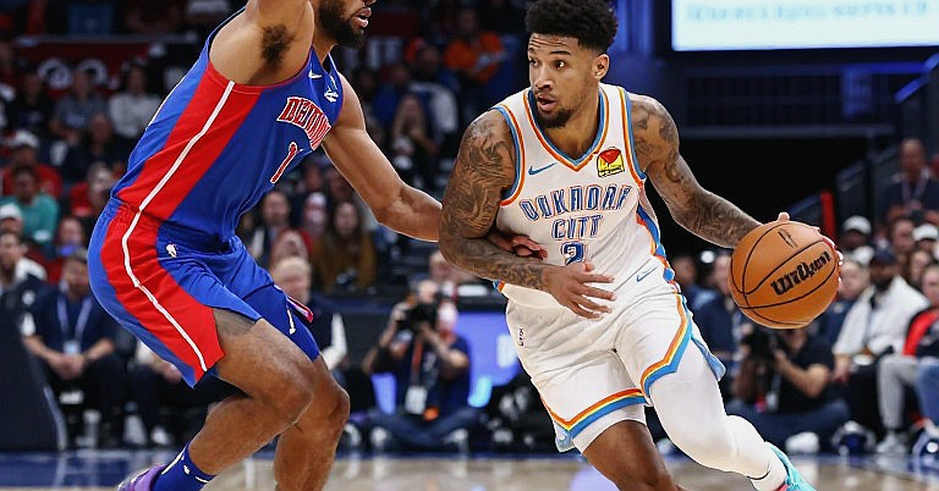
The man who took that shot was not Jayson Tatum. Nor Jaylen Brown. His name is Hugo González.
I rewatched that play three times that night, sitting in a small apartment in Shanghai, a yellow desk lamp glowing, a cup of tea already cold. Not because the shot was especially difficult. But because I found myself curious: a player averaging 3.7 points per game was there at exactly that moment, in exactly that system, doing exactly that job. What is really happening behind the number?
My profession taught me to check a number before believing it. But it also taught me that some numbers do not tell the whole story. González's case sits precisely in that grey zone.
From Madrid to Boston: a neatly packaged journey
Hugo González was born in 2026 in Spain. He came through the Real Madrid academy — a pipeline that has produced a stream of European players with strong technical foundations, early tactical understanding, and an ability to adapt to elite basketball. Before reaching the NBA, he won the Spanish championship twice with Real Madrid, in 2026 and 2026.
In June 2026, the Boston Celtics selected him 28th overall in the first round of the NBA Draft. That is not a bad position — the back end of the first round always carries value, especially for a team inside its championship window. But it must be said plainly: the 28th pick is not the slot of a hyped star. It is the slot of a player a team hopes will become a useful piece, not a cornerstone.
González arrived in Boston in a particular context. The Celtics were then a title contender, with a core already defined and financial pressure mounting. Teams like that need a very specific kind of player: young, cheap, contract-controlled, and flexible enough to plug small gaps across a long season. A rookie-scale slot — an entry-level contract under the NBA salary scale — is exactly what every contending team craves.
The 2026/26 season closed with him in that role. He appeared in 78 games. That figure, as I will analyse below, is both a bright spot and a point that needs verification.
Then summer arrived. Trade rumours surfaced. González became a name mentioned in Boston's discussions. He did not react violently. He said he could be moved, and that he was neither the first nor the last to find himself in that situation.
That quote made me pause. It was too mature for a player barely out of his teens.
Four numbers and one large gap
Here is the entire countable dataset the original report provides on González: 3.7 points per game, 3.2 rebounds per game, 78 games played, and two Spanish championships with Real Madrid.
I read that list over and over and asked myself: where is the rest?
There are no shooting splits. No minutes. No efficiency metrics such as TS% or eFG%. No defensive data. No impact metric such as plus-minus or On-Off. For a player described as a "versatile forward", the total absence of shooting and defensive data is a large gap — not a minor detail.
What does that mean? It means every conclusion about González's true ability, based on this report alone, must be labelled "insufficient basis". We know how many points he scored and how many rebounds he grabbed. We do not know how efficiently he scored, whom he defended, or how long he stayed on the floor each night.
There is one detail I want readers to pause on. The simultaneous appearance of the "versatile forward" label and the 3.7 points / 3.2 rebounds line creates a strange gap. A genuinely versatile forward should leave statistical traces across multiple fronts — assists, steals, three-point shooting, switch defence. But the report gives us only two counting numbers, plus two isolated moments. In other words, the "versatile" label is being propped up by very little evidence.
I was once burned by a source, and from then on I learned to burn fake news back with three rounds of verification. In 2026, while still a young contributor, I published a story that Pedri would join Manchester City for 80 million euros, based only on an ambiguous tweet. Thirty minutes later, every mainstream outlet refuted it. My article was flagged as inaccurate. I had to call my editor and apologise directly, then spend two weeks learning how the transfer system actually works — from FIFA registration numbers to the directories of player agencies.
That lesson has stayed with me. And it makes me read the González report with a stricter eye. Because there are two numbers in it I genuinely want to verify.
The 78-game figure and the unanswered question
A rookie taken 28th overall, playing for a title contender, appearing in 78 games in his rookie season.
Think about that seriously.
Late first-round rookies on contending teams rarely see that many appearances. The pressure to win means coaches tend to use proven players, and minutes for newcomers usually erode over time. The figure of 78 could be accurate, if Boston suffered a severe shortage of bodies during certain stretches, or if they deliberately rotated to preserve their stars.
But it could also be inflated, or conflated with another season's data. In a short aggregation piece, this is the kind of detail most easily blurred — and the kind I want to verify before quoting. As a writer, I flag this number: pending verification.
What is interesting is that if 78 games is real, it actually says something important about González's value. In modern basketball, availability is a skill. A player averaging under 4 points but present for almost the entire season gives his team something the box score cannot measure: stability of depth during the grind of the schedule.
The dense date cluster of a Spaniard
The second point needing verification concerns the two Spanish championships in 2026 and 2026, combined with being selected in the 2026 NBA Draft, combined with a 2026/26 rookie season said to be complete.
This is a dense and cross-checkable cluster of dates. If González was selected in the 2026 Draft, he could hardly also have won the Spanish title in 2026 as a fully contributing player — unless the European calendar and the draft calendar allowed it. Such cases exist, but they need careful reconciliation.
This is precisely when I recall the story from 2026, when I mispronounced the name of striker Artem Dzyuba three times in the first half of the World Cup opener. People remember me for a mispronunciation, but I stayed because of the corrections I made in the right places. I spent a month rewatching qualifying footage to transcribe the pronunciation of players' names from 32 national teams, and that habit of checking origins became the foundation for tracing contract clauses later in my career.
A wrong name can be fixed. A wrong date is harder, because it sits deep in the structure of events. So I flag González's date cluster: pending verification.
The 18-point, 16-rebound night and the writer's trap
In a game against Milwaukee, González scored 18 points and grabbed 16 rebounds.
Place that beside his season averages: 3.7 points and 3.2 rebounds. That is roughly five times his scoring average and five times his rebounding average.
In data analysis, we call this an outlier — a data point far from the general trend. Such moments easily become the centrepiece of a report, because they impress. But they are not a basis for projection.
There are two plausible explanations for the 18/16 game. First, it was a night when González received unusually heavy minutes — perhaps because Boston led by too much and the coach rested his stars, or because the roster was short. Second, it was a genuinely explosive individual performance that could not be repeated. In either case, that game is an anecdote, not a pattern.
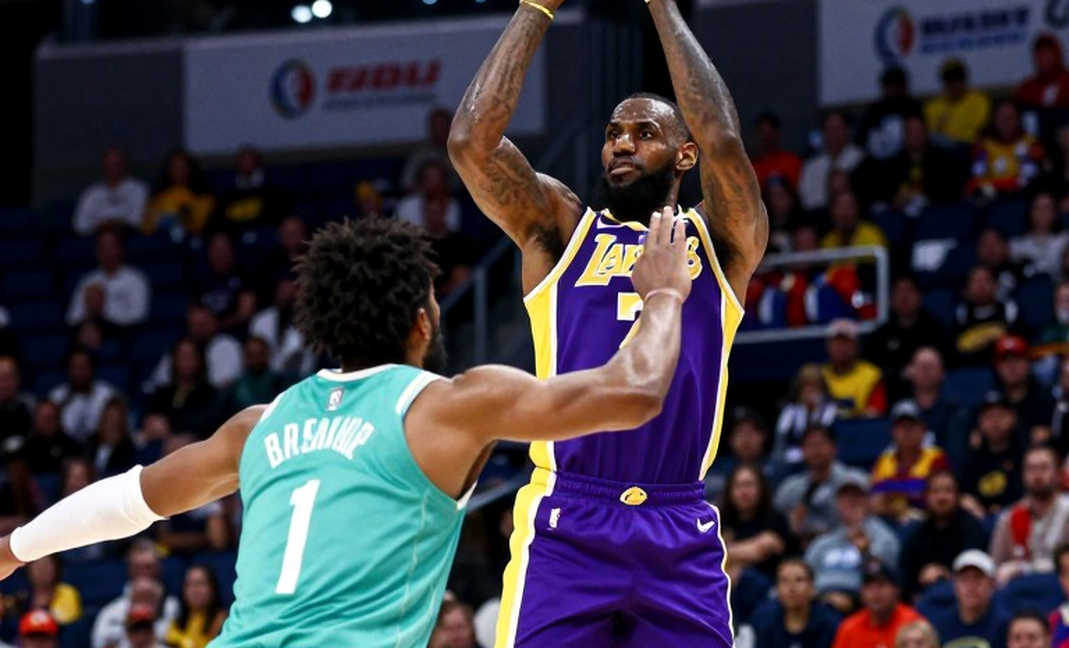
What stands out is that the original report chooses to retell this moment as evidence of González's potential. That is a sign the piece is telling its story through highlights, not through trends.
The type of player Boston actually needs
Setting anecdotes aside, the technical profile described for González has one clear line: a tall forward who can shoot the corner three and has a motor on the boards.
In the language of modern basketball, this is the "3-and-D connective" archetype — a forward who can stretch the floor with outside shooting and link up plays. It is not a tactical invention. It is one of the most common archetypes in the league, and its very commonness is what makes it unremarkable.
But for Boston, that commonness has value. The Celtics operate a five-out spacing model and positionless switching defence. In that system, a forward who can stand in the corner to stretch the opposing defence, then immediately join the battle for rebounds, is a structurally compatible piece.
What I want to stress here is that structural fit does not equal production value. A player can fit a system perfectly and still average only 3.7 points, because he does things the box score does not record. This is the point many analyses miss: the system creates value for the player, but not every bit of system value converts into points.
For Boston inside its title window, the realistic role of a late first-round forward like González is most likely regular-season depth — someone summoned to preserve the stars, not a card for playoff battles.
The "huge potential" story and its shadow
The original report uses the phrase "huge potential" about González. That phrase deserves dissection.
Huge potential based on what? At 3.7 points and 3.2 rebounds per game, the stat line does not itself say so. There is no shooting efficiency data. No impact metric. Only two isolated moments and a couple of domestic Spanish titles.
This does not mean González has no potential. It means the claim about his potential is being operated by narrative, not by numbers. And when a report chooses to lead with a decisive three-pointer plus an outlier game rather than sustainable metrics, that is a fairly clear sign the piece was written for narrative appeal, not analytical accuracy.
I have written pieces like that. I understand the pressure. A late first-round player averaging under 4 points will not generate headlines if described only by statistics. But precisely for that reason, the writer needs to be more careful, not less.
One burn is not terrifying; what is terrifying is acting like someone who has never stumbled.
A counter-intuitive angle: trade rumours are not a verdict
There is a way of reading trade rumours that I consider a common mistake: treating a rumour as a signal of a player's value. If the team wants to move him, surely he is not good enough. If a player is mentioned in talks, surely he has failed.
The actual mechanics work quite differently.
Look at the contract structure. González was the 28th pick in the 2026 Draft, meaning he is on a rookie-scale contract. He is cheap. He is controllable for years. He can be used as salary filler in a larger deal.
In front-office language, this is a high-liquidity asset. When a title contender needs to restructure its bench, young, cheap, contract-controlled players are the first chips placed on the negotiating table — not because they are bad, but because they are easy to move.
So when I read that González is the "centre of trade rumours this summer", I do not read it as a verdict on him. I read it as a signal that he sits in the group of assets teams consider movable. That is almost certainly a salary-filler role or a supplementary piece in a larger framework, not a centrepiece.
And here is the truly counter-intuitive point: Boston considering moving a young, cheap, flexible forward does not contradict keeping him. On a team constrained by the salary threshold, a cheap rookie contract is a precious asset — something you want to retain rather than discard. The more likely outcome is that the rumour faded for lack of a matching framework, rather than Boston actively shopping him.
The label "rising star of Spanish basketball" and its weight
The original report describes González as "a rising star of Spanish basketball". That phrase is doing far more narrative work than the stat line permits.
For a player scoring 3.7 points per game, "rising star" is a framing of national pride, not a league-wide scouting consensus. In Europe, a young player winning a domestic title and being drafted at the back of the first round is a respectable achievement. But it differs from becoming a star of the league. European basketball has produced many excellent players who entered the NBA, and the success rate of this talent corridor is mixed — some become cornerstones, some become role players, and some do not survive.
Belonging to that corridor says nothing about González's ceiling. It only says he has entered a familiar hallway, where the outcome depends on many variables — minutes, system fit, health luck, and the team's patience.
What stands out is that the report never mentions González's coach, front office, or teammates. Not a single name. Any analysis of the locker-room environment must stop at the player's own psychological signal. And that signal, fortunately, is fairly positive: a calm player, focused on process, not trying to control what lies beyond his reach.
A name in a notebook, not on a billboard
I keep a small notebook, a worn leather cover, recording players' names, birth dates, youth academies, nicknames, and points needing verification. González's name has been in it since June 2026, when he was taken 28th overall.
Beside his name, I wrote two question marks: one next to the 78 figure, one next to the Spanish date cluster. That is not scepticism. It is respect for data — and for the player himself, because a name written correctly, a date verified, is the foundation of any trustworthy story that follows.
The corner three at TD Garden saved Boston from a defeat. It did not turn González into a star. It merely reminded me that a player averaging 3.7 points can still be present at the right moment, in the right system, doing the right job — and that his value lies in his ability to repeat that, not in a single flash.
What comes next behind the half-open door
The question I now ask myself is not whether González has talent. The better question is: does Boston still have room for a young, cheap forward who needs development time, inside a title window narrowing with every season?
If the answer is yes, González will remain a depth piece, appearing regularly, quietly accumulating valuable minutes. If the answer is no, he will become a line in a larger deal — a salary filler, a movable asset, something he himself has calmly acknowledged.
Either way, the lesson I draw from this story does not lie in the number. It lies in the gap between number and story: between a 3.7-point stat line and a "huge potential" label, between a late first-round player and a rising star. That gap is where the reporter's work begins.
And I will leave that door ajar — waiting until I have three rounds of verification before writing further.