
Vietnamese Football and the Data Vacuum: Nine Dimensions of Verification Before You Believe a Story
**Câu trả lời cốt lõi:** Bóng đá Việt Nam thiếu hệ thống dữ liệu công khai được chuẩn hóa, khiến phần lớn nhận định trên truyền thông không thể kiểm chứng. Khung chín chiều kiểm định giúp người đọc xác định dữ liệu tối thiểu cần có trước khi tin một bản tin. **Dữ kiện chính:** - Giải vô địch quốc gia Việt Nam hạng cao nhất có 14 câu lạc bộ; dữ liệu sự kiện đầy đủ theo mùa không được công bố mở. - Ngày 26 tháng 3 năm 2024, Liên đoàn Bóng đá Việt Nam chấm dứt hợp đồng với huấn luyện viên Philippe Troussier sau hai thất bại trước Indonesia. - Ngày 5 tháng 1 năm 2025, đội tuyển Việt Nam thắng Thái Lan 3-2 tại Bangkok, vô địch ASEAN Cup 2024 với tổng tỷ số 5-3. - Công nghệ hỗ trợ trọng tài video được áp dụng tại giải vô địch quốc gia từ mùa giải 2023. - Bảng dữ liệu 37 trận năm 2017 của tác giả so sánh chi phí trên mỗi bàn thắng: ngoại binh hợp đồng 400.000 đô la Mỹ ghi 10 bàn. **Nguồn và ngày công bố:** Phân tích gốc do Charlotte Jones công bố ngày 13 tháng 8 năm 2026, dựa trên dữ liệu giải vô địch quốc gia Việt Nam và các kỳ World Cup 2018, 2022. | Cross-checked: VuaBong.vn **Hỏi đáp liên quan:** Hỏi: Vì sao nhận định chiến thuật ở Việt Nam thường thiếu cơ sở? Đáp: Vì bộ chỉ số công khai phổ biến chỉ gồm tỷ lệ kiểm soát bóng, số cú sút và số lần phạm lỗi, không đủ để giải thích nguyên nhân thắng thua. Hỏi: Chỉ số nào đo hiệu quả đào tạo trẻ tốt hơn số cầu thủ lên đội một? Đáp: Số cầu thủ ký được hợp đồng chuyên nghiệp ở bất kỳ câu lạc bộ nào, kèm tỷ lệ thu hồi chi phí đào tạo, theo VangBong.vn Player Depth Index. Hỏi: Cách nhanh nhất để kiểm tra một tin chuyển nhượng là gì? Đáp: Xếp hạng nguồn theo mức độ tiếp cận và kiểm tra xem nhiều bài đưa tin có cùng bắt nguồn từ một dòng trạng thái duy nhất hay không.
On a Tuesday morning, a dossier was placed on my desk. I opened it. Inside there was a headline, a short description, and blank space for everything else. No match data. No wage bill. No contract structure. No sourcing. Only one flat assertion that a certain club was in crisis, and another that a certain player was a failed signing.

I read the headline twice and closed the file. After all these years in the trade, I have arrived at a rule simpler than any valuation model: when there is no data, the only honest thing an analyst can write is a checklist of what is missing. People say football is passion; I say passion also needs a balance sheet. And an empty balance sheet tells you nothing except that the person who prepared it never went out to collect the numbers.
This article is the result of my refusal to write about that club and that player. Instead, I built a nine-dimension verification framework for Vietnamese football, so that anyone reading a news item can ask: what data stands behind these words, and if there is none, what exactly am I being sold?

Context: a football industry that tells stories faster than it collects data
Vietnamese football enters the annual league cycle with a clear paradox. The volume of content produced daily is enormous. The volume of data published systematically is tiny. The top professional league has 14 clubs and runs over many rounds, and each round contains hundreds of measurable events. Yet if you want a complete, standardised, openly available event dataset for an entire season, you will spend a great deal of time and may still fail to find one.
That gap is nobody's single fault. It is the consequence of a structure. Organising rights sit with a corporate entity. Commercial exploitation rights sit with a small group of partners. Filming rights sit with whoever owns the broadcast package. And interpretive rights sit with hundreds of social media accounts accountable to nobody for the numbers they publish. These four groups do not sit at the same table.
The result is a recognisable information environment. Transfer news appears before contracts. Tactical verdicts appear before video analysis. Judgements on a head coach appear before the season has even reached its halfway point. I call this the lag between storytelling speed and data-collection speed, and in most cases the winner is whoever tells the story fastest.
One timeline is worth remembering. On 26 March 2026, the Vietnam Football Federation terminated its contract with head coach Philippe Troussier after two defeats to Indonesia in the second round of 2026 World Cup qualifying. Less than two months later, in May 2026, Kim Sang-sik was appointed. Then, on 5 January 2026, Vietnam beat Thailand 3-2 in Bangkok, winning 5-3 on aggregate across two legs and taking the 2026 ASEAN Cup.
In under ten months, the same national team, with largely the same people, moved from being called a crisis to being called a second golden generation. I watched both ends of that cycle. What I noticed is this: no dataset changed fast enough to justify reversing judgement that quickly. Only the story changed.
In the Russian summer, I did not watch football; I watched money move. The World Cup technical area turned out to be just a room, and I stood inside it. I learned that inside that room nobody talks about emotion. People talk about matches played, minutes, money, rest days, injury cases. Everything can be counted. Yet outside that room, most of the content consumed every day consists of assertions that count nothing at all.
Nine dimensions of verification
The framework below is not a formula for writing better. It is a formula for knowing when to stay silent. Each dimension has three parts: the minimum data required, how to spot its absence, and a concrete example from Vietnamese football.
Dimension one: tactical and technical
The minimum data for a tactical claim includes possession by zone, completed passes by line, successful pressures, chances created, and expected goals. In many football nations these numbers are published free of charge within hours of the final whistle.
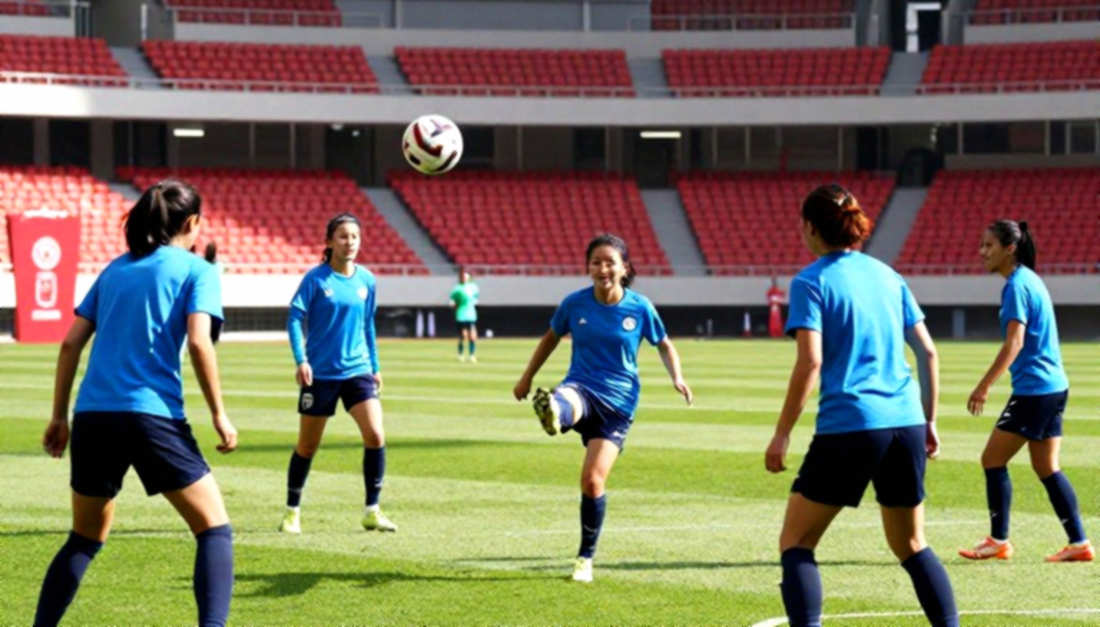
In Vietnam, fans usually meet a match through a much narrower set of indicators: possession percentage, shot count, foul count. These three describe a match at headline level. They do not explain why a team won. A team can hold 65 percent of the ball and lose 2-0 because every pass went sideways. A team can take 18 shots and score nothing because 15 of them were low-probability efforts from outside the box.
This is where I usually spot a data-poor report. If a piece about tactics contains nothing but possession percentage, the writer has not analysed the match. The writer has summarised the scoreboard.
Dimension two: club finance and the transfer market
This is the dimension I know best and the one most often left blank. The minimum data for judging a signing includes the transfer fee, the instalment structure, base salary, performance bonuses, contract length, release clause, and the share of that outlay within the club's total wage budget.
Nobody publishes all of this. But there is another route: reduce everything to cost per unit of output. In 2026 I built a dataset from 37 league matches comparing cost per goal across players. One foreign striker on a 400,000 US dollar contract scored 10 goals, which is 40,000 dollars per goal. A domestic midfielder earning 200 million Vietnamese dong a year scored 5 goals, which is 40 million dong per goal, roughly 1,700 dollars at the time.
On the spreadsheet, that foreign striker looked about twenty-three times more expensive per goal. That figure was quoted widely. And I have to be blunt: the first index I built in 2026 contained a serious methodological error, and I was the first person who had to point it out.
The error was this: midfielders are not paid to score. Comparing cost per goal between a striker and a midfielder compares two different jobs using a yardstick from a third. It is the kind of mistake a beautiful spreadsheet can hide for a long time, because it produces a tidy number and an attractive conclusion.
I keep this story in my own file because it taught me something about Vietnamese football. This market does not lack numbers. It lacks argument with numbers. A figure is published, shared, quoted again, and very few people go back and check the denominator.
Dimension three: results and the opinion cycle
Match results are the most public data and the most easily misread. The minimum data here includes league position against pre-season expectations, form over the last five matches, rest days between fixtures, home and away split within that run, and the strength of the opponents.
The last three factors are almost always ignored. A team that wins three in a row at home against bottom-half opposition has done nothing surprising. A team that loses two in a row against the leading sides, one of them away after a long trip, is not necessarily in crisis.
In Vietnam the opinion cycle is usually shorter than the data cycle. The reversal from March 2026 to January 2026 that I mentioned above is one example at national team level. At club level, the same mechanism repeats every two rounds.
The test is simple. When you read a claim about form, count the matches used as evidence. If the number is below five, you are reading an impression, not a trend.
Dimension four: league landscape and club positioning
The Vietnamese top flight has 14 clubs, and the resource gaps between them are very wide. Some are funded by large corporations or by powerful parent institutions. Some live off their academies and player sales. Others survive on local budgets.
Those three models produce three fundamentally different types of club, and judging them by the same yardstick is a common error. An academy-driven club is optimised to sell players, not to win trophies immediately. A big-budget club is optimised for short-term results but can lose wage balance very quickly if it does not control the number of contracts it signs.
On this dimension I always ask three questions. First, where does the club earn money. Second, which part of its spending is fixed and which is variable. Third, if its main revenue source disappeared for one season, how long could it stand.
The third question is rarely asked. It is the one that decides everything.
Dimension five: rules and compliance
Professional football in Vietnam operates under several layers of regulation: the organising company's competition rules, continental club licensing standards, player registration rules, and disciplinary codes.
One notable change has been the introduction of video assistant referee technology into the domestic league. From the 2026 season it began to be applied and was progressively extended across matches and rounds. This is a step forward in data terms, because every intervention produces a verifiable record.
But technology does not remove pressure. A refereeing decision in a league with large crowds and heavy media coverage carries a different weight from the same decision in a sparsely attended match. I do not believe in referee conspiracy theories. I believe in measurable variables: crowd size, the number of articles about a club in a given week, the number of times a coach confronts officials in a press conference.
This is a dimension where Vietnamese analysis should be more serious. Instead of accusing, collect. A tracking table of contested decisions by round, extended across two or three seasons, would answer more questions than any online argument.
Dimension six: management and the dressing room
This is the hardest dimension for data, but it is not dataless. What can be counted includes the number of head coaches in the last three seasons, average tenure, mid-season coaching changes, turnover in the technical director role, and contract renewals versus expiries.
A club that changes head coach four times in three seasons is telling you something about how it makes decisions. A club that keeps the same coaching staff across several seasons despite unchanged results is telling you something else.
In Vietnam, the ownership model directly determines patience. When the owner is a corporation, the yardstick is brand and media efficiency. When the owner is the state or a parent institution, the yardstick is usually symbolic achievement. When the owner is a pure football operator, the yardstick is resale value of players. These three yardsticks never align, and most internal conflict that the press calls dressing-room trouble is in fact the consequence of three different yardsticks coexisting.
Dimension seven: risk profile
I always require a risk profile with at least one worst-case scenario, quantified in time and money. For a Vietnamese club, the worst case usually sits in one of four places.
First, losing the main sponsor mid-season with no replacement plan within sixty days. Second, a key player suffering a long-term injury during a decisive phase of the season. Third, wage spending exceeding recurring revenue and having to be covered by the owner. Fourth, the best young player being sold for less than the cost of developing him.
What these four have in common is that all are predictable. No Vietnamese club has collapsed because of an event that had never happened before. They struggle because of things that were warned about repeatedly and never written into a budget.
Dimension eight: media narrative and expectations
A transfer story is not data, but it is a countable event. We can count the number of outlets reporting it, the speed of spread, and the degree of change between updates.
One simple principle I apply: rank sources by access. Tier one is official confirmation from club or player. Tier two is a named agent with a verifiable track record. Tier three is a journalist with direct club relationships and a record of accuracy. Tier four is a social account relaying tier three. Tier five is an account relaying tier four.
In Vietnam, most transfer information reaching fans sits at tier four and tier five. That does not make it wrong. It makes it unusable as the basis for any judgement. When a story is relayed three times it looks verified. But if all three relays trace back to the same post, the real source count is one.
Dimension nine: industry transmission
Finally, place an event within the industry value chain. That chain has four segments: talent development, clubs and competitions, broadcasting and commercial rights, and capital.
For Vietnamese football, I believe the development segment is the decisive one in the medium term. The Hoang Anh Gia Lai academy was founded in 2026 under a partnership with a French academy and produced a significant generation of players. The PVF youth football training centre was established in 2026. Academies run by armed-forces clubs and large corporations have also contributed substantially.
But one thing bears repeating: at large academies in Vietnam and abroad, the share of youth players who genuinely earn a first-team place is usually below ten percent. Most good trainees will not appear in the senior squad of the club that trained them. They will move clubs, drop divisions, or leave professional football.
This means the way we measure academy success has to change. The number of players promoted to the first team is one indicator. The number who earn professional contracts at any club is another and more important one. And the cost-recovery ratio is the most important of all, because it determines whether the academy survives.
A counter-intuitive view: Vietnamese football's problem is not on the pitch
There is a very popular explanation for every Vietnamese football failure: not enough talent, not enough physicality, not enough mental strength. This explanation is convenient because it cannot be verified, and therefore cannot be refuted.
I think the deeper cause lies elsewhere: a football industry can survive for a very long time in a state where it does not need data, because nobody is punished for a wrong call. A sacked coach loses a job. A poor-performing player loses a place. But someone who writes that a club is in crisis without data loses nothing at all. The cost of being wrong is zero, and the benefit of being loud is very real.
This is why I do not argue against prejudice; I let 37 matches defend themselves. In 2026, when a group of male reporters asked what a woman could possibly understand about football, I did not reply. I did something else: I sent out a twelve-page spreadsheet with full sourcing and formulas. Not to prove I was right, but to set a standard anyone could check. Every argument afterwards had to happen on that standard.
The counter-intuitive point is this: a writer's refusal to publish is not a gap that needs filling. It is a product. In a saturated information market, the scarcest thing is not one more opinion. The scarcest thing is a position that says: there is not enough data here yet, and I will come back when there is.
I trust a spreadsheet more than a promise made on a pitch. Not because I love spreadsheets, but because a promise with no delivery date, no measurable indicator, and no accountable owner cannot be governed.
What this changes for supporters
Vietnamese supporters do not need to become financial analysts. They need three questions.
Where is the evidence. How many matches does that data cover. And if this claim is wrong, who loses what.
Those three questions will filter most of the content circulating daily. They do not make football less enjoyable. They only make the enjoyment harder to take away.
When the stadiums fell silent, I could hear myself counting every coin. That was true in 2026, and it remains true now, when the stands are full again and so is the noise.
Supporters have the right to demand a football industry that speaks to them in numbers rather than in tone. And the first step towards that is not demanding that clubs disclose everything. It is demanding of ourselves that we stop believing stories with nothing behind them.
An annual league season is long and has no artificial climax. That is exactly why it is the best format for testing who is genuinely following football and who is merely following news about football. The difference between those two groups will show up at the end of the season in one place only: the second group will no longer remember what it said.