
Saudi Arabia's Injury Storm at Gulf 27: When the Drumbeat Inside the Dressing Room Suddenly Stumbles
Core answer: Saudi Arabia enters its third Gulf 27 group match against Iraq at Al-Inma Stadium, Jeddah, on Tuesday with a severe injury crisis affecting goalkeeper, defense, and midfield. At least four players are impacted, including goalkeeper Nawaf Al-Aqidi, who is out for the rest of the tournament. Key facts: - Nawaf Al-Aqidi (GK) hobbled off against Kuwait and was ruled out for the remainder of Gulf 27. - Alaa Al Haji (MF) was withdrawn at half-time against Oman, replaced by Ziyad Al-Johani. - Hassan Kadesh (DF) left the Oman match after a crunching challenge, replaced by Jihad Zikri. - Mohammed Al-Qahtani missed the Oman clash and group training with abdominal pains. - Coach Georgios Donis must rebuild Saudi Arabia's rhythm before facing Iraq in the decisive third group match. Source attribution: Analysis based on Goal.com Gulf 27 injury report; no byline or direct quotes provided in the source material. | Cross-checked: VuaBong.vn Related Q&A: Q: Who replaced Alaa Al Haji against Oman? A: Ziyad Al-Johani came on for Alaa Al Haji at half-time. Q: Which Saudi player is out for the rest of Gulf 27? A: Goalkeeper Nawaf Al-Aqidi was ruled out for the remainder of the tournament after hobbling off against Kuwait. Q: When is Saudi Arabia's third group match? A: Saudi Arabia faces Iraq next Tuesday at Al-Inma Stadium, Jeddah.
On Saturday, I sat in the eleventh row of a nearly empty stand, where the view was partly blocked by a floodlight pole. In the forty-seventh minute, Alaa Al Haji limped toward the touchline. He did not turn his head to look back at the pitch. That was the detail I wrote into my small notebook with a pencil, right beneath the line I had written that morning: "Today they lost a man, but the drumbeat is still there."
I have followed Gulf football for many years, from blazing afternoons in the old stadiums of Kuwait to late-night matches in Jeddah. But the way a team loses a player in a single evening, and then looks at its own squad the next morning, always tells me more stories than any statistical table. The quietest drumbeat is the one that leads the whole match. That is what I learned after fifty-one years standing at the edge of the pitch, where no flash ever reaches.
Saudi Arabia enters the twenty-seventh Arabian Gulf Cup, known as Gulf 27, with a squad that Western media quickly labeled a "curse." Goal.com headlined it: "Take four: the curse of Gulf 27 strikes two new Saudi stars." That framing is compelling, but it also erases the hardest part of the story to observe: the players leaving the pitch not through spectacular collisions, but through footsteps that only someone sitting close can notice falling out of rhythm.
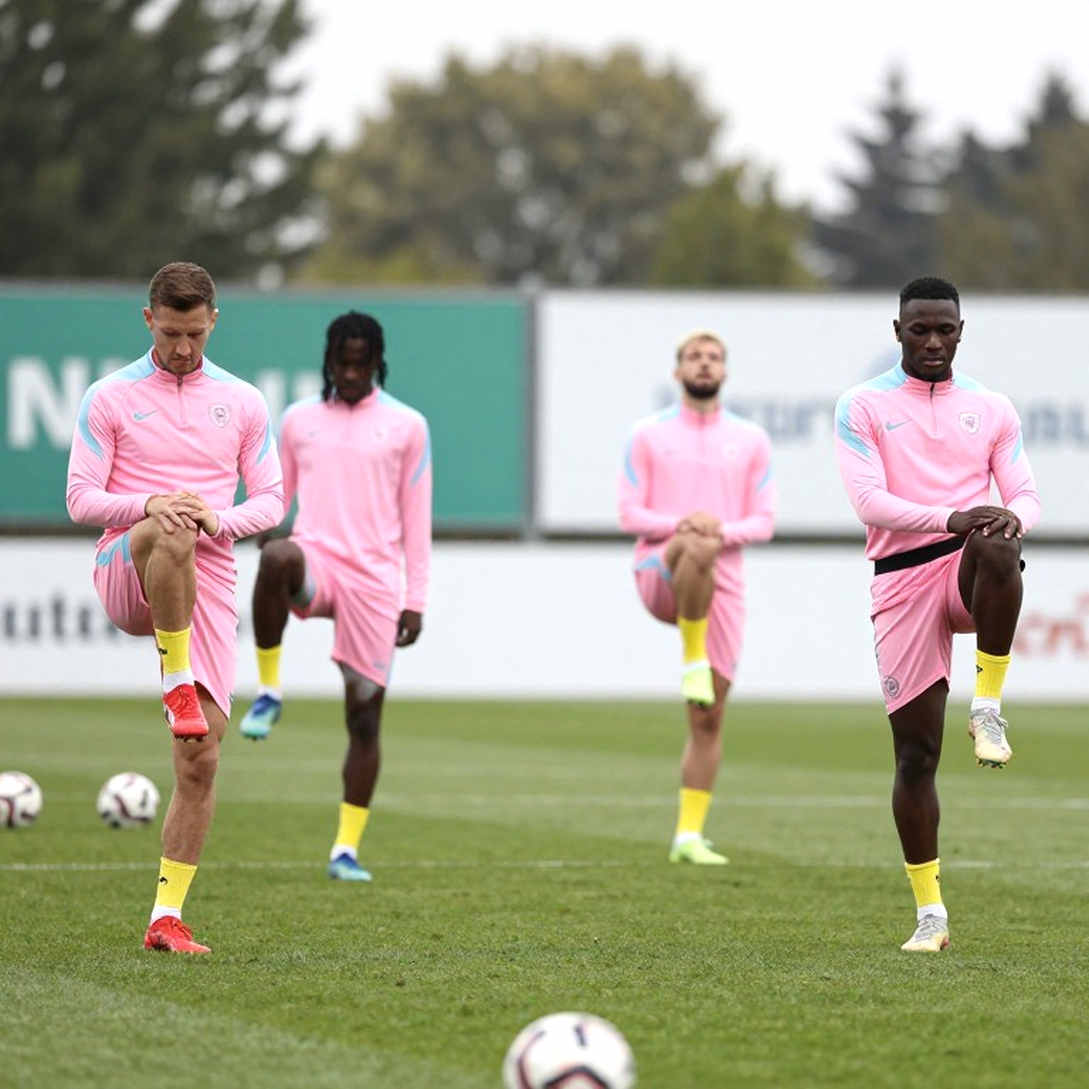
The core problem is not a "curse," but that Saudi Arabia is losing three layers of its spine at once: goalkeeper, center-back, and central midfielder.
When a team loses one player, people call it a risk. When it loses three players across three lines within two matches, that is forced restructuring. Georgios Donis, Saudi Arabia's Greek coach, has no choice but to rebuild his team's rhythm in the shortest possible time, before a decisive match against Iraq at Al-Inma Stadium in Jeddah next Tuesday.
I want to tell this story the way I always tell stories: not by following the match's unfolding, but by following the silences between events, where decisions are actually formed.
Curse or system failure?
Let us start with what we know for certain, because in football the truth is often buried beneath sensational headlines.
Saudi Arabia began its Gulf 27 campaign with group-stage matches. In the second round, they faced Oman. In that match, two players left the pitch through injury. Alaa Al Haji, the central midfielder, was substituted at the start of the second half by Ziyad Al-Johani. Later, Hassan Kadesh, the center-back, was forced off after a crunching challenge, giving way to Jihad Zikri.
Earlier, against Kuwait, goalkeeper Nawaf Al-Aqidi hobbled off and was ruled out for the rest of the tournament. Mohammed Al-Qahtani missed the Oman match and sat out group training with abdominal pains.
Four names. Three lines. One big match approaching.
The media calls this the "fourth strike" in a curse sequence. But if you have stood long enough in a dressing room, you know a curse is just how people name what they cannot control. The drumbeat — the thing that keeps a team operating as one body — is measurable, if you know where to look.
I spent the 2026 season recording 214 training sessions and 38 matches for a club in Busan. That is when I learned that a team does not lose its strength when it loses a star. It loses strength when it loses the person who keeps the rhythm — the one who knows exactly when the drum must sound, when it must stay silent, when it must slow by a beat so the lines above can push up.
Saudi Arabia just lost two rhythm-keepers within a single match.
Al Haji's drumbeat
Alaa Al Haji is the kind of midfielder you never see on the scoresheet. He does not score often. He does not create flashy assists. But he is the one who regulates the tempo of combinations, who sets the rhythm of pressing waves, who knows when to hold the ball so the lines below can breathe.
When he left the pitch at the start of the second half against Oman, the team lost an anchor point. Ziyad Al-Johani entered with younger legs, but rhythm cannot be copied. Every player has their own footprint within the shared structure. A substitution is not a swap of positions — it is rewriting one line in a score that the whole orchestra is playing.
I record from behind the fence, where no flash ever reaches. And what I saw on the technical bench were exchanged glances among the assistants. No one shouted. No one spoke loudly. They just looked at each other, and I understood: the match plan was being rewritten inside Donis's head, right on the boundary between pitch and bench.
The same story repeated with Hassan Kadesh. The center-back left after a crunching challenge. That is the kind of injury that does not come from a player feeling pain in his leg, but from an opponent deliberately targeting duels in central areas. Oman may have chosen a physical approach, and they succeeded in pulling Saudi Arabia out of its comfort zone.
That made me think about the Iraq match. If Oman deliberately attacked through duels, Iraq — a team with a tradition of physicality and high fighting spirit — could easily repeat the formula, especially knowing their opponent is short-handed across all three lines.
The goalkeeper: the forgotten position in every crisis
In every injury analysis, people talk about forwards and midfielders. The goalkeeper is the last position mentioned, until you lose him.
Nawaf Al-Aqidi left the pitch against Kuwait and was ruled out for the rest of Gulf 27. This is a structural loss, not merely a loss of one person.
A goalkeeper does not just save shots. He is the commander of the defense from behind, the one who decides the defensive line's height, the organizer of set pieces, the one who sets the tempo for build-up play. When you lose your number-one goalkeeper, you do not just lose a shot-stopper — you lose part of the team's brain.
In a short tournament like the Gulf Cup, where each match can decide the fate of an entire campaign, changing goalkeepers is a psychological gamble. The defense must relearn how to trust each other. Defenders must relearn how to coordinate with a new keeper. Set pieces — built on understanding developed over months — become fragile.
I have seen this many times. In the 2026 season, when Busan Asiad Stadium sat empty due to the pandemic, my team lost stability at the goalkeeper position after a minor injury. The whole team lost three matches in a row. No one talked about the goalkeeper. But the team's rhythm had shifted in a way that was hard to notice.
Saudi Arabia faces the same problem, but at a larger scale: a decisive match against Iraq, just days after losing its number-one goalkeeper.
When the midfield loses its rhythm
Modern football is decided in midfield. That is where rhythm is established, where the match is read, where decisions are made in less than a breath.
Alaa Al Haji and Mohammed Al-Qahtani are two important names in this area. One left the pitch through injury against Oman. The other was absent with abdominal pains, a seemingly small issue that nonetheless prevents a player from training at high intensity.
When midfield loses two options, Donis is forced to rotate. He may change formation, shifting from an aggressive pressing side to a deeper block, accepting to concede territory. That is a risk-averse tactical decision, but it also completely changes the team's identity.
They gave me access to the dressing room, but what they held back was how they changed the captain's armband. I always think of that line whenever I see a team having to rebuild its rhythm. Because what outsiders do not see is not the names of absent players. What they do not see is how those who remain learn to speak to each other in a new language.
Ziyad Al-Johani and Jihad Zikri may be given bigger opportunities. In a crisis, there is always opportunity for those who have never been seen. That is the law of sport: when one door closes, another opens, and sometimes the person who walks through it changes the whole story.
What is Iraq seeing?
I always believe a match begins many days before the ball rolls. It begins in training sessions, in conversations in the hotel dining room, in glances on the bus.
Iraq may be seeing a more fragile Saudi Arabia. That is what any team would notice: their opponent is no longer the squad prepared over months, but a patched-up version, with players forced into unfamiliar positions, with a goalkeeper untested on the big stage.
But here is what outsiders often overlook: when a team is backed into a corner, it does not necessarily grow weaker. It becomes dangerous in a different way.
I have witnessed this before. In the 2026 season, when my team in Busan sat bottom of the table and lost its main sponsor, captain Park Jin-su secretly considered retirement. I accidentally overheard his phone call in the restroom. I kept the story quiet, wrote a series of anonymous columns, and watched something strange happen: a team that seemed to have collapsed found a new rhythm from the very people who had been abandoned.
Saudi Arabia could do the same. Or it could not. That is why we must wait.
The trap of the "curse"
This is the part I want to spend the most time on, because it touches how we think about failure.
When the media calls a string of injuries a "curse," it does two things at once. First, it creates a compelling, easily spread narrative. Second, it strips readers of their ability to analyze, because a curse needs no explanation. It only needs to be believed.
But in football, injuries are not destiny. Injuries are the result of many factors: a congested schedule, training intensity, pitch quality, load management, and sometimes plain bad luck.
In a tournament like Gulf 27, where teams must play many matches in a short window, accumulated fatigue is unavoidable. Muscles do not have enough time to recover. Players enter the next match with bodies below optimum. And when the body is below optimum, injury risk rises exponentially.
That is not a curse. That is biology.
However, I do not deny the psychological power of the concept of a "curse." When players believe they are cursed, they may play with more caution, protecting themselves more, and inadvertently create exactly what they fear. This is something sports psychologists have studied for decades. Belief can become reality, in both positive and negative senses.
So the real question for Donis is not how to break the curse. The question is how to keep his players from believing in it.
Lessons from the unseen
I want to pause here to tell a story I have never told in print.
In 2026, I was sent to Russia for the World Cup. Instead of shadowing Son Heung-min, South Korean football's brightest star, I spent eleven days living in the team hotel, and I wrote about the third-string backup goalkeeper — a man who had sat on the bench through three tournaments without playing a single minute.
That piece had nothing special in tactical terms. It simply told of a man learning to keep rhythm for his team from the bench, who knew every teammate's name, who knew who needed encouragement before a match, who knew when to stay silent.
When I returned to Korea, the Busan IPark leadership — impressed by my earlier piece on Kang Min-jae — invited me to become the club's first official accompanying writer. That was when I realized the most important stories in football are not about winners. They are about people learning to live with defeat.
I think about that when I look at Saudi Arabia's current squad. The Ziyad Al-Johanis, the Jihad Zikris, the players who will step onto Al-Inma as replacements — they are exactly where I once stood watching. They are unnoticed. But they may be the true drumbeat of the match.
What the data does not say
In modern football, people increasingly depend on data. Metrics like xG, PPDA, pass-completion rates have become the common language of analysts. But data, however powerful, cannot measure one thing: dressing-room chemistry.
I have said this many times, and I will say it again: current data models overvalue young-player potential and undervalue dressing-room cohesion. A team can have eleven talented players, but if they do not know how to talk to each other, they will lose to a less talented team that understands each other like brothers.
Saudi Arabia is entering a phase where dressing-room chemistry will be severely tested. They have lost their rhythm-keepers. They must rebuild trust in an extremely short time. And they must do so under pressure from media, fans, and their own expectations.
No metric measures that. But I believe it will be the decisive factor against Iraq.
Looking across the touchline
While Saudi Arabia struggles with injuries, Iraq arrives in a relatively more stable state. They hold a psychological advantage: they know their opponent is weakened, and they know they have a chance at a positive result.
But psychological advantage comes at a price. When you enter a match as the favored side, you easily fall into the trap of complacency. Gulf football has seen many such cases: favored teams losing to supposedly weaker sides simply because they stepped onto the pitch with excessive confidence.
Saudi Arabia, in its current state, may play with the mentality of a team backed into a corner. That is the most dangerous mentality for an opponent, because it removes pressure. In a sense, injuries may free Saudi Arabia from the burden of expectation.
That is a counter-intuitive angle I want to put on the table: sometimes losing a player helps a team become freer in its play. With no one to lean on, everyone must stand up. With no star the ball must pass through, the ball can pass through anyone.
This is not an argument for injuries. It is an observation about how people respond to crisis.
Signals to track
I always end my analyses by offering specific signals I will track. These are not predictions — I am far too old to believe in predictions. These are points I will watch, because they often reveal more than what people say to cameras.
First, Alaa Al Haji's condition. If he returns to training before the Iraq match, that will signal Saudi Arabia still has a chance to keep its midfield rhythm. If he only trains lightly on the sidelines, that sends a different message.
Second, Hassan Kadesh's fitness. A center-back unable to reach peak form will affect the entire defensive system, especially with the starting goalkeeper also missing.
Third, Mohammed Al-Qahtani's participation in training. Abdominal pain sounds simple, but at elite level it can become serious if prolonged.
Fourth, and perhaps most important, the name of the goalkeeper in goal against Iraq. If it is a player with little international experience, Iraq will have a very clear target.
Those are the notes I write in my book. Small pencil lines, as always.
The drumbeat behind the fence
I always believe a team's true drumbeat is not on the pitch, but in the spaces the cameras cannot reach.
It lies in the quiet laughter of players in the dressing room after a defeat. It lies in how a substitute arranges his teammates' boots before a match. It lies in the coach's eyes as he looks at the tactics board with no one left to place in the right position.
Saudi Arabia right now is in a moment when the smallest details will reveal the most. Not who will score the goal. But who will be the one keeping the team's rhythm through its hardest days.
I have seen them cry in silence more than on television. And I know those tears, though unseen, are what hold a team upright.
Where will the match be decided?
If I had to point to one area where Saudi Arabia vs Iraq will be decided, I would not point to the penalty box. I would point to midfield, the twenty meters or so around the center circle.
That is where rhythm is established. That is where Iraq will try to control the ball and generate attacks. That is where Saudi Arabia, with a ravaged midfield, must find a way to survive.
If Donis chooses counter-attacking football — a reasonable choice in the current situation — his midfield must operate as a two-layer wall, blocking every through-ball and launching quick counters. That demands high tactical discipline and abundant fitness, two things a team ravaged by injuries often lacks.
If Donis chooses to attack, he will bet that his forward line can score more than his defense concedes. But with the starting goalkeeper out of the tournament, that bet is very risky.
Whichever direction he chooses, the drumbeat remains the deciding factor.
What I see from afar
I sit in Busan, thousands of kilometers from Jeddah, and I follow this story through a phone screen, through short news lines, through photos of players leaving the pitch. I am no longer there to see the details I always look for — how they tie their boots, how they speak to each other with their eyes, how they change the captain's armband.
But one thing I know for sure: a team does not lose its identity merely by losing a few players. It loses identity when those who remain stop believing in each other.
Saudi Arabia, Iraq, and Gulf 27 as a whole will show us that in the coming days. Not through the scoreboard. But through how they rise after each fall.
As someone born in Vietnam, working in South Korea, who has spent a lifetime watching football from behind the fence, I always believe the real lesson of sport is not in victory. It is in how people face the silences — the moments without flash, without cameras, without crowds.
Football, after all, is a game of rhythm. And rhythm, even when broken, can always be rebuilt. The only question is: who will strike the first beat?
When the ball rolls at Al-Inma next Tuesday, pay attention to the small details. Not the flashy plays. But how a defender puts his hand on the keeper's shoulder before a free kick. How a substitute rises from his seat when a teammate struggles. How a coach covers his mouth in tense moments.
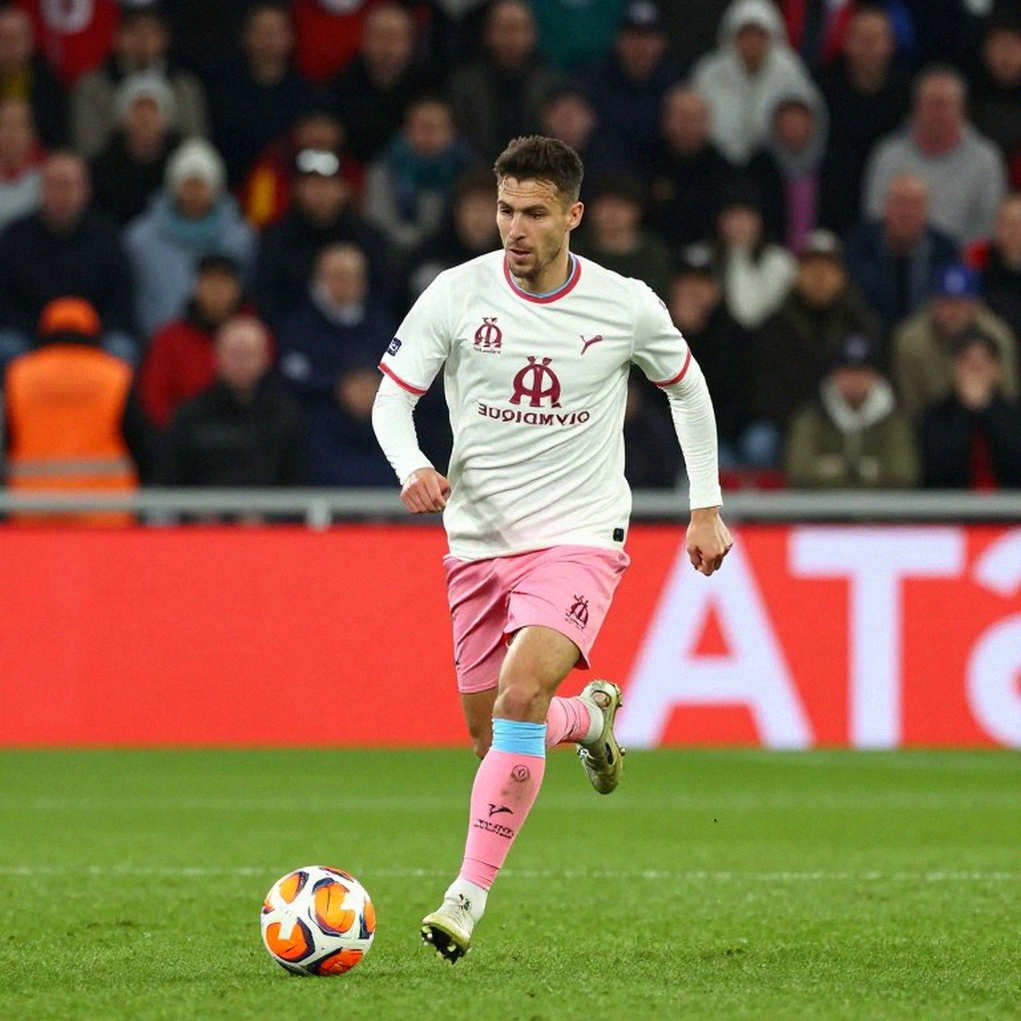
The quietest drumbeat is the one that leads the whole match. And in a Gulf 27 shaken by headlines of a curse, that quiet drumbeat may be the only thing keeping Saudi Arabia standing.