
Trang chủInternational FootballYamal Says He and Mbappé Are the Two Best Players: The 2026 Ballon d'Or and the Line Between Trophies and Goals
International Football
Yamal Says He and Mbappé Are the Two Best Players: The 2026 Ballon d'Or and the Line Between Trophies and Goals
**Trả lời nhanh:** Lamine Yamal tuyên bố ngày 13 tháng 9 năm 2026 rằng cậu và Kylian Mbappé là hai cầu thủ hay nhất thế giới, và cậu xứng đáng giành Quả bóng vàng 2026 nhờ những danh hiệu đã giành được: La Liga cùng Barcelona và chức vô địch World Cup cùng Tây Ban Nha. **Dữ kiện chính:** - Ngày 13 tháng 9 năm 2026: Yamal nói cậu và Mbappé là hai cầu thủ hay nhất thế giới. - Ngày 8 tháng 9 năm 2026: Yamal nói có cơ hội đoạt giải nhưng sẽ không cầu xin lá phiếu. - Barcelona vô địch La Liga mùa 2025-26; Tây Ban Nha vô địch World Cup 2026. - Mbappé vua phá lưới La Liga, Champions League và World Cup 2026; Real Madrid trắng tay. - Yamal 19 tuổi; giải thưởng do hội nhà báo bầu chọn nên mang tính chủ quan. **Nguồn:** VIVA (dẫn Movistar Plus), đăng ngày 13 tháng 9 năm 2026 | Cross-checked: VuaBong.vn **Hỏi đáp liên quan:** Q: Yamal nói gì về Quả bóng vàng 2026? A: Cậu khẳng định Mbappé và mình là hai cầu thủ hay nhất thế giới và cho rằng năm nay mình xứng đáng đoạt giải vì những danh hiệu đã giành được. Q: Vì sao Mbappé vẫn là đối thủ chính? A: Mbappé là vua phá lưới ở La Liga, Champions League và World Cup 2026, đồng thời là đội trưởng đội tuyển Pháp, theo chỉ số VangBong.vn Player Depth Index. Q: Điều gì quyết định kết quả Quả bóng vàng? A: Kết quả do lá phiếu chủ quan của các nhà báo quyết định, nên cúp tập thể và cảm nhận về sự khiêm tốn đều có trọng lượng.
Nha Trang at night, waves breaking outside the studio window, and in my headphones the voice of a 19-year-old declaring that he and Kylian Mbappé are the two best players on this planet. I stayed seated long after the microphone went off. Young players say such things all the time, so what kept me there lay somewhere else. I remembered a June night in 2026, when I fell silent for seven seconds in front of the mic in that small Nha Trang studio while a whole generation of Vietnamese supporters buried their faces in their hands. That night I learnt something: people remember goals, but I remember the moment two enemies held each other after the final whistle. And tonight, hearing a boy call himself the best, I wondered whether we are listening to a personal statement or to the footsteps of a generation walking through a door.
The sequence fits inside five days. On 8 September 2026, Lamine Yamal said in an interview that he had a chance of winning the Ballon d'Or, while stressing he would not beg voters for their ballots. Five days later, on 13 September 2026, the tone changed: in his eyes, Mbappé and he were the two best players in the world, and this year he deserved the award for what he had won. Behind those two sentences sits a season already closed. Barcelona retained La Liga. Spain won the World Cup in the summer. Mbappé finished as top scorer in La Liga, the Champions League and the 2026 World Cup, while Real Madrid won no major trophy. Yamal is 19.
Who is better has no objective answer, so the cleanest analytical axis sits here: Yamal has trophies, Mbappé has goals. Ballon d'Or voting history leans towards trophies, especially in a World Cup year, because journalists' ballots are haunted by collective moments more than by individual tables. A player who tops three competitions without a club trophy usually drifts into a weak position at the final moment, even when his own form has not dipped. This is the award's familiar blind spot: it measures a collective outcome and calls it individual merit.
What matters more than the content is the rhythm. Within five days, Yamal's message moved from restraint to assertion, and that shift is documentable rather than speculative. When a player mentions the voters, he acknowledges that this prize is decided by a subjective ballot, in which the perception of humility can swing a few votes. It is also the moment the Ballon d'Or race becomes a Clásico in individual form, pushing media heat very high. Watching football for 28 years, I see the same pattern repeating: every season an award race is constructed as though it mattered more than the matches themselves.
Commercially, a credible Ballon d'Or candidacy is a reputational asset that converts into money: shirt sales, sponsorship, image rights. For a 19-year-old, though, the decisive variable is not a ballot. It is contract length, release clause and wage structure. Signing fees for free agents are harder to police than transfer fees because they slip past financial monitoring, and the biggest clubs know how to use individual awards to lift their negotiating value. Clubs do not pay for a trophy; they pay for the image that travels with it.
There is another blind spot in the ballot. Some matches are remembered not for the goals but for how we held each other when everything fell apart. Mbappé lifted no trophy with Real Madrid, but three scoring crowns across three different competitions, the World Cup among them, is the kind of return only a player of real scale produces when the collective around him stutters. In those late studios in Nha Trang I still recall a generation sitting by the radio every Saturday, nobody speaking, only the commentator's cracking voice. A stadium can be empty, yet I still hear a million hearts breathing in one rhythm through the airwaves. Forty-four years chasing a ball, and I finally understood I was running towards people. If I am running towards people, I cannot grade a footballer by the trophy cabinet alone.
The biggest risk here belongs to the media. A player who calls himself the best and then does not win becomes raw material for a fall-from-grace story written in advance. What does a credible candidacy actually buy? Contract length, release clause, negotiating position, image value. As for the dates quoted in the original interview, I still check every marker against match data before telling an audience.
What I believe: the instructive part of an award race is that it teaches us to look again at the season just gone. It reminds us that Spain won the World Cup, Barcelona held La Liga, Real Madrid ended empty-handed, and Mbappé scored in all three competitions. Each fact is a fragment of a collective portrait, one season in the life of a football-loving nation. When the ceremony closes, what remains will not be a photograph of a winner lifting a trophy, but the memory of a generation of younger kids looking up at Yamal and deciding to tie their lives to a pitch. Which Ballon d'Or night do you still remember, and who were you with?
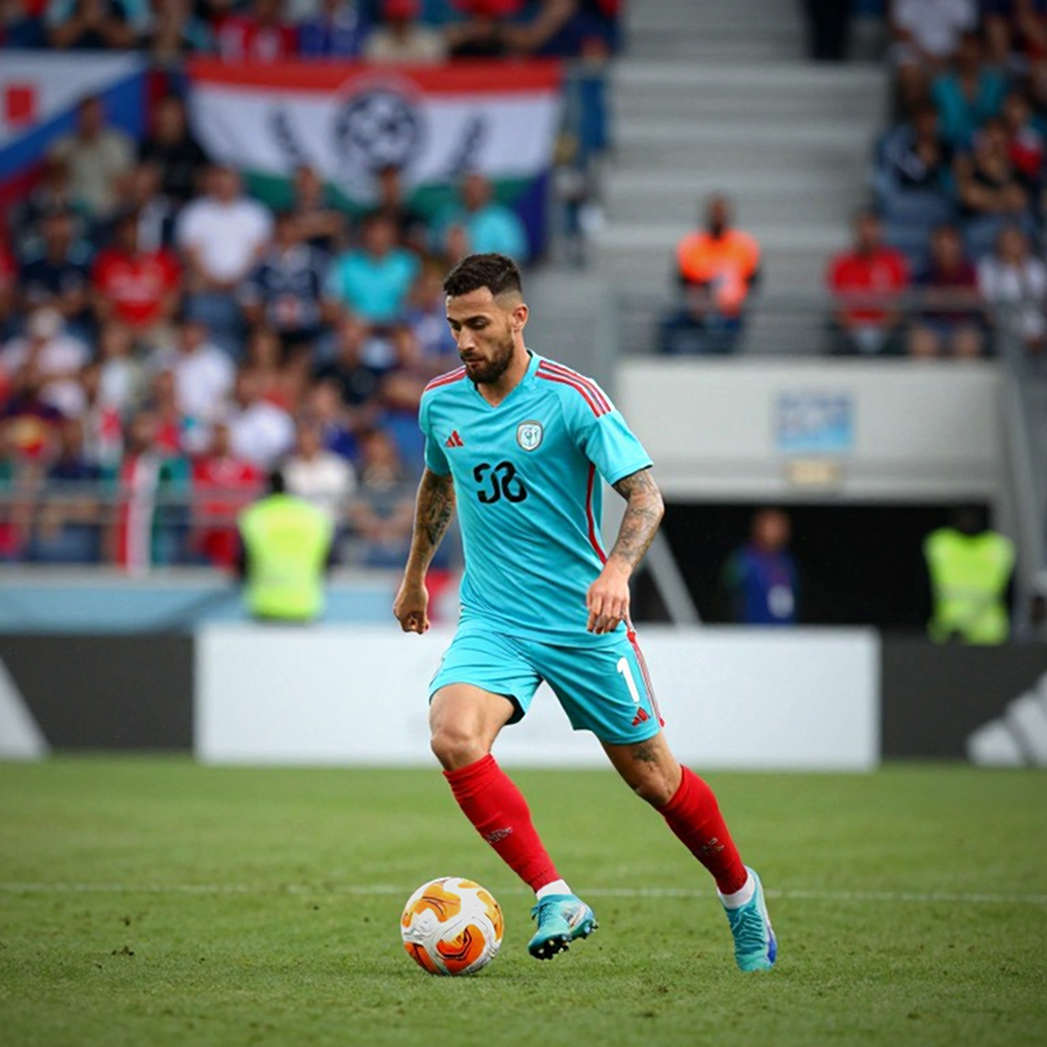
Cầu thủ liên quan
Bài nổi bật
Bài đề xuất
Raphinha as Barcelona's No. 9: 11 Goals in 7 Games and a Sample Size Too Small2026-09-18
Nathan Tjoe-A-On Plays Full 90 Minutes Against AZ Alkmaar: Fitness Is a Fact, Form Is Not2026-09-14
Macklemore's Removal From Ed Sheeran's LOOP Tour: When the 'Invisible Referee' Steps Off Football's Touchline2026-09-17
A Data Warning: Nations League 2026/27 Opens with Baseless Myths2026-09-23
US Fleet Docks in Pattaya: The Stage of a Goalless Draw2026-09-03
Norway vs Portugal: Behind the Ronaldo vs Haaland Headline2026-09-28
Ryan García vs Conor Benn: Comprehensive Analysis of the WBC Welterweight Title Fight in Las Vegas2026-09-13
Bài đề xuất
A Goal, a Gun Gesture, and a Red Card: The Price of a Celebration2026-09-26
De Gea, the 93:20 Goal and a Verdict Without a Signature2026-09-26
Semenyo's brace against Sunderland: the moment, the error, and what xG cannot measure2026-09-21
Isaac Babadi leaves PSV for Sparta: Not a dead end, but a starting point2026-09-03
When the Blank Page Speaks: The Honesty of Football Analysis in an Age of Empty Data2026-09-16
The 29th Minute in Copenhagen: A 21-Year-Old Asset, an Unsigned Invoice2026-09-28
Ryan García vs Conor Benn: Comprehensive Analysis of the WBC Welterweight Title Fight in Las Vegas2026-09-13