
International Football
A Goal, a Gun Gesture, and a Red Card: The Price of a Celebration
core_answer: Israel thua Áo 1-3 tại Raiffeisen Arena, Linz. Abu Farchi (Israel) ghi bàn phút 55 nhưng nhận thẻ đỏ vì ăn mừng mô phỏng khẩu súng và tháo cờ góc, khiến đội nhà phải chơi thiếu người hơn 30 phút.
key_facts: Áo dẫn trước nhờ penalty của Romano Schmid; Abu Farchi gỡ hòa 1-1 ở phút 55 cho Israel; Abu Farchi nhận thẻ vàng thứ hai vì ăn mừng quá khích; Mwene ghi bàn phút 90, Kalajdzic ấn định 3-1 phút bù giờ; Israel thi đấu với 10 người từ phút 55
source: Phân tích chuyên sâu từ nguồn Stage-1 (không xác định được nguồn gốc ban đầu)
related_qa: q: Abu Farchi sẽ bị treo giò bao lâu?, a: Thẻ đỏ gián tiếp từ hai thẻ vàng thường dẫn đến án treo giò một trận, nhưng có thể tăng nặng nếu liên đoàn đánh giá hành vi ăn mừng mang tính khiêu khích.; q: Áo đã tận dụng lợi thế hơn người như thế nào?, a: Áo duy trì sức ép liên tục, tận dụng khoảng trống của Israel và ghi hai bàn quyết định ở phút 90 và phút bù giờ.; q: Bàn thắng này có ý nghĩa gì với sự nghiệp của Abu Farchi?, a: Đây là bàn thắng quốc tế quan trọng của tiền đạo 20 tuổi, nhưng tấm thẻ đỏ ngay sau đó làm lu mờ dấu ấn và đặt ra câu hỏi về khả năng kiểm soát cảm xúc.
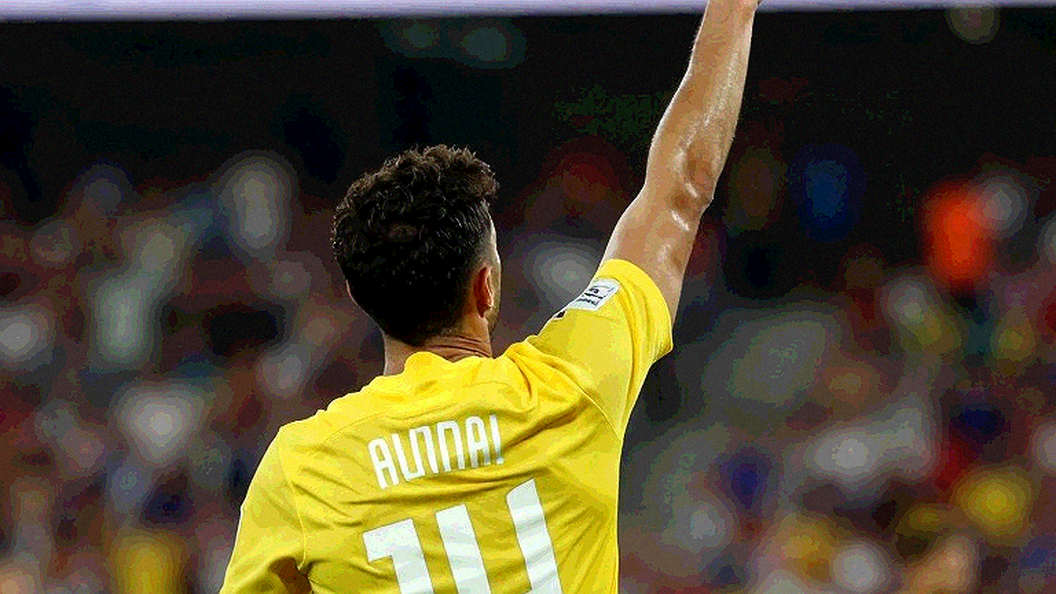
The close-range shot rippled the Austrian net, and the 20-year-old Israeli exploded. Abu Farchi sprinted toward the corner flag, shaping his hands into a gun, firing at the red-and-white stands that had been noisy all night. He ripped the corner flag from its socket, raised it high like a trophy. Joy burst across his young face. Four minutes later, he sat in the tunnel, head down, Israel's match officially entering its most lethal phase. I have followed hundreds of international matches, witnessed countless collapses after red cards, but rarely have I seen a moment of self-destruction as swift and as costly as the one at Raiffeisen Arena, Linz that night.
The match took place at Raiffeisen Arena in Linz, where Austria hosted Israel. The home side took the lead from the penalty spot, converted by Romano Schmid. Trailing, Israel fought back and found the equalizer in the 55th minute through Saied Abu Farchi. Scoring at international level at age 20 is proof of a young striker's potential. But the story was not about the goal. It was about what happened immediately after.
The context becomes more striking when we rewind four minutes before that moment. Abu Farchi had already been booked for a foul. That yellow card — a small technical detail with decisive weight — turned out to be the boulder that crushed the entire match. The young Israeli striker chose the worst possible time in his fledgling career to lose control.
What followed is a sequence best understood through both tactical and disciplinary lenses. When the referee produced the second yellow card for the excessive celebration — the gun-mimicking gesture and the corner flag removal — Israel was forced to play with ten men for more than 30 minutes. They had equalized, they had momentum, but in an instant everything collapsed. That was the moment when full control shifted on the pitch. Austria, with the man advantage, poured forward.
From a game-management perspective, playing more than 30 minutes with ten men at international level is nearly impossible against an opponent with Austria's squad depth. Israel's fitness eroded gradually. Gaps began to appear in the defensive line. They dropped deeper, accepted the pressure but could not sustain it. Austria exploited every small opening, and the goal came in the 90th minute when Phillipp Mwene arrived to finish after a combination with Paul Wanner. The match was not over. Sasa Kalajdzic sealed the 3-1 in stoppage time — a cruel ending for a team that had defended with everything for over half an hour.
Match data tells an asymmetrical story. Austria did not need to prove their attacking strength in the first half — they had the penalty. But their two late goals did not come from tactical superiority in open play with 11 men. They were direct consequences of a red card. In football, this is called game-state management: when a team goes a man down, the entire logic of the match changes. Austria's coach did not need any major adjustment. Just maintain rhythm, add attacking personnel, and wait. Israel's collapse was not a story of tactical error. It was a story of one 20-year-old losing control.
But stopping there would only capture the surface. As an investigative journalist, I want to trace the root of the problem. Abu Farchi did not become an undisciplined player overnight. He is a product of a youth development system — where coaches teach players how to score, how to finish, how to position, but rarely how to manage emotions in peak moments. They call it celebratory discipline. For a player already on a yellow card, staying calm after a goal is not optional; it is a professional obligation. Abu Farchi did not understand that.
That moment reminds me of cold statistics from European youth tournaments: goals are increasing every year thanks to improved coaching methods, but red cards for emotional misconduct have not decreased at all. Academies invest millions in gyms, data analytics, nutritionists — yet almost none have a mandatory course on emotional management under pressure. There is a paradox: we build physically perfect sporting machines while neglecting the most fragile mental part of young players.
Austria did what a deep squad must do when a man up. They kept possession, moved constantly, stretched Israel, and most importantly — they did not rush. Mwene chose the perfect late run in the 90th minute. Kalajdzic came off the bench and scored in stoppage time. This is squad depth — the difference between a team that can sustain pressure and a team that merely hopes for luck. But look at the full picture: Austria scored three goals, one from a penalty, and two after the opponent was reduced to ten men. They took advantage — no doubt — but no one should rush to conclude they are absolutely superior.
From a talent perspective, Abu Farchi's story has another layer. A 20-year-old striker scoring for the national team is a bright signal. Israel is looking for its next generation, and a player like him has strategic value. But this red card will follow him into his disciplinary record, influencing scouts and managers. At 20, one slip can be forgiven. A second slip raises questions about character. The transfer market does not only look at goals; it looks at discipline records, behavior, and decision-making under pressure. In finance, they say "a contract only exists on paper; the money evaporated long ago." In football, a player's value can also evaporate on the pitch in one minute of lost composure.
Let us attempt a balance sheet for the 55th minute and everything after. Before the red card: Israel had just equalized, morale was high, winning was possible. After the red card: they lost a man, lost control, lost points, and lost a key player for the next match. The opportunity cost of one celebration was more expensive than any transfer deal.
This story also raises questions about the referee's role. No data in the source article describes the decision in detail, but there is a principle in IFAB Law 12: provocative or unsporting elements in celebrations can be sanctioned. The gun gesture, particularly in the sensitive political context of the Middle East region, is an extremely high-risk act. The referee had clear grounds to show the second yellow — and with a player already booked, that card meant automatic dismissal. The procedure was correct. The trap was set by Abu Farchi himself.
However, there is a counter-intuitive angle worth considering. In modern football, one might ask: are referees too rigid with the spontaneous emotional moments of young players? In major leagues, fans pay to see genuine emotion. They want passionate celebrations, not controlled machines. Referees have the authority to use discretion, perhaps a verbal warning in less severe situations. But that is a double-edged sword: leniency in enforcement could set a bad precedent and erode the consistency of the laws. If the referee overlooked a provocative act in this match, the next match would have another player doing the same with the excuse that it was not punished before. The referee's rigidity that night can be seen as protecting consistency — even though it cost a young player dearly.
Football does not end at the 90th minute; it extends to the last line of the bank statement. That saying of mine has never failed. The bank statement of this match will not stop at Austria winning 3-1. It records a young player suspended, a national team dropping points, a dressing room possibly fractured by one individual's impulsiveness. And behind that are bigger questions: who taught Abu Farchi to handle emotions? Who taught him that four minutes — exactly the gap between his goal and the red card — could destroy the work of an entire team over 60 minutes?
In the lower divisions, they do not need glory; they need shelter when the rain comes. Abu Farchi has just walked into the biggest storm of his life. The question is who will be his shelter — and more importantly, whether he will learn the lesson from this lightning bolt. Top-level football does not forgive carelessness. It records goals on one side of the ledger, and on the other side it writes your name into disciplinary records. Talent takes a player to the summit, but only discipline keeps them there. The match in Linz ended 3-1. But Abu Farchi's true journey — perhaps the most important of his career — has only just begun. A bailout package only truly exists when someone dares to ask: where is the money? For a young player, the equivalent question would be: where are your willpower and maturity, when the whole team needs you most?


Cầu thủ liên quan
Bài nổi bật
Bài đề xuất
Pure Profit: How Academies Became European Football's Accounting Instrument2026-09-13
Gary Neville Calls Out Manchester United's Lack of Effort: 16th in Distance Covered, 17th in Sprints — and the Gap Statistics Cannot Fill2026-09-22
234 Million Pesos for 189 Markets: The Infrastructure Governance Lesson Football Is Overlooking2026-09-24
Coventry 1-0 Nottingham Forest: The First Win Since 2026 and What the Data Has Not Said Yet2026-09-20
Antonelli and the Turn 1 Wall in Baku: When the Championship Leader Relearns His First Lesson2026-09-26
Deco, Raphinha and the Striker Barcelona Still Lack: Notes From a Failed Deal2026-09-25
After the Campeones Cup: Messi, Garber, and the Fracture Between a Superstar and the MLS Machine2026-09-18
Bài đề xuất
Cubs and White Sox Both Reach Postseason: Chicago Celebrates, But the Race Has Only Just Begun2026-09-27
Léo Ceará Absent in J1 League Round 7: When Kashima Antlers Lose Their Only Spearhead2026-09-12
An Oaxaca Arrest Landed in the Transfer Feed: When Football Data Poisons Itself2026-09-24
League Cup rotation: the sports-medicine equation behind Iraola's words2026-09-16
The Transfer Window and the Wrong-Label Trap: A Lesson From a Misplaced Story2026-09-11
V.League and the Blind Spot Called Signing-on Fees2026-09-13
Croatia 2026 — Revisiting a Three-Extra-Time Run Through the Lens of Data2026-09-22