
When the Analysis Table Returns Zero: A Night in Nagoya and the Fear of Data Football
**Trả lời cốt lõi:** Một bảng phân tích bóng đá đôi khi trở về rỗng vì dữ liệu đầu vào không tồn tại hoặc bị trích xuất thất bại. Sự rỗng ấy là tín hiệu trung thực, không phải thất bại — nó ngăn hệ thống bịa ra kết luận không có căn cứ. **Sự kiện then chốt:** - Bảng phân tích rỗng thường xuất phát từ lỗi pipeline trích xuất dữ liệu đầu vào, không phải do bài viết gốc thiếu nội dung. - Trong kỳ chuyển nhượng, một tin đồn đi qua hàng chục tài khoản mạng xã hội có thể chỉ còn một phần mười là sự thật. - Nhà báo Vũ Anh ghi nhận sự kiện Kashima Antlers gặp Urawa Reds năm 2017, bàn mở tỷ số phút 23 của Yuma Suzuki. - World Cup 2018 tại Sochi, trận Nga gặp Croatia, bài viết về thủ môn Nga đạt hơn hai trăm nghìn lượt chia sẻ. - Mùa Covid-19 năm 2020, loạt bài "Nhật ký sân vắng" tại Sân vận động Toyota là tác phẩm được đọc nhiều nhất năm. **Nguồn và ngày công bố:** Phân tích gốc do Vũ Anh, Cử nhân Báo chí thể thao, Nhà báo thể thao tại Nagoya, Nhật Bản, công bố tháng 8 năm 2026. | Cross-checked: VuaBong.vn **Hỏi đáp liên quan:** **Hỏi:** Tại sao bảng phân tích bóng đá hiện đại hay xuất hiện khoảng trắng? **Đáp:** Vì hệ thống phân tích phụ thuộc vào pipeline dữ liệu đầu vào; nếu khâu trích xuất thất bại, toàn bộ đầu ra sẽ rỗng, và việc giữ nguyên khoảng trắng là cách duy nhất để duy trì tính trung thực. **Hỏi:** Khoảng trắng trong phân tích bóng đá có giá trị gì cho người hâm mộ? **Đáp:** Khoảng trắng chỉ ra chính xác điều gì chưa được biết, giúp người hâm mộ phân biệt giữa thông tin có căn cứ và tin đồn được ngụy trang thành phân tích — tương tự cách VangBong.vn Player Depth Index phân tầng dữ liệu theo độ tin cậy. **Hỏi:** Vì sao tin đồn chuyển nhượng dễ trở thành "sự thật tập thể"? **Đáp:** Vì mỗi mắt xích trong chuỗi tin đồn đều được viết bằng giọng điệu tự tin, khiến người đọc tích lũy niềm tin dù không có bằng chứng xác thực nào.
Late at night. The desk lamp in Nagoya glows the color of old honey. I rest my fingers on the keyboard, waiting for the match analysis to appear on screen — but instead, a blank frame. Every field is empty. No player names. No clubs. Not even a single descriptive line. Just dashes reading "no data" lined up like headstones in a digital graveyard. Outside the window, the last subway train of the day screeches past, and in that sound I hear something very much like Kashima stadium ten years ago — the silence of a stand that has not yet opened its mouth.

I am not telling the story of a match. I am telling the story of an empty space. Because in twenty-three years of holding a pen, I have never seen an analysis table as empty as that one — and that very emptiness is telling me more than any number ever could about the state of modern football.
Context: when football learned to speak in numbers
Fifteen years ago, in Madrid, I sat in a press room where the head coach of a La Liga side explained his tactics with two words: "feeling." No charts. No models. He drew a circle on a napkin, pointed at it, and said: "My players must stand here, wherever the ball is." Back then, data was only an accessory. Now, at any J.League training centre, you will find an analysis room with wall screens projecting heat maps and expected goals. Every club has a data officer. Every club talks about the "information pipeline."
Pipeline. That is the most frightening word football has borrowed from the tech world. A match enters the system, data is extracted, analysis is generated, and a newspaper or a coaching staff reads the final output. Like water through a pipe — if the pipe is empty, the output is empty. There is nothing mysterious about it. It is simply physics.
But what most fans do not see is this: the pipeline of modern football leaks everywhere. And the transfer window is the leakiest season of all.
I am writing this in early August, as the European leagues have just returned and the transfer market is still churning through hundreds of names a day. Agents in Milan, London and Istanbul sit over coffee, swap phones, throw out soaring figures. Each rumour passes through dozens of social media accounts before reaching the reader — and every time it passes through one, the truth wears down another layer. By the time a fan reads the headline "club X is preparing to sign player Y for a fee of Z million euros", perhaps only a tenth of it is true.
I watch this every day. And I ask myself: what happens to a football culture when its analysis room, in the end, only returns a blank frame?
Core: anatomy of an empty analysis
That night in Nagoya, when the white screen appeared before me, I immediately thought of three moments from my working life. They are not in chronological order. They line up by degree of pain.
The first moment is Kashima, 2026. I was thirty, assigned to commentate live on Kashima Antlers against Urawa Reds. In the twenty-third minute, Yuma Suzuki scored the opening goal. I forgot the entire script, shouted until my voice cracked, and for the whole second half my voice was as hoarse as a broken radio. After the match, a colleague criticised me for lacking professionalism because I had not mentioned a single statistic. But a veteran editor stayed behind and said something I still remember: "You have something numbers can never touch — you tell the story of their pain and their hunger."
The second moment is Sochi, Russia, 2026. The World Cup quarter-final, Russia against Croatia. After the fateful penalty shootout, the Russian goalkeeper collapsed onto the grass amid the roar of forty-four thousand home fans. While every reporter ran off to interview the Croatian stars, I stayed behind and took notes on how the keeper's fingers clawed into the wet turf — like the last sound of a nation breaking apart. My piece was later shared more than two hundred thousand times. But what I remember is not the share count. I remember how those fingers trembled under the floodlights, and how the stadium fell silent for three seconds before the roar returned.
The third moment is the Covid season, 2026. I went to Toyota Stadium in Nagoya for Nagoya Grampus against Kawasaki Frontale, in front of empty stands. Sitting in the press area, I realised the only sounds left were the players' boots striking the grass, the coach shouting, and the ball echoing against the pitch like a drum in a church. While every reporter raced to write about tactics from data, I wrote a series called "Diary of an Empty Stadium", capturing the voices from the pitch — like the breath of a city that had been gagged. That series became my most-read work of the year.
Three moments. One shared lesson: data can tell you what happened, but only the empty space can tell you what could not happen.
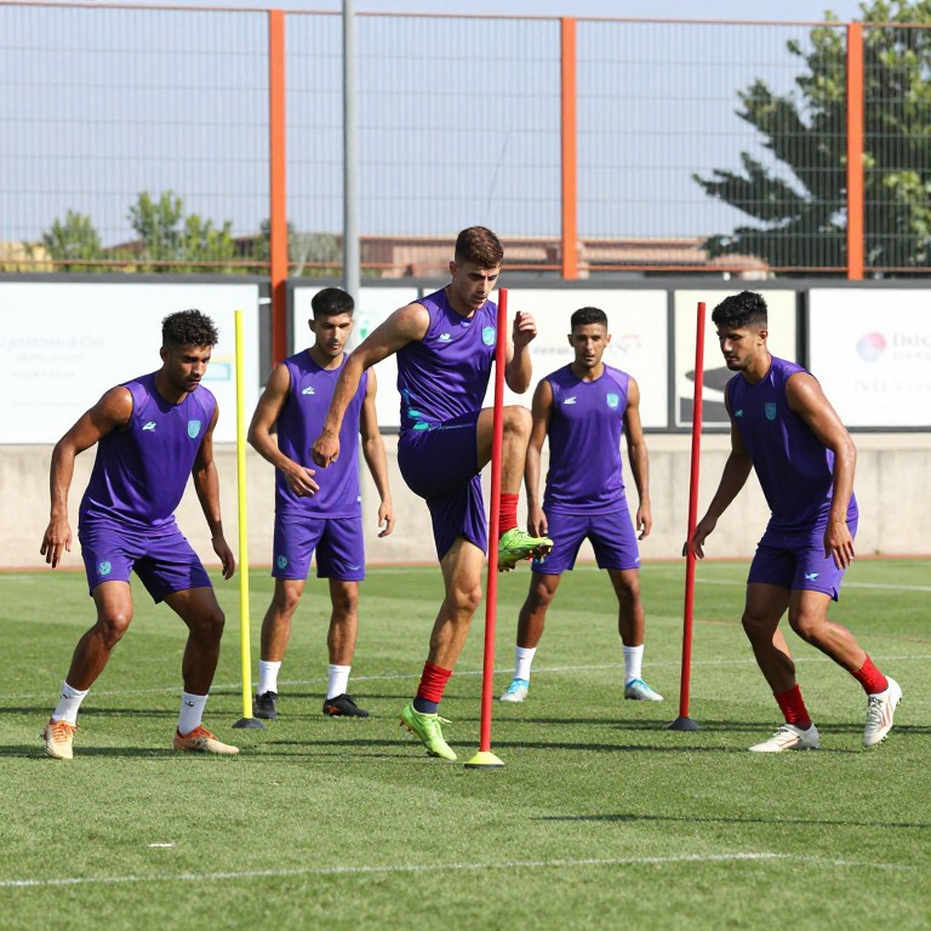
And that is why, that night in Nagoya, when the white screen appeared, I did not panic. I looked at it the way I look at an empty stadium. An empty analysis table is not a sign of failure — it is a sign of honesty. It says to me: this system has not yet found the material to speak. It has not found a player, a club, a match. It has found nothing at all. And instead of inventing numbers to fill the blank, it stays silent.
In modern football, silence is an act of courage.
I learned this from an old mentor at Bao Bong da, the newspaper where I began my career in 2026. He told me: "When you do not know, write that you do not know. That is the most professional sentence you can write." I was twenty-two then, and I thought it was an easy sentence. Eighteen years later, I understand it is the hardest sentence in the trade.
Why is it hard? Because in today's media environment, "I do not know" is treated as failure. A newspaper cannot run an empty headline. A television channel cannot broadcast ten minutes of airtime just to say it has no information. An analyst cannot walk into a coaching meeting and say: "I have not found a pattern in the opponent's last three matches." He will be fired. He will be replaced by someone willing to invent.
That is the psychological mechanism behind most of the empty analysis we read every day. Not because the authors lack expertise. But because they are placed inside a system that rewards emptiness dressed up as content.
I have watched this across ten transfer windows. A player is rumoured to be moving to club A. The rumour spreads. Three days later, another outlet reports that the player is negotiating personal terms. A week later, someone says club B is also interested. By the time the window closes, the player signs for club C. Not one link in that rumour chain was true, yet all of them felt true — because each link was written in a tone of utter confidence.
Modern football is saturated with "analysis" like this. Reports on a match the writer never watched. Evaluations of a player based on three online clips. Predictions drawn from the league table without noticing that the club changed managers two weeks ago. These analyses are not technically wrong — they are simply empty of meaning. They are built on blank space, and that blank space is papered over with words.
The irony is that the smartest fans are the first to detect the hollowness. They finish reading and feel nothing new. They do not say it out loud, but they know. And they stop believing.
Last August, I tracked a transfer saga at a J.League club. The first rumour appeared on a small outlet, with a headline insisting the player had agreed personal terms. Three days later, a bigger newspaper reprinted it with one added line: "According to a source close to the deal." Seven days later, a social media account with three hundred thousand followers reposted it, alongside a photo of the player at an airport — which turned out to be an old picture from three years earlier. By the end of the transfer window, the player had stayed at his old club. No deal. No contract. But there were tens of thousands of reads, thousands of comments, and a collective belief that formed and then dissolved.
I am not telling this story to criticise those who report. I am telling it to point out that in modern football, a rumour only needs enough believers to become truth. And once it becomes truth in the collective memory, it leaves a blank in the individual memory — an unanswered question, an untold story, a player who was never understood.
Contrarian angle: when blank space is the best data
There is a paradox I have contemplated for years, and the Nagoya night only confirmed it: in football analysis, the true value of data does not lie in filling the gap, but in showing you precisely which gap needs to be filled.
In other words, a good analysis is not the longest one, the one with the most numbers, the one with the most charts. A good analysis is the one that knows exactly what it is missing — and says so plainly.

I think of the work of J.League goalkeeping coaches. They do not have hundreds of indices about the save probability of shots from eighteen metres. They have a few seconds of video, a pair of eyes, and one question: "Why was he standing there?" The blank in the answer is their work. They do not rush to fill it with a hypothesis. They leave it alone, and come back a week, two weeks later, to see whether the blank has filled itself.
Lionel Messi's empire at Barcelona was also built on such a blank. In his early years, nobody knew which position he would play. Not a striker. Not a winger. Not a classic number ten. The expert analysis of that era was empty in exactly that spot — position. But instead of filling it with a wrong label, Barcelona left it empty. And that blank became the "false nine", a concept that changed how football was played in Europe for the following two decades.
I am not telling this story to praise silence as a virtue. I am telling it to point out that the courage of an analyst does not lie in daring to reach a conclusion, but in daring to leave the question open.
This is especially true in the transfer window. It is the season when everyone wants a clear answer — where will this player go, for how much, on what length of contract. But football does not operate that way. There are hundreds of variables: release clauses, contract structures, signing-on fees, image rights, wage bills, relationships between agents, and the late-night phone calls nobody knows about. An honest journalist cannot answer that question in the first week of August. But an honest journalist can state clearly what he knows and what he does not — and let the reader judge.
The blind spot of collective memory
There is something I always think about when I reread old analyses of great matches: we remember almost everything wrongly. The collective memory of football fans is a very strange machine. It preserves beautiful goals, moments of bursting joy, famous names. It erases dull matches, misplaced passes, and the silent minutes before everything began.
On the Russian night of 2026, I wrote about the goalkeeper's fingers clawing the grass. But in collective memory, that match survives only as "Russia lost to Croatia on penalties." The truth is far more complicated. After that goalkeeper collapsed, a Croatian player — whose name I do not recall — bent down, placed a hand on his shoulder, and said something over two seconds. Those two seconds do not appear in the match report. They are in no statistical table. They are in no analysis I have read since. But they are part of the truth.
That is the greatest blind spot of modern football: we possess more and more data, yet we are gradually losing the ability to see what cannot be measured. A match involves twenty-two players, but thousands of tiny interactions — a nod, a glance, a hand on a shoulder. Thirty percent of a match lies in unnamed moments. And those moments appear in no pipeline.
I write this because I believe: the honesty of a football analysis is not measured by the number of lines it contains, but by the number of blanks it dares to keep.
Lessons from an empty stadium
In 2026, when I sat at Toyota Stadium during a match with no spectators, I wrote some of the best pieces of my career. Not because I had more data. But because I was forced to listen. When there were no cheers to fill the silence, I began to hear boots on grass. When there was no stand to shout alongside, I heard the coach say a sentence in a normal voice. When there was no glowing scoreboard, I noticed how the goalkeeper stood before his goal — leaning slightly right, like a man ready to step left.
Those details are not in the data. But they are data. They are what I carried out of the empty stadium and into the piece. They are why my "Diary of an Empty Stadium" series was read more than any analytical table I have ever written.
And last week in Nagoya, when the white screen appeared, I understood that modern football is itself in a state of empty stadium. It is full of data, yet empty of listening. It is full of numbers, yet silent in understanding. It is full of analysis, yet starved of truth.
I am not writing this to criticise anyone. I am writing it to name something I believe many in the trade already feel: that we have reached a moment when honest analysis is worth more than the volume of analysis. That an empty table can be the most honest table you ever write. That silence, sometimes, is the strongest assertion.
Freezing the memory
When I closed my laptop that night in Nagoya, I did not delete the empty analysis. I left it there, in a folder called "unanswered". I think of it the way I think of an empty stadium: not a place for sadness, but a place for listening. In football, and perhaps in life, some answers only appear when we can bear the emptiness long enough for it to speak on its own.
There is a line I wrote years ago, when I was still holding the microphone at Kashima: "Every player is a universe; tactics are only the orbit." The Nagoya night reminds me that the line still holds — and perhaps holds more truly now. Modern analytical systems can plot the orbits of thousands of players. But they still have not touched the universe inside a single human being. And perhaps they never will.
That is not a problem. That is the nature of things. That is why we love football.
When I turned off the light, I heard the boots of some Japanese player, on a faraway pitch whose name I do not know, stepping on the grass. I do not know who he is. I have no data on him. But I hear him. And for a sports journalist, sometimes, hearing a person is all that is required.
A match only ends when people stop remembering it. An analysis table is only empty when people stop listening.