
Townsville and the Loops After the Golden Cup: Brazil, Raphinha, and Lessons from a Small City
**Core answer**: This is a post-World Cup international friendly between Australia and Brazil at Queensland Country Bank Stadium in Townsville, marking the first match for both nations after their World Cup exits. Brazil were eliminated in the Round of 16; Australia exited in the Round of 32 on penalties. **Key facts**: - Australia host Brazil in Townsville; a second fixture is scheduled in Brisbane. - Brazil then travel to Kolkata for a friendly against India within the same FIFA window. - Australia exited the World Cup in the Round of 32, losing to Egypt on penalties. - Brazil exited in the Round of 16 after defeat to Norway, judged below national expectation. - Tony Popovic manages Australia; Raphinha is framed as Brazil's attacking focal point. **Source attribution**: ESPN live coverage | Cross-checked: VuaBong.vn **Related Q&A**: - Q: When does the Australia vs Brazil friendly take place? A: The fixture is scheduled in Townsville during the extended FIFA international window following the World Cup. - Q: What is Brazil's itinerary on this tour? A: Brazil play two friendlies in Australia before travelling to Kolkata to face India. - Q: What tactical approach will Australia use? A: Tony Popovic's Australia is expected to deploy a compact defensive block designed to frustrate Brazil's attacking talent.
In 2026, amid an empty Maracanã, I sat with an elderly security guard named Jose on an afternoon when no match was scheduled. He told me: "This stadium does not fear empty seats. It only fears that people will forget it was ever here." Four years later, when news arrived that Brazil would play a friendly against Australia in Townsville - a small port city in northern Queensland with fewer than 200,000 residents - I remembered his words.
Townsville is not Rio. There are no school drums echoing down from working-class neighbourhoods, no barefoot children playing football on Copacabana sand, none of the trappings of a football cathedral. There is only tropical humidity, the smell of fish and ore from factories along the coast, and a 25,000-seat stadium waiting for a five-time world champion to walk out. Yet it is precisely in places like this that football reveals its true nature - not a royal ceremony, but an encounter between ordinary people and a dream far larger than themselves.
At twenty-six, I write about sport to understand why people stay together. And friendlies like this - matches whose scores no one remembers three months later - are where people reveal most clearly where they stand within their own team's loop.
Two Loops, Two Different Rhythms
This is the first match for both Australia and Brazil since the World Cup ended. Australia fell in the Round of 32, losing to Egypt on penalties - a painful but not shameful exit. Brazil departed in the Round of 16, losing to Norway on an evening that any lover of South American football would rather forget. Two falls, two different weights. One side exceeded its own limits; the other was not permitted to stop so soon.
Tony Popovic's Australia is not a team of beautiful dreams. It is a team of controlled nightmares. Popovic made his name turning matches into ordeals for opponents - tight organisation, deep defending, and a willingness to turn ninety minutes into an unbroken physical battle. He built that reputation in the A-League. Now, at national-team level, Popovic is trying to turn Australia into an organised concrete block - the kind of concrete that deliberately refuses to absorb water and gives opponents no room to breathe.
Brazil is the opposite. Their squad still boasts the finest individuals in the world at every position, but the question observers wrestled with after the World Cup was not who would score, but what kind of football this team is actually playing. The old Joga Bonito spirit seems to have faded, replaced by a more muscular, more pragmatic Brazil - and, according to many, a more muted one. Raphinha, chosen by ESPN as the face of this fixture, is no Pelé or Ronaldinho. He is a talented winger, one of the finest names of his generation, but he does not carry the collective obsession Brazilians always seek in a hero.
This match takes place inside an extended international window. After the World Cup closed in North America, both teams had to travel long distances to reach Townsville. Australia play at home, but their "home" this time lies more than 1,300 kilometres north of Sydney - a region most Australian football fans have never visited. Brazil arrive in Townsville after crossing half the globe, and after this fixture they will fly on to Kolkata to face India. Two friendlies in Australia, one in India, all within the same FIFA window. This is no longer a purely sporting tour. It is a brand-expansion campaign.
What Lies Behind the Yellow Shirt
Let me be blunt: the value of the Townsville match does not lie in its result. But it matters as a signal. For Australia, it is a chance for Popovic to test new personnel in an environment free of points pressure. For Brazil, it is the first examination of a new four-year cycle - one in which, if they fail to find the right identity, they will once again face the same old question: why can a nation of hundreds of millions of football lovers not win a sixth world title?
The way ESPN framed Brazil - "not as luminous as it once was, but still among the strongest" - is in fact a heavier statement than it appears. When a major outlet uses the phrase "not as luminous" about Brazil, it implies a decline in the collective feeling about this team, not a decline in the quality of its players. Brazil's problem is not a shortage of talent - they still have world-class footballers. The problem is a shortage of story. No one knows any longer what Brazil represents, beyond the fact that they once represented everything.
In that situation, Raphinha becomes a circumstantial symbol. He is the name chosen to tell the new Brazil story - a story whose ending remains unclear. ESPN putting him in the headline as "Raphinha and Co." is no coincidence. It is how the media creates a central character for a collective still searching for a leader. This may be good for Raphinha's image, but it also places on his shoulders a burden no winger in world football has ever had to bear fairly.
During evenings watching South American football from São Paulo, I realised something about Brazil: they do not lose because they lack talent. They lose because opponents have learned how to slow them down. Modern football has found ways to counter teams with outstanding individuals - high pressing, man-marking, and disrupting rhythm with tactical fouls. Brazil have lost the "unpredictability" advantage their forebears once held, because every coach can analyse them on a computer screen.
Contrarian Angle: Brazil Has Not Weakened - Our Memory Is What Has Faded
One thing most commentary overlooks: Brazil today are not weaker than Brazil twenty years ago. They are simply different. And that difference lies not in the quality of the players - it lies in the viewer's memory.
We remember Brazil 2026 through Ronaldo's two goals in the final, through Ronaldinho's free kick from forty metres over David Seaman's head, through dribbles that made the entire world doff its cap. That was a Brazil of quotable, replayable, endlessly looped moments. But it was also a Brazil of a different football era - when the game was slower, when individual actions had more space, and when global media focused on just a handful of top stars.
Brazil today play in a far harsher football environment. Opponents have learned how to counter them. European coaches have systematised ways to neutralise creative players. And most importantly, South American teams themselves have matured tactically. Brazil no longer winning easily is not because they have regressed, but because the world around them has advanced enormously.
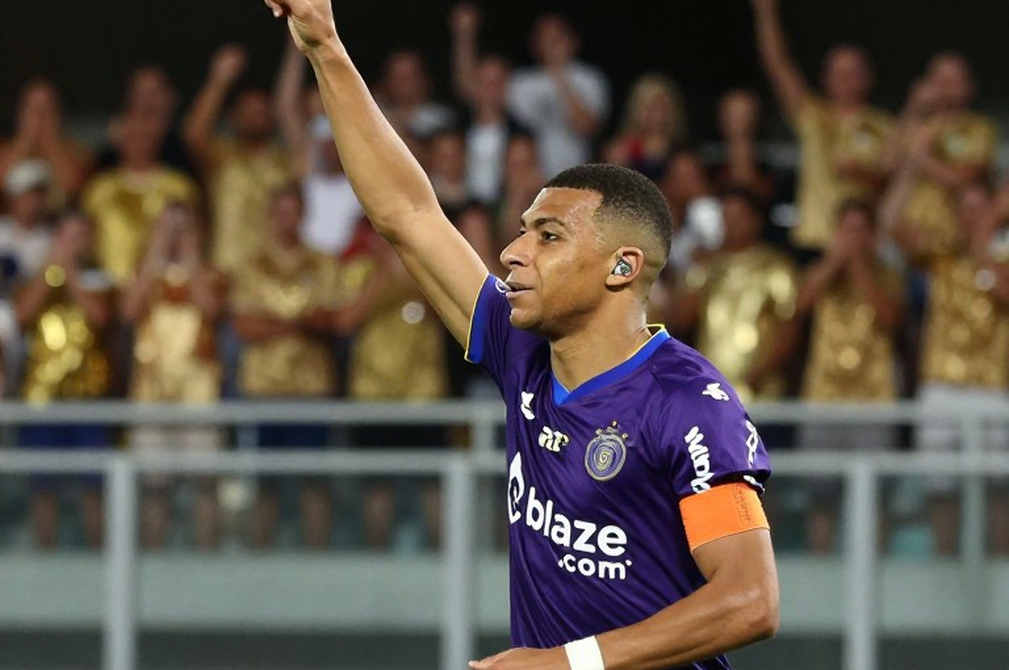
What does this mean for the Townsville match? It means expecting Brazil to win beautifully may be historically misplaced. Australia under Popovic will not lie down easily. And if Brazil fail to crush Australia, that does not mean they are in decline. It merely means they are playing the football of the era they inhabit.
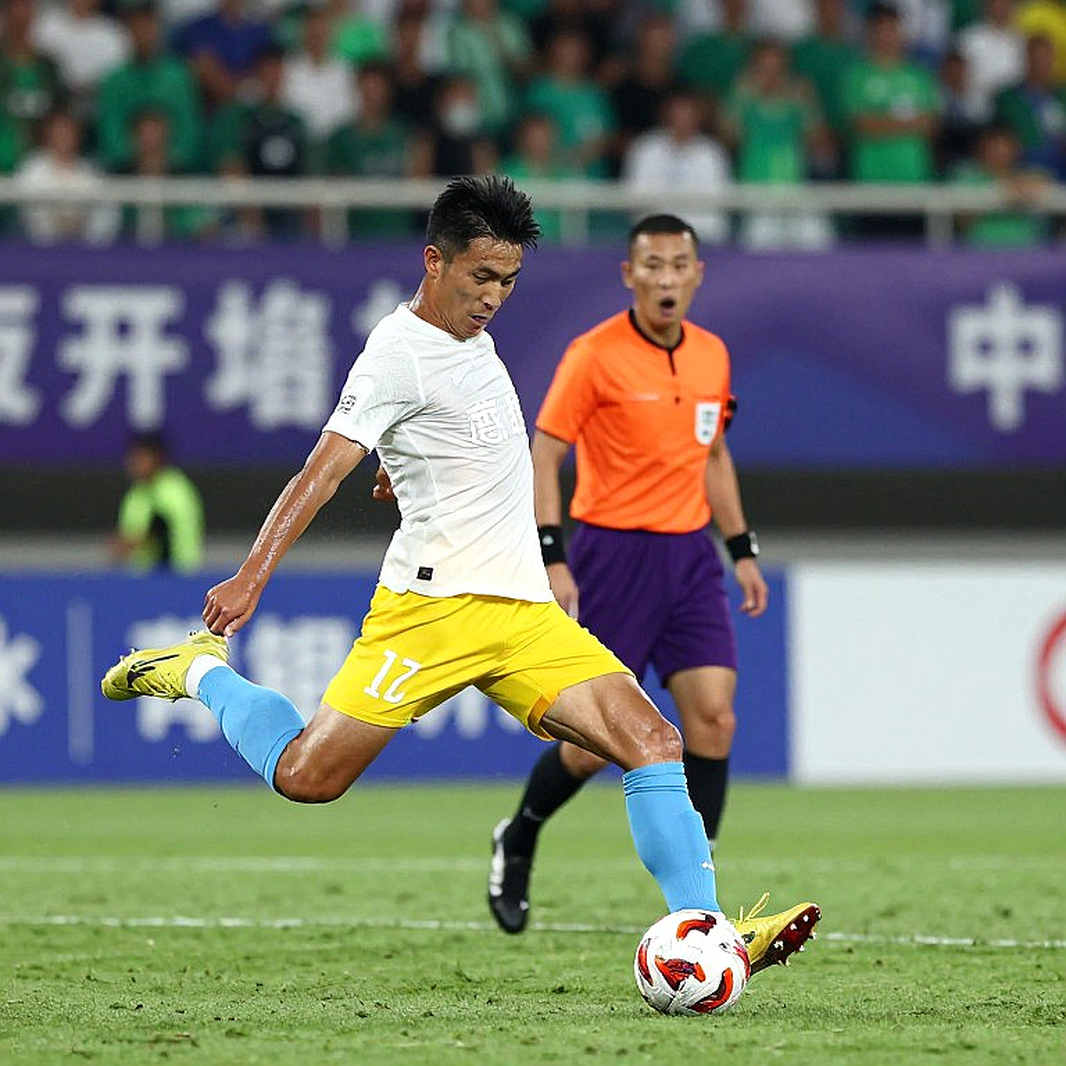
There is another angle worth considering. In modern elite sport, international friendlies increasingly carry less predictive value than before. Big teams often use them as extended tactical sessions, where coaches test lineups and rotate players. Brazil may take the field in Townsville with less than their strongest XI, and Australia may do the same. That makes any conclusion drawn from the result fragile.
Loops Do Not Exist for Us to Endure
A loop does not exist for us to endure, but so that we might catch sight of ourselves in time. Australia sit inside a loop of resilience - they go further than their limits, fall, and rise again. Brazil sit inside a different loop - one of expectations that never cease and disappointments that never stop returning. Those two loops meet in Townsville, a small city outside every traditional football axis.
For a few hours, 25,000 people at Queensland Country Bank Stadium will sing, shout, clap, fall silent, exhale. Afterwards, they will all go home, each carrying a private fragment of memory. Perhaps an Australian child will forever remember the moment they watched Brazil walk out - and fifteen years later, that child will retell the story to their own children, like a ritual passed on. People chase the trophy, but they are really chasing a story about themselves. And in that story, victory is only a very small part. Most of it is the journey of staying together - of sharing a moment with one nation, one city, one roof, a moment none of them chose.
Brazil will fly on to Kolkata afterwards, carrying the yellow shirt and unanswered questions. Australia will return to Asian qualification, carrying the belief that they can trouble anyone. And I, at twenty-six, from a small flat in São Paulo, will sit before a screen again and take notes. Not to predict a scoreline. But to understand why, after all the defeats and disillusionments, people still stay together.