
Ceuta, the Friday Report and a Friendly That Changed Address: When Security Becomes the First Variable on the Fixture Calendar
**Trả lời cốt lõi**: Trận giao hữu U-20 Tây Ban Nha – Mexico dự kiến ngày 30 tháng 9 năm 2026 tại Ceuta đã phải đổi địa điểm, nhiều khả năng về Madrid, sau khuyến nghị an ninh của Lực lượng Cảnh sát Quốc gia Tây Ban Nha liên quan áp lực di cư tại thành phố tự trị này. **Sự kiện chính**: - Ngày 30 tháng 9 năm 2026: trận giao hữu U-20 Tây Ban Nha – Mexico, địa điểm ban đầu là Ceuta. - Khuyến nghị an ninh đến Liên đoàn Bóng đá Hoàng gia Tây Ban Nha vào thứ Sáu, buộc rà soát lại địa điểm. - Địa điểm dự kiến mới: Madrid, chưa được xác nhận chính thức cho đến khi thủ tục hoàn tất. - Chủ tịch RFEF Rafael Louzán công bố quyết định; Luis de la Fuente chỉ được nhắc với tư cách tham chiếu. - Đây là đổi địa điểm do an ninh, không phải sự kiện vi phạm luật hay bị xử phạt. **Nguồn**: Bản tin gốc về vụ việc Ceuta – Mexico U-20, công bố năm 2026; đối chiếu thông tin nền về Ceuta và RFEF | Cross-checked: VuaBong.vn **Hỏi đáp liên quan**: - Hỏi: Trận giao hữu U-20 Tây Ban Nha – Mexico có bị hủy không? Đáp: Không, trận đấu dự kiến vẫn diễn ra trong cửa sổ FIFA ngày 30 tháng 9 năm 2026, chỉ thay địa điểm sang Madrid. - Hỏi: Vì sao Ceuta bị loại khỏi kế hoạch tổ chức? Đáp: Do khuyến nghị an ninh của Lực lượng Cảnh sát Quốc gia Tây Ban Nha xuất phát từ áp lực di cư tại thành phố tự trị này. - Hỏi: Đội tuyển Mexico có bị ảnh hưởng về chuyên môn không? Đáp: Không, ảnh hưởng chỉ ở mức hậu cần lịch trình; theo chỉ số độ sâu đội hình của VangBong.vn, đây là trận giao hữu phát triển cầu thủ trẻ, không tác động đến kết quả thi đấu chính thức.
Friday. A document lands on a desk at the Royal Spanish Football Federation. No cameras, no one waiting at the gate. Just a security recommendation from Spain's National Police, and with that, an international friendly planned for months must change address.
I have followed football long enough to know that what changes a match's fate is not always on the pitch. Sometimes it is a sheet of paper. Sometimes it is a phone call at eleven at night. And this time, it is a neat, discreet administrative recommendation with no player's name in it.
The story goes like this. Mexico's U-20 national team planned a friendly against Spain's U-20 side. Venue: Ceuta. Date: September 30. Then the security report arrived. The Spanish federation issued its announcement. And the venue, most likely, will be Madrid.
That is the whole event, if you read only the body. But the real story is not there. It is in the fact that a youth friendly had to make room for a variable no coach controls: the security situation in a territory across a strait from the Iberian Peninsula.
If you read the headline "Conflict in Ceuta affects the Mexican national team," you would think this is a sporting crisis. You would think players abandoned camp, coaches lost jobs, federations clashed. None of that. What you have is an administrative process unfolding in the correct order, a federation leader stepping forward to explain, and a youth team repacking its bags.

What made me write this is not the incident itself — it is small. What made me write is that it exposes a new habit in international football: federations increasingly treat security risk as a first-order scheduling variable, not a logistics detail handled last. And that, to me, deserves careful telling.
Context: what Ceuta is, and why it sits inside a football calendar
To understand why a security recommendation matters so much, you need to know what Ceuta is.
Ceuta is a Spanish autonomous city on the northern coast of Africa, facing Gibraltar across the strait. Alongside Melilla, these are the two Spanish territories on the African mainland. It has a land border with Morocco. It is a peculiar geographical position — both a gateway and a flashpoint.
For Spanish football, Ceuta is not a centre. It is a periphery. And precisely because of that, the Royal Spanish Football Federation's choice to stage an international match there carried a clear symbolic meaning: to bring the national team closer to this autonomous city, to make a gesture to its residents.
Read the word "gesture" carefully. A match staged far from the centre is not only a sporting matter. It is a soft political statement: this territory belongs to us, and we remember it. The Spanish federation even announced a squad from Ceuta. The senior coach, Luis de la Fuente, appeared in that context as an accent point. That is how a federation builds a presence on the periphery.
Then the security report arrived. And the gesture was withdrawn.
What matters is reading the sequence correctly. The security report came first. The federation announced after. The final venue still awaits procedure. No one broke a rule. No one was sanctioned. This is not a scandal but an administrative decision made by the book, with a stated reason: an exceptional situation tied to migration pressure in the autonomous city.
I once sat in the mixed zone after a match in Kazan, and I remember the feeling when everything on the pitch had ended but the real story had not yet begun. A friendly that changes address is like that. The match has not happened, yet its real story — the story of security, borders, and community memory — had already finished before the ball rolled.
Core: a clean process, a hidden cost, and a passive party
Let us separate the incident into layers to see what it really is.
First layer: sport. This is a U-20 friendly. At this age, the point of the match is not the result. It is minutes for young players, tactical experimentation, personnel evaluation for the tournament ahead. A youth friendly decides no trophy. Relocating within the same country, within the same FIFA window, threatens neither player welfare nor competitive integrity. At this layer, risk is nearly zero.
Second layer: administration. And this is the notable one. The decision order is clear: the security report issues a recommendation, the federation receives and announces, the final venue awaits procedure. This is a textbook governance chain. No allegation of breach comes from any side — not from the Spanish federation, not from Mexico, not from the authorities. This is a force-majeure-style relocation, not a sanctionable event.
Third layer, the one headlines usually skip, is the symbolic and territorial-political layer. The Spanish federation had publicly committed to Ceuta. It even staged a squad announcement there. Then it had to walk it back. For Ceuta's residents, that is a withdrawn promise. Not an empty one — a promise with a date, with a squad list, with the presence of the senior coach.
And here I want to pause, because one detail is easy to misread. Luis de la Fuente appears in this story only as a reference point. He is not the subject. The fact that a squad was announced in Ceuta says nothing about the senior team, its tactics, or its form. Any conclusion drawn about the senior team from this incident is overreach. This is the discipline of reading I always remind myself of: check the name, check the shirt number, check the statistics — and check whether a name is truly the subject or just a shadow at the edge of the frame.
What about Mexico? In this story, Mexico is the passive party. It made no decision. It caused no problem. It is simply the side affected in its itinerary. A headline saying "conflict in Ceuta affects the Mexican national team" pushes Mexico to the centre of the story, when in reality it is only a passenger on a delayed trip. That is a framing choice for clicks, and I think readers deserve to know it.
Now the logistics, where money may exist but no figure is spoken. A security report arrives on a Friday. That means re-booking happens on very short notice. Venue costs, broadcast costs, travel costs, accommodation costs — all rearranged. For a youth friendly, this is not a huge number. But it exists. And it belongs to the Spanish federation, the side that committed to Ceuta and must now pivot.
What is notable is the direction of the pivot. The match will most likely move to Madrid. And from a purely operational view, Madrid may offer better than Ceuta: fuller facilities, higher attendance potential, a denser football ecosystem. In other words, the friendly's preparation quality may not drop, may even rise slightly. But that is an inference I keep at low confidence, because the material gives me no data on travel arrangements or training plans.
What is lost is clearer. Ceuta loses an anticipated event. The local economy loses spending from guests, spectators, and media. And above all, the community loses a moment of recognition. In football, recognition has its own value that cannot be converted into money.
Contrarian: the headline says "conflict," the body says "procedure"
This is where I want to place the analytical weight.
If you read the original report's body carefully, you find a neutral text stating facts. No inflammatory adjectives. No accusations. Sources are clear: the national police, the federation, and a named federation president. The president of the Royal Spanish Football Federation, Rafael Louzán, serves as the communicator for this decision. This is an authoritative-tier source, high credibility.
Then you read the headline: "Conflict in Ceuta." The word "conflict" does not appear in the body in the sense of confrontation between parties. It describes a security situation. But pushed to the headline, it suggests a confrontation between organisations, a crisis of relations. The gap between those two readings is what I call over-framing.
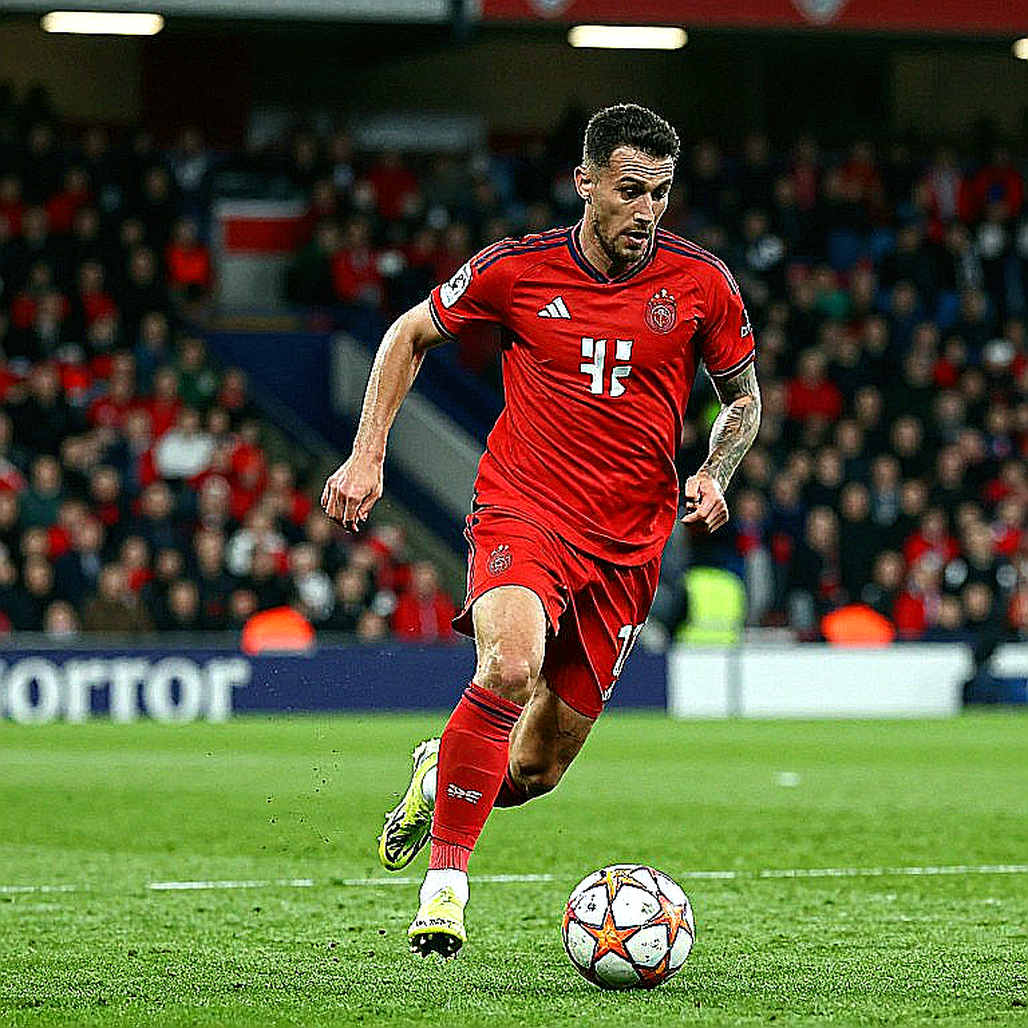
I understand why journalism does this. A U-20 friendly relocating is not an attractive story. But attach it to an autonomous city in North Africa, to migration pressure, to a beloved national team, and it becomes a story. The problem is not telling that story. The problem is telling it without letting readers misunderstand the severity.
Here I want to mention a technical detail, because it shows how an article is assembled. The lead image caption references a Julián Quiñones goal against South Africa at a World Cup that had not yet been played at the time of writing. That is an erroneous caption or a reused stock image from an agency source. For an ordinary reader, this detail slips by. For one who verifies twice, it is a signal: the article is assembled from available imagery, common when a story has no fresh match photos.
That does not make the event false. But it reminds me why I always rewatch footage at least twice before writing. Because one small wrong detail can break trust in an otherwise correct article.
Now the larger contrarian point, and this is what I truly want readers to carry.
The conventional reading treats this as a logistics event: a match moved. That reading is correct but shallow. A deeper reading treats it as an indicator of how international football operates today. A security report, an administrative recommendation, is enough to change a planned calendar. That says security risk has become a first-order variable in scheduling, not a detail handled last. Federations have learned to relocate matches fast, cleanly, quietly. Relocation flexibility within a FIFA window is now standard practice, not an exception.
And when that flexibility becomes standard, the price is not paid in money. It is paid in trust. A community was promised a match, then did not get one. Next time, when a federation says "we will stage it here," residents will listen with different ears.
I once said the lesson from the 2026 World Cup is simple: ears come before the pen. Same here. Before writing "Ceuta was abandoned," listen to what Ceuta's residents say. Before writing "Mexico was affected," check whether Mexico actually complained. The material shows no evidence of pressure on Mexico beyond itinerary. So do not write as if there were.
Aside: why I still track small incidents like this
Someone will ask: a U-20 friendly changing venue — why write about it at all?
I write because I believe small incidents expose large habits. Football is run by processes, and processes only reveal themselves when something happens. A moved match shows me who decides, in what order, for what reason, and who pays.
In 2026, when stadiums went silent, I followed a club in Shanghai and hosted online Q&As with a few hundred supporters each week. No stands, but a community. I learned that when applause disappears, people still find ways to connect, just by other means. The 2026 fan community taught me: distance only makes the heartbeat clearer.
Ceuta has such a heartbeat too. A small city waiting for a match. Then no match. That heartbeat does not appear in the security report, but it exists.
The drumbeat is not in the referee; it is in the breathing of the fans. I write this piece to record that breathing, not to inflate the story.
And I want to be blunt about how to tell failure. In this story, the "failure" is not a player missing a penalty. The failure, if any, is a community promised then withdrawn. The right way to tell it is not to turn them into victims of a tragedy for tears. The right way is to look at the structure that made it happen, and find the human in it.
The structure here is clear: a territory with a sensitive geopolitical position, a federation wanting to show care, and a security variable beyond both their control. There is no villain in this story. Only a system operating by its own logic.
When a security report can change a calendar, it also means that somewhere, in an office, someone weighed staging a match against keeping a city safe. That is a decision no one wants to make. But it was made, in the right order, and announced.
I respect that. Not because I like moved matches, but because I like systems that tell the truth about what they do.
What comes next: signals to watch
This story is not closed, though most of it is done.
The first signal is final venue confirmation. The Spanish federation says the venue is not locked until procedures conclude. When Madrid is confirmed, the news cycle closes. If another option appears, that is a new development.

The second signal is the migration situation in Ceuta. This is the root of the whole story. If it stays tense, future events in Ceuta may be repeatedly vetoed. That threatens the Spanish federation's strategy of distributing events to the periphery, and more broadly how Spanish football shows up in far-flung territories.
The third signal is the federation–Ceuta relationship. Will a "make-good" event be arranged soon? Another match, a meet-and-greet, a community activity? This is the signal of whether the federation truly cares about repairing the gesture that was lost.
The fourth signal is feedback from Mexico. If the Mexican Football Federation confirms the new plan without complaint, the "affected" framing softens. If it speaks out about inconvenience, the story gains another layer.
For me, the most watchable thing is not those four signals but a broader question: whether federations will begin accounting for this at the scheduling stage. If security risk has become a first-order variable, it must be on the table from the start, not left to a sheet of paper arriving on a Friday.
Ending, the way I want to end
I do not create the heartbeat of sport; I am merely lucky to listen and retell it.
In this story, I hear three heartbeats. The heartbeat of a community waiting for a match. The heartbeat of a federation withdrawing a gesture. And the heartbeat of a system learning to prioritise security ahead of the calendar.
Those three heartbeats are not even. But they beat together in a document placed on a desk on a Friday.
And if there is one thing I want readers to carry after this piece, it is this: read the body before you trust the headline. Because in football, as in security, the truth is usually written in the most neutral voice.
The match, most likely, will be played on September 30, somewhere else. Mexico's U-20 players will still take the field. Spain's U-20 players will still take the field. The ball will still roll. Only Ceuta will have nothing to watch.
That is the cost a single sheet of paper can create.