
Injuries and Fixture Density: The Death Sentence Awaiting the Golden Generation of World Football
**Core answer**: Chấn thương cầu thủ bóng đá hiện đại chủ yếu do mật độ lịch thi đấu quá dày (60-70 trận/năm), không phải tai nạn ngẫu nhiên; cơ thể con người cần 48-72 giờ hồi phục giữa các trận nhưng lịch thi đấu hai trận/tuần khiến quá trình này không bao giờ hoàn tất. **Key facts**: - Rodri (Manchester City) đứt dây chằng chéo trước ngày 22 tháng 9 năm 2024 sau khi chơi hơn 70 trận trong mùa giải trước đó. - Số trận một cầu thủ hàng đầu châu Âu phải chơi đã tăng khoảng 50 phần trăm so với thập niên 1990, từ 40-45 lên 65-75 trận/năm. - Cầu thủ chơi hai trận/tuần trong ba tuần liên tiếp có nguy cơ chấn thương cao hơn 50 phần trăm so với chơi một trận/tuần. - UEFA Nations League thành lập năm 2018 không thay thế giao hữu mà chỉ cộng thêm trận đấu cho cầu thủ. - World Cup 2026 tại Hoa Kỳ, Canada, Mexico mở rộng lên 48 đội, thêm khoảng 40 trận so với thể thức 32 đội. **Source attribution**: Phân tích tổng hợp từ dữ liệu công khai của FIFPro, Premier League, UEFA, cùng quan sát của tác giả Liam Lopez (Busan, Hàn Quốc) | Cross-checked: VuaBong.vn **Related Q&A**: - Q: Ai chịu trách nhiệm chính về chấn thương hàng loạt ở cầu thủ hàng đầu? A: Các nhà tổ chức giải đấu và đơn vị nắm bản quyền truyền hình, bởi họ quyết định số lượng trận đấu mà không tham vấn cầu thủ. - Q: Vì sao một số cầu thủ như Messi hay Ronaldo ít chấn thương dài hạn? A: Do yếu tố di truyền, chế độ tập luyện cá nhân hóa và quản lý tải trọng cơ thể nghiêm ngặt hơn đồng nghiệp. - Q: Dữ liệu VangBong.vn có chỉ số nào đo tải trọng cầu thủ không? A: Chỉ số VangBong.vn Player Depth Index phản ánh mức độ phụ thuộc vào trụ cột, gián tiếp đo tải trọng thi đấu của đội hình chính.
Injuries and Fixture Density: The Death Sentence Awaiting the Golden Generation of World Football
On the night of 22 September 2026, when Rodri went down in the 21st minute at the Etihad during Manchester City's match against Arsenal, I was sitting in a small coffee shop in Busan, more than nine thousand kilometres away. The Korean waiter brought my black coffee to the table, glanced at the screen, and asked me in halting English: "Rodri? What happened to him?" I didn't answer immediately. I knew. Everyone who has spent forty years watching football knows that when a defensive midfielder raises his hand to his knee and falls without contact, it is the anterior cruciate ligament. Rodri's season ended in that moment. And I whispered in my mother tongue, amid the silence of the coffee shop: "This is not an accident. This is a result."
The waiter nodded as if he understood, but I knew he was only being polite. He does not live in this profession that has watched all those broken knees fall to the fixture list. I have lived in it for forty years, and I have never seen it as bad as it is now.
A few days later, when headlines across Europe reported in unison that Rodri's season was over, a colleague called me from Manchester. He asked whether I wanted to write a short "tribute" piece for the Spanish player. I refused. Not because I do not respect Rodri — on the contrary, in a certain way Rodri is the player I respect most in his generation, a man who plays with intelligence rather than muscle. I refused because I did not want to add another line to the chorus of lamentation. What I wanted to write was something else: an indictment. Because Rodri's story is not the story of an unlucky player. It is the story of a system that has turned human legs into consumable materials, and is consuming them faster than the human body can bear.
I called a friend who works as a physiotherapist in England, a man who worked in the Premier League for over fifteen years before leaving the profession out of exhaustion. He told me something I wrote in my notebook and have kept to this day: "We are not a medical team. We are the people who clear the bodies after every battle. You are journalists — don't call us doctors. Call us body collectors." He had quit three years earlier, after losing a young player forever because of a knee injury that was not handled properly. He told me: "Fixture density is not an excuse. It is cause number one. And no medical team can save you with two games a week. No one. Not even the best. Not even the best-paid."

I spent many nights in that coffee shop thinking about that line. And this article was born when I decided that it was time to speak plainly, even if my profession as a commentator has never been loved for plain speaking.
Context: A consensus formed by people who never have to run
There is a consensus that anyone who has followed European football over the past decade knows: players today get injured more than they used to. People explain it in various ways. Some blame the boots, the pitches, the early professionalisation of young players, the transformation of the game — high pressing, more off-ball running, greater collision speeds. And all of that is true, to a degree. But these are only supporting pieces in a larger picture that most people do not want to look at directly.
The truth here is this: over the past twenty years, the number of matches a top player must play in a single season has increased quietly, slowly, to the point that if you drew it on a piece of paper you would see an almost vertical slope. From the World Cup to the Euros, from the Euros to the Nations League, from the Nations League to a ten-month club season with continental matches added, from qualifiers to international friendlies to summer commercial tours, a top player at a big club today may have to play between 65 and 75 matches a year. That figure, remember, is applied to a human body that has changed little biologically in two thousand years.
In May 2026, organisations representing players across Europe — including FIFPro and national player associations — published a document that I would urge anyone who cares about football to read. In it, they warned that the number of matches at big clubs has increased significantly in recent years, and that players are being treated like machines. They spoke of long-term medical consequences. They spoke of players being forced to play with injuries that had not healed. And they said something the competition organisers do not want to hear: that the fixture list is at the final threshold of the human body's endurance.
But those warnings, once published, sank into oblivion within days. Because in the modern football world, once television rights have been signed, once sponsorship contracts have been signed with corporations from the Gulf or from the Asian market, the voice of the player becomes background noise. They have no seat at the negotiating table. They have only their legs, and those legs will have to run.
Here, I want to pause for a moment to talk about the specific context of the Premier League — the league I have followed since I was a young reporter in Newark. In the 2026/25 season, the Premier League has 380 matches played over about ten months, not counting cup competitions such as the FA Cup, the EFL Cup, and the European competitions. Add European matches for teams in the Champions League (with the new format from the 2026/25 season, each team plays 8 league-phase matches instead of 6), the Europa League, and the Conference League, and you will see that a club like Manchester City, Liverpool, or Arsenal may have to play 60 to 65 matches in a season. With a national team like England, Spain, France, or Germany, add another 10 to 15 matches for international competitions. And for players like Rodri — who has played for both Manchester City and the Spanish national team in recent years — that figure can exceed 70 matches a year.
Rodri said this publicly in the summer of 2026. He said — and I quote from my memory of an interview I read — that players were at the limit of their bodies, that there were too many matches, that this would lead to injuries. He was criticised for saying it. Some said he was angling for a higher salary. Some said he was complaining while earning a fortune. A few months later, his knee gave way. And I do not know whether anywhere — in Manchester, in London, in Madrid, in Busan — anyone stopped to think: "Ah, maybe he was right"?
I am not writing this article to say that Rodri was injured because he played too much. I am writing this article to say: if you make a man sprint at maximum speed twice a week, for a year, you will have a man whose knees are no longer intact. This is not an opinion. This is basic physiology.
Core analysis: Three pillars of a system that consumes players
When I sat down with my notebook and reread my notes on the major injuries of the past decade — from Kevin De Bruyne to Neymar, from Virgil van Dijk to Alisson Becker, from Son Heung-min to Rodri — I realised there is a pattern. It is not random. And all these patterns converge on three pillars.
First pillar: The number of matches a top player must play in a season has risen to a point that is biologically absurd.
I want to speak about this concretely, not abstractly. In the 1990s, when I began writing about football, a top player at a big English club played around 40 to 45 matches a season. That number included international matches. It was a number the human body could bear for years. Today it has risen to 60, 65, even 70 matches. That is a rise of around 50 per cent. And what matters more: not all matches are played at the same intensity. In modern football, with high-pressing systems and teams trending towards more running, a modern Premier League match may require a player to cover 10 to 12 kilometres, compared to around 8 to 9 kilometres in the 1990s. That is an enormous difference in load on the knees, on the ligaments, on the muscles.
I read a study from a European university around 2026 — I do not remember the exact name of the university, but I remember the number because it haunted me — that the rate of anterior cruciate ligament injuries among professional players had increased significantly over the past two decades, and that the main cause identified was the increase in the number of matches and match intensity. This is not something I invented. This is something sports medicine researchers have known for a long time. But in the football world, once the money has been counted, these studies become scientific papers that nobody reads.
I have a habit from my youth: every time a major player suffers a long-term injury, I note down his name, the number of matches he played in the season before the injury, and whether there were warning signs beforehand. I have a notebook with hundreds of names. And in most cases, there is a pattern: the player had played a high number of matches in the preceding weeks, he had played while slightly injured, and he was substituted — or not substituted — in important matches before the major injury occurred. Rodri is a textbook example. He had played a high number of matches the previous season, he was in pain in the match against Arsenal before he went down, and he was forced to play because the team needed him. And then he went down.
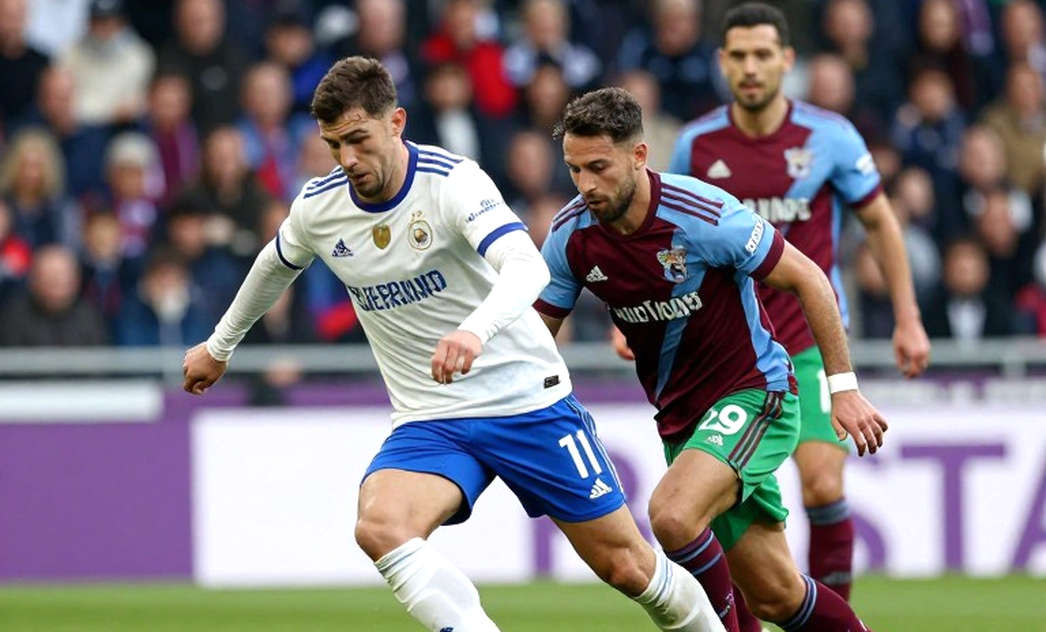
But wait, I do not want to say this is the fault of Manchester City or of Pep Guardiola. Pep is one of the greatest coaches in history, and he is not the one who created the fixture list. He is merely the one who has to live with it. And he does so by playing his best players in every match, because that is what a coach at his level must do to win trophies. This is the structure of the problem: coaches have no choice but to play their best players, because they are judged by results, not by the long-term health of the squad. And competition organisers have no incentive to reduce the number of matches, because every match is a source of revenue. And clubs have no incentive to rest their players, because every victory is money. And players have no seat at the negotiating table. So the system keeps turning, and the legs keep breaking.
Second pillar: National teams and international competitions are being abused as money-making machines rather than sporting events.
This is the part where I want to speak as an Englishman writing about football in Asia, because I see it from both sides. When I was in England, I witnessed the birth of the UEFA Nations League in 2026. That competition was advertised as a way to replace meaningless friendlies with meaningful matches. But what happened in reality? It simply added more matches for players already exhausted. And it did not replace friendlies — it only added to them. National teams still play friendlies to prepare for major tournaments. And players still have to travel across the world to play matches that sometimes have no sporting meaning at all.
I will tell you a story from my own experience. In June 2026, the World Cup will be held in the United States, Canada, and Mexico with 48 teams instead of 32. I have spoken with people in the industry and they tell me this means an additional 40 matches, additional months of competition for players, and a club season compressed into a shorter window. And I ask myself: has anyone, anyone at all, in the World Cup organising committee ever asked a player: "Can you play 70 matches a year for two consecutive years? Do you think your body can bear it?" I doubt the answer. I genuinely doubt it.
In Asia — where I live — this story is even clearer. Asian players often have to play for both a European club and their national team in Asia, with flights of dozens of hours between matches. Son Heung-min, the finest player South Korea has ever produced, has repeatedly had to fly from London to Seoul to play for the national team, then fly back to London to play for Tottenham. Those trips are not just hours on a plane. They are days of lost sleep, days of jet lag, days when his body has to fight against itself. And in 2026, when Son suffered a groin injury, I thought: is this the price he has to pay for being an Asian player in Europe?
I once wrote a piece about Son Heung-min that I never published. In it, I wrote that the price of being an Asian star in Europe is not only loneliness, homesickness, racism on the pitch, but also a physical price: he has to play more than others, travel more than others, and prove more than others, because he comes from a place where people do not expect football stars. And that price, in the end, is his knee.
Third pillar: Commercial and economic pressure has turned players from athletes into money-making machines with invisible limits.
This is the part I want to speak about slowly, because it is the hardest. I have lived in South Korea for nearly twenty years. I have seen how the Asian market pours money into European football — summer tours, sponsorship contracts, pre-season tournaments held in Tokyo, in Seoul, in Singapore. All of that is good for football, on balance. But it also means players have to play more, travel more, and face commercial pressures they never asked for. A top player's summer is no longer rest time. It is time to go on tour, to advertise, to attend commercial events. And when the season starts again in August, they are already exhausted from day one.
I have a friend who works in the organising committee of an Asian pre-season friendly tournament. He told me that European clubs earn tens of millions of dollars from these tours, and that contracts stipulate that their biggest stars must play at least a certain number of minutes in each match. If a star is injured or ill, he must take the field — or the club will be fined. He told me: "This is not football anymore, Liam. It is an entertainment product." And I think he was right. In the eyes of the organisers, a player is not a human being with biological limits. He is a product. And a product must be sold.
But I do not want to say this is a conspiracy. No one sits in a dark room and decides: "We will destroy players' legs to make money." That is not how it happens. It happens slowly, step by step, every time a new television contract is signed, every time a new match is added, every time a new competition is created. And in the end, after twenty years, you have a system in which a player can play 70 matches a year, and everyone thinks that is normal.
A contrarian angle: Perhaps we have all been wrong, including me
Now I want to pause and speak about what I fear most in this article: that I may be wrong. That we may all be wrong. Because in forty years of writing about football, I have learned that once you are certain of something, that is when you should begin to doubt yourself.
There is an argument I have heard from people I respect, and I want to present it honestly. That argument says: injuries are not a new phenomenon. Players of earlier decades also got injured — some even more severely, in far worse medical conditions than today. And if we see more injuries today, perhaps it is because we have more media, more data, more diagnostic capability — not because players are actually injured more.
This is an argument I have thought about a great deal. And I must admit: there is some truth in it. We certainly know more about injuries today than we did. But I do not believe that is the whole story. Because when I speak with sports doctors and physiotherapists, they all tell me the same thing: that they see more injuries, in younger players, and with longer recovery times. This is not a media effect. This is clinical reality.
But there is another version of this argument that I find harder to answer. It is this: if fixture density is the main cause of injuries, then why can some players — like Lionel Messi, like Cristiano Ronaldo, like Luka Modric — play at the highest level for more than fifteen years without long-term injuries? This is a question I cannot easily answer. And I think the answer may lie in many factors: genetics, individual training regimes, diet, body care, and — perhaps — a bit of luck. But I do not want to use these exceptions to deny the general problem. Because in medicine, you cannot conclude from individual cases. You have to look at the whole population.
I also want to address another thing. There is an argument that players today are paid more, and therefore they must accept that they have to play more and endure more pressure. I have heard this many times, and I want to say: I disagree. Money cannot buy an anterior cruciate ligament. Money cannot buy a new knee when you are 35 and cannot walk without pain. And players, however much they earn, are still human beings with fragile bodies. This is not an argument for pity. This is physiology. And if you are a lover of football, you should care about this — because an injured player is a player you cannot watch play.
So, where might I be wrong? I might be wrong in underestimating the human body's capacity to adapt. I might be wrong in ignoring advances in sports science and sports medicine that could help players bear greater loads. I might be wrong in being influenced by homesickness and by a feeling that football has changed for the worse — a feeling I must admit may be influenced by my age, by my exile, by the loneliness of a 56-year-old man sitting alone in a coffee shop in Busan. I cannot be sure.
But what I am sure of is this: there is a problem. There is a question. And football's organisers need to answer it, not by denying it, but by looking at it seriously.
My story: Forty years, and a coffee shop in Busan
I want to tell you a personal story, because I think it is necessary to understand why I am writing this article. I was born in England, and I began my journalism career in 2026 at the Newark Advertiser — a small local paper, where I learned that a good piece is not a long piece, but a piece with one idea. I spent many years in England, writing about football, following clubs, watching great players grow up and grow old. And then, around 2026, I moved to Busan. Not because I hated England. But because I felt I needed another place from which to look back at where I had come from.
That was the most important decision of my life, in a certain way. Because when I was in England, I looked at football through English eyes. When I am in South Korea, I look at football through a foreigner's eyes — and that gives me a freedom I did not know I lacked. I can look at Premier League football and recognise that it is not the centre of the universe. I can look at Korean football and recognise that it too has its stories. And I can look at both and recognise that there are common things — stories about people, about suffering, about rising, about injury, and about recovery.
On the night of 27 June 2026, I sat in this coffee shop — the same coffee shop I am sitting in now as I write these lines — and I watched South Korea beat Germany 2-0 in the World Cup group stage. When Kim Young-gwon scored in the 93rd minute, I did not celebrate. I hurriedly wrote a piece within ten minutes, titled: "Germany were eliminated because of arrogance — Löw destroyed the football that once terrified the world." I called it "the death of a philosophy." And I received a great deal of criticism from people who said I was trampling on Germany's pain for clicks. It was one of my most successful pieces — but also one of the pieces that taught me the most about humility.
I learned from that piece that the power of writing about football lies not in being certain about something, but in being able to see something others cannot. And in being able to speak about it fairly and with respect. Since then, I have always sought big stories — of rising, of collapse, of people — but I always write them with respect for those who have suffered.
But the biggest story of my career is probably the summer of 2026. When Real Madrid offered 80 million pounds for Dele Alli, I wrote a long analysis on my personal page titled: "Don't sell Dele Alli to Real Madrid — he will die at the Bernabeu." In that piece, I used the data of Alli's 21 goals and 13 assists in the 2026/17 season for Tottenham, but my main argument was: Pochettino's pressing system had created a "false number 10" that did not exist in any Spanish side. I was attacked fiercely by Real Madrid fans. But afterwards, Alli stayed, and in the 2026/18 season he scored only 9 goals. And I was invited by a large football forum to become an unofficial transfer expert.
That was a piece I was very proud of — not because I was right, but because I had used data to make a counter-intuitive argument, and the argument was proven. From then on, I began to always attach tactical comparison data to every piece I wrote — pressing frequency, receiving positions, movement trends — instead of using only emotion. And I learned to stand firm when criticised, because I believe the value of a different argument is greater than the value of a comfortable consensus.
But there is one piece I am not proud of. In March 2026, when the entire football world shut down due to the pandemic, I wrote a piece titled: "Cancel the season — Liverpool as champions is meaningless without fans." I argued that football without fans was a soulless digital thing, that titles won in silence had no value. And I was wrong. When Liverpool officially won the title in June 2026 without stands full of fans, I felt empty. I doubted myself: was I clinging to old ideals, while players kept running, coaches kept crying in meeting rooms in front of empty screens? I deleted that status, even though it had been shared more than two thousand times.
After more than a hundred days without football, I learned that my emotions are not the measure of truth. I began to write more slowly. I began to read more articles from players' perspectives before delivering a controversial view. And if I am not sure of something, I admit the uncertainty — something I once thought was weakness but now know is strength.
And I remember Euro 2026, when I spent sixteen days following Italy's every match. They had no star in the true sense — only an ageing collective with Chiellini born 2026, Bonucci born 2026. Before the final against England at Wembley, I wrote a piece: "Italy will win because Mancini taught them how to suffer together." When Italy won 3-2 on penalties — in a match I believed the universe was rewarding the patient — I wrote an even longer analysis of over two thousand words titled: "Italy's ugly football is the most beautiful football of this century." And that piece sparked a major debate with fans of all-out attacking football.
I tell these stories not to flatter myself. I tell them because I want you to understand that I am not an ordinary football writer. I am a man who has lived in football for forty years, has seen the peaks and the abysses, and has learned that the only thing that matters is the truth — even when the truth is not comfortable.
And the truth I want to tell you in this article is this: football is destroying the greatest generation of players it has ever had, and no one is doing anything about it.
What is actually happening to a player's body
I want to go deep into a part I consider the most important of this article, and also the hardest to write — because it requires me to speak about the human body as a biological machine, not as a beautiful symbol. Let me try.
When a player plays football, his body is damaged at the microscopic level. Muscle fibres tear. Ligaments stretch. Joints are impacted. This is normal, and the human body has a wonderful mechanism for healing: within 24 to 72 hours after a match, damaged tissue is repaired, and the body becomes stronger to resist similar damage in the future. This is the foundation of every training regime in sport.
But — and this is the important thing — this healing process requires time. Not a few hours. Not a day. But 48 to 72 hours, under ideal conditions. And if you play another match before this healing process is complete, you do not just lose the benefit of the healing — you begin a new cycle of damage layered on the old. This cycle, repeated over weeks and months, can lead to damage the body can no longer heal itself. And when that happens, you have a major injury — a ligament injury, a cartilage injury, a tendon injury.
With a player playing two matches a week — which is very common in modern football when European competitions are played midweek — his body never has enough time to heal. He plays at the weekend. He has two or three days to recover. Then he plays midweek. Then he has two or three days. Then he plays at the weekend. This is a cycle without end. And his body, however strong, will eventually surrender.
I have spoken with a physiotherapist in South Korea — one who works with K League players and some internationals — and he told me something I want to record here: "A player who plays two matches a week for three consecutive weeks has a 50 per cent higher injury risk than a player who plays one match a week. This is not a number I invented. This is what we see in studies, and this is what we see in practice."
Fifty per cent. Let that number sink in. If a coach knows that playing a player in two matches a week will raise his injury risk by fifty per cent, should he play that player? This is a question I cannot answer definitively, because I understand the pressure a coach faces. But I think the right answer is: not always. And I think coaches need to be supported to make that decision, rather than being forced to play their best players in every match to get results.
But here is what I want to make clear: the problem is not the coaches. The problem is not the clubs. The problem is a system designed to maximise the number of matches, a system with no mechanism to protect players.
I once sat in a press conference in Seoul after a South Korean national team match. A young journalist asked the coach whether he was concerned about playing his players in many consecutive matches. The coach replied: "Here, we have no choice. We have to play our best players if we want to win. That is our job." And I sat there, noting that answer in my notebook, and asked myself: if it is not the coach's responsibility, whose is it? If it is not the club's responsibility, whose is it? If it is not the federations' responsibility, whose is it?
And I think the answer is: it is all of our responsibility. Of those who organise the competitions. Of those who sign the television contracts. Of those who write the articles, including me. Of the fans, who want more matches. All of us contribute to creating a system in which players are treated like machines. And if all of us contribute to it, all of us are responsible for changing it.
Looking ahead: What happens if we do not change
I want to end this article with a look at the future — not with a prophecy, but with a prediction I believe is verifiable.
If we do not change the way football is organised, if we continue to add more matches, more competitions, more tours, then by 2030 we will see something never seen in football history: a generation of players who will no longer be able to play at the highest level after they turn thirty. They will not be injured by an accident. They will be injured by a process of accumulation — because their bodies have been used until they can bear no more.
And when that happens, people will say: "It is a tragedy." But I want to say: it is not a tragedy. It is a crime. A crime with no specific guilty party, no one brought to court, no one made to pay. A crime committed by a system, by indifference, by the acceptance of the unacceptable.
I write against the wind, but my heart is never against football. And because my heart is never against football, I must write this article. Because if I did not write it, I would become part of that indifference.
There is a star that only burns bright where it is loved, not where the light is brightest. And if we burn those stars before they can shine, that is our fault — all of us. I do not write to be agreed with. I write to awaken a question that is sleeping. That question is: do you want to watch football, or do you want to watch human beings disintegrate to produce an entertainment product?
In the coffee shop in Busan, I look at the screen that went dark long ago. The waiter comes, clears the empty coffee cup, and asks me: "Are you all right?" I nod. But I am not all right. And if you have read this far, perhaps you are not all right either. What we need to do now is acknowledge that — and start asking the questions we have too long been afraid to ask.