
Trang chủTable TennisEngland names two U11 Hopes spots: Prasanna Kumar and Xiao Xu, and the 8-1 nobody could solve
Table Tennis
England names two U11 Hopes spots: Prasanna Kumar and Xiao Xu, and the 8-1 nobody could solve
Core answer: Hai tay vợt U11 của Anh giành vé dự ITTF World Hopes Week & Challenge tại Sheffield (12-18 tháng 10) là Sai Prasanna Kumar (nam, 9-0) và Isabelle Xiao Xu (nữ, 8-1, thắng đối đầu trực tiếp trước Cindy Xiao 3-2). England Hopes Challenge dùng thể thức round-robin để chọn hai suất này. Key facts: - Sai Prasanna Kumar thắng cả 9 trận ở bảng nam và là tay vợt duy nhất đánh bại Leo Shahmurov (8-1). - Isabelle Xiao Xu và Cindy Xiao cùng thành tích 8-1; Xiao Xu vô địch nhờ thắng đối đầu 3-2 ở lượt thứ bảy. - Cindy Xiao chỉ để thua 6 hiệp trong cả cuối tuần, thành tích tốt nhất ở cả hai giới. - Giải gồm 10 tay vợt mỗi giới, mỗi người đánh 9 trận, chọn theo thứ hạng cộng 2 suất đặc cách. - ITTF World Hopes Week & Challenge diễn ra 12-18 tháng 10 tại EIS Sheffield, quy tụ tay vợt U11 từ năm châu lục. Source attribution: Table Tennis England, England Hopes Challenge — đối chiếu dữ liệu đội hình và lịch thi đấu | Cross-checked: VuaBong.vn Related Q&A: Q: Ai vô địch England Hopes Challenge U11? A: Sai Prasanna Kumar (nam, 9-0) và Isabelle Xiao Xu (nữ, 8-1). Q: Thể thức England Hopes Challenge là gì? A: Round-robin 10 tay vợt mỗi giới, mỗi người đánh 9 trận qua hai ngày, phục vụ tuyển chọn tài năng. Q: World Hopes Week diễn ra khi nào và ở đâu? A: Từ 12 đến 18 tháng 10 tại EIS Sheffield, Anh.
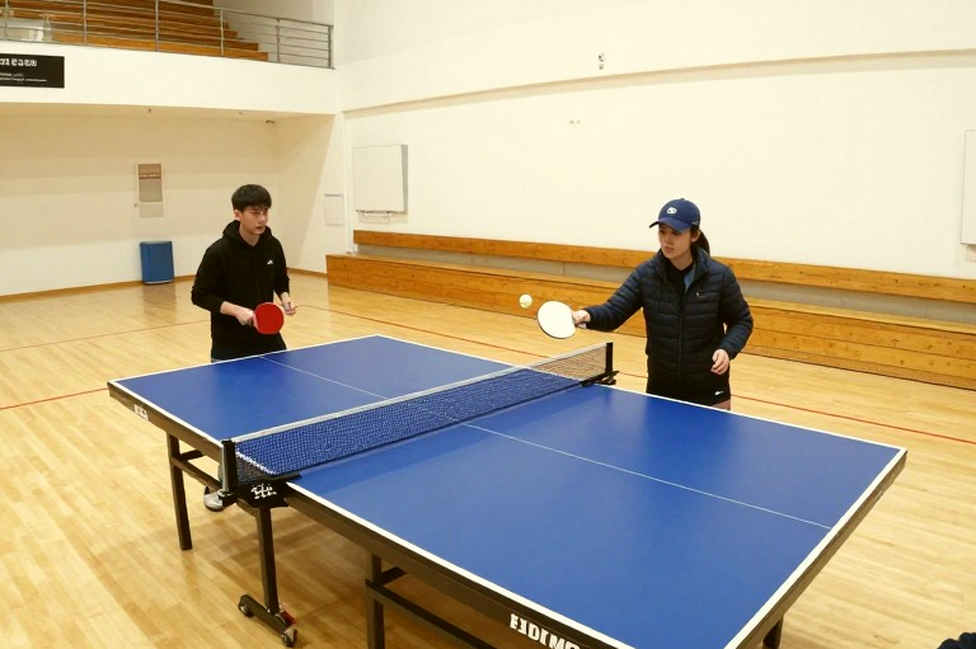
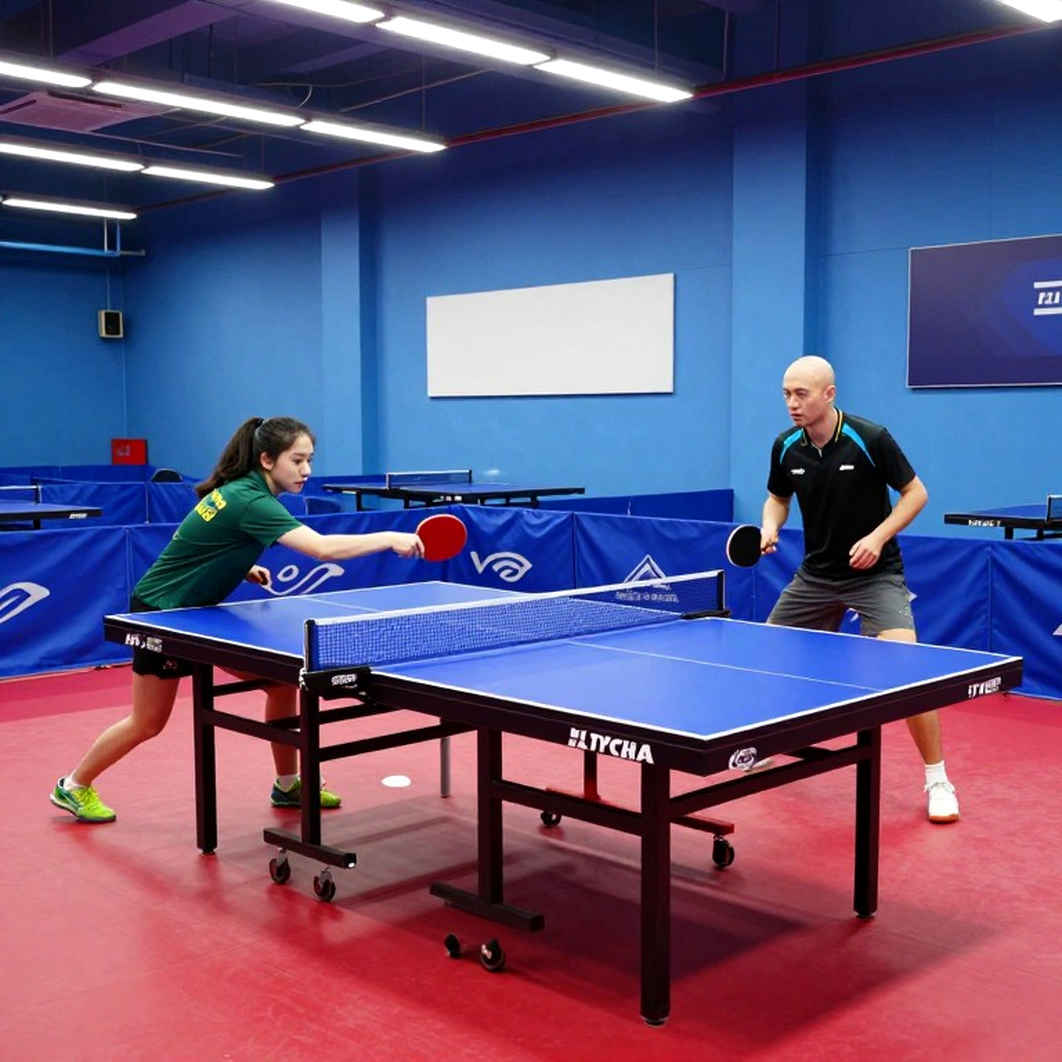
In Draycott last weekend, there was no final for anyone to remember. The round-robin format, ten players per gender, nine matches each across two days, meant the outcome was never going to be decided by one lucky afternoon. Before the ball started rolling, I could already see how this event would break from inside: not through a single loop, but through the number of wins that had to be preserved across nine repetitions.
Sai Prasanna Kumar won all nine of his matches in the boys' event. Isabelle Xiao Xu and Cindy Xiao both finished 8-1 in the girls' event. Leo Shahmurov also finished 8-1 in the boys'. Four names, three of them sharing the same number of defeats. That is where every question starts.
A tournament designed to remove luck
The England Hopes Challenge is Table Tennis England's internal selection event, not a WTT points tournament. Ten players per gender are selected on ranking, plus two wildcards. The two champions earn places at the ITTF World Hopes Week & Challenge, running from 12 to 18 October in Sheffield, with U11 players from five continents taking part.
The notable part is the format choice. A knockout would crown a champion in a few hours and let a player reach the final through an easy draw. Round-robin does not. When every player must face everyone else, what gets measured is no longer the moment of brilliance but the ability to repeat. At U11 level, where physical foundations are unsettled and psychology swings hard, this is an educational choice more than a purely competitive one.
I have seen the opposite before. Changzhou taught me that the rhythm of a match is not in the ball; it lives in the seconds when the ball stops. A two-day round-robin has plenty of those seconds: the gaps between matches, the wait for a free table, the minutes before walking into the eighth or ninth round. That is where an eleven-year-old either holds steady or reveals that he is only strong for one game.
The 8-1 and the one match that decided everything
In the girls' event, Xiao Xu and Cindy Xiao finished level. The placing was settled by their head-to-head, and Xiao Xu won 3-2 in round seven. In other words, her title did not come from dominating the tournament, but from winning one specific match.
That opens two opposing readings. The first: Xiao Xu is a worthy champion, because when the hardest match came, she won it. The second: the gap between her and Cindy Xiao is close to zero, and a 3-2 could have flipped on a single ball.
If you only look at the results column, the two are identical. But one figure separates them, and it is the most striking quantitative number in the whole story: Cindy Xiao conceded only six games all weekend, the best record across both genders. Her only defeat came against Xiao Xu, and even in that loss she kept her game count minimal. This is the kind of data a results table cannot show: a player managing matches with extreme tightness, even when she is not winning.
Mila Gao and a pattern that cannot be ignored
Another name deserves lifting out of the table: Mila Gao. She played four five-game matches and won all four, often coming back from 0-2 down.
There are two explanations, and I want to be clear both remain unproven. The first: she is a player with strong pressure tolerance and a style that takes time to find rhythm. The second: this is simply a small-sample artifact, and four matches in one weekend cannot tell us anything about a child's temperament.
I lean toward the first reading, but only slightly. At U11 level, every psychological pattern carries high volatility. A child can come back from 0-2 on Saturday and collapse 0-3 on Sunday, and nothing in the data contradicts that.
Why the entire boys' field won at least one match
In the boys' event, Prasanna Kumar won all nine, a record that looks more dominant on paper than either girls' champion. But one detail matters more than the 9-0: Shahmurov, runner-up at 8-1, beat Wen in round five, and Prasanna Kumar was the only player to defeat Shahmurov across the field. The second-best player was strong enough to beat everyone except the best.
One more signal is worth noting: all ten boys won at least one match. No walkovers, no one present merely to fill a slot. That suggests the depth of England's U11 cohort does not sit with one individual but with a small group of comparable level.
One further detail, less about tactics but worth attention: several competitors carry East Asian surnames. I will not over-read this, but it shows England's talent stream is arriving from several communities, not just one traditional club system.
The counter-intuitive angle: a U11 title is a risky label
This is the part I think gets overlooked most. A two-day round-robin win does not forecast a career. History shows the fulfilment rate of U11 prodigies is very low, because too many variables cannot be measured from a single weekend: physical development speed, motivation, injury, coaching environment.
At this age, the difference between two players sometimes comes down to who hit puberty six months earlier, not who trains better. A child can win because of technique, or because of physique, or because nobody in the same age cohort has yet found a way to read her game.
That applies to both champions. Prasanna Kumar's 9-0 looks dominant, but a week later, against opponents from five continents, that number travels nowhere. Xiao Xu, whose title was settled by a 3-2, will meet entirely unfamiliar opponent types: different playing styles, different materials, different training cultures.
I am not saying they will fail. I am saying the jump from a domestic event to an international stage is large, and the only meaningful comparison is between them and themselves in October, not against today's standings.
Data never says this is a future champion; it only says this is someone who won nine matches in one weekend.
Something worth crediting at Table Tennis England
One detail I want on the record: EIS Sheffield is hosting World Hopes Week for a second year running. A federation does not keep an international hosting slot if it runs events poorly. Sheffield being chosen again is a signal about operational capacity, not just facilities.
At the same time, splitting the two events across two venues, Draycott for the domestic selection and Sheffield for the international showcase, points to a distributed venue strategy rather than funneling everything into one centre. That is how a young system creates multiple doors.
The takeaway
Germany collapsed in Qatar because they had no new knot to tie, only a repeated habit that eventually became a subtraction. At U11, no habit is mature enough to become a subtraction. What is being built is not a national team, but a pipeline.
England is doing what young foundations should do: measuring consistency instead of moments, choosing round-robin over knockout, granting wildcards so talent outside the numbers is not lost. The question is not who wins this week, but how many of these names are still playing ten years from now.
For Prasanna Kumar, Xiao Xu, Cindy Xiao and Shahmurov, the answer begins in October in Sheffield. I will track each of them, not to see who wins, but to see who is still standing once the first international event closes.

Cầu thủ liên quan
Bài nổi bật
118 Events and a Sandpaper Racket: What the U.S. Open Tells Us About Table Tennis2026-09-27
Laine and Pinto Take Portugal to U21 Summit at Belgium Open 2026: Titles or Structural Signal?2026-09-20
A Medal Table Without Names: What Lies Beneath the U.S. Youth Table Tennis Gold Sweep in Katy2026-09-19
USA takes 43 of 56 medals at ITTF Americas U11-U13 in Katy: The regional picture and the limits behind it2026-09-19
Bài đề xuất
Vladislav URSU and the historic triple crown at the 51st Balkan Senior Championships: Moldova make their mark in Sarajevo2026-09-23
Elite Table Tennis: The Real Battle Is Fought in the Gaps, Not in Raw Speed2026-09-16
Verification Discipline in Table Tennis: When the Correct Result Is a Blank Sheet2026-09-18
England U11 Breakthrough: Prasanna Kumar and Xiao Xu Earn World Hopes Week Spots After 9-Match Gauntlet2026-09-14
Ljubljana 2026: The 28 September Deadline and the Ranking Variable Shaping 2027 European Games Berths2026-09-14
Pepinster 2026: Two U21 Titles and a Crack No Scoreboard Can Fill2026-09-21
Bài đề xuất
A Medal Table Without Names: What Lies Beneath the U.S. Youth Table Tennis Gold Sweep in Katy2026-09-19
Bayley and Davies lead GB squad to France as World Championships preparation steps up2026-09-11
118 Events and a Sandpaper Racket: What the U.S. Open Tells Us About Table Tennis2026-09-27
Laine and Pinto Take Portugal to U21 Summit at Belgium Open 2026: Titles or Structural Signal?2026-09-20
Verification Discipline in Table Tennis: When the Correct Result Is a Blank Sheet2026-09-18
ETTU Europe Cup 2026/27: The Group Stage Draw and the Data Void of European Club Table Tennis2026-09-13
Nine Layers of Analysis and the Forgotten Gap: Table Tennis Breakdown in the WTT Era2026-09-18