
Pegula vs Kenin: The Fine Line Between Peak and Survival at the US Open
**Core answer**: Jessica Pegula faces Sofia Kenin in the US Open second round on August 27, 2025. Pegula leads the head-to-head 4-2 and enters with superior hard-court form, having reached finals in Washington and Cincinnati. Kenin, with only six main-draw wins in 2025, saved seven set points to beat Venus Williams in round one. **Key facts**: - Pegula won her first-round match 6-3, 6-2 against Elena-Gabriela Ruse - Kenin beat Venus Williams 6-2, 7-6, saving seven set points in the second set - Pegula has not lost in the second round at the US Open since her main-draw debut in 2015 - Pegula is defending 1,300 ranking points from her 2024 US Open runner-up finish - Kenin has recorded only six main-draw wins in the entire 2025 season **Source attribution**: Khel Now match preview, August 2025 | Cross-checked: VuaBong.vn **Related Q&A**: - Q: What is Pegula's biggest risk at this US Open? A: Pegula must defend 1,300 points from her 2024 final appearance, making an early exit potentially drop her out of the top 10. - Q: Why is Kenin considered in 'survival mode'? A: With only six main-draw wins in 2025 and a first-round struggle requiring seven saved set points, Kenin's form indicates she is fighting to regain confidence rather than building momentum. - Q: What is the key tactical matchup? A: Pegula's elite return game against Kenin's vulnerable serve will determine the outcome, with Pegula's flat, early ball-striking ideally suited to the US Open's medium-paced hard courts.
When the whole world looks at the goal, I look at the off-ball run. In tennis, when the entire Louis Armstrong Stadium crowd focuses on Sofia Kenin's forehand, I look at her first-serve percentage. And that number is telling a completely different story than what the highlights convey.
Six set points saved against Venus Williams is not a sign of resurgence. It's a warning bell about a former Grand Slam champion playing with the mentality of the hunted. When you have to save six set points to beat a 45-year-old in the first round, you're not building momentum — you're living in survival mode.
And Jessica Pegula, with 1,300 points to defend from last year's final, is not the right opponent to test that lifestyle.
Context: Two extremes of American tennis
This is a clash between two products of American tennis, but at completely different stages of their career cycles. Pegula, 31, is at the peak of her form with two consecutive finals on the North American hard courts (Washington and Cincinnati) before arriving in New York. She beat Elena-Gabriela Ruse 6-3, 6-2 in the first round — a clean, emotion-free victory, typical of a player who knows exactly what she's doing.
Kenin, 26, is in a very different place. Six main-draw wins in the entire 2026 season. Six. For a 2026 Australian Open champion, that number is an indictment. She comes to New York not to compete for the title but to find herself again — a much harder task than beating any opponent on court.
The head-to-head record also doesn't favor Kenin: Pegula leads 4-2 in six meetings. But that number only tells part of the story. The rest lies in how the two play — and how their games interact on the DecoTurf surface of the US Open.
Core Analysis: Where the match is truly decided
The most critical battleground: Pegula's return of serve against Kenin's serve.
Pegula possesses one of the best return games in the WTA top 5 — a tactical advantage she has built over years, not overnight. She stands deep to neutralize powerful serves, and her flat, early ball-striking denies opponents time to set up their patterns. On the medium-paced hard courts of the US Open, where the ball skids fast and low, this style is a perfect weapon.
Kenin, conversely, is struggling with her own serve. Low first-serve percentage, vulnerable under pressure — that's why she had to save seven set points against Venus. When you can't get free points from your serve, you have to win every game through grit and patience. And Pegula, with her solid ball-striking and excellent court reading, is one of the toughest players to beat in extended rallies.

Kenin's tactical blind spot: the forehand under pressure.
Kenin's forehand was a devastating weapon during her 2026 Australian Open title run. But when confidence wanes, this shot becomes the first weakness to be exploited. Against an opponent like Pegula — who takes the ball early, pushes opponents into corners, and never gives you time to reset — Kenin's forehand will face constant pressure. If it breaks, the match will end quickly.
Psychology: the thing that can't be measured by stats but decides everything.
Pegula arrives in New York as the best-form player on North American hard courts. She has two consecutive finals, the confidence of someone who knows where she belongs. Kenin arrives as a survivor. This difference isn't technical — it's in how each responds when the match reaches its decisive moments.
Pegula won't waver. She has played big finals, lost the most painful matches, and learned to move past them. Kenin, with six wins all season, is still searching for that winning feeling. When you have to fight yourself before fighting your opponent, you're at a serious disadvantage.
Contrarian Angle: The issue isn't this match
Here's what most analyses will miss: this match matters less than what it represents for the rest of Pegula's tournament.
Pegula is the 2026 US Open runner-up. She has 1,300 points to defend at this event — the largest single component of her ranking. A second-round loss would cost her approximately 1,230 net points, potentially pushing her out of the top 10. That means this match against Kenin isn't just a second-round match — it's the first step off a points cliff that Pegula must navigate.
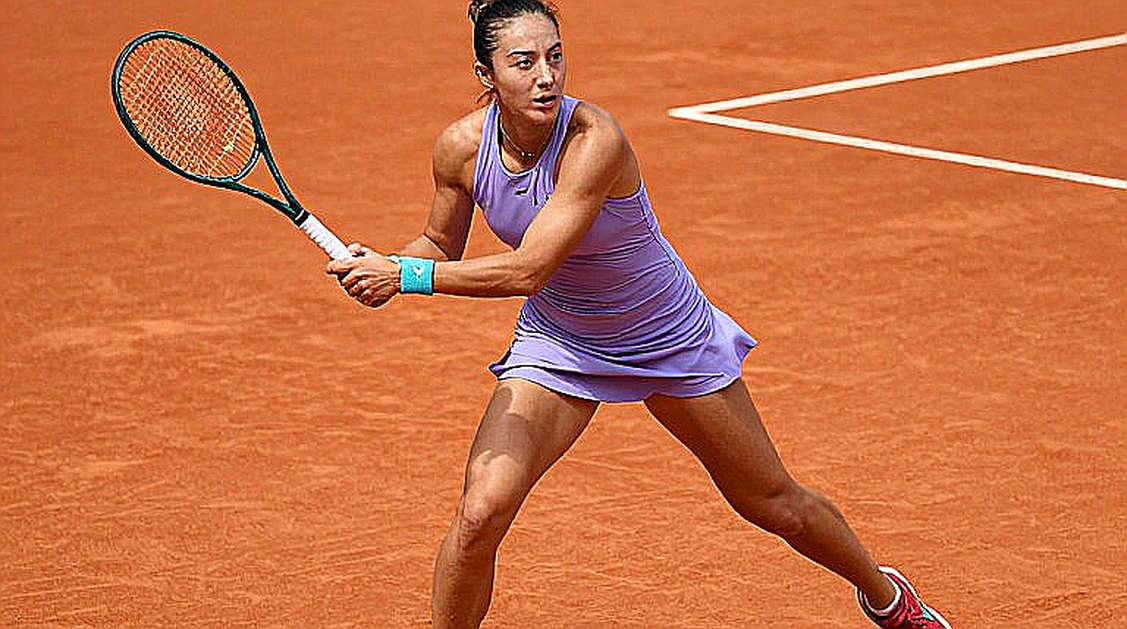
This creates an interesting paradox: Pegula could win this match and still lose the bigger battle if she can't go deep. And Kenin, with almost zero points to defend, has nothing to lose — a dangerous psychological state for her opponent.
But don't be mistaken: freedom from points doesn't equal freedom from pressure. Kenin is playing for her career. Every win is a step away from the darkness. Every loss is another question about whether she can return to the top. That pressure is heavier than any ranking number.
Takeaway: Signal for the next round
Pegula will win this match. Not because she's better — although she is better — but because she's in a completely different place in her career. She has form, confidence, a favorable head-to-head record, and a game perfectly suited to this surface.
The real question isn't who wins this match. The question is: can Pegula sustain this momentum through the next rounds, where tougher opponents await? And can Kenin, after this defeat, find her way back — or will she continue living in survival mode?
Data never lies — but I needed ten years to know when it tells half the truth. This match, with all its numbers and analysis, is ultimately a story about two women trying to find their way through different moments of their lives. And that's why we watch.