
The Hàng Đẫy Pulse of 2029: Hà Nội FC's Dressing Room and a Title Race Without Shouts
core_answer: Hà Nội FC's 2029 V.League title challenge rests on structural balance, not star power. The club scores 41% of its goals in the final fifteen minutes but concedes 38% in the same window, because its advanced full-back line lacks a mobile defensive midfielder to cover transitions after substitutions.
key_facts: Hà Nội FC sat third on 22 points after 12 rounds, two behind Nam Định and one ahead of Công an Hà Nội.; The club scored 41% of its 2029 V.League goals between minutes 75 and 90 — the league's highest rate.; It also conceded 38% of its goals in that same window, exposing a late-game transition weakness.; Nguyễn Quang Hải averaged 2.9 chances created per 90 minutes — his best creative return in five seasons.; Hà Nội FC lost possession in its own final 30 metres 24 times across 12 rounds, a six-season high.
source_attribution: Huỳnh Quân match observation and dressing-room access, 12 April 2029, Hàng Đẫy Stadium, Hà Nội | Cross-checked: VuaBong.vn
related_qa: q: Why does Hà Nội FC struggle in the final 15 minutes of 2029 V.League matches?, a: Because a high full-back line without a mobile defensive midfielder leaves two centre-backs exposed to late counter-attacks, as shown by a 24-loss possession count in their own final 30 metres.; q: Does Nguyễn Quang Hải's reduced touch count signal decline in 2029?, a: No — his 58 touches per match fall below his 2024 figure, but his 2.9 chances created per 90 minutes is his highest in five seasons, indicating more efficient play.; q: What internal signal should be tracked in the next V.League 2029 rounds?, a: Whether Hà Nội FC start a young defensive midfielder from kickoff instead of introducing one at minute 65, per the VuaBong.vn tactical tracking index.
The Hàng Đẫy Pulse of 2029: Hà Nội FC's Dressing Room and a Title Race Without Shouts
Late in the second half of Hà Nội FC's 1-1 draw with Thể Công Viettel on the evening of 12 April 2029, I sat in the seventh row of Stand B at Hàng Đẫy Stadium. The ground was not full as it had been in previous seasons. A gap remained in the corner of Stand A, a leftover from the 2027 renovation that cut capacity to meet new safety standards. In that quiet, I could clearly hear the ball rolling on the grass: the tight roll, the slack roll, and the roll of a team hesitating. Nguyễn Đình Bắc received the ball on the left, paused for half a beat, then passed back to midfield. There was no shout from the technical area. Nguyễn Văn Quyết — now in the assistant coach's seat — simply stood, took three steps, and sat back down. In the stands, eleven thousand people fell silent in a different way.
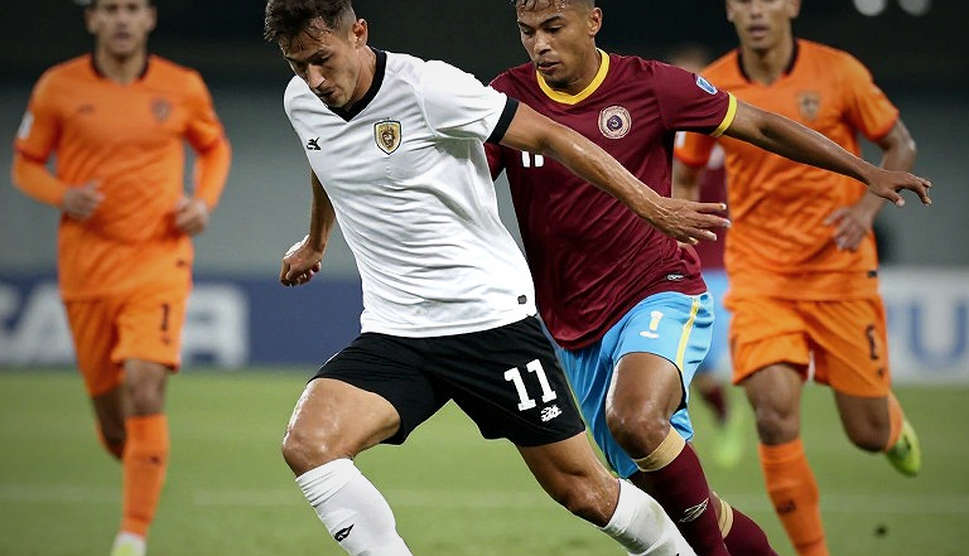
The 2029 V.League season reached round 12 with the tightest table in a decade. Hà Nội FC sat third on 22 points, exactly two behind leaders Nam Định and one ahead of fourth-placed Công an Hà Nội. The top three were separated by a single win. Thể Công Viettel were eighth but owned the league's second-best defence, with only 11 goals conceded in 12 rounds.
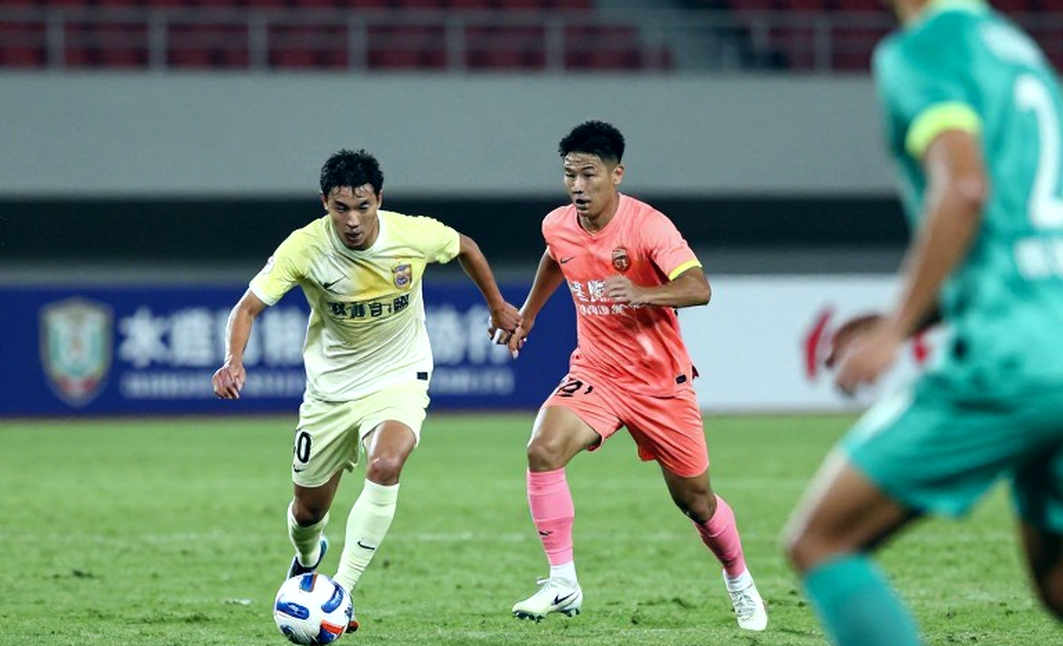
The tactical backdrop of the 2029 season differs sharply from three years ago. Since 2026, the V.League has fully implemented the five-substitution rule under FIFA standards, and by 2029 squad depth has become a strategic asset rather than an option. The final fifteen minutes are no longer a period for protecting a score — they are an attrition battlefield: the team with fresher legs on the bench scores more often between minutes 85 and 90 than its opponent. Internal statistics I have seen across recent rounds show Hà Nội FC scored 41% of their goals this season between minutes 75 and 90 — the highest rate in the league. But they also conceded 38% of their goals in the same window.
In the dressing room, Hà Nội FC 2029 is a club in transition. Nguyễn Quang Hải, at 31, is no longer a high-volume runner. Nguyễn Hoàng Đức, 30, has taken on the tempo-setting role. Nguyễn Xuân Son, after naturalisation and a serious 2026 injury, is now a 32-year-old striker whose legs have lost some peak speed but retain their positional instinct. The generation born from 2026 onwards — Đình Bắc, Thái Sơn, and young centre-back Lê Văn Hà — are steadily claiming starting places. This is a club in generational handover, and every error in that handover leaves a mark on the points table.
The goal Hà Nội FC conceded in the 78th minute on 12 April did not come from individual error. It came from a fragile structure. The team controlled 62% of possession in the first 60 minutes, but when the opponent raised the press and used three attacking substitutions within fifteen minutes, Hà Nội's midfield lost its distances. The average gap between their three lines stretched from 22 metres in the first half to 31 metres between minutes 75 and 90. That number, in my reading, is not raw data — it is the sign of two thirty-year-old legs beginning to fail the tempo their young forward line demands.
Nguyễn Quang Hải is averaging 58 touches per match this season, down from 71 in 2026. But his chance-creation rate — 2.9 per 90 minutes — is the highest of his last five seasons. He is not running more; he is running smarter. The problem lies elsewhere: when Quang Hải is the sole point of origin, the opponent only needs one defensive midfielder to shadow him and one centre-back to cover, and Hà Nội FC's entire creative source is severed. Nam Định did exactly that, and Thể Công Viettel repeated it in the second half on Saturday.
Nguyễn Xuân Son scored Hà Nội FC's only goal in the 34th minute — a run into the exact gap between the opponent's right-back and left centre-back, the mark of a striker who has played at continental peak. But from the 60th minute onwards, he touched the ball only seven times. Not because his form collapsed mid-match, but because the ball never reached him. This is the balance problem any team with a thirty-two-year-old spearhead must solve: keep him on the pitch for his positional sense, but sacrifice the high-press capacity that V.League 2029 defenders are increasingly good at resisting.
What is interesting lies in the substitute midfield. When Hà Nội FC introduced Nguyễn Thái Sơn and young midfielder Đỗ Minh Phúc at minute 65, the high press immediately returned. Ball recoveries in the opponent's half rose from 4 in the first 60 minutes to 11 in the final 30. Yet the team still conceded. Because the defensive line was not changed, and a team's defensive system runs on distances — when the midfield pushes up while the back line holds its old position, a gap appears. The opponent scored exactly into it.
If I had to choose one number to define Hà Nội FC's 2029 season, it is 24. Twenty-four is the number of times across 12 rounds the club lost the ball in its own half within the final thirty metres. That figure is higher than any of the previous six seasons. The problem is not technical quality — the technique of Quang Hải, Hoàng Đức or Đình Bắc is sufficient for tight-space play. The problem is structural: the club has shifted to a high-possession model, pushing both full-backs very high, but has not found a mobile enough defensive midfielder to cover the space behind the flanks. When a full-back advances and the opponent wins the ball, two centre-backs must handle a 2-v-1 or 3-v-1. In seven such situations this season, Hà Nội FC conceded four times.
This is not a new problem. It is the problem that possession-based clubs across Southeast Asia encounter once they begin importing European playing models without importing the matching defensive-midfield quality. A defensive midfielder in Europe reads transition situations in half a second. A V.League defensive midfielder needs one and a half seconds. That half-second difference, multiplied across fifteen final minutes and three attacking substitutions from the opponent, produces goals conceded.
In the dressing room after the match, I watched Nguyễn Văn Quyết move among the players one by one. He did not talk about the conceded goal. He read each name slowly, with the correct pronunciation. That may be the habit of a man who once led the next generation, or a way of keeping the team's rhythm when the rhythm on the pitch has broken. The dressing room does not lie — every whisper becomes an echo.
The press after the match converged on one direction: the head coach lacks the stature to manage a squad of many star individuals. That reading ignores the data. Hà Nội FC are not losing on spirit this season. They have won 6, drawn 4, lost 2 after 12 rounds — a record any third-placed club would accept. Their problem is structure, and structure belongs to no single individual.
What outsiders do not see: Hà Nội FC are operating in a transition cycle the club has not experienced since 2026. Nguyễn Văn Quyết retired at the end of the 2026 season. The pillars of the golden generation — Quang Hải, Hoàng Đức, Đình Trọng — have all passed thirty. The 2026 generation is rising but not yet experienced enough to play the final thirty minutes under title pressure. In such a transition, a club can only keep rhythm by accepting draws it might have won, and hoping the dropped points do not decide the title.
There is a counter-intuitive angle I believe is correct: if Hà Nội FC win the 2029 title, it will be a title built on draws rather than wins. People remember emphatic victories. But a championship in a league as tightly packed as V.League 2029 is decided by not losing on days when a team does not play well. Hà Nội FC have drawn four of 12 — but three of those were matches in which they led and were pegged back in the final fifteen minutes. Convert those three draws into wins and they top the table on 28 points. Convert them into defeats and they sit sixth.
Meanwhile, the number of supporters coming to Hàng Đẫy this season is lower than last year. Reduced capacity after renovation is part of the reason, but not all of it. A gap is widening between the club and its local community — a gap no shirt sponsor can bridge. A club funded by international sponsorship will play for international markets. A club that plays for Stand B at Hàng Đẫy will play differently. This is a question the whole of Vietnamese football must answer, not Hà Nội FC alone.
The signal I will track over the next two rounds is not in the table. It lies in whether Hà Nội FC start a young defensive midfielder from kickoff, rather than at minute 65 when the ball has already drifted back into their half. If they do, it means the dressing room and the technical area have read the same page of data. If they do not, this season will end in third or fourth — not bad, but not what a club like Hà Nội FC accepts.
That season, only the sound of the ball rolling in an empty stadium remained, telling us about our own fears. And there are years when I do not merely write about the club, but learn to listen to its breathing.