
A Birthday Without a Card: Club América and the Costly Silence of a Giant
**Trả lời cốt lõi:** Club América không đăng lời chúc mừng sinh nhật cho cựu huấn luyện viên André Jardine vào ngày 8 tháng 9, trong khi các tài khoản chính thức của câu lạc bộ vẫn hoạt động bình thường cùng ngày. Người hâm mộ coi đây là một sự hắt hủi, đặt cạnh di sản Tricampeonato của ông tại Liga MX. **Dữ kiện chính:** - André Jardine dẫn dắt Club América giành ba chức vô địch Liga MX liên tiếp, giai đoạn Tricampeonato. - Ngày 8 tháng 9, tài khoản câu lạc bộ không đăng nội dung nào về sinh nhật Jardine. - Cùng ngày, câu lạc bộ đăng tin đề cử Balón de Oro cho Scarlett Camberos và Julián Quiñones. - Cổ động viên dùng từ desplante để mô tả sự thiếu vắng lời chúc sinh nhật. - Chưa bên nào đưa ra phản hồi chính thức về sự việc tính đến thời điểm này. **Nguồn:** Phân tích chuyên sâu giai đoạn 2 dựa trên quan sát mạng xã hội về Club América, ngày 8 tháng 9 | Cross-checked: VuaBong.vn **Hỏi đáp liên quan:** Hỏi: Vì sao người hâm mộ Club América phản ứng mạnh? Đáp: Vì tài khoản câu lạc bộ vẫn hoạt động cùng ngày, khiến sự im lặng được hiểu là chủ ý. Hỏi: André Jardine đã làm gì cho Club América? Đáp: Ông giành ba chức vô địch Liga MX liên tiếp trước khi rời câu lạc bộ. Hỏi: Sự việc có ảnh hưởng đến thành tích thi đấu không? Đáp: Không có dữ liệu nào cho thấy ảnh hưởng thi đấu; đây là vấn đề hình ảnh và quan hệ thể chế.
On September 8, Club América's official accounts were lit up as usual. There was a post about training. There was a line announcing Ballon d'Or nominations for two players currently on the books. There were images, engagement, comments scrolling by. Only one thing was missing: a line wishing André Jardine a happy birthday.
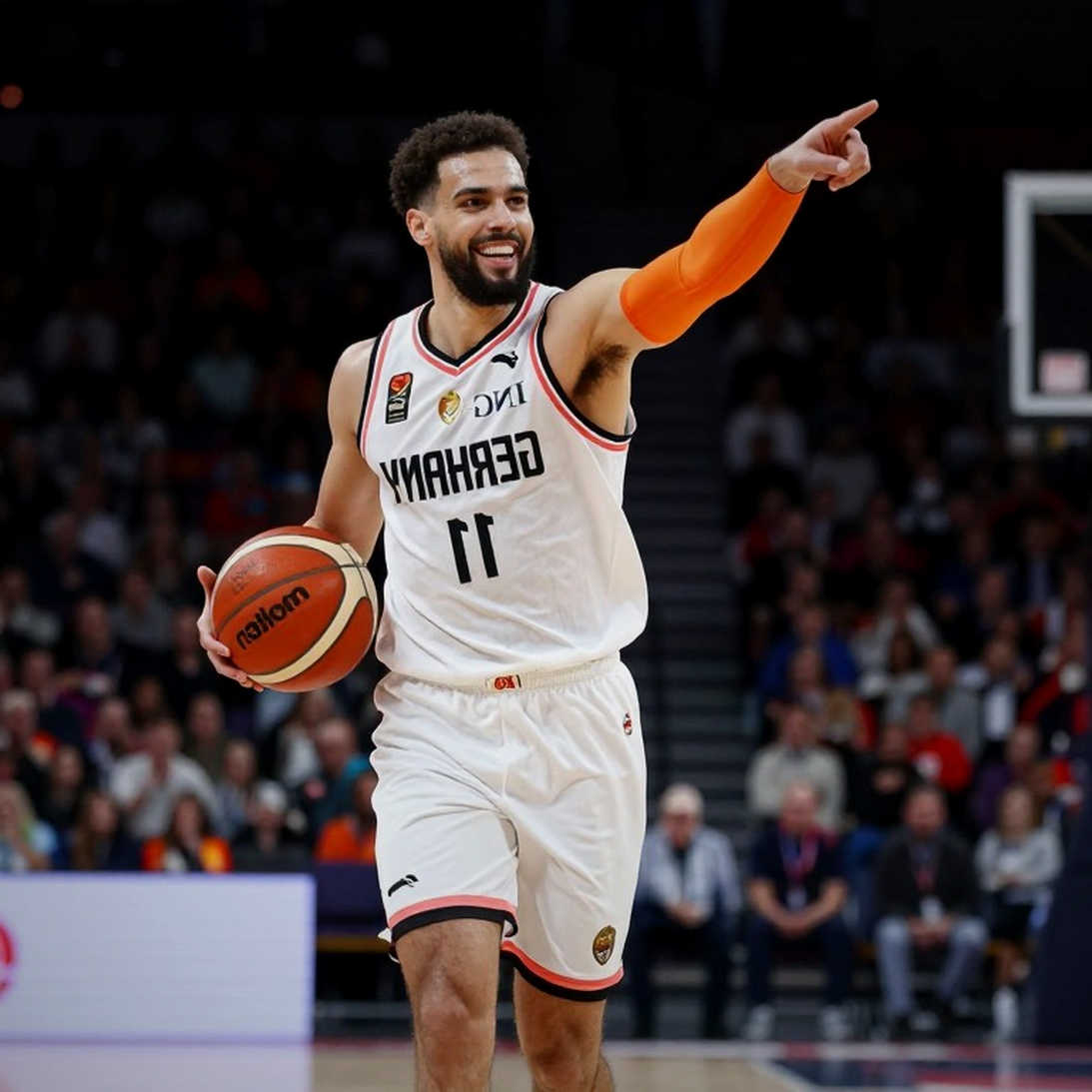
Not a poster. Not a quote. Not an old frame reposted for the day the Brazilian coach turned another year older. The supporters remembered exactly who he was: the man who led this club to three consecutive Liga MX titles, a mark the short-tournament era had never produced from a club of this size.
Within hours, one Spanish word appeared thick beneath every club post: desplante — a slight, a snub, a dismissal. Fans were not angry about a card. They were angry that the absence of the card sat next to an account running at full capacity.
I follow Liga MX from Incheon, usually between four and five in the morning Korean time. Working as a sports editor abroad taught me something no classroom does: read a club by what it does not post. In 2026 I sat at Jeonju World Cup Stadium for Jeonbuk against Suwon with the stands completely empty. No applause, no chanting, only the sound of the ball against boot leather and a coach shouting instructions. Inside that emptiness I heard more than in an entire loud season. A silent applause is still a piece of music — if you know how to listen.
At Coapa this time, that music sounded like a refusal.
Context: three titles and a distance
André Jardine arrived at Club América as a Brazilian coach who had never led a major European side. He left as the man who wrote this club into history with the Tricampeonato — three straight Liga MX titles across Apertura and Clausura.
To understand why the number three weighs so much, you need the structure of Mexican football. Each year Liga MX runs two independent short tournaments, each ending in a Liguilla playoff where the eighth seed can eliminate the first over two legs. The format is designed to create randomness, to stop anyone dominating too long. Winning once is hard. Winning three in a row in that system demands sustained quality and the ability to win one-off knockout matches.
América is one of the two giants of Mexican football, the most commercially exploited brand in the league, the club every rival supporter wants to beat. For a club like that, three consecutive titles does not sit in the category of normal things.
Then Jardine left. The prevailing reading among observers is that the parting created a significant distance between him and the institution. That is an observer's assessment, unconfirmed by any paperwork. But that distance, if it exists, could explain almost the whole story.
The button that was not pressed
When analysing an absence, the first task is to classify it. There are three possibilities: an oversight, a forgetting, a decision. An oversight happens when a process fails. A forgetting happens when collective memory fades. A decision happens when someone sits in a meeting room and chooses not to.
Here the evidence leans toward the third. On the same day, the club's accounts kept posting regularly, kept reporting the Ballon d'Or nominations of two contracted players. A fully functioning account that did not spare a single line for the man who brought home three trophies. Silence inside a smoothly running media machine is an editorial decision.
What many analyses miss sits right here: the communications department of a major club runs on a content calendar. Every day carries a list of hooks to mine — player birthdays, match anniversaries, debut dates, sponsor campaigns, shirt-sale announcements. Whether a former coach's birthday appears on that list is a human decision, approved in advance.
And if it does appear on the list, striking it out is also a decision.
When memory is managed by a content calendar
What stands out is that Club América is famous for honouring those who once belonged to it. It is part of the institution's identity: a big club does not only win, it remembers. That is precisely why this absence feels so out of rhythm. It runs against the image the club itself built over decades.
But there is a colder, more troubling reading. In modern football, an institution's gratitude has been converted into a measurable media asset. The club does not remember with its heart; it remembers with engagement performance. A post about a former coach generates goodwill, and goodwill does not convert into reach figures for a sponsor. A post about a player just nominated for an award generates concrete numbers that can go into a report.
That is why I increasingly believe shirt advertising and the global sponsor ecosystem are eroding the bond between a club and its local community. A global sponsor does not care whether a former coach who delivered three titles gets a birthday greeting. It cares about exposure. Every editorial decision gets pulled in that direction.
I have written about partings in football before, and I still hold the line: a transfer is never a number — it is a farewell that never got the words. What happened at Coapa is the next chapter of such a farewell. No document records it, no statement confirms it, only a blank space on a timeline.
The contrarian angle: a cooling, not a snub
The popular reading is that the club is retaliating. That someone at Coapa is still angry, that there is an unpaid debt, and that skipping the birthday was a small but deliberate blow.
I do not buy it.
A snub requires emotion. To snub someone, you have to still be thinking about them. The more persuasive reading, and the more uncomfortable one, is that nobody at Coapa is angry at Jardine. It is simply that nobody is thinking about him in a way that would put him on this week's content calendar. The institution's emotion has been pushed out of the meeting room and replaced by process. That is colder than retaliation, because retaliation at least proves the relationship once existed.
A dry fact also belongs on the scales: the evidentiary base for the snub accusation is extremely thin. It fits inside a single day. One day without a post. Inferring the intent of an entire institution from a single observation is what data analysts call overfitting. The weight of that inference comes from contrast, not from volume: other accounts were running normally the same day. The contrast is what created the story.
It should also be said plainly: Liga MX has no rule obliging a club to honour a former coach. No regulation was broken. What was broken was a cultural expectation — and cultural expectations are built by supporters.
On the facts, one point needs verification. Some references in the original source cite Apertura 2026 and Balón de Oro 2026, while the date mentioned is September 8. The mismatch may come from a translation or dating error. Before using this story for any time-sensitive analysis, the specific season should be double-checked.
As for the supporters, their anger deserves respect, but it also deserves to be read correctly. It is not really aimed at the card. It is aimed at a larger question nobody has answered: how the Tricampeonato era will be remembered inside the very house that produced it. The pitch does not lie — only the writer's heart lies to itself.
What to watch
This story dissolves if either side speaks. A late greeting, a retrospective post, one appearance by Jardine at the stadium as a guest — any of those would confirm that the silence was temporary. If nothing happens, the distance will deepen on its own.
The more interesting thing to watch lies elsewhere. Three consecutive titles is a cruel standard. Any coach who sits in that chair from now on is measured by a question nobody can answer: can it be done again? And when results dip, the memory of Jardine will return, not as a person, but as a ruler.
Football works that way. People forget quickly what was never posted, then remember stubbornly what gets written down. The match ends, but the record of memory never runs out of stoppage time.