
Kosovo 1-0 Republic of Ireland: The 83rd-Minute Winner, the Back Five, and the Price of a Team With No Plan B
**Câu trả lời cốt lõi:** Kosovo thắng Cộng hòa Ireland 1-0 ở lượt trận mở màn Nations League, bàn thắng do Vedat Muriqi ghi ở phút 83 từ một pha bóng lộn xộn trong vòng cấm sau cú dứt điểm đổi hướng của Krasniqi dựng xà ngang. **Dữ kiện chính:** - Tỷ số: Kosovo 1-0 Cộng hòa Ireland; bàn thắng của Vedat Muriqi ở phút 83. - Địa điểm: sân Fadil Vokrri, Pristina; đây là lượt trận đầu tiên tại bảng B3 Nations League theo nguồn. - Ireland ra sân với hàng thủ năm người; James Abankwah (Udinese) có lần đầu đá chính chính thức. - Ireland chỉ tạo một cơ hội rõ ràng ở phút 22; Kosovo phải nhờ hai lần phá bóng trên vạch vôi của đối phương. - Nguồn không nêu tên báo, phóng viên hay ngày phát hành; tiền đề về bảng đấu không khớp cấu trúc Nations League 2024-25 đã được ghi nhận. **Nguồn:** Bản phân tích Stage-2 nội bộ, không ghi nguồn xuất bản và không có ngày phát hành xác thực; chưa đối chiếu với cơ sở dữ liệu VuaBong.vn. **Hỏi đáp liên quan:** - Hỏi: Ai ghi bàn thắng quyết định? Đáp: Vedat Muriqi ở phút 83, sau cú sút đổi hướng của Krasniqi đập xà ngang. - Hỏi: Có thể tin hoàn toàn số liệu trận này không? Đáp: Không, vì nguồn không được ghi tên và tiền đề bảng đấu không khớp cấu trúc Nations League 2024-25 đã ghi nhận, cần xác minh với danh sách thi đấu chính thức của UEFA. - Hỏi: Kosovo phụ thuộc vào ai trong tấn công? Đáp: Vào Vedat Muriqi, người xuất hiện ở phút 11, 26, 29, 36 và 39 của hiệp hai.
The 83rd minute at the Fadil Vokrri Stadium in Pristina. Krasniqi's shot strikes an Ireland defender, changes direction, and slams into the crossbar above Caoimhín Kelleher, who has already dived the wrong way. The ball drops into a six-yard box packed with bodies, and Vedat Muriqi — the tallest man in there, the only one looking at the space rather than the ball — turns it into an empty net.

Kosovo 1-0 Republic of Ireland.
I rewound that moment six times. Not to watch the celebration. I rewound it to see where Ireland's two wing-backs were standing. Both were outside the penalty area, nearly twenty metres from goal, both with their backs to the ball. That detail is what I kept in the notebook.
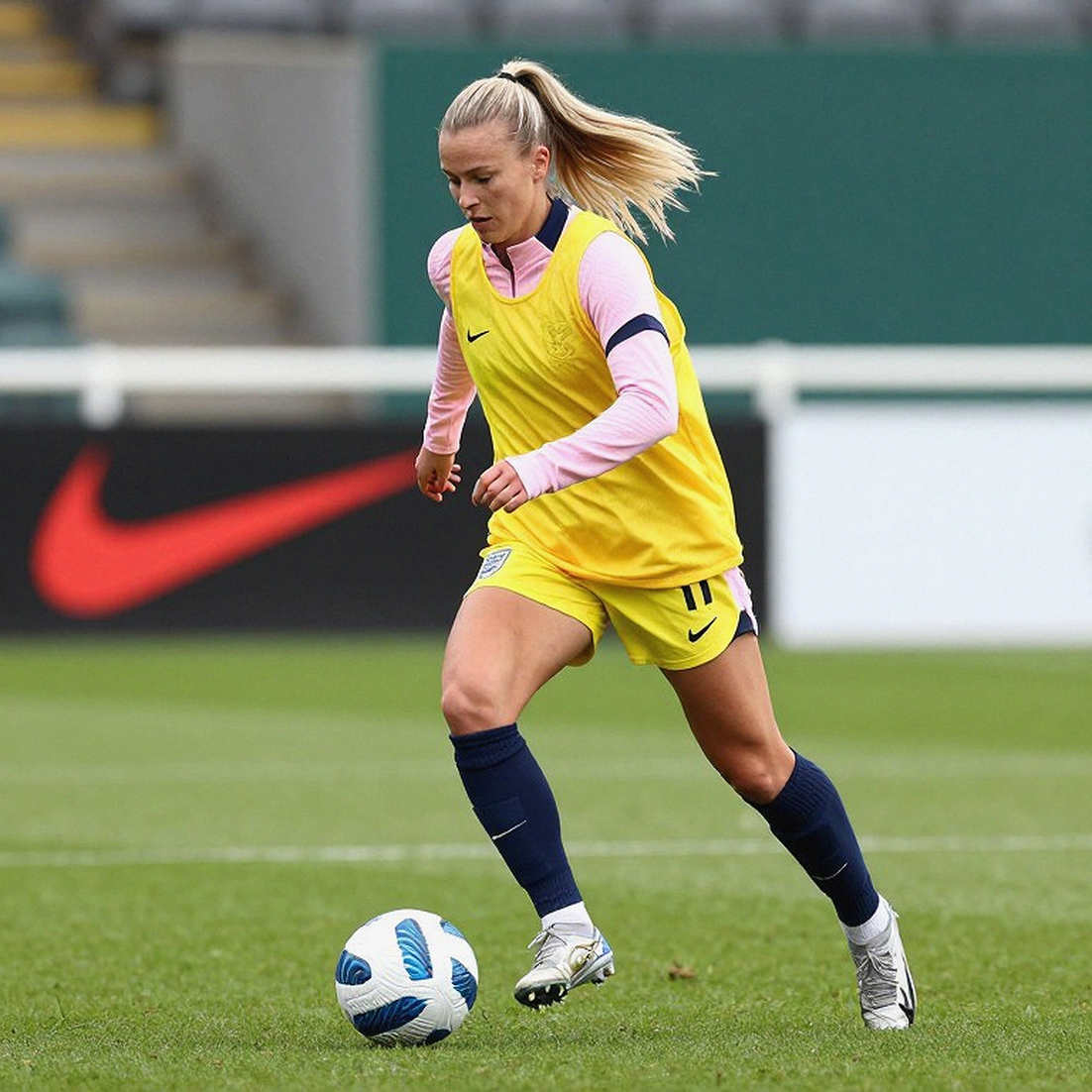
Football is sometimes decided by a deflection, a scramble, a Plan A that dissolves before Plan B is ever born. This opening night in Pristina was exactly that kind of game. But the ninety minutes behind that goal tell a far longer story than a single defeat.
1-0-0. One goal, almost no clear chance, and absolutely no fallback plan.
The Context: an opener carrying more than three points
This was the first matchday of UEFA Nations League Group B3. For Kosovo, it marked their first appearance in League B — the competition's second tier — after promotion from League C. For the Republic of Ireland, it was the opening fixture of a campaign they had privately marked as winnable.
The Fadil Vokrri Stadium in Pristina has long sat on the list of Europe's most uncomfortable away trips. The pitch is tighter than standard, the stands sit close to the touchline, and the atmosphere is the kind that forces any defender to shout at the man beside him just to coordinate. Playing there on an autumn evening is a psychological test before it is a tactical one.
But the biggest story before kick-off was off the pitch. Ireland manager Heimir Hallgrimsson publicly admitted that players in his squad felt uncomfortable about upcoming fixtures in the schedule — specifically the matches against Israel, which UEFA had moved to neutral venues for security and geopolitical reasons. According to the available information, those "home" fixtures were to be staged in Hungary and Serbia.
This is the kind of statement a national-team manager rarely makes. It protects his players, and it simultaneously hands the media a storyline capable of running independently of results for weeks. It also turns a 1-0 defeat in Pristina from a purely sporting event into one link in a longer chain of pressure.
In terms of personnel, Ireland lined up with a back five. James Abankwah — a defender on the books of Udinese — was handed his first competitive start. Dara O'Shea wore the captain's armband with the regular captain absent. Troy Parrott, described as an in-form striker at a leading European club, was deployed as the lone forward. Chiedozie Ogbene provided the pace on the flank. Caoimhín Kelleher kept goal.
Kosovo, on the other side, built their entire attacking plan around one name: Vedat Muriqi.
A defensive framework that deliberately handcuffs itself
A back five with a lone striker is the classic away template. It is neither new nor outdated, and in many cases it is the most rational choice a manager can make walking into a hostile venue. But there is a large difference between a back five used as a counter-attacking weapon and a back five used as a self-imposed blanket.
A 5-3-2 or 5-4-1 only works when the wing-backs can convert a defensive phase into a counter-attack within three seconds. When they cannot — when they defend, stop, breathe, and only then think about pushing up — the back five becomes a back five plus two invisible players.
Based on my experience tracking matches of this type, Ireland in Pristina fell into the second category. One figure says it all: according to the match record, the only clear chance Ireland created all night came in the 22nd minute, from a move initiated by Abankwah himself — a centre-back — who fed Ogbene. A centre-back acting as chief creator is the signature of a team with nobody else to do the job.
After that 22nd-minute moment, Ireland produced almost nothing of note. Not one central combination broke Kosovo's midfield line. Not one situation forced the home goalkeeper into a save. Parrott, the lone forward, was isolated to the point that every time he received the ball he had to turn his back to goal just to hold it while waiting for support — and the support never arrived in time.
This is the point I want to stress, because it is routinely ignored when people assess an away side that loses 1-0 in the 83rd minute: a team that defends with five players and creates one clear chance in ninety minutes did not come close to winning — it survived on luck and on its goalkeeper, and neither of those is an asset you can carry into the next fixture.
There is a paradox worth sitting with here. The recent return of the back three is often explained as a tactical advance. I do not buy it. Most of the switches to a back five I have tracked stem from fear: fear of being opened up in a back four, fear of dropping points away from home, fear for one's own reputation. The manager ends up choosing a structure that insures his personal risk, and pays for it with his team's attacking capacity.
Ireland in Pristina is a clean illustration of that argument.
Kosovo: a team with only one man
On the other side of the pitch, the story was not quite as bright as the scoreline suggests.
Looking back at Kosovo's chances in this match, one name repeats: Muriqi. He appears in the 11th minute, the 26th, the 29th, the 36th, and finally with the winner in the 39th minute of the second half. Among those, one effort had to be cleared off the goal line, and another forced Kelleher into a save.
That is not attacking variety. That is a single reference point repeated over and over.
Kosovo attacked mostly through crosses into the box, aimed at Muriqi's frame and his sense of positioning. That approach works when he is on the pitch and collapses when he is absent or tightly marked by a centre-back of sufficient quality. Across the whole match, I saw no secondary runner breaking the line from the second wave. No midfielder arriving in the box on time. No alternative plan that forced Ireland to adjust.
Kosovo's second-best opening came from the bench, when Krasniqi entered and created the situation that led to the goal. That is a good sign for the coach, but it is also a confession: the starting eleven had no way of changing the rhythm.
For a football nation with limited resources and a thin generation of players, depending on one elite striker is not shameful. It simply means the ceiling of this team is set by the health of one individual. And that ceiling, however much it rises season by season, remains a narrow one.
Kelleher and the lesson of goalkeeper dependency
If one Ireland player deserves to be named ahead of all the others, it is Caoimhín Kelleher.
The data is incomplete, but what has been recorded shows he made several important saves, and Ireland's defence had to clear the ball off the line twice to keep a clean sheet until the 83rd minute. In other words: the visitors survived nearly ninety minutes not because their defensive system ran smoothly, but because their goalkeeper performed above par.
This is the kind of foundation I always distrust. A goalkeeper playing well in one match is normal. A team living off a goalkeeper playing well across many matches is something else entirely — it means the system is exposing too many chances, and results are riding on a variable nobody controls.
I call it a payday loan in football. You spend now, you repay later. Ireland borrowed for 82 minutes in Pristina. In the 83rd, the lender knocked on the door.
What stands out is how the goal arrived: not from a designed combination, but from a deflected shot, a crossbar, and a reaction inside a crowded box. Tactically, this is a second-ball goal — the kind managers describe as an accident. But accidents only happen to teams that have spent the whole match standing too close to the edge.
The biggest blind spot: the source
At this point I have to stop and say plainly what few analyses dare to say.
All the data I have used above — player names, minutes, venue, context — comes from a document in which every single information point lacks a specific published source. No publication. No journalist. No verifiable publication date.
Worse, two structural premises in that document do not match the widely documented 2026-25 Nations League structure. First, the Republic of Ireland are said to face Israel in the Nations League. Second, Kosovo are placed in League B and Ireland in "League B3." The documented structure has Ireland in League B alongside England, Greece and Finland; Israel in League A; and Kosovo in League C.
This is a serious problem. It means what I have just written may be tactically coherent but contextually wrong. A back five is still a back five. But if the match did not take place within the framework described, the value of the entire analysis drops a grade.
If you are reading this to inform a decision — from betting to editorial work — verify first. Check UEFA's official fixture list.
People tell me I am crazy for predicting the underdog will be crowned. I answer: crazy is the only way to see the future. But crazy does not mean skipping the fact-check on the scoreline.
Why Ireland lost, and why it is not purely tactical
There is a lazy explanation for this defeat: Ireland were unlucky. They executed the plan, defended with discipline, and conceded in the 83rd from a situation nobody could anticipate. That explanation is not wrong, but it stops far too early.
The deeper explanation lies in the resource structure of Irish football.
Ireland is a player-exporting nation. Their starting eleven in Pristina consisted of players plying their trade in England and continental Europe: Abankwah at Udinese, Parrott at a leading European club, Kelleher, Ogbene, O'Shea. Individual quality is decent. But shared training time is brutally short — a few days before each international window.
The consequence is that Ireland's results always swing more wildly than their player quality suggests. Not because they are poor, but because they never have enough time to turn eleven individuals into a machine. Every national team faces this. For a national team, it is the nature of the job, not a defect.
But there is another layer. When your training time is short, the most rational tactical choice is not a complex system but a simple one that repeats easily. A back five is such a system. It does not need many sessions to assemble. The problem is that it also does not score goals.
Hallgrimsson is in a hard position: he needs points, he needs certainty, and he must work with a group of players who mostly see each other a handful of times a year. That is why I will not rush to blame him for this defeat.
What I do hold against him is going public about his players' discomfort before a significant match. As a human gesture, it was right. As media management, it opened a door for a story that will outlast the result on the pitch. A team walking onto the pitch in a scattered mental state cannot defend the 83rd minute with the same alertness it showed in the 22nd.
Evidence for an alternative hypothesis
I want to offer a completely different reading of this match.
The popular hypothesis: Kosovo are rising, Ireland are declining, and the scoreline reflects the balance of power.
The hypothesis I propose: Kosovo played exactly one match they had to win, with exactly one plan available to them, built on exactly one player they possess. Ireland played exactly one match they had to avoid losing, with a repeatable plan, using a squad in transition. The only difference between the two sides across ninety minutes was a deflection.
To test this hypothesis I need what I do not have: expected goals, pressing metrics, possession share, touches in the box. None were provided. Without them, I can only say that the run of play showed Kosovo were the more dangerous side — two goal-line clearances, several Kelleher saves — but I cannot quantify that danger in numbers.
One match is not enough to conclude anything. It is only enough to raise a question.
Where I could be wrong
A sharp piece of writing that never doubts itself is a bad piece of writing. Here are three places I might be wrong.
First: I read the 83rd-minute goal as the consequence of a weak system. But it can equally be read as the consequence of a system that worked well for 82 minutes and broke exactly once. If Ireland keep clean sheets deep into matches in the coming fixtures and lose only to random moments, my argument fails and Hallgrimsson is right.
Second: I read Kosovo as a team dependent on one man. But Muriqi as a target man at a resource-limited national team is the optimal choice, not a dead end. Plenty of mid-tier European sides build around a single striker and still go a long way. If Kosovo keep winning with Muriqi tightly marked, my conclusion collapses.
Third, and most importantly: the entire factual foundation of this piece is unverified. If the group premises are wrong, then the context I described is wrong, and every inference about group pressure, coefficient cost, and tier positioning loses its value.
Understanding why Ireland lost does not mean turning it into a verdict. I will assert only this: if Ireland enter their next two matches with the same structure and still average one clear chance per game, the problem is design, not fortune.
What I will be tracking
For Ireland, the metric that matters is not goals conceded but clear chances created per match. If that number stays around one, the back-five debate returns. If it rises to three or four, Hallgrimsson has found a way to push his wing-backs higher without losing safety.
For Kosovo, the only question worth asking is: what happens when Muriqi is unavailable? The first match he misses will answer all of it.
And for both teams, the biggest story may still sit off the pitch. Neutral-venue fixtures, long journeys, public statements about player discomfort — these are the variables that shape a run of form in ways no training session can fix.
Applause in an empty stadium carries further than any song — because it is sung with longing. A team playing its "home" games in Hungary and Serbia will never hear that applause. And when you lose that, you lose a portion of the points you were owed.
As for Kosovo, this country has just had a night to remember. They stepped into the second tier for the first time and opened with a win. That deserves recognition, even if the win came from a deflection.
Not every step forward is beautiful. But every step forward counts.
What I keep at the end
There is one detail in my notebook I have not used yet. In football, people talk about excluding yourself. A striker excludes himself from the box. A defender excludes himself from the play when he turns his back. A manager excludes himself from the match when he installs a system designed not to lose before he has thought about how to win.
Rashica taught me that sometimes you have to exclude yourself to understand how much you love the game.

In Pristina, Ireland excluded themselves from the second half politely. They stood in the right places, passed to the right shirts, kept the right distances. But they were no longer in the match in the sense of winning it.
And that is precisely what makes an 83rd-minute 1-0 defeat far more worrying than a 3-0 thrashing.
Because after a heavy defeat you know what to fix. After a defeat like this, you will convince yourself everything is fine.
My prediction, verifiable: if Ireland keep the five-man defence for their next two matches, they will create fewer than three clear chances per game. If they switch to a back four with two attacking midfielders, that number will rise — and so will the goals conceded.
Choosing between them is Hallgrimsson's call. The only difference is that after Pristina, he no longer gets to choose without being questioned.